

Persistent digestive discomfort is a common concern for many British adults, with research showing that nearly one in five people in the United Kingdom experience ongoing symptoms without a clear cause. Identifying which foods may be responsible is essential for lasting relief and improved wellbeing. This overview explains how modern intolerance testing is regulated and practiced in the United Kingdom, helping you find reliable, non-invasive pathways to better digestive health.
Table of Contents
- Defining Intolerance Testing And UK Standards
- Types Of Intolerance Tests And How They Work
- Legal Requirements And Official Recognition
- Bioresonance Methods Versus NHS Approaches
- Risks, Reliability, And Consumer Protections
Key Takeaways
| Point | Details |
|---|---|
| Standardisation is Crucial | UK intolerance testing must follow stringent protocols to ensure accurate diagnosis and protect consumer health. |
| Consult Professionals | Always seek guidance from registered dietitians or nutritionists for interpreting test results and developing a tailored dietary strategy. |
| Be Cautious with Home Testing | Commercial home testing kits may provide unreliable results; professional oversight is essential for effective intolerance management. |
| Understand Regulatory Frameworks | Familiarise yourself with legal standards and allergen labelling to better navigate the landscape of food sensitivities in the UK. |
Defining Intolerance Testing and UK Standards
Intolerance testing in the United Kingdom represents a sophisticated approach to understanding individual dietary sensitivities through scientifically validated methodologies. The Food Standards Agency (FSA) research highlights the critical importance of developing comprehensive frameworks to assess and manage food hypersensitivities across diverse populations.
Standardisation in UK intolerance testing involves multiple key components that ensure accurate, reliable, and patient-centred diagnostic processes. These standards encompass several critical domains: laboratory protocols, testing technologies, result interpretation guidelines, and professional practitioner qualifications. Importantly, the regulatory landscape demands rigorous scientific validation, meaning any intolerance test must demonstrate consistent reproducibility and measurable clinical relevance.
The primary objective of these standards is protecting consumer health by establishing clear protocols for identifying potential food sensitivities. This includes creating standardised methodologies for sample collection, analysis techniques, and result reporting. Professional bodies such as the British Nutrition Foundation and healthcare regulatory institutions work collaboratively to maintain these exacting standards, ensuring that intolerance testing provides meaningful insights into an individual’s potential dietary challenges.
Expert Tip: Always verify that your intolerance testing provider follows established UK regulatory standards and can demonstrate transparent, scientifically validated testing protocols.
Types of Intolerance Tests and How They Work
Intolerance testing encompasses multiple diagnostic approaches, each with unique methodologies and scientific validity. The British Dietetic Association research highlights that not all testing methods are equally reliable, emphasising the importance of professional guidance and scientifically validated techniques.
Primary types of intolerance testing include blood tests, elimination diets, hydrogen breath tests, and specialised immunoglobulin assessments. Blood tests typically measure specific antibody responses, identifying potential inflammatory reactions to particular food proteins. Hydrogen breath tests are particularly effective for assessing lactose and fructose intolerances, measuring gas production after consuming specific sugars. Elimination diets remain a gold standard, involving systematic food removal and careful reintroduction to identify potential trigger substances.
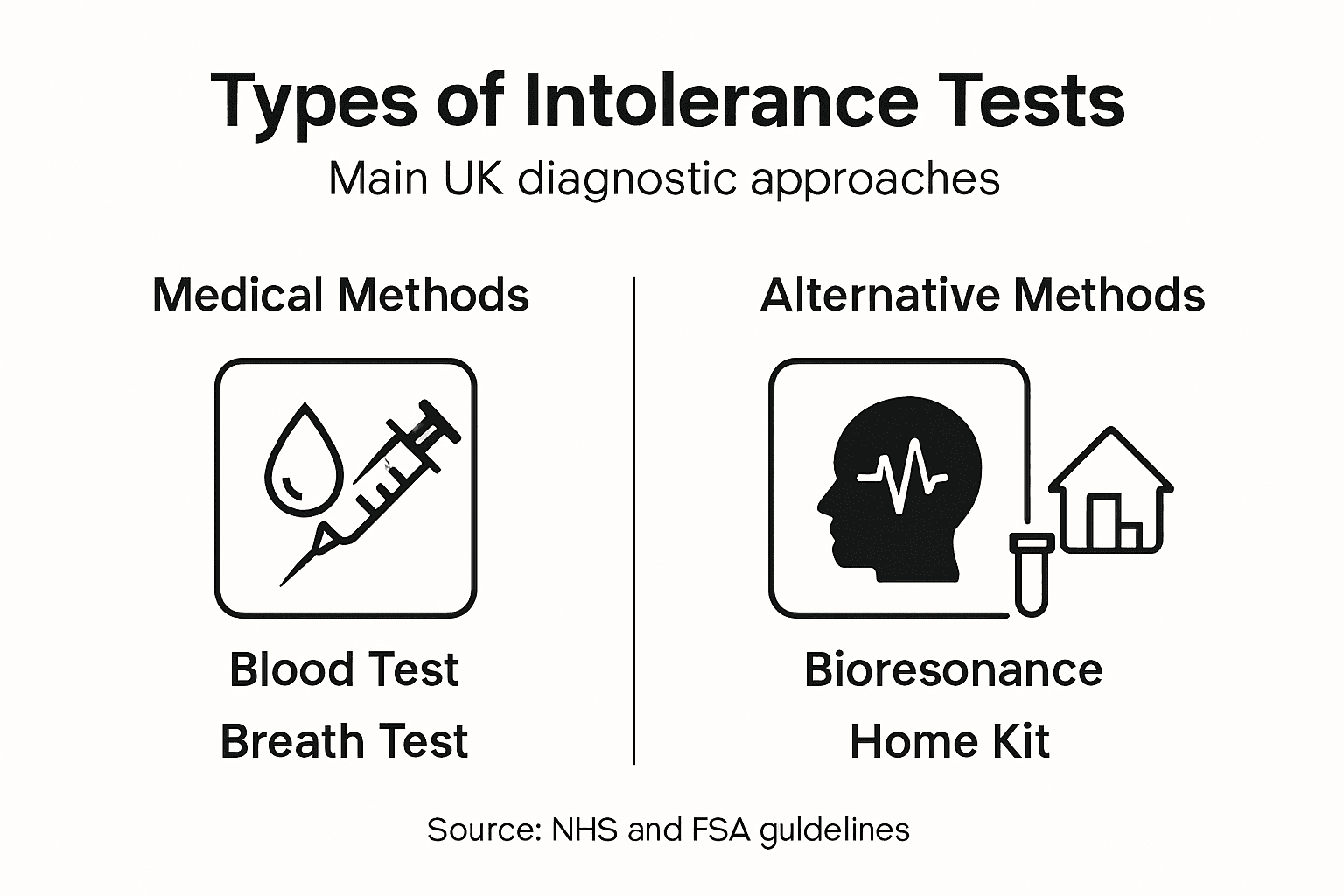
Home testing kits have gained popularity, but healthcare professionals caution against relying solely on these methods. Professional diagnostic pathways involve comprehensive clinical assessments, detailed medical histories, and multiple testing approaches to ensure accurate identification of food sensitivities. The complexity of individual metabolic responses means that no single test can provide a definitive diagnosis without expert interpretation.
Below is a summary comparing the main intolerance testing methods available in the UK:
| Test Type | Scientific Validity | Typical Use Case | Professional Oversight |
|---|---|---|---|
| Blood Tests | Strong, clinical studies | Protein-triggered reactions | Medical laboratories |
| Elimination Diets | Gold standard, clinician-led | Complex intolerance cases | Dietitians and nutritionists |
| Hydrogen Breath Tests | Well recognised, reproducible | Sugar intolerances | Gastroenterology specialists |
| Home Testing Kits | Limited, variable | Convenience, self-administered | Commercial providers, little oversight |
Expert Tip: Consult a registered nutritionist or dietitian to develop a comprehensive testing strategy tailored to your specific health concerns and symptoms.
Legal Requirements and Official Recognition
In the United Kingdom, legal frameworks surrounding food intolerances have evolved significantly, with recent legislation prioritising consumer protection and safety. Natasha’s Law, introduced in 2021, represents a critical milestone in mandating comprehensive allergen labelling for pre-packed foods sold directly to consumers, demonstrating the government’s commitment to protecting individuals with food sensitivities.
The NHS has developed sophisticated information standards to manage allergy and intolerance data across healthcare settings. These standardised medical information systems ensure that patient records accurately reflect individual dietary requirements, enabling healthcare professionals to make informed decisions about treatment and prescription management. While official recognition of specific intolerance testing methodologies remains cautious, there is growing acknowledgement of the importance of systematic approaches to identifying and managing food sensitivities.
Regulatory bodies like the Food Standards Agency continue to play a crucial role in monitoring compliance and developing guidelines. Their approach balances consumer protection with scientific rigour, recognising that not all intolerance tests meet the same standards of validity. This means individuals seeking testing must navigate a complex landscape, relying on professional guidance and scientifically validated methodologies to obtain reliable insights into their dietary sensitivities.
Expert Tip: Always request detailed documentation about the scientific validation and regulatory compliance of any intolerance testing method you are considering.
Bioresonance Methods Versus NHS Approaches
The landscape of intolerance testing in the United Kingdom presents a complex dialogue between alternative methodologies and established medical protocols. British clinical immunology standards emphasise rigorous scientific evidence as the primary criterion for diagnostic validity, creating a significant challenge for alternative testing approaches like bioresonance.

NHS approaches prioritise systematic, reproducible diagnostic methods that rely on measurable physiological markers and controlled clinical testing. These typically involve blood tests, elimination diets, and specialist referral pathways that provide verifiable results. Bioresonance methods, by contrast, operate on principles of electromagnetic frequency analysis, a concept not currently recognised by mainstream medical institutions as a scientifically validated diagnostic technique.
The fundamental difference lies in the evidentiary standard. While bioresonance practitioners claim to detect energy imbalances associated with specific food sensitivities, medical professionals require concrete, quantifiable biological responses. This creates a fundamental tension between alternative and conventional testing methodologies. The NHS maintains a conservative stance, recommending only those diagnostic approaches with substantial peer-reviewed research and demonstrable clinical outcomes.
This table clarifies differences between NHS-endorsed and alternative intolerance testing methodologies:
| Approach | Basis of Diagnosis | Evidentiary Standard | Endorsement Level |
|---|---|---|---|
| NHS Clinical Methods | Physiological measurement | Peer-reviewed clinical trials | National acceptance |
| Bioresonance Techniques | Electromagnetic principles | Anecdotal, limited scientific evidence | Not officially recognised |
Expert Tip: Always prioritise testing methods endorsed by recognised medical bodies and seek multiple professional opinions when investigating potential food intolerances.
Risks, Reliability, and Consumer Protections
Food intolerance testing presents significant challenges for consumers navigating complex diagnostic landscapes. Consumer protection guidelines emphasise the critical importance of understanding potential risks associated with unverified testing methodologies, particularly home testing kits that lack scientific validation.
The Food Standards Agency has developed rigorous frameworks to mitigate consumer risks in diagnostic testing. Their comprehensive allergen testing methodologies focus on minimising false positives and negatives that could lead to inappropriate dietary modifications. This approach recognises that inaccurate testing can potentially cause more harm than benefit, potentially triggering unnecessary dietary restrictions or providing false reassurance about genuine health concerns.
Key risks in intolerance testing include misinterpretation of results, potential psychological impact, and the possibility of eliminating essential nutrients from one’s diet based on unreliable information. Professional dietary consultation remains the gold standard, with qualified dietitians providing nuanced interpretation of test results and personalised nutritional guidance. Consumers are advised to approach commercial testing with scepticism, always seeking multiple professional opinions and comprehensive clinical assessment.
Expert Tip: Always consult a registered dietitian to interpret any intolerance test results and develop a balanced, evidence-based approach to managing potential dietary sensitivities.
Discover Reliable Intolerance Testing Backed by UK Standards
Navigating the complexities of intolerance testing in the United Kingdom can feel overwhelming. The article highlights challenges such as inconsistent testing methods, lack of scientific validation, and the risk of misleading results from unregulated home kits. If you are seeking trustworthy ways to identify food and environmental sensitivities impacting your wellbeing, it is vital to choose solutions aligning with recognised standards while offering convenience and clarity.
UK Food Intolerance provides a non-invasive, at-home testing service using advanced bio-resonance technology verified by UK-based laboratories. Our Ultimate Single Intolerance Test covers over 1,100 items and the Core Single Intolerance Test addresses 500 items — both designed to deliver detailed insights within 48-72 hours, enabling informed dietary decisions confidently. We prioritise fast, affordable, and reliable testing combined with expert guidance to help you interpret your results safely in line with professional recommendations referenced in the article.
Start your journey to understanding your dietary needs with UK Food Intolerance today.
Find out more about our testing options here: Core Single Intolerance Test and Ultimate Single Intolerance Test.
Why wait to address unexplained health symptoms or optimise your wellbeing? Take control now.
Get started with a scientifically informed, consumer-friendly testing service at UK Food Intolerance and discover the triggers that matter to you.
Frequently Asked Questions
What types of intolerance testing are available?
Intolerance testing encompasses several methods, including blood tests, elimination diets, hydrogen breath tests, and specialised immunoglobulin assessments. Each method varies in terms of scientific validity and use case.
How can I ensure my intolerance test follows UK standards?
To verify that your intolerance testing provider adheres to UK standards, request documentation on their scientific validation and regulatory compliance. Look for providers that follow established guidelines from professional bodies like the Food Standards Agency.
What role do professional practitioners play in intolerance testing?
Professional practitioners, such as registered nutritionists and dietitians, play a crucial role in developing a comprehensive testing strategy, interpreting results accurately, and providing personalised dietary guidance based on individual health concerns.
Are home testing kits reliable for food intolerance testing?
While home testing kits offer convenience, they may lack scientific validation and oversight. Healthcare professionals advise against relying solely on these kits and recommend professional diagnostic pathways for accurate results.










Leave a Reply
Want to join the discussion?Feel free to contribute!