

TL;DR:
- At-home bioresonance tests provide hypotheses for food sensitivities but require medical advice and structured protocols.
- They do not replace clinical diagnosis; elimination and reintroduction supervised by professionals confirm triggers effectively.
At-home bioresonance tests can guide a safe elimination diet, but only when three conditions are met: you have ruled out medical causes with your GP, you have dietetic support where needed, and you follow a structured elimination-and-rechallenge protocol as recommended by health professionals. The tests themselves are not a medical diagnosis. Think of the report as a list of hypotheses, each one waiting to be confirmed or dismissed by your own body’s response during a controlled trial.
Here is what you can do in the next 24–72 hours:
- Book a GP appointment to rule out coeliac disease, IBD, thyroid dysfunction, and H. pylori before restricting your diet.
- Decide whether you need a referral to a registered dietitian (essential for children, pregnancy, or a complex medical history).
- Start a symptom diary today, noting what you eat, when symptoms appear, and their severity.
- Order your at-home test kit from Ukfoodintolerance so the hair-sample report arrives before your elimination phase begins.
Pro Tip: Do not begin eliminating foods before your GP appointment. A blood test for coeliac disease, for example, requires you to be eating gluten to produce an accurate result. Eliminating first can invalidate the test.
Table of Contents
- What should you check before starting an elimination diet?
- Medical checks you must do first
- What do at-home bioresonance tests actually do?
- How do you order, collect, and submit your hair sample?
- How do you run a safe elimination and reintroduction protocol?
- What are the nutritional risks of an elimination diet?
- Why do children and pregnancy need extra caution?
- What mistakes do people make, and when should you stop?
- How do you turn your test report into a safe elimination plan?
- Key takeaways
- What Ukfoodintolerance offers for at-home sensitivity testing
- Useful sources and further reading
What should you check before starting an elimination diet?
Work through this checklist before you change a single meal:
- GP consultation: Ask specifically about coeliac disease and gluten sensitivity, IBD, IBS, thyroid function, and H. pylori.
- Symptom diary: At least one week of baseline records before any restriction.
- Medications review: Tell your GP which medicines you take; some affect gut symptoms or interact with dietary changes.
- Dietitian referral: Request one if you are pregnant, breastfeeding, managing a child’s diet, or have a history of disordered eating.
- Meal plan: Sketch a simple substitute plan so you are not left hungry when you remove a staple food.
- Test kit ordered: If you are using an at-home sensitivity test, order it now so results are ready before you begin.
Medical checks you must do first
The NHS advises consulting a GP before any elimination diet to rule out conditions that mimic food intolerance, including coeliac disease, Crohn’s disease, IBS, thyroid problems, and H. pylori. These are not rare edge cases. Coeliac disease, for instance, affects roughly 1 in 100 people in the UK yet remains widely underdiagnosed.
Your GP will typically consider:
- Coeliac serology (tissue transglutaminase antibody test) if gluten is a suspected trigger.
- Full blood count, ferritin, B12, and vitamin D where malabsorption is possible.
- Thyroid function tests if fatigue, weight change, or bowel irregularity is present.
- Stool tests or specialist referral if IBD or infection is suspected.
Children and pregnant people should be referred to a registered dietitian before any dietary restriction begins. For everyone else, a GP review is the non-negotiable first step.
What do at-home bioresonance tests actually do?
Bioresonance hair-sample testing works by analysing the energetic frequencies associated with a hair sample in a UK laboratory. You collect a small hair sample at home, post it to the lab, and receive a digital sensitivity report within 48–72 hours. The report flags items across food, environmental, and nutritional categories where a sensitivity response was detected.
| Feature | What it means for you |
|---|---|
| Non-invasive sample | No blood draw; a few strands of hair are sufficient |
| 48–72 hour turnaround | Results arrive quickly, so planning can begin promptly |
| Broad panel coverage | Flags across food, environmental, and nutritional categories |
| Report as hypothesis list | Each flag is a starting point, not a confirmed diagnosis |
What the report does not do is replace clinical diagnosis. Allergy UK confirms there is no blood test that diagnoses food intolerance, and structured elimination-and-rechallenge remains the accepted method for confirmation. Treat every flagged item as a question your elimination trial will answer.
Ukfoodintolerance offers two panels:
- Ultimate Single Intolerance Test: screens over 1,100 food and non-food items.
- Core Single Intolerance Test: screens 500 items, a focused and more affordable starting point.
Both follow the same at-home testing workflow: hair sample collected at home, posted to a UK lab, digital report returned within 48–72 hours.
How do you order, collect, and submit your hair sample?
- Order your kit online from Ukfoodintolerance and choose the test size that suits your needs.
- Receive your kit with clear collection instructions and a prepaid return envelope.
- Collect the hair sample: cut 10–15 strands close to the root from the back of the head. Avoid contamination from hair products where possible.
- Package the sample in the provided envelope, seal it, and post it to the UK laboratory.
- Receive your digital report within 48–72 hours of the lab receiving your sample.
| Stage | Typical timeframe |
|---|---|
| Order to kit arrival | 1–3 working days |
| Sample posted to lab receipt | 1–2 working days |
| Lab analysis to digital report | 48–72 hours |
| Total order to report | Approximately 5 working days |
Once your report arrives, use the step-by-step interpretation guide from Ukfoodintolerance to translate flags into a prioritised elimination plan.
How do you run a safe elimination and reintroduction protocol?
Clinical guidance structures the process in four stages: planning, avoidance, challenge, and long-term plan. Here is how that looks in practice.

Planning phase: Cross-reference your report flags with your symptom diary. Prioritise items that appear in both. Identify nutritious substitutes before you remove anything, so your diet stays balanced from day one.
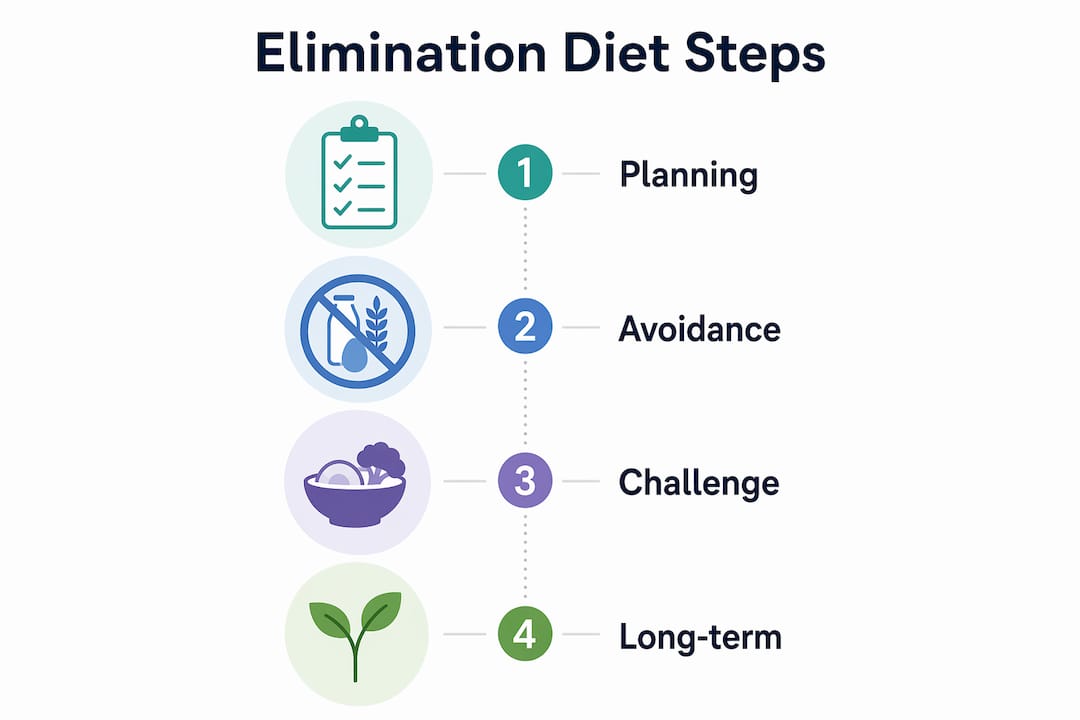
Elimination phase: Allergy UK recommends a trial elimination over several weeks. A trial elimination lasting two to four weeks is the clinical norm, with strict avoidance required during this period. Even a small exposure can reset your symptom baseline and make the results unreadable. Read every food label, including sauces, seasonings, and packaged snacks.
| Symptom log entry | What to record |
|---|---|
| Time and meal | Exact time and full description of what you ate |
| Portion size | Approximate quantity in grams or household measures |
| Symptoms | Type, location, and severity (rate 1–10) |
| Timing | How long after eating symptoms appeared |
| Other factors | Sleep quality, stress, hydration, menstrual cycle |
Reintroduction phase: Introduce one food at a time. A practical protocol is to eat the food for two to three days in gradually increasing portions, then observe for three to four days without it. If symptoms return reproducibly, that food is a confirmed trigger. If not, move to the next item. Rushing this phase is the most common mistake. Use the elimination diet checklist from Ukfoodintolerance to keep each reintroduction organised.
What are the nutritional risks of an elimination diet?
Removing major food groups without planning puts specific nutrients at risk. Calcium and vitamin D are vulnerable when dairy is excluded. Iron, B12, and protein variety suffer when meat or legumes are removed. Fibre intake can drop sharply if multiple grains are restricted simultaneously.
- Replace dairy with fortified plant milks (oat, soy, or almond with added calcium and D).
- Maintain protein variety using eggs, pulses, fish, or meat alternatives depending on what remains in your diet.
- Consider a short-term multivitamin if multiple groups are excluded, and discuss this with your GP or dietitian.
Pro Tip: If you are excluding more than two major food groups at once, ask your GP to request a ferritin, B12, and vitamin D blood test at the six-week mark. Catching a deficiency early is far easier than recovering from one.
Seek professional support immediately if you are pregnant, breastfeeding, managing a child’s diet, or have any history of disordered eating. Weight loss of more than 5% of your body weight within a month is a red flag requiring GP review.
Why do children and pregnancy need extra caution?
NICE guidance is clear: elimination diets for children should involve a competent dietitian and appropriate clinical oversight. Growth, bone density, and neurological development all depend on consistent nutrient supply. A poorly planned restriction in a child can cause harm within weeks.
For parents who suspect a food reaction in a child:
- Request an urgent GP review rather than removing foods independently.
- Ask for a referral to a paediatric dietitian or allergy clinic.
- Keep a detailed food and symptom diary to bring to the appointment.
- Check allergic reaction guidance so you know how to respond if a reaction occurs during any reintroduction trial.
During pregnancy and breastfeeding, do not self-restrict major food groups. Maternal nutrition directly affects foetal development and milk composition. Any suspected intolerance during pregnancy should be discussed with a midwife or obstetric dietitian before any change is made.
What mistakes do people make, and when should you stop?
The most common errors in the food sensitivity process are eliminating too many foods at once, treating a single test result as a confirmed diagnosis, and skipping the reintroduction phase entirely.
- Eliminating multiple foods simultaneously makes it impossible to identify which item caused improvement or worsening.
- Over-relying on IgG test results without rechallenge: structured elimination and reintroduction supervised by an HCPC-registered dietitian remains the accepted standard for confirming triggers.
- Ignoring cross-contamination on food labels, particularly for gluten and dairy.
- Not reintroducing foods leaves you on a permanently restricted diet with no confirmed reason for it.
The gold standard for identifying food triggers is a structured elimination-and-reintroduction diet supervised by an HCPC-registered dietitian. Many commercial sensitivity tests are not validated for diagnosis on their own.
Stop the protocol and contact your GP if you experience unexplained weight loss, severe or worsening symptoms, new symptoms not present before the diet began, or any sign of a serious allergic reaction.
How do you turn your test report into a safe elimination plan?
Start with a triage approach. Divide your flagged items into three groups: high priority (flagged strongly and matching your most frequent symptoms), medium priority (flagged but symptoms are mild or infrequent), and low priority (flagged but no obvious symptom link).
Test high-priority items first. Work through them one at a time during the reintroduction phase, following the two-to-three-day introduction and three-to-four-day observation window described above. Medium-priority items follow once high-priority testing is complete.
If your report suggests possible nutritional imbalances, ask your GP for targeted blood tests: ferritin, B12, and vitamin D are the most clinically relevant. A dietitian can then advise on supplementation or dietary adjustments based on confirmed results. For a structured approach to reading your sensitivity report, Ukfoodintolerance provides step-by-step guidance to help you prioritise and act confidently.
Key takeaways
A safe food elimination process combines GP-confirmed medical clearance, structured elimination and rechallenge, and professional dietetic support where needed.
| Point | Details |
|---|---|
| Rule out medical causes first | See your GP before restricting diet to exclude coeliac disease, IBD, and thyroid issues. |
| Use test reports as hypotheses | Bioresonance flags are starting points; rechallenge confirms or refutes each one. |
| Follow a two- to four-week elimination phase | Strict avoidance for this period gives your body a clear baseline to measure against. |
| Protect your nutrition | Monitor calcium, iron, B12, and vitamin D when excluding major food groups. |
| Ukfoodintolerance supports the process | The Ultimate and Core Single Intolerance Tests provide 48–72 hour reports to guide your elimination plan. |
A practical perspective on at-home testing and elimination diets
The stepwise approach described here is not overcautious. It reflects what actually works. People who skip the GP check and dive straight into a multi-food elimination often spend months on an unnecessarily restricted diet, sometimes missing a treatable condition like coeliac disease in the process.
At-home bioresonance testing has a genuine role in this process, but it is as a starting point, not a conclusion. The report gives you a prioritised list of suspects. The elimination-and-rechallenge protocol is the trial. Your body’s reproducible response is the verdict. That sequence matters, and Ukfoodintolerance’s resources, from the elimination checklist to the interpretation guides, are designed to support each stage of it.
Prioritise safety and balanced nutrition above speed. If something feels wrong during the process, stop and seek professional advice. There is no benefit to pushing through a protocol that is causing harm.
What Ukfoodintolerance offers for at-home sensitivity testing
Ukfoodintolerance gives you a clear, non-invasive route into the food sensitivity process without a clinic visit or a long wait. You collect a small hair sample at home, post it to a UK laboratory, and receive a detailed digital report within 48–72 hours.

Two test sizes are available. The Ultimate Single Intolerance Test screens over 1,100 food and non-food items, making it the right choice if your symptoms are wide-ranging or you want the broadest possible picture. The Core Single Intolerance Test covers 500 items and suits those with a shorter list of suspected triggers or a tighter budget. Both reports map directly to an elimination plan, showing you which items to prioritise and in what order.
Browse the full range of intolerance test options to find the right fit, or go straight to the elimination diet checklist to prepare your plan before your kit arrives.
Useful sources and further reading
- Food intolerance: NHS guidance — conditions to rule out and when to see a GP.
- Food intolerance: Allergy UK — professional oversight, elimination trial duration, and dietitian involvement.
- Food allergy in under 19s: NICE CG116 — paediatric elimination diet guidance and dietitian requirements.
- Elimination diet checklist: Ukfoodintolerance — practical step-by-step template for planning, elimination, and reintroduction phases.
- Bioresonance research and methodology: Ukfoodintolerance — educational material on how the testing approach works and its intended use.
- Interpreting intolerance results: Ukfoodintolerance — turning your report into a prioritised elimination plan.
Peer-reviewed clinical evidence supports structured elimination and rechallenge as the accepted method for confirming food triggers. Practice resources from NHS services, Allergy UK, and NICE provide the clinical framework. Ukfoodintolerance’s guides and checklists support the practical implementation of that framework at home.
This article provides general information about the food elimination process and is not a substitute for professional medical or dietetic advice. Always consult your GP or a registered dietitian for guidance specific to your own health situation.










Leave a Reply
Want to join the discussion?Feel free to contribute!