
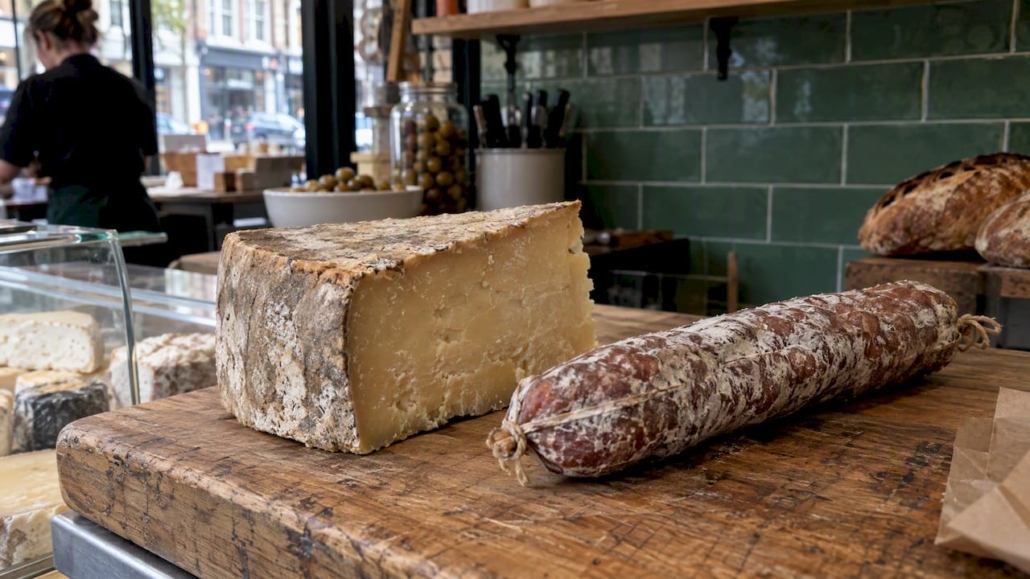
The foods with the most histamine are the aged, fermented and cured ones: fermented sausages, aged cheeses, sauerkraut, wine and beer. Many online lists go much further than that, and the evidence behind the longer lists is thin. This guide separates the foods that really do carry histamine from the ones that only appear on lists, answers the questions people ask most (tomatoes, diet cola, probiotics), and shows you a safe way to find out whether histamine is a problem for you.
TL;DR
- The British Dietetic Association (BDA) points to aged, fermented and cured foods, plus wine, champagne, beer and cider, as the main high-histamine items.
- Long “histamine lists” are inconsistent, and the idea of foods that “release” histamine has no reliable clinical evidence behind it.
- There is no known reliable test for histamine sensitivity. The BDA suggests a 2 to 4 week low-histamine trial, then gradual reintroduction.
- Freshness matters as much as the food itself: storage time and bacterial growth change histamine levels.
- Probiotics are not proven for histamine problems, so there is no product to recommend with confidence.
Table of Contents
- What histamine is and why food can matter
- The foods highest in histamine
- Are there histamines in tomatoes?
- Is diet cola high in histamine?
- “Histamine-releasing” foods: what the evidence says
- Freshness, storage and fermentation
- Medicines can play a part too
- Can a test confirm histamine intolerance?
- How to run a short low-histamine trial
- Low-histamine probiotics: is there a safe choice?
- Where a sensitivity test can help
- Our view on histamine lists
- Frequently asked questions
- Sources
What histamine is and why food can matter
Histamine is a natural chemical your body makes. It is also found in some foods, particularly those that have been aged, fermented or stored for a while. Most people break it down without noticing. The BDA explains that sensitivity to histamine and other vasoactive amines is thought to come from reduced activity of diamine oxidase (DAO), an enzyme in the lining of the small intestine that helps digest these compounds.
When that breakdown is slower, histamine from a meal may add up. Reported symptoms are wide-ranging, which is exactly why guesswork is risky: many of them overlap with other conditions. If you are having symptoms that worry you, such as swelling, breathing difficulty, fainting or hives, see your GP. Do not try to diet your way through them. If you want a fuller picture of symptoms and how the condition is discussed in the UK, our guide to histamine intolerance symptoms and testing covers it.
The foods highest in histamine
The most useful rule is a simple one: the longer a food has been aged, cured, fermented or left to mature, the more histamine it tends to contain. The BDA’s guidance highlights fermented sausages, various aged cheeses, sauerkraut and alcoholic drinks such as wine and beer as the foods with the highest levels of histamine.
Here is how that looks in everyday UK shopping terms. Use it as a starting map, not a rulebook.
| Group | Examples that commonly appear as high-histamine | Why they are on the list |
|---|---|---|
| Cheese | Cheddar, parmesan, blue cheese, aged gouda | Ripening and maturing |
| Cured and fermented meats | Salami and other fermented sausages | Fermentation and curing |
| Fermented vegetables and drinks | Sauerkraut, kimchi, kombucha | Fermentation |
| Alcohol | Wine, champagne, beer, cider | Fermentation |
| Fish | Tinned or stored fish, anchovies | Storage and bacterial breakdown |
The cheese and fermented-food examples reflect what several UK and international pages list, including the BDA’s guidance on the biggest sources. Where lists disagree, trust the pattern (aged, fermented, cured, stored) rather than any single food on a single page.
Why lists disagree with each other
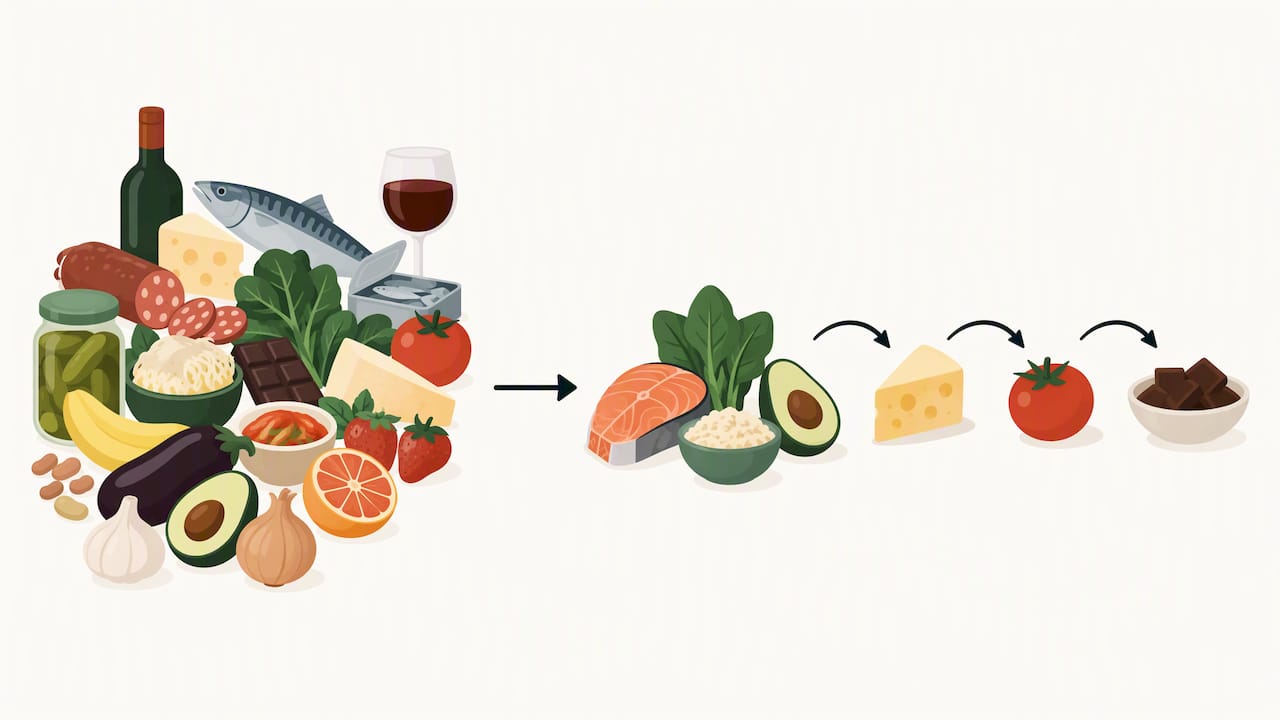
Search for a histamine foods list and you will find lists that include bananas, citrus, nuts, chocolate, avocado, spinach and more. The BDA notes that histamine-rich lists are inconsistent and often include foods that do not actually have high histamine content. The German-Austrian-Swiss guideline goes further and questions whether sorting foods purely by their histamine number makes sense, because tolerance depends on the whole food matrix, not just one chemical.
The practical lesson: a very long “avoid” list can leave you eating a narrow diet for no good reason. Start with the strongest suspects and widen only if you need to.
Are there histamines in tomatoes?
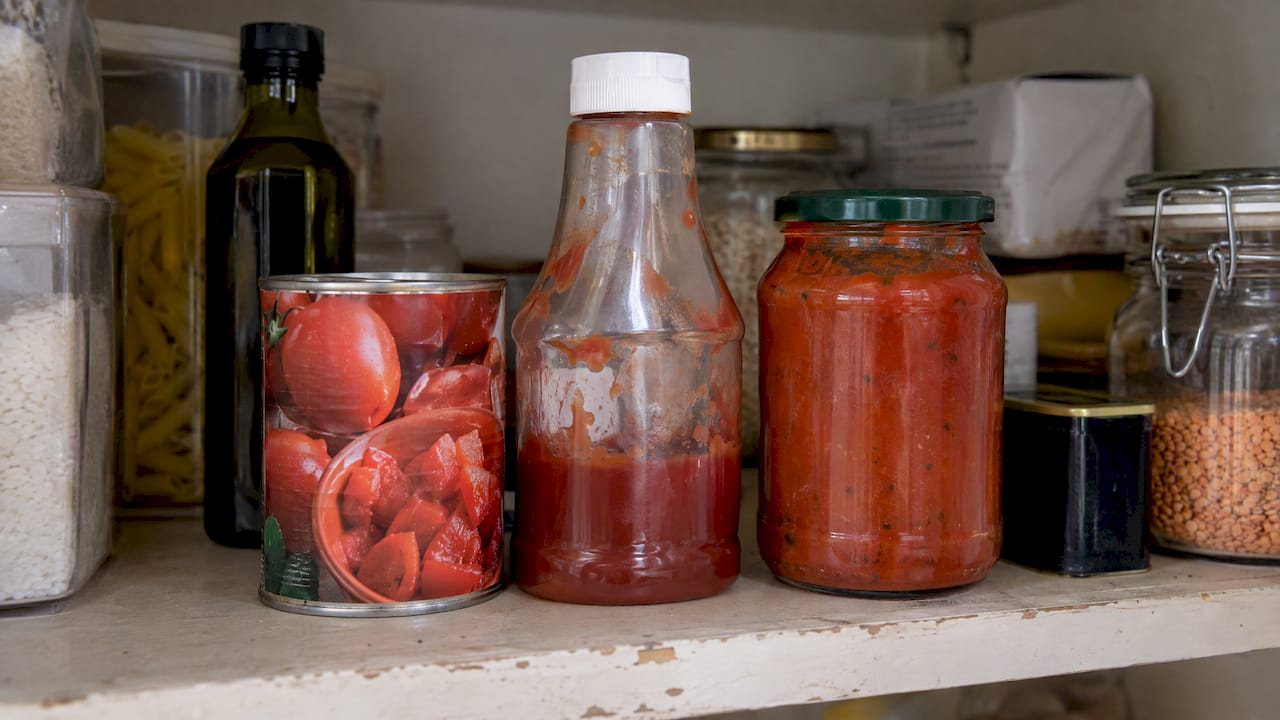
Yes, tomatoes naturally contain histamine, but far less than aged cheese or fermented sausage. The BDA still lists tomatoes among the foods to limit or avoid during a trial. That is why you see them on some lists and not others.
What this means for you: tomatoes belong in the “test it” group, not the “definitely a problem” group. If you cook with a lot of tomato sauce, ketchup or tinned tomatoes, remove them for the trial period, then bring them back and see what happens.
Is diet cola high in histamine?
Not according to the BDA. Its guidance names wine, champagne, beer and cider as the high-histamine drinks and says that all other drinks can be consumed freely. So if diet cola upsets you, histamine is not the obvious explanation. Caffeine, sweeteners or fizz may be worth thinking about instead, and a food diary will help you see the pattern.
“Histamine-releasing” foods: what the evidence says
Many lists have a second category: foods said to trigger your body to release its own histamine, often called histamine liberators. Citrus fruit, strawberries and some additives are typical entries. The German-Austrian-Swiss guideline states that there is no reliable evidence for the existence or clinical significance of histamine liberators, even though the concept is a common feature of elimination diet lists.
In plain terms: foods that contain histamine are a different matter from foods that supposedly make you release it. If a list asks you to cut out dozens of foods on the second basis, you can be more relaxed. Focus on the first group.
Freshness, storage and fermentation
Two identical foods can have very different histamine content depending on how they have been handled. The BDA says histamine levels vary with freshness, storage time and bacterial contamination, and advises trying fresh foods and freezing leftovers rather than keeping them in the fridge for days.
Some habits that follow from this:
- Buy fresh meat and fish and cook or freeze them quickly.
- Portion and freeze leftovers on the day you cook them.
- Be wary of food that has sat in the fridge for several days, smoked or tinned products, and anything that has been left out.
- Choose fresh over matured wherever you have the choice.
It is also a reminder of why fresh prepared food matters for your health in general, not only if histamine is your concern. Cooking from fresh ingredients also puts you in control of what goes on the plate, which makes a trial far easier to follow.
Medicines can play a part too
Food is not the only thing that affects how you handle histamine. Some medications, including ibuprofen, can inhibit DAO and stop histamine being broken down. Never stop or change a prescribed medicine on your own. If you suspect an interaction, ask your GP or pharmacist, and mention it to a dietitian if you see one.
Can a test confirm histamine intolerance?
The honest answer is no. The BDA states that there are no known reliable tests for histamine sensitivity. That includes any home kit, ours included. We would rather say so plainly than let you buy something expecting a histamine diagnosis. Our own page on what works and what doesn’t in a histamine intolerance test goes through it in more detail.
So how do you find out? With a structured, time-limited diet trial.
How to run a short low-histamine trial
The BDA says a short-term, low-histamine diet of 2 to 4 weeks can help identify whether high-histamine foods are causing symptoms. After that, foods are brought back gradually so you learn your own tolerance. A simple way to do it:
- Write down what you eat and how you feel for a week first. Include times, drinks and medicines. This is your baseline.
- Remove the main suspects for 2 to 4 weeks. Aged cheese, fermented and cured foods, wine, beer, champagne and cider come first. Add tomatoes if you eat them often.
- Eat fresh. Cook from fresh, freeze leftovers, avoid stored and tinned items.
- Keep nutrition in mind. Replace what you remove rather than just cutting back. This matters most for children and for anyone with other health conditions.
- Reintroduce one food at a time. Wait before adding the next, and note any reaction.
- Keep what you tolerate. The aim is the widest diet that keeps you well, not the narrowest one possible.
If you are bringing foods back, the principles of introducing new foods safely (one at a time, small amounts, careful notes) apply just as well to adults, although that guide is aimed at babies. For a full step-by-step approach, see our elimination diet checklist and our guide to identifying food triggers safely and effectively.
If your symptoms do not improve after a fair trial, histamine may not be the cause. The BDA also discusses dietary triggers alongside other factors such as mast cell mediators and gut microbiota, which is one reason a registered dietitian can be worth seeing for persistent or complex symptoms. Speak to your GP first if you have not yet had your symptoms checked.
Low-histamine probiotics: is there a safe choice?
People often ask for histamine-friendly probiotics because many probiotic foods (kefir, kombucha, yogurt, sauerkraut) are fermented and appear on high-histamine lists. The evidence for supplements is limited. The BDA says there is not enough evidence to recommend specific probiotic products for histamine sensitivity. More generally, NHS England guidance advises that probiotics should not be routinely prescribed in primary care because evidence of clinical effectiveness is limited.
So we will not name a “best” product. If you are considering a probiotic, talk to a pharmacist or dietitian first, and introduce it on its own during the reintroduction phase rather than at the same time as other changes. Otherwise you cannot tell what caused what.
Where a sensitivity test can help
Histamine is only one possible explanation for symptoms after eating. Many people we hear from have a broader mix of suspected triggers: wheat, dairy, eggs, additives and more. A shorter trial for histamine will not tell you about those.
This is where our at-home testing can fit. You send a hair sample from home, it is analysed at a UK-based laboratory, and you receive a digital report in 48 to 72 hours. Our tests use bio-resonance technology, are non-invasive, and are designed for intolerance screening: they give you a list of items to look at first in an elimination diet, not a medical diagnosis. If you want to understand the method and its limits, read our educational guide to bio-resonance technology and our research and methodology page.
Our Ultimate Plus Intolerance Test costs £140.99 one-off per person. You can also compare the rest of the range, from Core to Ultimate, as well as single Gluten and Dairy & Lactose tests, on our tests page. Results do not replace a GP, and they do not confirm histamine intolerance. They help you decide where to begin.
Our view on histamine lists
We see the same pattern again and again. Someone finds a list of 200 foods, cuts nearly everything out, feels a little better for a week (partly because they are eating simpler, fresher food), and then cannot work out what to put back. A month later they are tired, anxious about eating and no clearer.
Our advice is different. Start with the short list that has real support: aged, fermented and cured foods, and alcohol. Eat fresh. Keep the trial to a few weeks, not months. Reintroduce slowly, with notes. And be honest that no test, ours or anyone else’s, can tell you for certain that histamine is your problem.
Where we can help is in narrowing down the wider set of foods that might be involved, so your elimination diet is shorter and more targeted. Our guide to managing food triggers day to day and our overview of a histamine intolerance diet are good next reads.
— Rob
Frequently asked questions
What foods have the highest levels of histamine?
Aged, fermented and cured foods are at the top: fermented sausages, aged cheeses, sauerkraut, and wine, beer and similar drinks, according to the BDA. Fresh foods generally contain less. Storage matters too, so older leftovers can carry more than freshly cooked meals.
Are tomatoes high in histamine?
Tomatoes contain histamine, but much less than aged or fermented foods. The BDA still includes them in the foods to limit during a trial. Treat them as something to test and reintroduce, not something to ban for good.
Is there a test for histamine intolerance?
There are no known reliable tests for histamine sensitivity. The usual approach is a 2 to 4 week low-histamine trial followed by gradual reintroduction, ideally with advice from your GP or a registered dietitian. Our own tests screen for wider food and environmental sensitivities and do not diagnose histamine intolerance.
Do I need to avoid every food on a histamine list?
No. Lists are inconsistent and often include foods that are not truly high in histamine. Begin with the strongest suspects, keep the trial short, and add foods back one at a time so you keep as varied a diet as you can.
Sources
- Sensitivity to Histamine and other Vasoactive Amines (BDA, 2025 update)
- Guideline on management of suspected adverse reactions to ingested histamine (AWMF)
- Conditions for which over the counter items should not routinely be prescribed (NHS England guidance)
- Histamine intolerance and the low histamine diet (BDA)
- How can a dietitian help support those with Mast Cell Activation Syndrome (BDA)
- Why Fresh Prepared Food Matters for Your Health
- How to Introduce New Foods and Allergies Safely






Leave a Reply
Want to join the discussion?Feel free to contribute!