
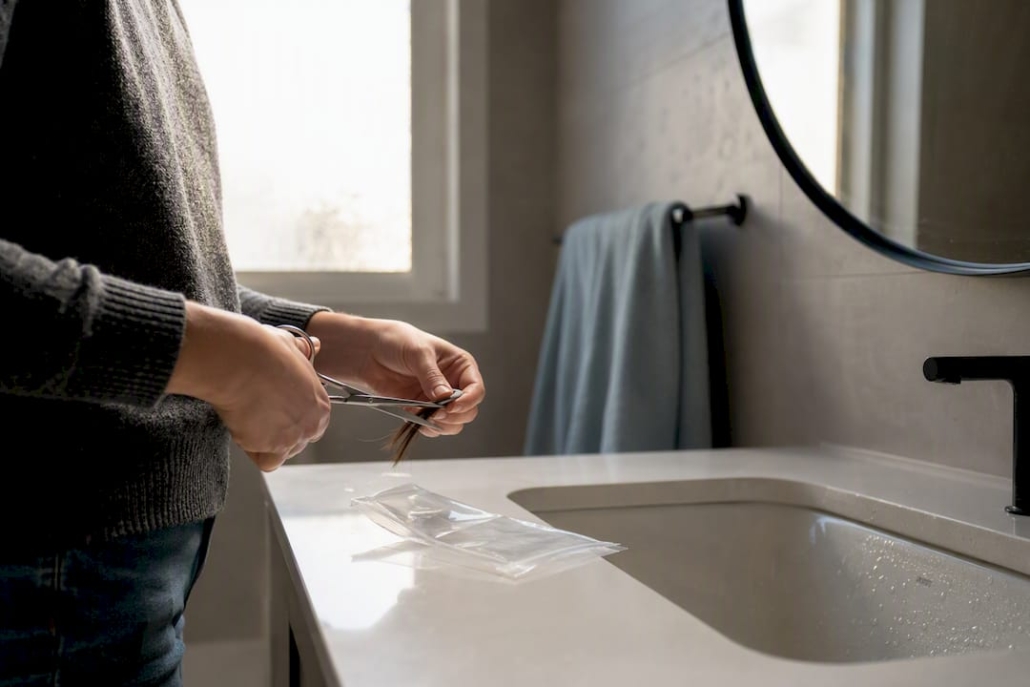
An at-home bioresonance hair test can flag dairy as a potential trigger and give you a practical starting point for an elimination diet, though it should never replace a clinical diagnosis on its own. The test works by analysing a small hair sample and returning a report you can act on almost immediately.
Here’s what that looks like in practice with Ukfoodintolerance:
- A hair sample, collected at home with no needles and no clinic visit
- Analysis at a UK-based laboratory
- A digital report delivered within a few days
Use that report as a map for a controlled elimination diet, paired with honest symptom tracking, rather than treating it as a final verdict.
Key Takeaways
At-home bioresonance hair testing works best as a structured starting point for an elimination diet, not as a standalone diagnosis for dairy intolerance.
| Point | Details |
|---|---|
| Test type matters | Bioresonance hair testing differs fundamentally from clinical lactose intolerance testing and should be understood as a distinct approach. |
| Evidence is limited | Academic reviews flag bioresonance and similar methods as lacking large-scale clinical trial support. |
| Reintroduce one food at a time | Removing several foods together makes it impossible to isolate which one actually caused your symptoms. |
| Watch for red flags | Severe reactions, suspected allergy symptoms, or nutritional concerns mean stopping the diet and seeing a doctor. |
| Ukfoodintolerance offers two clear options | The Core test screens a substantial number of items and the Ultimate test screens over 1,100, both with a digital report delivered in a few days. |
Table of Contents
- How does dairy intolerance testing actually work?
- How accurate are at-home dairy intolerance tests?
- What happens after you order a test?
- How should you use your results safely?
- Author perspective: how I’d use an at-home dairy intolerance test
- Which UK Food Intolerance test should you choose?
- Frequently asked questions
- Sources
How does dairy intolerance testing actually work?
Bioresonance testing works on the premise that different substances, including hair, carry a measurable energetic signature that a scanner can compare against a reference library of foods and everyday items. Ukfoodintolerance’s lab processes your hair sample using bioresonance technology, checking it against dairy proteins alongside hundreds or thousands of other substances, then scores each one by the strength of reaction detected.
This is not the same as clinical lactose intolerance testing, which measures your body’s chemical response to lactose directly. Bioresonance testing sits in a different category entirely, and academic reviews are upfront that methods like this, alongside electrodermal testing, carry limited scientific validation.
The workflow itself is simple:
- Order your test online and it arrives by post within days.
- Collect a small hair sample at home, following the included instructions.
- Post the sample to the UK laboratory using the pre-paid packaging.
- Receive your digital report within a few days of the lab receiving your sample.
Pro Tip: Collect your hair sample from close to the scalp rather than the ends, since older hair further from the root may have been exposed to washing products and environmental residue that some providers suggest could affect readings.
How accurate are at-home dairy intolerance tests?
Mainstream clinical bodies are consistent on one point: at-home sensitivity tests, including IgG-based kits and bioresonance methods, have not been through the kind of large randomised trials that would prove they reliably diagnose food intolerance. The Cleveland Clinic notes that allergy organisations generally advise against relying on IgG testing alone, partly because IgG antibodies often just reflect what you eat regularly rather than pointing to a genuine problem food.
Academic reviewers list several approaches, including bioresonance and hair analysis, among methods that lack strong clinical evidence, which means false positives and false negatives are both possible.
What this means practically:
- A flagged food is a lead worth investigating, not a confirmed diagnosis.
- Removing multiple foods at once without reintroducing them one at a time makes it hard to know what’s actually causing your symptoms.
- Results work best as a starting point for a structured trial, not as the final word.
No published, large-scale clinical trial has confirmed bioresonance testing as a standalone diagnostic tool, which is exactly why the elimination and reintroduction phase matters so much.
What happens after you order a test?
The process is designed to be straightforward from the moment you check out.
- Place your order. Choose between test options based on how many items you want screened.
- Collect your sample. Follow the included guide for collecting hair samples at home, keeping the sample clean and dry before posting.
- Post to the lab. Use the pre-paid envelope provided with your kit.
- Wait 48 to 72 hours. The UK laboratory processes your sample and compiles your digital report.
- Review your report. You’ll see a full list of tested items, flagged reactions ranked by strength, and explanatory notes to help you interpret each one.
A well-built report does more than list problem foods. It should highlight your highest-priority items, explain what a flagged result actually indicates, and point you towards further guidance rather than leaving you to interpret raw data alone. Reputable providers back this up with FAQs, written guides, and follow-up support so you’re not left guessing what to do next.
How should you use your results safely?
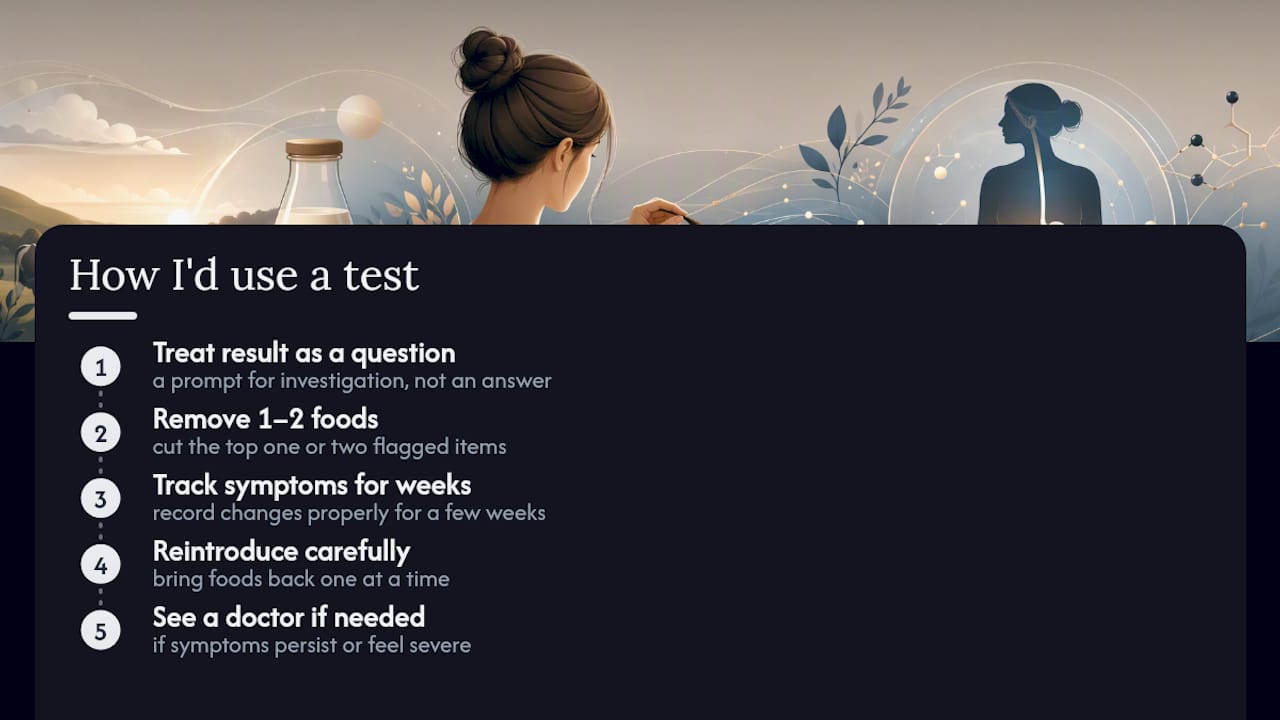
Treat your report as the opening move in a short, focused experiment rather than a permanent set of rules.
- Prioritise one or two highest-scoring foods first. Trying to eliminate everything flagged at once makes it almost impossible to isolate what’s actually causing symptoms.
- Remove the priority food completely for two to three weeks, tracking digestive symptoms, energy, skin, and mood daily in a simple food and symptom diary.
- Reintroduce one food at a time, waiting several days between each, and note any reaction before adding the next.
- Score your symptoms consistently, using a simple 1 to 10 scale so you can compare weeks fairly.
Ukfoodintolerance’s elimination diet checklist gives you a structured template for this, and the wider workflow for managing food sensitivities covers what comes after reintroduction too.
Pro Tip: If a food triggers a strong reaction on reintroduction, wait until symptoms fully settle, at least 48 hours, before testing the next item. Overlapping reactions muddy your results.
Stop the diet and see a doctor if you experience severe symptoms such as breathing difficulty, swelling, or widespread hives, since these point towards a possible allergy rather than an intolerance, and allergies need proper clinical assessment.
Author perspective: how I’d use an at-home dairy intolerance test
I’d treat a flagged result as a question, not an answer. Cut the top one or two items, track symptoms properly for a few weeks, then reintroduce carefully. What I’d avoid is stripping out a dozen foods at once because a report flagged them. That’s how people end up with restrictive, joyless diets that solve nothing because nobody can tell which food was ever the problem.
If symptoms persist past a few weeks of careful testing, or anything feels severe, see a doctor. A test report is a prompt for a conversation, not a substitute for one.
Which UK Food Intolerance test should you choose?
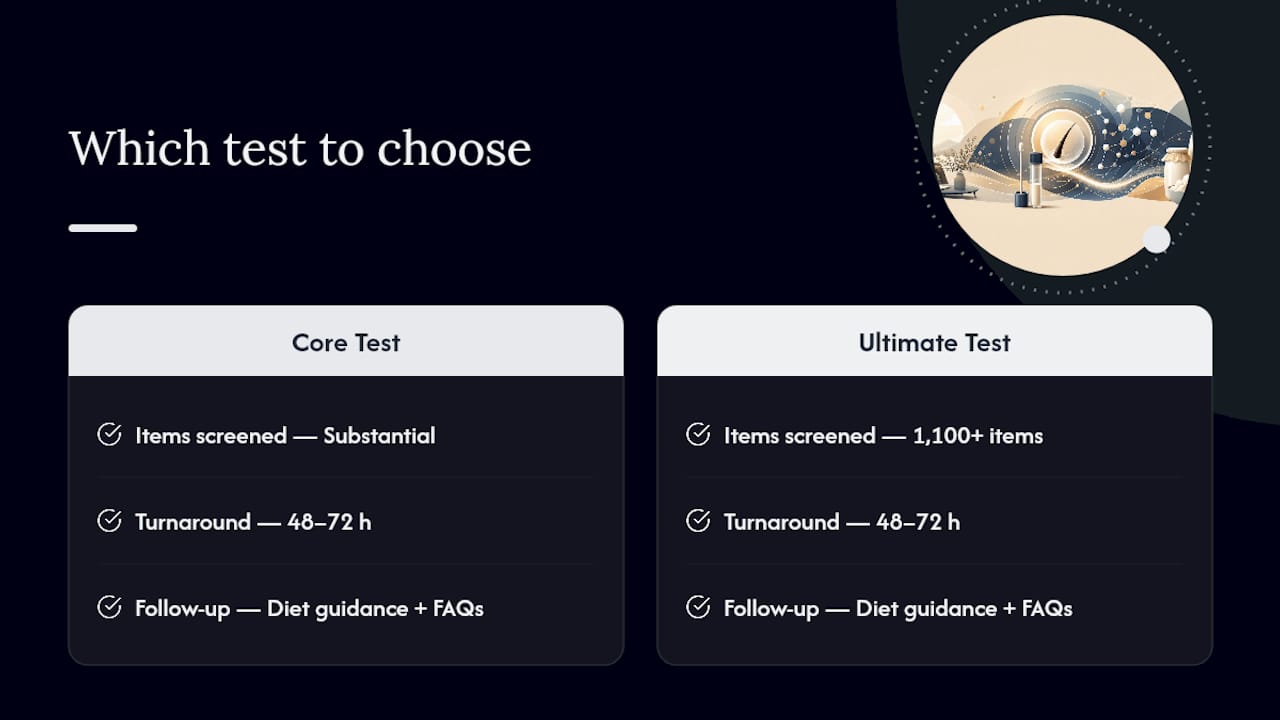
If you’re ready to put this into practice, Ukfoodintolerance gives you two straightforward routes into testing, both built around the same hair-sample workflow and UK lab turnaround already covered above.
The Core Single Intolerance Test screens a substantial number of items and suits anyone wanting a focused first look at potential dairy and food triggers without paying for maximum coverage. The Ultimate Single Intolerance Test goes further, screening over 1,100 items, which gives you a wider net if you suspect more than one trigger is at play, alongside dairy. Both arrive with the same 48 to 72 hour digital report, and both come with practical follow-up resources, including elimination-diet guidance and FAQs, so you’re not left staring at a spreadsheet of flagged foods wondering what to do next.
Browse the full range of intolerance tests to compare coverage and pricing, or check the detailed breakdown of what each test screens before you order.
Frequently asked questions
Can a hair sample really detect dairy intolerance?
It can flag dairy as a potential sensitivity for further investigation through an elimination diet, though it isn’t a clinical diagnostic tool in the way a doctor’s assessment is.
Is dairy intolerance testing the same as lactose intolerance testing?
No. Bioresonance hair testing and clinical lactose intolerance diagnostics use entirely different methods and measure different things, so they shouldn’t be confused with one another.
What’s the difference between lactose intolerance and a milk protein allergy?
Lactose intolerance involves difficulty digesting milk sugar, causing bloating or discomfort, while a milk protein allergy triggers an immune response and can cause more severe reactions, including hives or breathing difficulty, requiring urgent medical attention.
How long does it take to get results?
Ukfoodintolerance delivers digital reports within a few days of your hair sample reaching the UK laboratory.
Should I stop eating dairy completely after a flagged result?
Not straight away. Remove it for two to three weeks while tracking symptoms, then reintroduce it carefully to confirm whether it’s actually causing your symptoms.
When should I see a doctor instead of self-testing?
See a doctor if you have severe symptoms, suspect a true allergy, or notice no improvement after a careful elimination and reintroduction process.
Sources
For more on clinical caution around at-home tests, see Cleveland Clinic, Monash Lens, and Henry Ford Health.
- Do At-Home Food Sensitivity Tests Work? | Cleveland Clinic
- The science and pseudoscience of food allergy and intolerance testing – Monash Lens










Leave a Reply
Want to join the discussion?Feel free to contribute!