
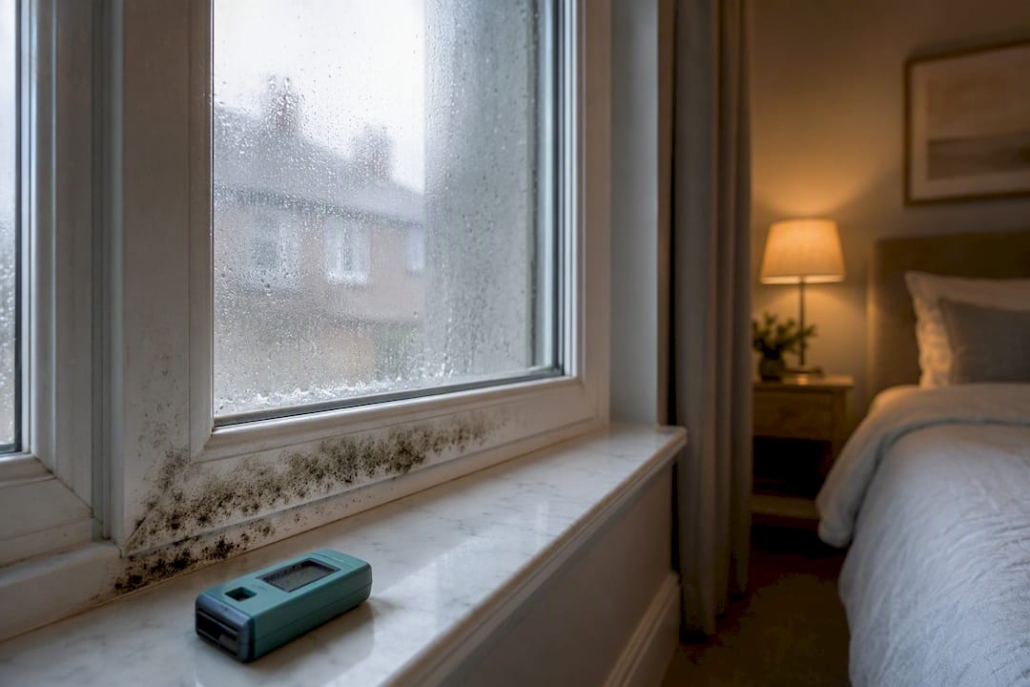
If you’re sneezing, wheezing, or breaking out in itchy skin whenever you’re at home, mould sensitivity is a genuine possibility, not a stretch. The three main clues are respiratory symptoms (sneezing, cough, wheeze), eye irritation (itchy, red, watery), and skin flares like eczema. The most useful first step is fixing dampness and improving ventilation; if you have asthma, or symptoms persist despite that, see your GP.
TL;DR:
- Most mould sensitivity symptoms involve persistent respiratory issues, eye irritation, and eczema flare-ups that improve when away from damp environments.
- Children, older adults, and those with asthma or eczema are at higher risk of severe reactions and complications from mould exposure.
- Mould triggers immediate allergic responses via IgE antibodies and irritates airways through volatile organic compounds, with symptoms usually peaking in autumn and winter.
- A diagnosis relies heavily on pattern recognition, symptom diaries, visible evidence of damp, and allergy testing, with severe symptoms requiring urgent medical attention.
- Preventing recurrence depends on controlling indoor moisture, improving ventilation, and conducting professional remediation for persistent issues rather than relying solely on cleaning.
Table of Contents
- Common symptoms of mould sensitivity: a system-by-system checklist
- Who is most at risk from mould exposure, and why
- How mould exposure causes symptoms, and when they show up
- How mould sensitivity is diagnosed
- Reducing mould exposure and managing symptoms at home
- How I approach suspected mould sensitivity cases
- When home fixes and a GP visit still leave questions unanswered
- Sources
- FAQ
Common symptoms of mould sensitivity: a system-by-system checklist
Mould sensitivity rarely announces itself with one obvious sign. It tends to show up as a cluster of low-grade, nagging symptoms that overlap with hay fever or a cold that never quite clears. The NHS inform guidance on damp and mould groups the most common reactions into three areas, and it’s worth checking your own symptoms against each one.
Respiratory symptoms are usually the first thing people notice:
- Sneezing and a runny or blocked nose
- A persistent cough, especially at night
- Wheezing or a tight, heavy feeling in the chest
- Postnasal drip that leaves your throat feeling raw
Eye symptoms often run alongside the respiratory signs:
- Itchy, red, or watery eyes
- Occasional blurred vision, though this usually only happens with more severe irritation
Skin symptoms are less talked about but just as real for many people:
- Itchy skin or unexplained localised rashes
- Flare-ups of existing eczema that seem to track with time spent in a particular room
Fatigue and headaches get mentioned a lot in mould discussions online, and they can accompany a reaction, but the evidence for these as a standalone marker of mould sensitivity is thin. Treat them as supporting signs, not proof, especially if they appear without any respiratory or skin symptoms at all.
Pro Tip: Keep a simple symptom diary for two weeks, noting the room you were in and the time of day. Mould-related reactions tend to be perennial rather than seasonal, but they often peak in autumn and winter when condensation builds up and windows stay shut.
One pattern worth paying attention to: symptoms that ease noticeably when you’re away from home, at work, or on holiday. That improvement away from the environment is one of the more reliable clues that your surroundings, not a virus or unrelated allergy, are driving what you’re feeling.
Who is most at risk from mould exposure, and why
Mould sensitivity isn’t evenly distributed. Some groups react faster, harder, and with more serious consequences, and knowing where you sit on that spectrum should shape how urgently you act.
- Children under 14, whose smaller airways and developing immune systems make them disproportionately vulnerable
- Older adults, who often have reduced lung reserve and more coexisting health conditions
- People with asthma or allergic rhinitis, whose airways are already primed to overreact to irritants
- People with atopic eczema, whose skin barrier is more easily disrupted by airborne triggers
- Immunosuppressed people, who have a reduced capacity to clear fungal spores from the airways
The scale of the childhood impact is worth sitting with. UK guidance links damp and mould exposure to around 5,000 new asthma cases and 8,500 lower respiratory infections in children aged 0 to 14 each year. If you’re a parent noticing a persistent cough or wheeze in a child who lives in a damp property, that’s not a coincidence worth dismissing.
How mould exposure causes symptoms, and when they show up
Mould triggers symptoms through two distinct routes, and knowing which one you’re dealing with helps explain your own timing.
The first is a classic allergic response. Your immune system produces IgE antibodies against mould spores, and exposure triggers an almost immediate reaction: sneezing, itchy eyes, and a blocked nose within minutes of walking into a damp room. The second route is irritation from mould’s volatile organic compounds (often shortened to mVOCs), the chemicals responsible for that musty smell. These don’t rely on an allergic mechanism at all; they simply irritate the airways and skin directly, and the effect can build cumulatively over weeks of low-level exposure rather than hitting all at once.
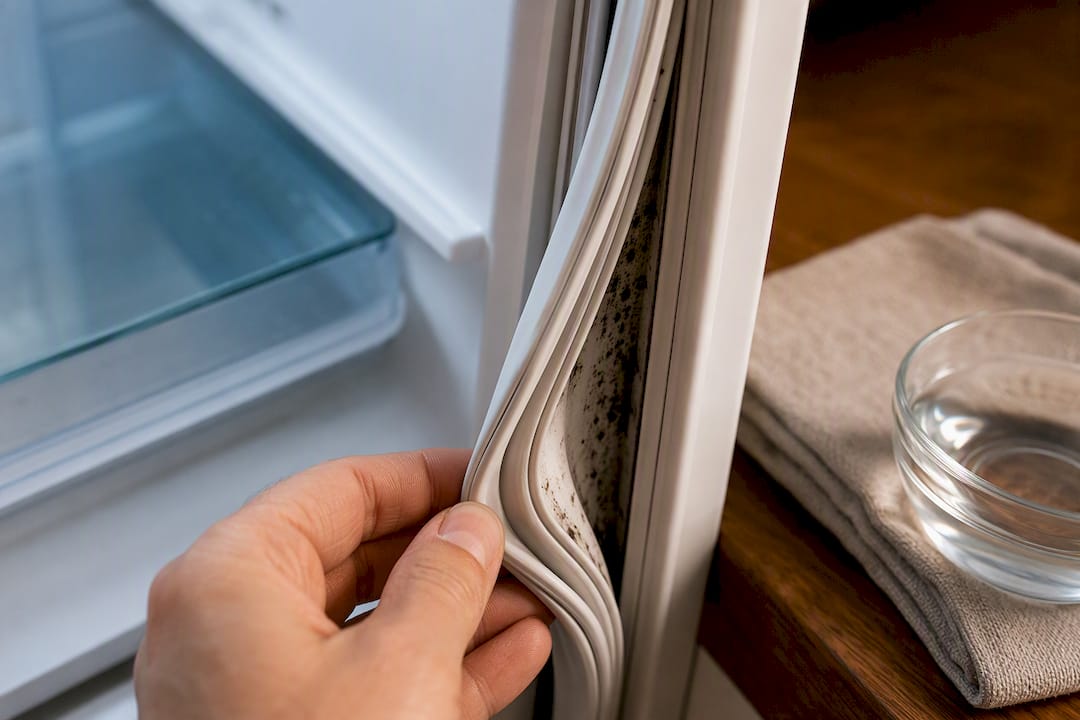
This is why hidden mould matters so much. Mould growing behind wallpaper, inside fridge door seals, or deep in ventilation ducts can drive weeks of vague symptoms with no visible black spots anywhere in sight, according to NHS inform. A musty smell with no obvious source is often the only warning sign you’ll get.
It’s worth being clear about what mould exposure does not reliably cause. It can trigger allergic reactions and worsen asthma, but there’s no credible evidence linking it to broad systemic effects such as memory loss, despite what some alternative health sites claim about widespread “mould toxicity.” The Cleveland Clinic’s overview is direct on this point, and it’s a useful corrective if you’ve been reading more alarming claims elsewhere online. If your symptoms improve reliably when you’re away from a particular building, that’s a stronger diagnostic clue than any symptom list on its own.
How mould sensitivity is diagnosed
A GP appointment for suspected mould sensitivity works best when you arrive prepared. Diagnosis here is mostly a matter of pattern recognition, not a single definitive test, so the quality of your history matters more than people expect.
- Bring a symptom diary. Note when symptoms started, which rooms trigger them, and whether they ease when you’re elsewhere for a few days.
- Bring photos of any visible damp or mould, plus a note of any musty smells, even without visible growth.
- Expect an allergy-focused history first. Your GP will ask about asthma, eczema, hay fever, and family history before considering any test.
- Skin prick testing or specific IgE blood tests may follow. These can confirm an allergic sensitisation to mould, though a negative result doesn’t fully rule out irritation from mVOCs, which isn’t allergy-mediated.
- Ask about referral if symptoms are severe or unclear. A respiratory or allergy specialist gets involved when asthma is poorly controlled or the picture doesn’t add up.
Certain signs justify moving faster than a routine appointment. Severe shortness of breath, chest tightness that doesn’t ease with your usual inhaler, or asthma symptoms that are clearly worsening are red flags that need prompt medical review, not a wait-and-see approach.
Reducing mould exposure and managing symptoms at home
Fixing the source of moisture matters more than any cleaning product you can buy. Allergy UK’s guidance is consistent on this: repeated, thorough moisture control prevents recurrence in a way that a one-off scrub never will. Improve ventilation, especially in bathrooms and kitchens, fix leaks promptly, and dry laundry outdoors or in a well-ventilated space rather than on radiators indoors, where it releases moisture straight into the room.
When it comes to actually cleaning mould, technique matters:
- Avoid spray cleaners on mould patches. Spraying aerosolises spores and can spread them further into the room you’re trying to clean.
- Use liquid-based wiping instead, working from the outside of the patch inward.
- Wear a mask rated for fine particles while cleaning, particularly if you’re already symptomatic.
- Wash affected soft furnishings, curtains, and bedding at a high temperature where the fabric allows.
If mould keeps returning despite your efforts, especially in a rented property, contact your landlord or local environmental health team rather than repeating the same clean every few weeks. Persistent damp is usually a structural issue (poor insulation, failed damp-proofing, inadequate ventilation) that no amount of wiping will fix on its own. For more extensive infestations, a professional remediation service is worth the cost.
On the medical side, your GP can offer antihistamines for allergic symptoms, a nasal steroid spray for ongoing congestion, or an adjusted inhaler regime if mould is worsening your asthma. Severe breathing difficulty is a reason to seek emergency care, not to wait for your next scheduled appointment.
Pro Tip: A musty smell with no visible mould, condensation that reappears on the same window every morning, or a room that always feels colder and damper than the rest of the house are all signs of hidden mould worth investigating behind cabinets, wallpaper, and fridge seals.
How I approach suspected mould sensitivity cases
My starting point is always the environment, not the symptom list. Fix the damp, improve ventilation, and see what happens before assuming anything more complicated is going on. If symptoms persist once the obvious moisture problems are dealt with, a GP review comes next, because asthma and allergic rhinitis need proper clinical assessment, not guesswork. Targeted testing has a place, but only once the basics have been ruled out. It’s a tool for narrowing down unclear triggers, never a substitute for medical care.
— Rob
When home fixes and a GP visit still leave questions unanswered
Fixing the damp and getting a GP’s opinion covers most cases, but some people do everything right and still can’t pin down what’s triggering their symptoms. That’s where at-home environmental sensitivity testing earns its place, as a follow-up step for unresolved cases, not a first move.

At-home intolerance testing involves collecting a hair sample at home, sending it to a laboratory, and receiving a digital report within a few days that covers a range of potential environmental and food-related triggers. It’s designed to sit alongside medical care, giving you additional information to discuss with your GP, not to replace the allergy history, skin prick tests, or specialist referral your doctor might recommend. For anyone whose symptoms don’t add up despite a damp-free home and a normal allergy work-up, that extra layer of insight can help narrow down what to investigate next. Take a look at the full range of tests to see what each one covers before deciding if it’s the right next step for you.
This article is general information, not a substitute for advice from a qualified doctor. Consult a qualified healthcare professional about your own circumstances before acting on anything here.
Sources
- Damp and mould indoors | NHS inform
- Mould allergy | Allergy UK
- Gov
- Black Mold Exposure: Symptoms, Risks & Treatment | Cleveland Clinic
FAQ
What are the warning signs of mould sensitivity?
The clearest signs are respiratory (sneezing, cough, wheeze, chest tightness), eye irritation (itchy, red, watery eyes), and skin reactions such as eczema flares, according to NHS inform. Fatigue and headaches sometimes accompany these but aren’t reliable standalone markers.
Can mould exposure affect the nervous system or cause memory problems?
No credible clinical evidence supports mould causing memory loss or broad neurological damage, despite claims about “mould toxicity” circulating online, according to the Cleveland Clinic. Mould can trigger allergic reactions and worsen asthma, but systemic claims beyond that aren’t well supported.
I think I’m allergic to mould. What should I do first?
Start by fixing any damp or ventilation problems at home, since removing the moisture source is the most effective step for reducing symptoms. See your GP if you have asthma, persistent symptoms, or if a symptom diary confirms your reactions track with time spent at home.
Is there a link between mould exposure and conditions like OCD?
There’s no established clinical evidence connecting mould exposure to OCD or other specific psychiatric conditions. Persistent, unexplained health worries linked to a damp home are worth raising with a GP, who can assess physical causes properly rather than leaving you to self-diagnose from online claims.
Can mould exposure trigger an asthma attack?
Yes, mould can worsen asthma and trigger attacks, and severe shortness of breath or chest tightness that doesn’t ease with your inhaler counts as a red flag needing urgent medical review. Don’t wait out a serious breathing episode at home.










Leave a Reply
Want to join the discussion?Feel free to contribute!