
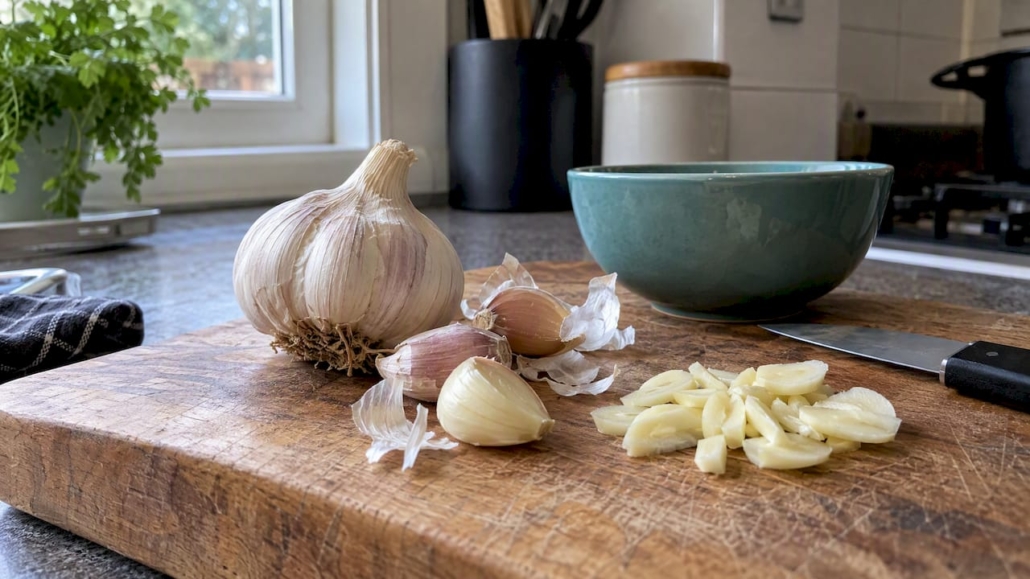
Garlic intolerance usually shows up as digestive discomfort: bloating, stomach pain and wind, often starting a few hours after a meal. It is not an allergy, and it rarely poses the same danger. It can still make everyday eating miserable, because garlic hides in so many sauces, stock cubes and ready meals. Below, we explain the symptoms, the timing, how to tell intolerance from allergy, and the sensible ways to find out what is behind it.
TL;DR
- Garlic intolerance most commonly causes bloating, stomach pain and wind, often after a large amount and sometimes hours after eating.
- Allergy is different: symptoms such as hives, swelling or breathing difficulty usually start within minutes and can follow tiny amounts. Call 999 if you have breathing trouble, throat swelling or collapse.
- Garlic is high in fructans, which many people with IBS find hard to digest, so your symptoms may have another explanation. Speak to your GP if they keep coming back.
- The NHS-recommended way to confirm an intolerance is a food and symptom diary, then removing the food and reintroducing it.
- A home test can be a starting point for that conversation and that diary, but it does not diagnose anything on its own.
Table of Contents
- What garlic intolerance feels like
- When symptoms start and how long they last
- Garlic allergy vs intolerance: how to tell them apart
- Why garlic upsets some stomachs
- Can you suddenly develop a garlic intolerance?
- How to find out if garlic is the problem
- What about a garlic intolerance test?
- Our perspective
- Our tests, if you want a place to start
- Living well with a garlic intolerance
- FAQ
- Sources
What garlic intolerance feels like
A food intolerance is not an immune reaction. The NHS explains that it differs from a food allergy and may cause diarrhoea, bloating, stomach pain, nausea, tiredness and other symptoms. With garlic, the gut is usually where you notice it first.
The pattern most people describe:
- Bloating. A tight, heavy, swollen feeling in your tummy, sometimes within a couple of hours of eating.
- Wind. More gas than usual, and often more noticeable than the pain.
- Stomach pain or cramps. Often dull and crampy rather than sharp.
- Loose stools or diarrhoea. Some people have the opposite and feel sluggish.
- Nausea. Usually mild, but it can be enough to put you off eating.
- Tiredness, headache or a general unwell feeling. The NHS lists these among the wider symptoms of food intolerance, though they are less specific and have many possible causes.
It is easy to blame garlic when the real culprit is the whole dish. A rich, creamy garlic pasta also contains dairy, wheat and fat. That is one reason keeping a record matters, and we come back to it below.
When symptoms start and how long they last
Timing is the biggest clue you have. Anaphylaxis UK says intolerance symptoms may begin from about 30 minutes after eating, sometimes much later, and that they often only appear after a large amount. The NHS says symptoms commonly appear a few hours after eating and can last hours or days.
That delay is what makes intolerance so frustrating to pin down. You may eat garlic at dinner, feel fine, and then wake up bloated. By then you have forgotten what was on the plate.
Two practical points follow from this:
- Dose matters. A little garlic in a stew may cause nothing, while a whole garlic bread plus a garlicky dip does. Many people with intolerance can handle small amounts.
- Look back over the previous day. When symptoms arrive late, check meals from the past 24 hours, not just the last one.
Garlic allergy vs intolerance: how to tell them apart
This is the most important distinction in the article. BSACI says a food allergy is an immune-system reaction, whereas intolerance does not involve the immune system and is generally less dangerous.
| Intolerance | Allergy | |
|---|---|---|
| Immune system involved | No | Yes |
| Typical onset | From about 30 minutes, often hours later | Usually within minutes |
| Amount needed | Often a larger amount | Can be a very small amount |
| Typical symptoms | Bloating, stomach pain, wind, diarrhoea, nausea | Hives, swelling, mouth or throat symptoms, vomiting, breathing difficulty |
| Seriousness | Uncomfortable, generally less dangerous | Can be life-threatening |
Anaphylaxis UK also says a true onion or garlic allergy is very rare in the UK, although exact figures are not available. So if you are bloated after garlic, intolerance or another gut issue is far more likely than allergy.
Signs that need urgent help
Anaphylaxis UK lists the serious “ABC” symptoms as airway swelling, a hoarse voice, difficulty swallowing, wheeze, breathing difficulty, a persistent cough, dizziness, collapse and loss of consciousness. If you or your child has any of these after eating garlic, call 999. Do not wait to see whether it passes.
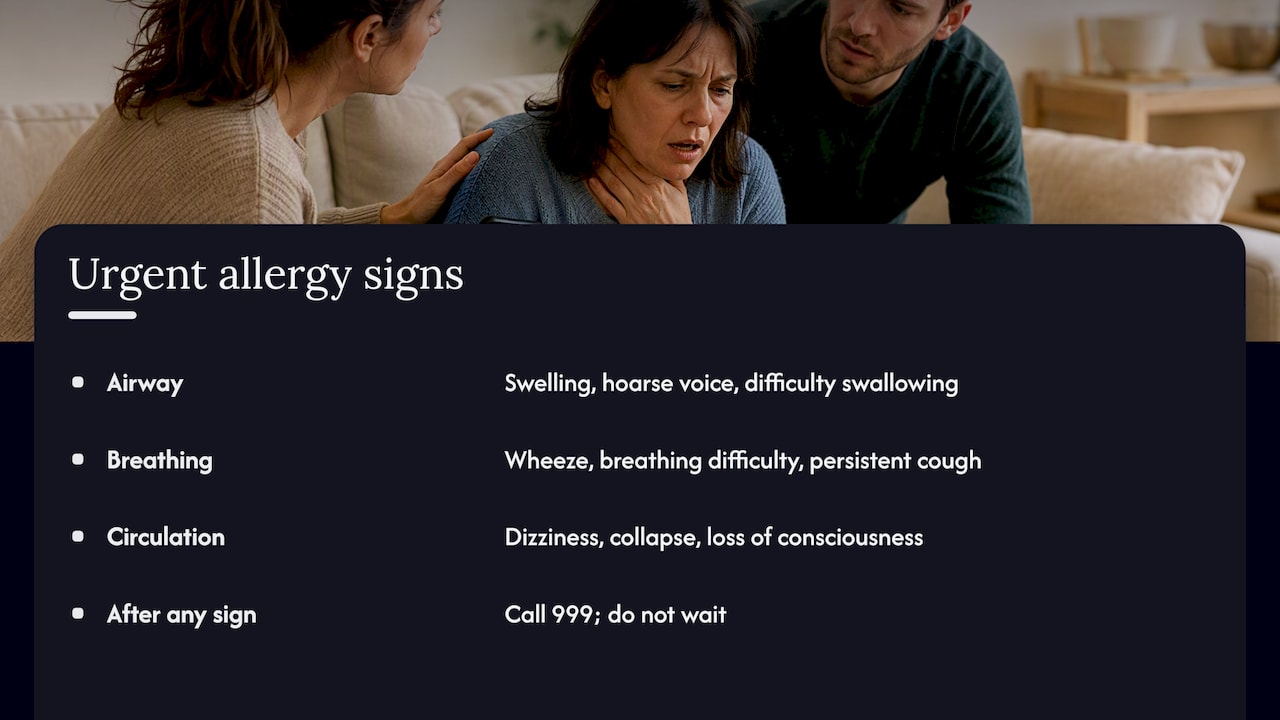
For milder allergy signs, such as a red itchy rash, swelling of the lips or face, or a tingling mouth, see your GP and ask about referral to an allergy specialist. Allergy is best diagnosed by a specialist using your clinical history and appropriate tests, according to BSACI. Anaphylaxis UK adds that the most important part of that process is an allergy-focused history, including your symptoms and how quickly they started.
Why garlic upsets some stomachs
Garlic is high in fructans, a type of carbohydrate in the FODMAP family. BBC Food reports that fructans are poorly absorbed, so gut bacteria ferment them and produce gas, which can trigger bloating in people with IBS. Anaphylaxis UK makes the same point.
This matters for two reasons:
- Your reaction may not be about garlic alone. Onions, leeks and wheat are also high in fructans. If garlic bothers you, it is worth noticing whether those do too.
- Bloating has other possible causes. It can be linked to coeliac disease, IBS or other intolerances such as lactose intolerance. That is why persistent symptoms deserve a GP conversation rather than guesswork.
Can you suddenly develop a garlic intolerance?
Many people say it feels sudden: they ate garlic happily for years, then one day it stopped agreeing with them. We cannot point to a trial that explains this for garlic specifically, so we will not pretend to. What we can say is that gut symptoms can change over time, and that a new reaction to garlic is a reason to look at the whole picture: stress, other foods eaten alongside it, a recent stomach bug, and any underlying gut condition.
The practical answer is the same either way. Record what happens, and if the pattern repeats, raise it with your GP rather than assuming garlic is the only cause.
How to find out if garlic is the problem
The NHS suggests that if you suspect an intolerance, you avoid the suspected food and reintroduce it after a few weeks to see whether symptoms return. It also advises discussing recurring symptoms with your GP, who may suggest a food and symptom diary and an elimination diet followed by reintroduction, sometimes with a dietitian’s support.
Here is a simple way to prepare for that:
- Keep a diary for two weeks. Write down everything you eat and drink, the time, and any symptoms with their timing. Include sauces, stock and seasoning.
- Look for patterns. Do symptoms follow garlic-heavy meals, or do they appear with other foods too?
- Speak to your GP before cutting out whole food groups, especially for children, or if you have weight loss, blood in your stool, or symptoms that wake you at night.
- Remove garlic fully for a few weeks, including hidden sources, if your GP or dietitian agrees.
- Reintroduce it in a small, planned amount and note what happens.
If you are reintroducing foods for a child, this guide on how to introduce new foods safely covers the gentle, one-at-a-time approach that suits young eaters.
Where garlic hides
Elimination only works if it is complete. Garlic often appears in:
- Stock cubes, gravy granules and bouillon
- Pasta sauces, curry pastes and pizza bases
- Garlic bread, hummus, pesto and aioli
- Marinades, dressings and seasoning blends
- Crisps, flavoured snacks and ready meals
Check ingredient lists. Garlic is not one of the major allergens that must be highlighted on UK labels, so it may be listed simply as “garlic” or hidden inside “flavouring” or “seasoning”.
What about a garlic intolerance test?
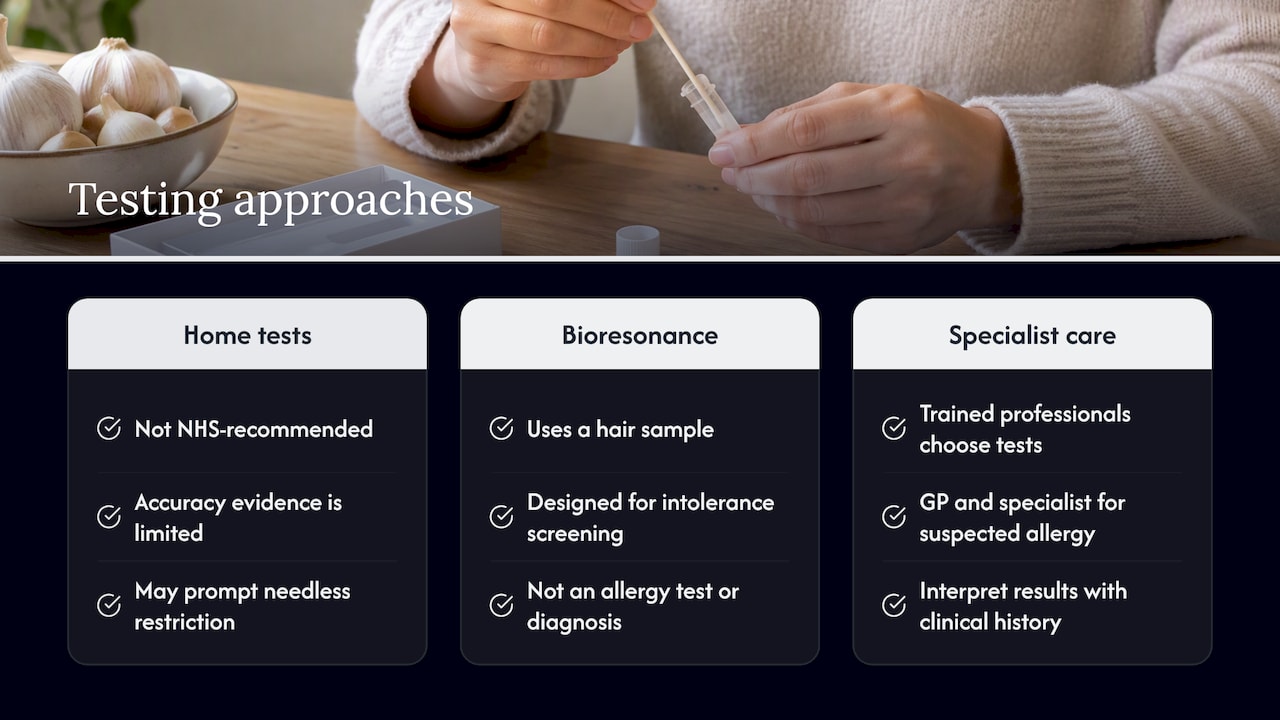
We want to be straight with you here, because this is a topic where people can be misled. The NHS says home tests claiming to diagnose food intolerance are not recommended, because the evidence for their accuracy is limited and they may lead people to restrict their diet unnecessarily. Anaphylaxis UK likewise advises that test choice and interpretation should be handled by trained healthcare professionals, not inferred from a single home result.
We respect that, and it shapes how we describe what we do. Our tests use bioresonance technology on a hair sample and are designed for intolerance screening. They are not an allergy test, and they do not replace a medical diagnosis. If you suspect a true allergy, you need a GP and a specialist, not a home kit. You can read more about the difference in our guide to sensitivity and allergy test types.
Where a screening report can help is as a starting point. If garlic, onion or other foods appear in your results, you have a shortlist to check against your diary and to take to your GP or dietitian, instead of starting an elimination diet blind. Our guide to at-home intolerance tests goes through the benefits and the risks plainly.
Our perspective
We hear from many people who have spent months feeling bloated and unsure why. They are often relieved just to have somewhere to begin. We believe that is a fair use of a screening test: it gives you a list of foods to look at more closely, not a verdict.
We also think the honest limits matter. A result is only useful when you check it against how you actually feel. That means keeping a diary, removing foods in a planned way and reintroducing them to see what really happens. It also means not cutting out lots of foods on the strength of one report, and seeing a GP if symptoms are severe, persistent or accompanied by anything worrying.
Garlic is a good example. It is one of the most common foods people suspect, yet the fructans in it can cause trouble for reasons that have nothing to do with a specific sensitivity. A report that flags garlic, plus a diary that agrees, plus a calm reintroduction, gives you far more confidence than any one of those alone.
— Rob
Our tests, if you want a place to start
If you would like a screening report to work from, our Ultimate Plus Intolerance Test costs £140.99 one-off per person. You collect a hair sample at home, send it to a UK laboratory and receive a digital report, typically within 48 to 72 hours, covering a panel of up to 1,450 items. It comes with guidance for using the results in an elimination diet.
Prefer to compare? See the full range, including the Core, Essential, Premium and Ultimate options, on our intolerance tests page. Our guide to digital intolerance reports explains what the report looks like and how to use it safely.
Living well with a garlic intolerance
Most people do not need to avoid garlic completely forever. What helps depends on you, and a dietitian can tailor it. These are common, practical steps:
- Test your own limit. Some people tolerate a small amount cooked into a dish but not a raw clove or a heavy garlic sauce.
- Read labels every time. Recipes change, and garlic powder is common in processed food.
- Build flavour another way. Fresh herbs, lemon, ginger, chives (the green tops), paprika and good olive oil all add depth without garlic.
- Eat smaller portions of rich meals. Since dose often matters, a lighter portion may be easier on your gut.
- Cook from scratch more often. It is the surest way to know what is in your food.
- Keep the diary going while you adjust, so you can see what is really helping.
If you are cutting several foods and feel unsure about nutrition, ask your GP about seeing a dietitian. That is especially worth doing for children.
FAQ
Can you suddenly develop an intolerance to garlic?
It can feel that way, and symptoms do sometimes appear later in life. The cause is not always garlic itself, though. Stress, other foods in the meal, a recent illness or a gut condition such as IBS can all play a part, so talk to your GP if it keeps happening.
What helps garlic intolerance?
The main step is to reduce or avoid garlic once you have confirmed it is a trigger, ideally with your GP or a dietitian guiding a structured removal and reintroduction. Reading labels for hidden garlic and using herbs, lemon and spices for flavour makes this much easier.
Why is my stomach so sensitive to garlic?
Garlic is high in fructans, which are poorly absorbed in the gut. Bacteria ferment them and produce gas, which can cause bloating, particularly if you have IBS. A sensitive reaction may also reflect another condition, so persistent symptoms are worth discussing with your GP.
How can you tell if you have a garlic allergy?
Allergy symptoms usually begin within minutes and can follow a very small amount. They may include hives, swelling of the face or mouth, vomiting or difficulty breathing. If you have breathing difficulty, throat swelling or collapse, call 999. For milder symptoms, see your GP about specialist testing.









Leave a Reply
Want to join the discussion?Feel free to contribute!