

Coeliac disease is an autoimmune condition that damages the small intestine, while wheat intolerance, known clinically as non-coeliac gluten sensitivity, causes similar symptoms without the autoimmune markers or gut damage. If you are experiencing symptoms, the NHS and Coeliac UK both advise keeping gluten in your diet and seeing your GP before changing what you eat.
TL;DR:
- Coeliac testing starts with blood tests for total IgA and tissue transglutaminase antibodies, followed by a small bowel biopsy if results are positive.
- Keep eating gluten across multiple meals daily in the weeks before testing, because stopping can lower antibody levels and produce a false negative.
- Doctors diagnose non coeliac gluten sensitivity only after ruling out coeliac disease and wheat allergy, then use symptom tracking to guide dietary changes.
- Wheat allergy symptoms can appear within minutes, including swelling or breathing difficulty; severe reactions require urgent care and a prescribed epinephrine plan.
- About one in four people with coeliac disease are first treated for irritable bowel syndrome, so ask your GP directly about coeliac testing.
Table of Contents
- What is coeliac disease: cause, how it affects the body and key facts
- What clinicians mean by wheat intolerance or non-coeliac gluten sensitivity
- Wheat allergy: how it differs in speed, testing and emergency care
- Quick comparison: coeliac disease, wheat intolerance and wheat allergy
- Symptoms: what overlaps and what points towards coeliac disease
- Diagnosis and testing: the pathway, why you must stay on gluten, and how NCGS is confirmed
- What to do next: a checklist if you are experiencing symptoms
- Treatment and management: what long-term care looks like for each condition
- How at-home intolerance screening can support your next steps
- Why clinical confirmation should always come first
- Structured at-home screening to help you prepare for testing
- FAQ
- Sources
What is coeliac disease: cause, how it affects the body and key facts
Coeliac disease happens when your immune system reacts abnormally to gluten, a protein found in wheat, barley and rye. That reaction triggers inflammation that damages the lining of your small bowel, which is where you absorb most of your nutrients. Over time, this damage can lead to malabsorption, meaning your body struggles to take in iron, calcium and other essentials even when your diet looks balanced.
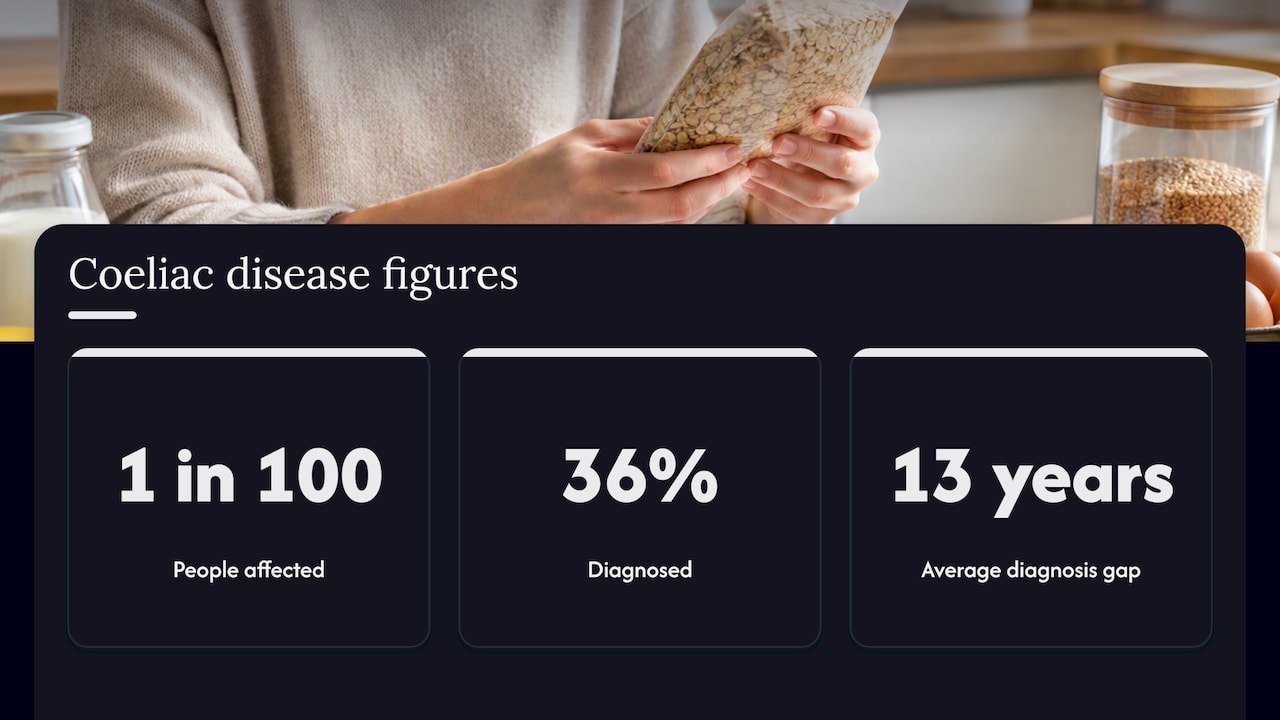
Around 1 in 100 people are affected, yet only about 36% are diagnosed, and the average gap between symptoms starting and a confirmed diagnosis is roughly 13 years. That delay matters because untreated coeliac disease carries real risks: iron-deficiency anaemia, weakened bones from calcium loss, and a skin condition called dermatitis herpetiformis that causes an itchy, blistering rash.
Catching it early changes the picture considerably. Once gluten is removed from the diet under proper guidance, the gut lining typically heals and nutrient absorption recovers. That is why getting a clear diagnosis, rather than guessing or self-treating, makes such a difference to long-term health.
What clinicians mean by wheat intolerance or non-coeliac gluten sensitivity
Non-coeliac gluten sensitivity, often called wheat intolerance in everyday language, describes symptoms that look like coeliac disease but without the antibodies or intestinal damage that define it. There is currently no validated blood test or biopsy marker for this condition, which means doctors diagnose it by ruling out coeliac disease and wheat allergy first.
Gluten itself may not even be the main culprit for everyone affected. Some researchers point to other components in wheat, particularly fermentable carbohydrates known as FODMAPs, as possible triggers for bloating and digestive discomfort. Because the underlying cause is still debated, management tends to focus on tracking symptoms and adjusting diet under supervision rather than following a single fixed protocol. This is a practical, trial-based approach rather than a one-size-fits-all fix, and working with a dietitian helps you avoid cutting out foods unnecessarily.
Wheat allergy: how it differs in speed, testing and emergency care
Wheat allergy works through a completely different mechanism: your immune system produces IgE antibodies that react to wheat proteins within minutes, sometimes seconds, of exposure. Symptoms can include hives, swelling, wheezing or, in severe cases, anaphylaxis, which needs emergency treatment.
Diagnosis relies on skin prick testing or a blood test measuring specific IgE levels, both very different from the serology and biopsy route used for coeliac disease. Management centres on strict wheat avoidance and, for anyone at risk of severe reactions, carrying prescribed epinephrine and having an emergency plan in place. This rapid, allergic response sets wheat allergy clearly apart from the slower, immune-driven process behind coeliac disease and the diagnosis of exclusion that applies to wheat intolerance.
Quick comparison: coeliac disease, wheat intolerance and wheat allergy
| Feature | Coeliac disease | Wheat intolerance (NCGS) | Wheat allergy |
|---|---|---|---|
| Cause/mechanism | Autoimmune reaction to gluten | Unclear; possibly gluten or other wheat components like FODMAPs | IgE-mediated allergic reaction |
| Symptom timing | Hours to days after eating | Variable, often delayed | Minutes after eating |
| Intestinal damage | Yes | No | No |
| Diagnostic test | Blood test (serology) then biopsy | None standardised; diagnosis of exclusion | Skin prick or specific IgE blood test |
| Usual management | Lifelong gluten-free diet | Symptom-led dietary changes | Strict wheat avoidance, emergency plan if severe |
Only clinical testing confirms coeliac disease, so this table is a starting point for conversation with your GP rather than a substitute for it.
Symptoms: what overlaps and what points towards coeliac disease
Many symptoms of coeliac disease and wheat intolerance look identical on the surface, which is exactly why testing matters rather than guesswork. Both can cause bloating, abdominal pain, diarrhoea and fatigue that leave you feeling drained after meals.
- Shared symptoms include bloating, stomach cramps, diarrhoea or constipation, and general tiredness.
- Signs that point more strongly towards coeliac disease include unexplained iron-deficiency anaemia, tingling or numbness from nerve involvement, and an itchy blistering rash known as dermatitis herpetiformis.
- Wheat allergy stands apart through its speed: hives, facial swelling or breathing difficulty appearing within minutes rather than hours.
- A symptom diary noting what you ate, when symptoms started and how long they lasted gives your GP something concrete to work from.
If you notice any of the extra-intestinal signs alongside digestive symptoms, mention them specifically when you book your GP appointment.
Diagnosis and testing: the pathway, why you must stay on gluten, and how NCGS is confirmed
Getting a reliable diagnosis depends almost entirely on timing. The NHS diagnostic pathway for coeliac disease follows two clear steps:
- A blood test checks total IgA and tissue transglutaminase IgA antibodies, which rise when your immune system is actively reacting to gluten.
- If that result is positive, you are referred for an endoscopic biopsy of the small intestine to confirm the damage directly.
Both steps only work if you are still eating gluten. Stopping gluten before testing, even for a short period, can cause antibody levels to fall and the gut lining to begin healing, leading to a false negative. Coeliac UK recommends keeping gluten in your diet across multiple meals a day in the weeks leading up to testing, so ask your GP for specific guidance before you change anything.
Statistic: Around 1 in 4 people with coeliac disease are initially treated for irritable bowel syndrome before the correct diagnosis is reached, which is one reason it helps to ask your GP directly for coeliac testing rather than accepting an IBS label by default.
When coeliac disease and wheat allergy have both been ruled out, and symptoms persist, non-coeliac gluten sensitivity becomes the working explanation. There is no blood test or scan that confirms it; it is reached by exclusion, with your GP or a gastroenterologist guiding the process.
What to do next: a checklist if you are experiencing symptoms
Protecting your diagnostic options starts with a few straightforward steps.
- Keep eating gluten as normal until all recommended tests are complete.
- Book a GP appointment and ask specifically for coeliac disease blood tests.
- Start a food and symptom diary, noting timing, triggers and severity.
- Seek urgent care if you experience signs of severe allergy such as swelling or breathing difficulty, or red-flag symptoms like unexplained weight loss.
Pro Tip: Bring your symptom diary and any family history of coeliac disease to your GP appointment; both help speed up referral for the right tests.
Treatment and management: what long-term care looks like for each condition
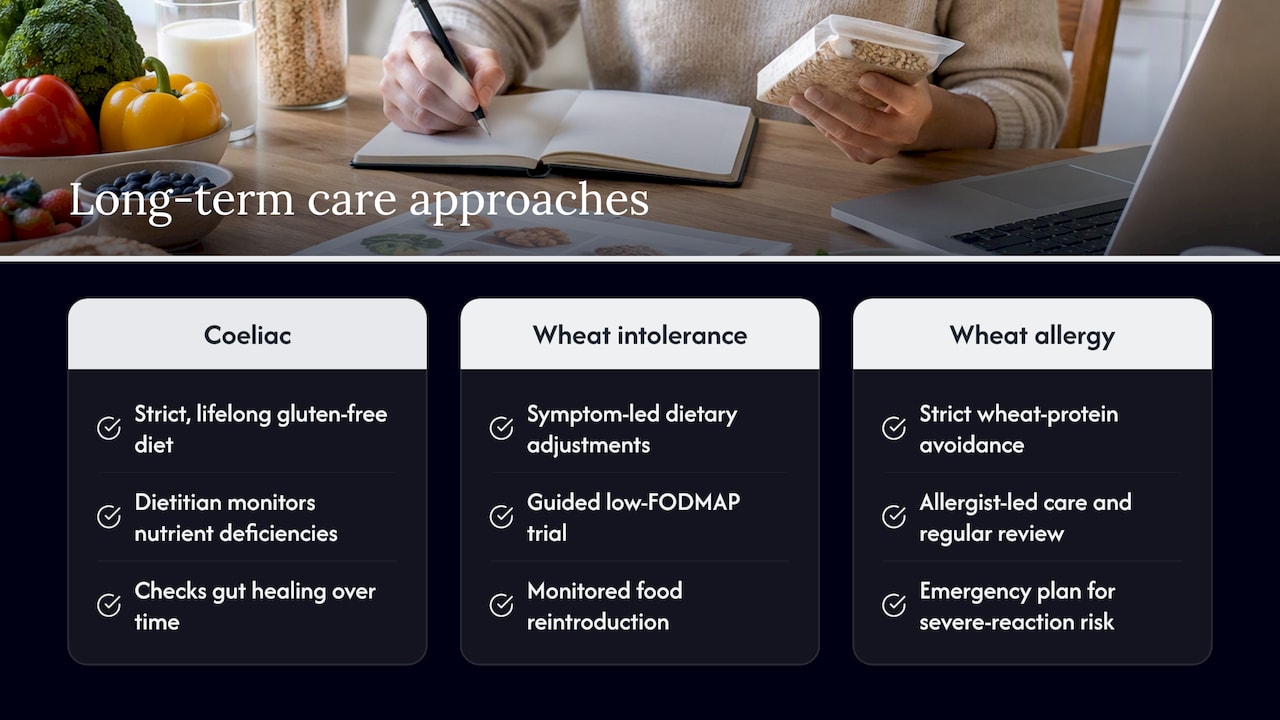
Once you have a confirmed diagnosis, the path forward differs considerably between conditions. Coeliac disease requires a strict, lifelong gluten-free diet, usually supported by a dietitian who monitors for nutrient deficiencies and checks that your gut is healing properly over time.
Wheat intolerance tends to be managed more flexibly, through symptom-led dietary adjustments. Some people find a structured low-FODMAP trial helpful under professional guidance, followed by a careful, monitored reintroduction of foods to identify specific triggers.
Wheat allergy calls for allergist-led care: strict avoidance of wheat proteins, regular review, and a clear emergency action plan for anyone at risk of a severe reaction.
How at-home intolerance screening can support your next steps
Once clinical testing has ruled out coeliac disease and wheat allergy, structured at-home screening can help you organise what comes next. Our Core Test, Essential Test, Premium Test and more use a simple hair sample, processed at a UK laboratory, with digital reports delivered in 48 to 72 hours covering a wide panel of items.
This kind of screening is not a diagnostic test for coeliac disease. It works alongside clinical care, helping you spot patterns worth discussing with your GP or prioritise which foods to test or eliminate first as part of a structured reintroduction plan, guided by our interpretation resources.
Why clinical confirmation should always come first
Permanent diet changes deserve a proper diagnosis behind them, not a guess made under pressure from ongoing symptoms. Keep gluten in your diet, get tested, and treat screening tools and dietitian support as companions to that process rather than replacements for it. Tracking your symptoms carefully alongside clinical testing gives you the clearest path to an answer that actually fits your body.
— Rob
Structured at-home screening to help you prepare for testing
If you have already completed clinical testing and want help structuring an elimination diet or spotting patterns worth raising with your GP, our range of at-home tests gives you a practical starting point. We process every sample at a UK laboratory and deliver digital reports within 48 to 72 hours, with clear guidance for interpreting your results.

- Panels range from our more affordable options through to the Ultimate Plus Intolerance Test at £140.99 one-off per person.
- Sample collection is non-invasive and done entirely at home, with step-by-step guidance provided.
- Results come with practical support for building or refining an elimination diet.
| Test | Best for | Price |
|---|---|---|
| Ultimate Plus Intolerance Test | Readers wanting our widest screening panel | £140.99 one-off per person |
This article is general information, not a substitute for advice from a qualified doctor. Consult a qualified healthcare professional about your own circumstances before acting on anything here.
FAQ
How is coeliac disease different from wheat allergy?
Coeliac disease is an autoimmune reaction to gluten that damages the small intestine over hours or days, diagnosed through blood tests and biopsy. Wheat allergy is an immune allergic reaction that triggers rapid symptoms such as hives or swelling within minutes, diagnosed through skin prick or specific IgE blood testing.
What can I eat with coeliac disease?
Once diagnosed, people with coeliac disease follow a strict, lifelong gluten-free diet, avoiding wheat, barley and rye and their derivatives. A dietitian can help you identify safe alternatives and monitor for any nutrient deficiencies as your gut heals.
What are the signs and symptoms of gluten intolerance?
Common signs include bloating, stomach pain, diarrhoea or constipation, and fatigue, which overlap closely with coeliac disease symptoms. Because non-coeliac gluten sensitivity has no standard test, it is diagnosed only after coeliac disease and wheat allergy have been ruled out.
Is coeliac disease hereditary?
Coeliac disease does run in families, since having a close relative with the condition raises your own likelihood of developing it. If a parent or sibling has been diagnosed, mention this to your GP, as it may prompt earlier testing.
Should I stop eating gluten before getting tested?
No. Removing gluten before testing can cause a false negative, since antibody levels can fall and gut healing can begin within weeks. Coeliac UK advises keeping gluten in your diet until your GP confirms testing is complete.
Sources
- Coeliac disease – Diagnosis (NHS)
- What is non coeliac gluten sensitivity? (Coeliac UK)
- Coeliac disease diagnosis pathway (Bristol research news)









Leave a Reply
Want to join the discussion?Feel free to contribute!