

Unexplained bloating after meals. Persistent headaches that no painkiller seems to shift. Fatigue that lingers no matter how much sleep you get. If any of these sound familiar, food sensitivities could be playing a role. Many UK residents spend months, sometimes years, trying to work out what is causing their symptoms, often cutting out foods randomly or turning to unverified tests. This guide walks you through a clear, evidence-based workflow for identifying food sensitivities safely, so you can stop guessing and start getting answers.
Table of Contents
- Understanding symptoms and when to consider food sensitivities
- Essential tools: What you need before starting
- Step-by-step workflow: The evidence-based UK process
- Common pitfalls, troubleshooting, and next steps
- Why most DIY tests miss the mark—and what actually works
- Explore evidence-based testing options for your next step
- Frequently asked questions
Key Takeaways
| Point | Details |
|---|---|
| Start with your GP | Always consult your GP to rule out allergies or serious conditions before investigating food sensitivities. |
| Diary and elimination diet | Track foods and symptoms, then use a structured elimination diet to pinpoint sensitivities. |
| Avoid unreliable tests | Steer clear of IgG and bioresonance testing as they lack scientific backing and can cause harm. |
| Professional support is vital | Dietitian guidance helps you avoid nutritional deficiencies and ensures safe, effective results. |
Understanding symptoms and when to consider food sensitivities
Food sensitivities are not always obvious. Unlike a food allergy, which triggers an immediate and often dramatic immune response, a sensitivity can cause symptoms hours or even days after eating. That delay makes it genuinely difficult to connect what you ate to how you feel.
Some of the most common signs worth paying attention to include:
- Digestive issues: bloating, wind, diarrhoea, constipation, or stomach cramps
- Skin reactions: eczema flare-ups, itching, or unexplained rashes
- Headaches and migraines that appear regularly without a clear cause
- Fatigue and brain fog that does not improve with rest
- Joint pain or stiffness that comes and goes
It is important to understand the difference between a food allergy and a food sensitivity. An allergy involves the immune system and can be life-threatening. A sensitivity, sometimes called a food intolerance, typically involves the digestive system and is not immediately dangerous, though it can significantly affect your quality of life. You can read more about food intolerance symptoms to get a clearer picture of what to look for.
Important: Always see your GP before starting any elimination diet or self-testing process. The NHS recommends ruling out serious conditions first, including coeliac disease, inflammatory bowel disease, and food allergies, before assuming a sensitivity is the cause. The NHS-recommended workflow prioritises excluding dangerous conditions ahead of any self-led investigation.
A structured approach matters here. Self-diagnosis without professional input can lead you to cut out nutritious foods unnecessarily, or worse, miss a condition that needs medical treatment. Starting with your GP is not just a formality. It is the safest and most effective first move.
Essential tools: What you need before starting
Once you have recognised that your symptoms might point to a food sensitivity, preparation makes all the difference. Jumping straight into an elimination diet without the right tools often leads to frustration and inconclusive results.
Here is what you need before you begin:
- A food and symptom diary: keeping a detailed diary is the NHS’s first recommended step. Record everything you eat and drink, along with any symptoms and when they occur.
- A symptom tracking template: a simple spreadsheet or notebook works well. Note the time, food consumed, portion size, and any symptoms within 24 to 48 hours.
- GP support: share your diary with your doctor. They can help identify patterns and refer you to a dietitian if needed.
- Your health history: bring any existing test results, a list of current medications, and details of any diagnosed conditions to your GP appointment.
- Realistic timeline: a proper elimination diet takes a minimum of two to six weeks. Rushing this process produces unreliable results.
For families with children, the process requires extra care. Children have specific nutritional needs, and removing food groups without professional supervision can affect growth and development. Our parent guide for families offers tailored advice for parents navigating this process.

| Tool | Purpose | Where to get it |
|---|---|---|
| Food diary | Track meals and symptoms | Notebook, app, or template |
| Symptom log | Spot patterns over time | Spreadsheet or diary |
| GP referral | Rule out serious conditions | Your local NHS practice |
| Dietitian support | Safe elimination guidance | GP referral or private |
| Test results file | Inform professional assessment | Your GP surgery |
Pro Tip: Start your food diary at least one week before your GP appointment. This gives your doctor concrete data to work with and speeds up the assessment process considerably.
For a more detailed overview of how to structure this preparation phase, our step-by-step intolerance testing guide and comprehensive testing guide are both worth bookmarking.
Step-by-step workflow: The evidence-based UK process
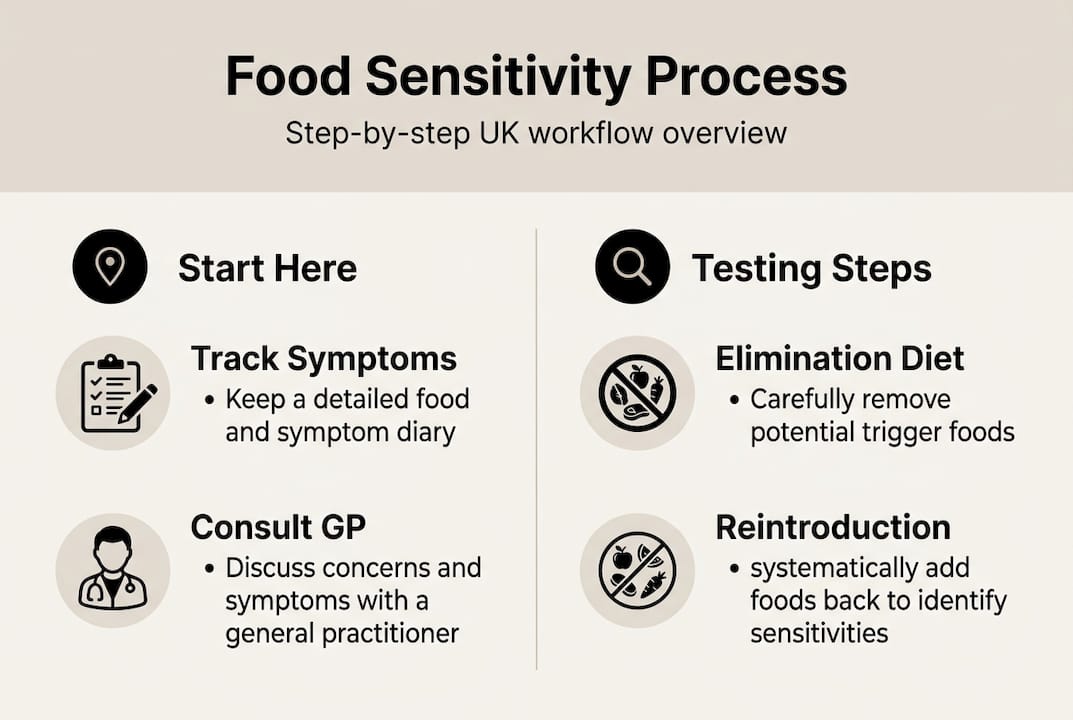
With your preparation in place, here is the practical process that UK health professionals and the NHS recommend for identifying food sensitivities safely.
- See your GP first. Book an appointment and share your symptom diary. Your GP will rule out conditions such as coeliac disease, Crohn’s disease, or irritable bowel syndrome before pointing you towards sensitivity testing.
- Keep a detailed food and symptom diary. Continue logging everything you eat and any symptoms for at least two weeks. The more specific you are, the more useful the data.
- Start an elimination diet under professional guidance. Remove the suspected trigger food or foods for two to six weeks. This should be supervised by a dietitian to avoid nutritional gaps.
- Reintroduce foods one at a time. After the elimination phase, reintroduce each food slowly, waiting three to five days between each one. Note any returning symptoms carefully.
- Use approved tests for confirmation. For conditions like lactose intolerance, a hydrogen breath test is available on the NHS. For coeliac disease, a blood test and biopsy are the gold standard.
When it comes to commercial home tests, it is worth being clear-eyed. NHS and AAAAI guidelines highlight that the diary and elimination method remains the most reliable approach. Expert guidance is firm that IgG and bioresonance tests should not be used as sole diagnostic tools, as they can produce misleading results.
| Method | Evidence base | NHS endorsed? |
|---|---|---|
| Food diary and elimination | Strong | Yes |
| Hydrogen breath test | Strong | Yes (for lactose) |
| Blood test (coeliac) | Strong | Yes |
| IgG antibody test | Weak | No |
| Bioresonance test | Weak | No |
Pro Tip: Think of commercial sensitivity tests as a starting point for conversation, not a diagnosis. Use them to generate hypotheses, then verify through the elimination and reintroduction method with professional support.
For guidance on selecting the right test for your situation, see our articles on choosing intolerance tests, why use intolerance tests, and their role in family health.
Common pitfalls, troubleshooting, and next steps
Even with the best intentions, people often run into problems when trying to identify food sensitivities. Knowing what to watch out for can save you weeks of frustration.
The most common pitfalls include:
- Cutting out too many foods at once: this makes it impossible to identify which food is actually causing symptoms
- Not keeping a diary consistently: gaps in your records make patterns harder to spot
- Stopping the elimination phase too soon: two weeks is a minimum; some people need longer
- Ignoring nutritional balance: removing major food groups without replacement can lead to deficiencies
- Relying solely on unvalidated tests: acting on IgG or bioresonance results without professional review can lead to unnecessary restrictions
Warning: The NHS advises that unsupervised elimination diets carry a real risk of nutritional deficiency, particularly in children, pregnant women, and those with existing health conditions. Always work with a dietitian.
If your symptoms persist after a thorough elimination and reintroduction process, ask your GP for a referral to a gastroenterologist or registered dietitian. There are conditions that mimic food sensitivity, including small intestinal bacterial overgrowth (SIBO), non-IgE mediated food allergies, and coeliac disease, that require specific testing and treatment.
Knowing when to escalate is just as important as the process itself. Seek urgent medical advice if you experience sudden weight loss, blood in your stool, severe abdominal pain, or any signs of anaphylaxis. These are not sensitivity symptoms. They need immediate professional attention.
For practical support on managing ongoing symptoms or understanding childhood sensitivities, we have dedicated resources to help you take the right next steps.
Why most DIY tests miss the mark—and what actually works
It is easy to understand the appeal of a quick home test. You post off a sample, get a report back in a few days, and suddenly you have a list of foods to avoid. It feels like progress. The problem is that feeling and accuracy are not the same thing.
IgG and bioresonance tests are not considered reliable for diagnosing food sensitivities. IgG simply reflects foods you have been exposed to, not foods that are harming you. Acting on those results can mean cutting out nutritious foods for no good reason.
What genuinely works is less glamorous but far more effective: a consistent food diary, a structured elimination diet, and professional oversight. This process takes longer. It requires patience. But it produces results you can actually trust and act on sustainably.
Where commercial tests do have value is as a starting point. If a test result prompts you to look more closely at a particular food and then verify that through the proper elimination workflow, it has served a useful purpose. The key is using these tools within the evidence-based process, not instead of it. Understanding the impact on UK wellbeing of getting this right is what makes the effort worthwhile.
Explore evidence-based testing options for your next step
If you are ready to move forward, having the right support makes the process far simpler. At UK Food Intolerance, we offer non-invasive at-home testing that can help you identify potential triggers as part of a broader, evidence-informed approach to your health.

Our food intolerance test options include the Core Single Intolerance Test, covering 500 items, and the Ultimate Single Intolerance Test, covering over 1,100 items. Both use a simple hair sample collected at home, with results delivered within 48 to 72 hours. To understand how testing can support your dietary choices, read our guide on how to match your body with the right diet. Used alongside a food diary and professional guidance, our tests can be a genuinely useful part of your journey.
Frequently asked questions
What is the gold standard for identifying food sensitivities in the UK?
The NHS recommends keeping a food and symptom diary followed by a structured elimination diet, supported by your GP or a registered dietitian. This remains the most reliable method available.
Are commercial home tests like IgG or bioresonance reliable?
IgG tests indicate exposure, not intolerance, and bioresonance lacks scientific validation, meaning both can produce false positives and lead to unnecessary food exclusions.
When should I see a GP before trying to identify a food sensitivity myself?
See your GP if you have persistent or worsening symptoms, any signs of an allergic reaction, or before starting an elimination diet, as the NHS advises ruling out serious conditions first.
Can food sensitivities cause symptoms in children?
Yes, but any diagnosis and management for children should always involve a healthcare professional, as NICE and NHS guidelines recommend specialist referral and supervised care for young patients.










Leave a Reply
Want to join the discussion?Feel free to contribute!