

TL;DR:
- Food intolerance causes delayed, dose-dependent symptoms from foods like dairy, gluten, and histamine. Accurate diagnosis relies on structured food diaries, supervised elimination diets, and GP consultation to avoid serious health risks. Managing intolerances involves gradual adjustments and understanding that some may improve over time as gut health heals.
Food intolerance is defined as a non-immune reaction where the body struggles to digest or process certain foods or food chemicals, producing delayed and often confusing symptoms. Unlike a food allergy, which triggers an immediate immune response, a food intolerance is dose-dependent and rarely life-threatening. Lactose intolerance is the most widely recognised example, but the full list of common food intolerances spans dairy, gluten, FODMAPs, histamine, caffeine, sulphites, and more. Understanding what are common intolerances, and how they differ from allergies, is the first step towards feeling better. The NHS and Allergy UK both recognise that unmanaged intolerances can significantly reduce quality of life over time.
What are common intolerances and their symptoms?
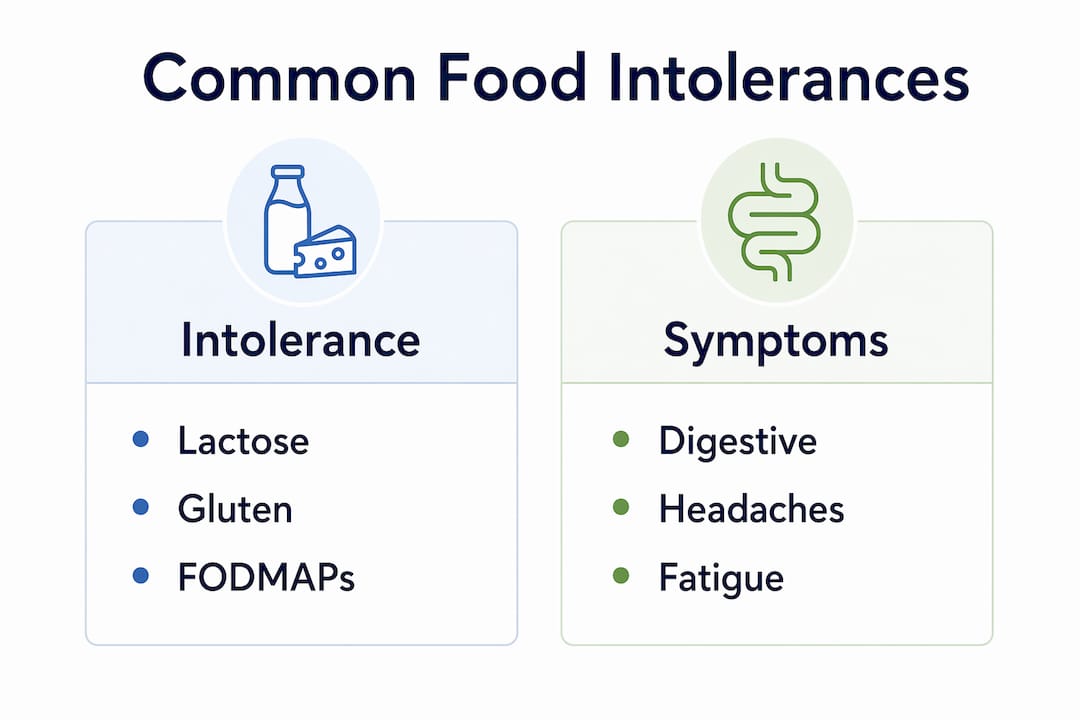
Common food intolerances include reactions to dairy (lactose), gluten and wheat, FODMAPs, histamine, caffeine, alcohol, sulphites, artificial sweeteners, and eggs. These are the triggers most frequently reported by people in the UK, according to Allergy UK and NHS data. The list is broader than most people expect, which is why so many go months or years without identifying the real cause of their discomfort.

Symptoms of intolerances split into two clear categories: digestive and non-digestive. Digestive symptoms are the most obvious, but the non-digestive ones are the ones that most often get misattributed to stress, poor sleep, or other causes.
Digestive symptoms include:
- Bloating and abdominal distension
- Flatulence and cramping
- Diarrhoea or loose stools
- Nausea after eating
Non-digestive symptoms include:
- Headaches and migraines
- Fatigue and low energy
- Brain fog and difficulty concentrating
- Skin reactions such as rashes or eczema flares
Digestive symptoms typically appear 2–12 hours after eating; headaches can take 2–24 hours to develop. That delay is what makes food sensitivities so hard to pin down without structured tracking.
Pro Tip: If you feel fine immediately after a meal but unwell several hours later, a food intolerance is far more likely than a food allergy. Log the time of eating and the time symptoms appear, not just what you ate.
One critical feature of food intolerances is their dose-dependent nature. Small amounts may cause no reaction, but large or repeated exposures can trigger significant symptoms. This means you might tolerate a splash of milk in tea but react badly to a bowl of cereal with full-fat milk. That variability is not random. It is a defining characteristic of how intolerances work.
| Intolerance | Common trigger foods | Typical symptoms |
|---|---|---|
| Lactose | Milk, cheese, yoghurt, ice cream | Bloating, gas, diarrhoea |
| Gluten/wheat | Bread, pasta, cereals, beer | Bloating, fatigue, gut pain |
| FODMAPs | Onions, garlic, apples, legumes | Cramping, bloating, loose stools |
| Histamine | Aged cheese, wine, processed meats | Headaches, flushing, skin reactions |
| Sulphites | Wine, dried fruit, vinegar | Headaches, breathing discomfort |
| Caffeine | Coffee, tea, energy drinks | Palpitations, anxiety, insomnia |
| Artificial sweeteners | Diet drinks, sugar-free sweets | Bloating, diarrhoea |
| Eggs | Baked goods, mayonnaise, pasta | Nausea, bloating, skin reactions |
How do food intolerances differ from food allergies?
The distinction between intolerance and allergy is not just academic. Getting it wrong can have serious consequences. Food allergies involve the immune system and can be life-threatening; food intolerances are typically non-immune reactions that affect quality of life but do not cause anaphylaxis.
The speed of reaction is the clearest practical difference. Allergy symptoms emerge within minutes of exposure. Intolerance symptoms are delayed, often arriving hours later, and their severity scales with the quantity consumed.
Key differences at a glance:
- Immune involvement: Allergies trigger IgE antibodies; intolerances do not involve the immune system in the same way
- Onset speed: Allergy reactions occur within minutes; intolerance reactions take hours
- Severity: Allergies can cause anaphylaxis; intolerances cause discomfort but are not life-threatening
- Dose dependency: Intolerances are dose-dependent; even trace amounts can trigger an allergy
- Diagnosis: Allergies are confirmed via skin-prick tests or specific IgE blood tests; intolerances rely on food diaries and elimination diets
“Food intolerance is distinctly less severe than allergy but can significantly degrade long-term quality of life if left unmanaged. Correct identification matters because the management strategies for each condition are entirely different.” — NHS Inform
If you experience throat tightening, hives, swelling, or difficulty breathing after eating, seek emergency medical care immediately. Those are allergy symptoms, not intolerance symptoms, and they require urgent attention.
How can you identify and diagnose food intolerances?
Identifying food intolerances requires patience and structure. The gold standard approach is keeping a detailed food and symptom diary for 2–4 weeks before consulting a healthcare professional. This gives you and your GP a clear picture of patterns rather than isolated incidents.
What to record in your food diary
- Every food and drink consumed, including portion sizes and preparation methods
- Time of eating, so you can map the gap between consumption and symptoms
- Symptom type and severity, rated on a scale of 1–5 for pattern recognition
- Contextual factors such as stress levels, eating speed, and whether you ate late at night
- Any medications or supplements taken that day
Contextual factors like stress and eating speed significantly affect digestive symptoms and can complicate identifying trigger foods. A food diary that captures lifestyle factors alongside meals produces far more useful data than one that records food alone.
Pro Tip: Use a simple notebook or a free notes app on your phone. You do not need a specialist app to start. Consistency matters far more than the tool you use.
Once you have two to four weeks of diary data, the next step is an elimination diet. This involves removing suspected trigger foods for a set period, typically two to six weeks, then reintroducing them one at a time to observe reactions. Elimination diets should be done under the supervision of a registered dietitian to avoid nutritional gaps.
| Diagnostic method | Recommended by NHS? | Reliability |
|---|---|---|
| Food and symptom diary | Yes | High when done consistently |
| Elimination and reintroduction diet | Yes, under supervision | High |
| Hydrogen breath test (lactose/fructose) | Yes | High for specific intolerances |
| Commercial IgG blood tests | No | Not validated for intolerance diagnosis |
| Unscientific alternative tests | No | Not reliable |
The NHS advises against commercial IgG tests for diagnosing food intolerances. These tests are widely marketed but are not considered scientifically valid for this purpose. Reliable diagnosis rests on structured observation, professional consultation, and supervised elimination diets.
Consulting your GP is also necessary to rule out serious conditions. Coeliac disease, inflammatory bowel disease, and in rare cases bowel cancer can produce symptoms that closely resemble food intolerance. If you experience unexplained weight loss, blood in stools, or symptoms that worsen rapidly, see your GP without delay.
What practical steps help you manage food intolerances?
Managing food intolerances well is about reducing your symptom load without unnecessarily restricting your diet. The goal is to find your personal threshold for each trigger food, not to eliminate everything that might cause a problem.
Practical management steps:
- Reduce quantity, not always eliminate. Many people with lactose intolerance tolerate small amounts of hard cheese or butter. Start by reducing portion sizes before cutting foods out entirely.
- Space out trigger foods. Eating the same trigger food repeatedly across a day increases cumulative exposure. Spreading intake reduces the chance of crossing your symptom threshold.
- Eat slowly and without distraction. Eating speed and stress both affect how well your gut processes food. Rushed meals increase the likelihood of digestive discomfort regardless of what you eat.
- Track your gut health recovery. Secondary intolerances can develop after gut illness or coeliac disease and may resolve once the gut heals. What you cannot tolerate today may not be a permanent restriction.
- Manage stress actively. Stress directly affects gut motility and sensitivity. Techniques such as walking, breathing exercises, or consistent sleep schedules reduce background gut reactivity.
Pro Tip: When travelling, managing your intolerances requires extra planning. Practical advice on eating well abroad can help you stay on track without missing out.
Reintroduction after an elimination phase is where many people make mistakes. Reintroduce one food at a time, in a small amount, and wait 48–72 hours before drawing conclusions. Rushing this process produces unreliable results and can leave you unnecessarily avoiding foods you actually tolerate fine.
For a structured approach to managing food sensitivities, working through a clear step-by-step process makes the whole experience less overwhelming and more productive.
Key takeaways
Food intolerances are non-immune, dose-dependent reactions that cause delayed symptoms, and identifying them requires structured food diaries, supervised elimination diets, and GP consultation to rule out serious conditions.
| Point | Details |
|---|---|
| Intolerances are not allergies | Intolerances are non-immune and dose-dependent; allergies are immune-driven and can be life-threatening. |
| Symptoms are delayed | Digestive symptoms appear 2–12 hours after eating; headaches can take up to 24 hours to develop. |
| Diary tracking is the gold standard | Record foods, timings, symptom severity, and lifestyle factors for 2–4 weeks before seeking diagnosis. |
| NHS advises against IgG tests | Commercial IgG blood tests are not validated for food intolerance diagnosis; use structured elimination diets instead. |
| Some intolerances are reversible | Secondary intolerances linked to gut illness may resolve once gut health improves. |
Why identifying your triggers takes longer than you think
People often come to me frustrated that they have been unwell for months without a clear answer. The honest truth is that food intolerances are genuinely difficult to identify, and that difficulty is built into how they work. The delayed, dose-dependent nature of reactions means that by the time you feel unwell, you have usually forgotten the meal that caused it.
What I have found, both from research and from speaking with people who have been through this process, is that most people underestimate how long structured tracking takes. Two weeks of diary data feels like a lot when you are feeling rough. But two weeks is the minimum needed to spot a reliable pattern. One bad day after eating pizza tells you almost nothing. Ten bad days after eating gluten-containing foods across different meals tells you something worth acting on.
The other pitfall I see regularly is self-diagnosis without medical input. People read about FODMAPs or histamine intolerance online and immediately cut out entire food groups. That approach can mask symptoms temporarily, but it does not confirm a diagnosis, and it can create nutritional gaps that cause new problems. The structured route, diary, elimination, reintroduction, and GP review, is slower but it produces answers you can actually trust.
One thing that genuinely helps is understanding that not all intolerances are permanent. Secondary intolerances that develop after a gut infection or illness often resolve once the gut heals. That is worth knowing, because it changes how you approach management. You are not necessarily signing up for a lifetime of restriction. You are managing a temporary state while your body recovers.
Be patient with yourself. Be methodical. And please, do not skip the GP appointment. Ruling out coeliac disease and inflammatory bowel disease is not optional. It is the foundation everything else rests on.
— Rob
How Ukfoodintolerance supports your next steps
If you have been tracking symptoms and suspect a food intolerance, having a clear picture of your potential triggers makes the whole process faster and less stressful.

Ukfoodintolerance offers at-home intolerance testing covering over 900 food and non-food items, using bio-resonance technology with results delivered within 48–72 hours. You collect a small hair sample at home, post it to the UK-based laboratory, and receive a detailed digital report you can use to guide your elimination diet. The full range of intolerance tests includes both the Core Single Intolerance Test (500 items) and the Ultimate Single Intolerance Test (over 1,100 items), so you can choose the level of detail that suits you. For guidance on reading your results clearly, the step-by-step results guide walks you through every section of your report.
FAQ
What are the most common food intolerances in the UK?
The most common food intolerances in the UK include lactose, gluten and wheat, FODMAPs, histamine, caffeine, sulphites, artificial sweeteners, and eggs, according to Allergy UK and NHS data. Triggers vary between individuals, so personal tracking remains the most reliable way to identify your specific sensitivities.
How long after eating do intolerance symptoms appear?
Intolerance symptoms typically appear 2–12 hours after eating for digestive reactions, and up to 24 hours later for headaches. This delayed onset is what makes food intolerances so difficult to identify without a structured food diary.
What is the difference between a food intolerance and a food allergy?
A food allergy involves the immune system and can cause life-threatening anaphylaxis within minutes of exposure. A food intolerance is a non-immune reaction that causes delayed, dose-dependent symptoms such as bloating, fatigue, and headaches, but is not life-threatening.
Can food intolerances go away on their own?
Some intolerances, particularly secondary intolerances that develop after gut illness, can resolve once gut health improves. Intolerances linked to conditions like coeliac disease may reduce after treatment, but primary intolerances such as lactose intolerance are typically long-term and require ongoing dietary management.
Should I use a commercial IgG test to diagnose a food intolerance?
The NHS does not recommend commercial IgG blood tests for diagnosing food intolerances, as they are not scientifically validated for this purpose. Reliable diagnosis relies on food and symptom diaries, supervised elimination diets, and GP consultation to rule out serious underlying conditions.










Leave a Reply
Want to join the discussion?Feel free to contribute!