

If dairy leaves you bloated, gassy or breaking out in a rash, you’re likely dealing with a casein or cow’s milk protein reaction rather than lactose intolerance, though the two overlap and can be hard to tell apart on symptoms alone. Watch for digestive upset within hours and skin or breathing symptoms that come on fast. If you notice hives, swelling or wheeze soon after dairy, treat this as a signal to see your GP rather than something to self-manage.
TL;DR:
- Hives, swelling, wheezing, or collapse within minutes to two hours can signal an immediate allergy; seek prompt medical care and never reintroduce dairy at home.
- Delayed digestive or eczema symptoms may develop over 72 hours; doctors may use a two to four week dairy exclusion followed by supervised reintroduction, since standard allergy tests do not reliably detect delayed reactions.
- If lactose free milk still triggers symptoms, protein may be responsible; skin, swelling, or breathing symptoms are not explained by lactose intolerance.
- For ongoing dairy avoidance, check labels for milk proteins and replace calcium and vitamin D; consult a registered dietitian before prolonged restriction, especially for children.
- At home screening can guide a discussion, but it cannot diagnose a milk allergy or replace clinical testing, especially for immediate reactions.
Table of Contents
- 1. Common symptoms linked to casein or cow’s milk protein reactions
- 2. Immediate versus delayed reactions: timing and risk
- 3. Telling casein reactions apart from lactose intolerance and other causes
- 4. How doctors diagnose a casein-related reaction
- 5. Practical steps to manage symptoms safely
- A balanced view on self-diagnosis and dairy exclusion
- Where an at-home test fits alongside clinical advice
- FAQ
- Sources
1. Common symptoms linked to casein or cow’s milk protein reactions
Casein is one of the two main proteins in cow’s milk, alongside whey, and a reaction to it can show up almost anywhere in the body. The pattern you notice matters more than any single symptom.
Digestive symptoms are the most frequently reported and include bloating, wind, abdominal cramps, diarrhoea, constipation and nausea. These often build over several hours rather than striking instantly, though some people feel unwell within minutes of drinking milk.
Skin reactions are the next most common group:
- Eczema flares or patches of dry, itchy skin that worsen after dairy
- Hives (urticaria), which appear as raised, itchy welts
- Angio-oedema, a deeper swelling usually around the lips, eyes or throat
Respiratory and systemic signs are less common but more serious. These include a blocked or runny nose, wheeze, and in rare cases dizziness or fainting, which point towards a more significant allergic process rather than simple intolerance.
Cow’s milk allergy in adults is uncommon but can affect a small portion of the population, and some series report that up to a quarter of affected adults have a history of anaphylaxis, which is why skin and breathing symptoms deserve more caution than digestive discomfort alone.
2. Immediate versus delayed reactions: timing and risk
How quickly symptoms appear tells you a lot about what’s happening in your body, and it shapes how doctors investigate and treat the reaction.
- Immediate (IgE-mediated) reactions typically strike within minutes to two hours of eating or drinking dairy. Hives, swelling, vomiting, wheeze or, rarely, collapse can occur, and these reactions require prompt medical attention because they can escalate quickly.
- Delayed (non-IgE-mediated) reactions take hours and can continue to develop for up to 72 hours. These usually present as gastrointestinal symptoms such as bloating, altered bowel habits or eczema flares, without the sudden skin and breathing signs seen in immediate reactions.
The distinction matters clinically. Immediate reactions can sometimes be confirmed with blood or skin tests, while delayed, non-IgE reactions generally cannot, which is why doctors rely on structured exclusion and reintroduction to confirm them rather than a single test result.
3. Telling casein reactions apart from lactose intolerance and other causes
Lactose intolerance and casein-related reactions often get lumped together because both follow a glass of milk, but they work differently and call for different responses.
- Lactose intolerance stems from low lactase enzyme activity, so symptoms are almost entirely digestive, bloating, wind, stomach pain and diarrhoea, and they ease on a low-lactose diet or with lactose-free products.
- A protein-driven reaction is more likely if lactose-free milk still triggers symptoms, since lactose-free products remove the sugar but not the casein or whey.
- Skin reactions, swelling or breathing difficulty point away from lactose intolerance entirely, since lactase deficiency does not cause these symptoms.
- Other conditions, including IBS, coeliac disease and certain medications, can mimic dairy reactions and are worth ruling out with your GP.
Our guide comparing lactose intolerance and dairy intolerance breaks this down further if you want more detail on where the lines sit.
Pro Tip: Try a lactose-free milk for a few days. If symptoms persist, the problem is more likely to be the protein than the sugar.
4. How doctors diagnose a casein-related reaction
Getting a proper diagnosis means more than cutting out dairy and hoping for the best. BSACI guidance for primary care sets out a structured route that GPs and allergy specialists follow.
- Clinical history first. Your GP will ask about timing, how reproducible the reaction is, and how severe it gets, since these details narrow down whether an immediate or delayed mechanism is at play.
- Allergy tests where appropriate. Skin prick testing and serum specific IgE tests can help confirm immediate, IgE-mediated allergy, but they have no reliable role in diagnosing delayed, non-IgE reactions.
- Exclusion and reintroduction. For delayed symptoms, the recommended approach is excluding dairy for two to four weeks, checking whether symptoms settle, then reintroducing it under supervision to confirm the link.
Never attempt a home reintroduction if you have a history of immediate, severe reactions such as hives, swelling or breathing difficulty. That reintroduction step needs to happen under medical supervision, since the same food that caused mild symptoms once can trigger something more serious the next time.
5. Practical steps to manage symptoms safely
Once you suspect casein is behind your symptoms, a few practical changes make exclusion safer and easier to stick to.
- Avoid milk, cheese, yoghurt, butter and processed foods listing casein, sodium caseinate or calcium caseinate, as well as whey where protein sensitivity extends to both milk proteins.
- Read ingredient lists carefully. FSA guidance requires the 14 regulated allergens, including milk, to stand out on packaging, so checking for “milk” and its derivatives is more reliable than relying on “may contain” warnings alone.
- Replace calcium and vitamin D through fortified plant milks, leafy greens or supplements if dairy makes up a large part of your current diet.
- Speak to a registered dietitian before any extended exclusion, particularly if you’re planning this for a child, since unsupervised restriction carries nutritional risks.
Our elimination diet checklist and guide to dairy alternatives both offer practical support if you’re starting this process.
Pro Tip: Keep a simple symptom and food diary for two weeks before you change anything. It gives you and your GP a clearer picture than memory alone.

A balanced view on self-diagnosis and dairy exclusion
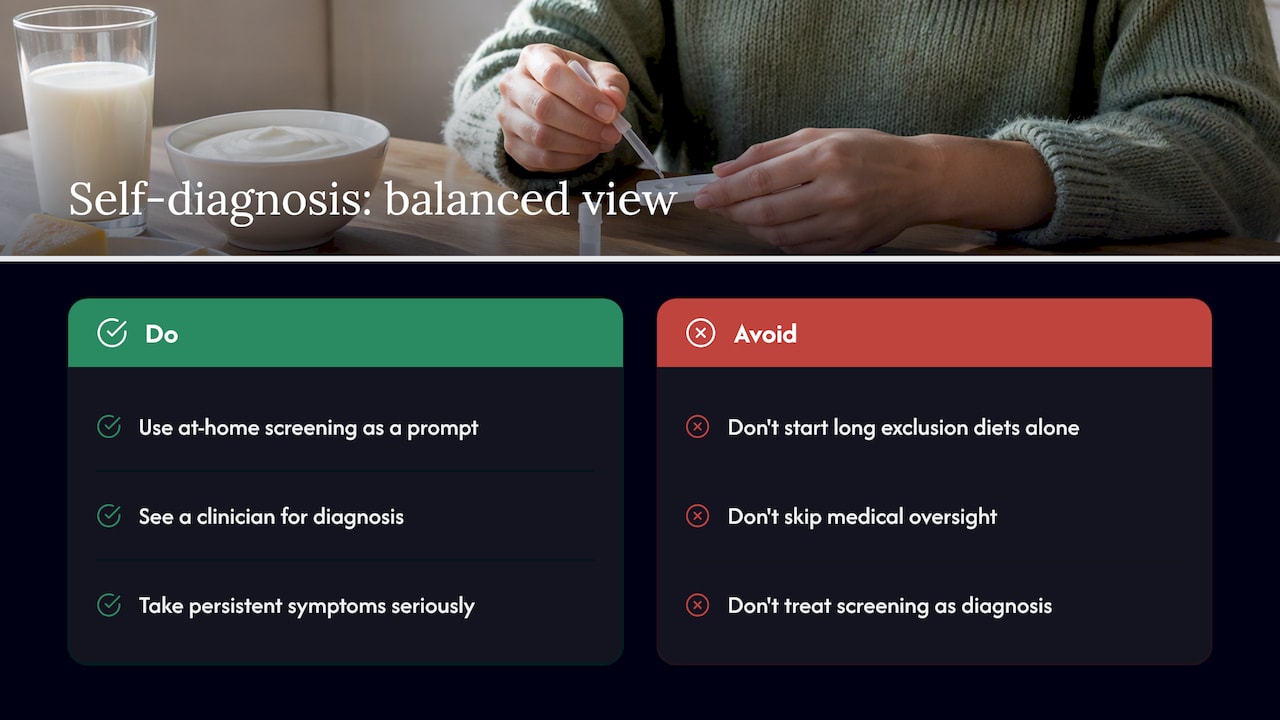
Cutting dairy without guidance is tempting when you feel rough after every glass of milk, but open-ended restriction carries real nutritional risk, particularly for calcium and vitamin D intake. Clinicians warn that long, self-initiated exclusion diets without medical oversight can mask other conditions rather than solve the problem.
At-home screening has a place here: as a prompt to take persistent, unexplained symptoms seriously and start a conversation with a professional. It isn’t a clinical diagnosis, and it shouldn’t replace one.
— Rob
Where an at-home test fits alongside clinical advice
We built our Ultimate Plus Intolerance Test for exactly this moment: when you’ve noticed a pattern with dairy but you’re not sure what to do with that information. It works from a small hair sample you collect at home, which we analyse at a UK laboratory using bioresonance technology, with your digital report ready in 48 to 72 hours.

What it offers:
- A screening view across a wide panel of items, including dairy, so you can see where sensitivities might cluster
- A fast turnaround that gives you something concrete to discuss rather than guesswork
- A starting point for a structured elimination and reintroduction plan, ideally run with your GP or a registered dietitian
It’s a screening tool, not a substitute for clinical allergy testing, and it won’t confirm IgE-mediated allergy on its own. Our guide to at-home dairy testing explains what the results can and can’t tell you, and we’d always recommend taking your report along to a professional before making lasting changes to your diet.
FAQ
Can lactose cause headaches?
Headaches aren’t among the typical symptoms of lactose intolerance, which mainly causes bloating, wind, stomach pain and diarrhoea. If headaches regularly follow dairy, it’s worth discussing other possible triggers with your GP rather than assuming lactose is the cause.
Can dairy cause hives?
Yes, hives can be a sign of an immediate, IgE-mediated reaction to cow’s milk protein, and they typically appear within minutes to two hours of eating or drinking dairy. Clinical guidance treats this as a reason for prompt medical assessment, especially if swelling or breathing difficulty accompany the rash.
What are the symptoms of a milk allergy in babies?
Milk allergy in babies can appear as vomiting, diarrhoea, eczema, wheeze or, in more immediate reactions, hives and swelling soon after a feed; parents introducing new foods should watch closely for these signs, as explained in our guide to introduce new foods and allergies safely. Parents introducing new foods should watch closely for these signs; our partner guide on introducing foods and spotting allergy signs safely covers this in more depth.
How is casein intolerance different from lactose intolerance?
Casein-related reactions involve the body’s response to milk protein and can affect the skin and airways alongside digestion, while lactose intolerance is a digestive-only reaction caused by low lactase enzyme levels. If dairy with the lactose removed still causes symptoms, protein rather than sugar is the likely cause.
When should I see a GP about dairy symptoms?
See your GP if symptoms are severe, recurrent, or involve skin swelling, hives or breathing difficulty, since these can signal an allergic reaction needing proper assessment. Persistent digestive symptoms alone are also worth discussing, particularly before starting any extended exclusion diet.










Leave a Reply
Want to join the discussion?Feel free to contribute!