

Many popular intolerance tests lack scientific evidence yet influence significant family health decisions. With roughly 20% of UK adults reporting symptoms linked to food intolerance, families face a confusing landscape of testing options. This guide clarifies which methods offer genuine support, how to interpret results safely, and practical steps to improve your family’s wellbeing through evidence-based intolerance management.
Table of Contents
- Understanding Food Intolerance In Families
- How Intolerance Testing Works: Methods And Mechanisms
- Evidence-Based Benefits Of Intolerance Testing For Family Health
- Common Misconceptions And Limitations Of Intolerance Testing
- Practical Guidance For Uk Families: Using Test Results Effectively
- Summary: Integrating Intolerance Testing Into Family Health Strategies
- Discover Reliable Intolerance Testing Options For Your Family
- Common Questions About Intolerance Testing In Family Health
Key takeaways
| Point | Details |
|---|---|
| Prevalence | Around 20% of UK adults report symptoms related to food intolerance, affecting families widely |
| Testing methods | Non-invasive approaches like bio-resonance and IgG testing identify possible triggers, but many commercial tests lack validation |
| Evidence | IgG-guided elimination diets improve symptoms in over 70% of IBS cases and help children with skin and behavioral issues |
| Professional support | Healthcare involvement prevents overly restrictive diets and ensures nutritionally balanced approaches for families |
| Practical application | Systematic elimination and reintroduction, monitored with professional guidance, optimizes symptom relief while maintaining nutrition |
Understanding food intolerance in families
Food intolerance differs fundamentally from food allergy. Allergies trigger immune system responses that can be severe or life threatening. Intolerances involve digestive or metabolic reactions without immune involvement, producing uncomfortable but typically non-dangerous symptoms.
Food intolerance in the UK population is prevalent, with around 20% of adults reporting symptoms related to food intolerance. Children and adults experience diverse symptoms including bloating, stomach pain, diarrhea, skin rashes, headaches, and in children, behavioral changes or learning difficulties.
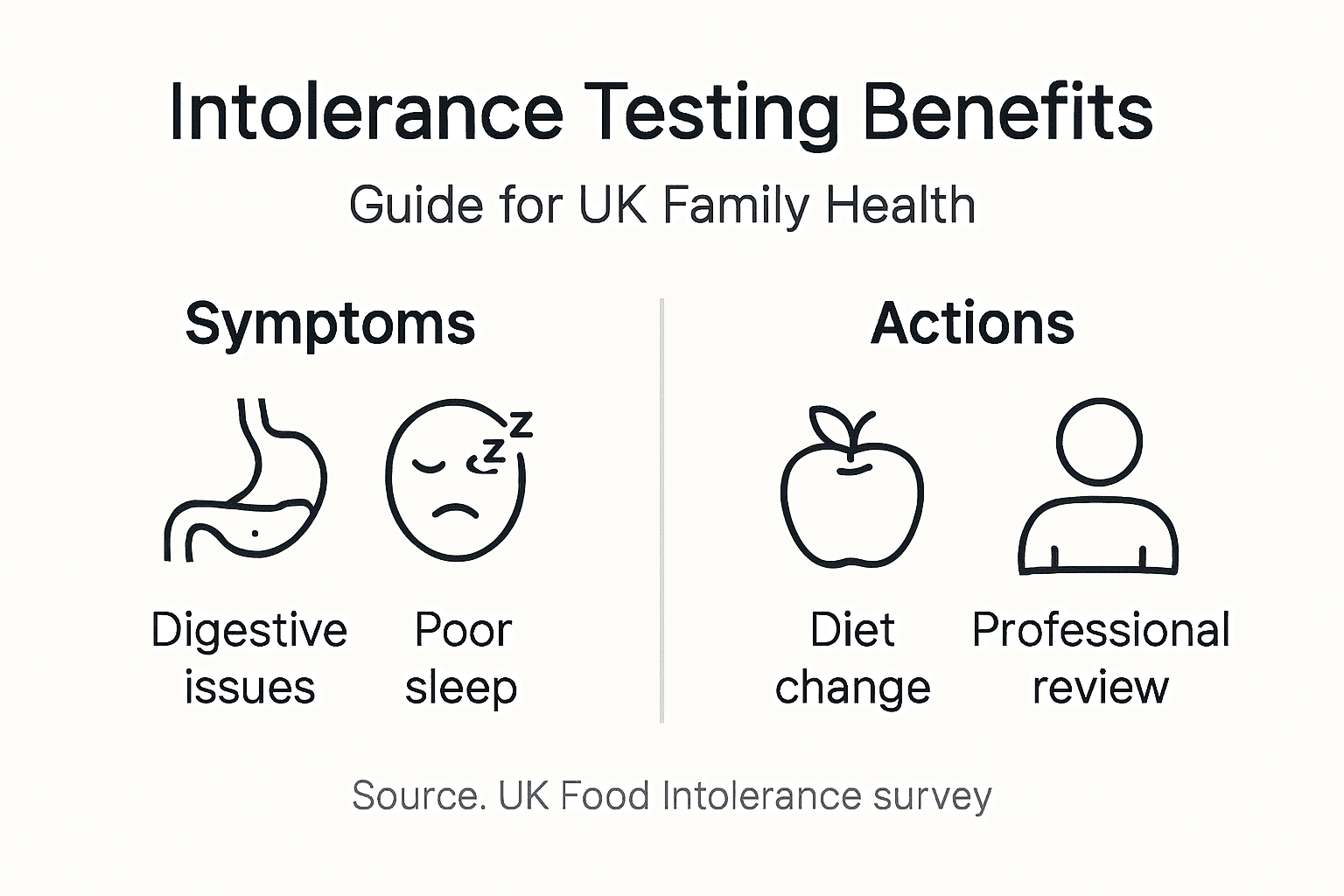
Common symptoms families notice include:
- Digestive issues like bloating, gas, stomach cramps, and irregular bowel movements
- Skin problems including eczema, rashes, itching, and unexplained hives
- Headaches and migraines triggered after eating certain foods
- Fatigue, brain fog, and low energy impacting daily activities
- Behavioral changes in children such as irritability, hyperactivity, or concentration problems
Many families confuse intolerances with allergies, leading to inappropriate testing or overly cautious dietary restrictions. Understanding this distinction helps you choose the right testing approach and interpret results within the proper context. A comprehensive guide to food intolerance testing in the UK explains these differences further.
Identifying intolerances can transform family health. When you pinpoint specific triggers, targeted dietary adjustments reduce symptoms without unnecessary food elimination. This knowledge-based approach supports better nutrition while addressing the root causes of discomfort.
The impact of intolerance testing on UK wellbeing extends beyond symptom relief. Families report improved sleep, better mood, enhanced concentration, and overall quality of life improvements when problematic foods are identified and managed appropriately.

How intolerance testing works: methods and mechanisms
Several testing methods claim to identify food intolerances, but scientific validity varies significantly. Understanding which approaches offer genuine insight helps UK families make informed testing decisions.
Bio-resonance testing uses hair samples to measure energy frequency responses to over 1,100 food and environmental items. This non-invasive method analyzes how your body’s energy fields react to different substances. Results identify items that may trigger intolerance symptoms, guiding elimination diet planning.
IgG blood testing measures immunoglobulin G antibodies to food proteins. Elevated IgG levels suggest your immune system recognizes specific foods as problematic. Clinical studies use IgG results to design elimination diets that reduce symptoms in conditions like IBS.
However, many commercially available home intolerance tests, including those based on hair analysis or applied kinesiology, lack scientific validation. The role of at-home intolerance tests depends heavily on the methodology used.
Testing approaches comparison:
| Method | Sample type | Items tested | Scientific support | Typical turnaround |
|---|---|---|---|---|
| Bio-resonance | Hair | 500-1,100+ | Emerging evidence | 48-72 hours |
| IgG blood test | Blood | 100-300 | Clinical validation | 1-2 weeks |
| Skin prick | Skin | 20-40 | Strong for allergies | Immediate |
| Hair analysis (mineral) | Hair | Varies | Not validated | 1-2 weeks |
| Kinesiology | None | Varies | No evidence | Immediate |
Validated methods like bio-resonance testing in intolerance detection offer practical benefits. They test extensive item ranges covering common foods, additives, environmental factors, and household products that may trigger symptoms.
Pro Tip: Choose testing services that provide clear interpretation guidance and encourage healthcare professional consultation. Results should inform dietary decisions, not dictate them without professional context.
The testing process typically involves collecting a small hair sample at home, submitting it to a laboratory, and receiving detailed digital reports. This convenience allows families to investigate potential triggers without invasive procedures or clinic visits.
Understanding test mechanisms helps you evaluate claims critically. While no intolerance test offers 100% accuracy, evidence-based methods provide valuable starting points for identifying dietary triggers when combined with symptom tracking and professional guidance.
Evidence-based benefits of intolerance testing for family health
Scientific research demonstrates meaningful benefits when intolerance testing guides dietary management. Statistically significant symptom improvements in IBS with IgG-guided elimination diets; case studies showing symptom relief in children validate this approach for UK families.
Key research findings include:
- Over 70% of IBS patients experience symptom improvement following IgG-guided elimination diets
- Children with eczema, skin rashes, and behavioral issues show relief when dietary triggers are identified and removed
- Crohn’s disease patients report symptom modulation through testing-informed dietary adjustments
- Migraine frequency decreases in patients who eliminate identified trigger foods
These benefits extend across age groups. Adults managing chronic digestive discomfort find relief when they avoid specific intolerances. Children with unexplained skin conditions or concentration difficulties often improve when problematic foods are removed from their diets.
The impact of intolerance testing on diets and wellbeing appears most significant when families approach results methodically. Testing provides a hypothesis about potential triggers rather than definitive diagnoses. Systematic elimination and reintroduction confirm which items genuinely cause symptoms.
“Testing empowers families to move from guessing to informed experimentation. When you know which foods to investigate first, you save time and reduce the frustration of trial and error dietary changes.”
Real-world applications show families reducing medication dependence for digestive symptoms, improving school performance in children with concentration issues, and enhancing overall quality of life through targeted dietary modifications.
The testing benefit lies not in the results alone but in how families use them. Results guide focused elimination trials, helping you identify genuine triggers without unnecessarily restricting your family’s diet. This targeted approach maintains nutritional balance while addressing symptom causes.
For families struggling with unexplained health issues, testing offers actionable direction. Rather than eliminating multiple food groups based on suspicion, you can prioritize specific items identified by testing, making the process more manageable and sustainable.
Common misconceptions and limitations of intolerance testing
Despite potential benefits, widespread misunderstandings about intolerance testing can lead families astray. Recognizing these misconceptions helps you use testing appropriately within your family’s health strategy.
Key misconceptions include:
- Believing all commercial tests are scientifically validated when many lack evidence
- Assuming positive test results always indicate clinically significant intolerance
- Confusing food intolerance with food allergy, leading to inappropriate testing choices
- Thinking test results alone provide sufficient information for dietary decisions
- Expecting testing to diagnose underlying medical conditions rather than identify triggers
The NHS perspective stresses medically recognized testing methods and warns against unvalidated approaches. Hair mineral analysis and applied kinesiology show no scientific basis for identifying food intolerances, yet remain commercially available.
A guide to intolerance testing including NHS perspectives emphasizes that even validated tests have limitations. IgG antibodies indicate food exposure, not necessarily intolerance. Your body produces IgG to many foods you eat regularly without problems.
Test limitations to understand:
- False positives occur when tests identify foods that don’t actually cause symptoms
- False negatives happen when genuine trigger foods aren’t detected
- Results reflect your diet at testing time, potentially missing newly introduced foods
- Individual symptom thresholds vary; small amounts may be tolerable even for positive results
- Test sensitivity differs between methodologies and laboratories
Pro Tip: Treat test results as investigation starting points rather than definitive answers. Always confirm suspected intolerances through systematic elimination and reintroduction while monitoring symptoms.
Overly restrictive diets based solely on test results risk nutritional deficiencies, particularly in growing children. Eliminating multiple food groups without professional guidance can lead to inadequate protein, calcium, iron, or vitamin intake.
The NHS and NICE guidelines advocate involving healthcare professionals in testing interpretation and dietary planning. This collaboration ensures dietary changes address symptoms effectively while maintaining nutritional adequacy for your family’s needs.
Understanding these limitations doesn’t diminish testing value but frames it appropriately. Testing works best as one component of a comprehensive approach including symptom diaries, professional consultations, and structured dietary trials.
Practical guidance for UK families: using test results effectively
Receiving intolerance test results marks the beginning of your investigation, not the end. How you use this information determines whether testing benefits your family’s health. Parents and carers are advised by NHS guidelines to engage healthcare professionals for interpretation and dietary decisions considering children’s needs.
Follow these steps to use results safely and effectively:
- Review results with your GP, dietitian, or qualified nutritionist to understand implications within your family’s symptom context.
- Prioritize investigating foods that correspond with your symptom diary patterns rather than eliminating everything flagged.
- Plan a structured elimination phase removing suspected triggers for 4-6 weeks while monitoring symptom changes.
- Reintroduce eliminated foods systematically, one at a time, to confirm which items genuinely trigger symptoms.
- Document all dietary changes, symptom variations, and reintroduction outcomes to identify clear patterns.
- Adjust your long-term diet based on confirmed triggers while maintaining nutritional balance across food groups.
When implementing dietary changes for children, consider:
- Cultural food preferences and family eating patterns that support adherence
- Physical activity levels requiring adequate energy and nutrient intake
- Social situations like school meals, parties, and friends’ homes
- Learning and concentration needs supported by proper nutrition
- Growth requirements that may be compromised by overly restrictive diets
The guidance on using intolerance test results emphasizes gradual changes. Removing multiple foods simultaneously makes it impossible to identify which items cause symptoms. Sequential elimination provides clearer answers.
Practical implementation tips:
- Start by eliminating your highest-reacting foods rather than everything flagged
- Maintain detailed food and symptom diaries throughout the elimination phase
- Wait at least 3 days between reintroducing different foods to observe delayed reactions
- Introduce suspected triggers in small amounts first, gradually increasing if no symptoms appear
- Watch for symptom patterns rather than expecting immediate, obvious reactions
The 7 essential tips for interpreting intolerance test results guide provides additional detail on translating results into actionable dietary strategies.
Monitor not just symptom reduction but also quality of life changes. Improvements in energy, mood, sleep, and daily functioning indicate successful dietary adjustments. Conversely, if symptoms persist despite eliminating flagged foods, other factors may contribute to your family’s health issues.
Regular review with healthcare professionals ensures dietary modifications remain appropriate as your family’s needs change. Children’s nutritional requirements evolve with growth, and adult intolerances may shift over time.
Summary: integrating intolerance testing into family health strategies
Intolerance testing serves as a valuable tool within comprehensive family health management, not a standalone solution. Understanding its proper role helps UK families make informed decisions that genuinely improve wellbeing.
Key integration principles include:
- Using test results to guide focused investigation rather than as definitive diagnoses
- Combining testing with symptom diaries, professional consultations, and systematic dietary trials
- Maintaining nutritional balance through thoughtful elimination planning with professional support
- Recognizing test limitations while appreciating the practical direction results provide
- Monitoring outcomes and adjusting approaches based on real symptom changes
The role of intolerance testing in UK healthcare continues evolving as research expands. Current evidence supports testing as part of symptom management strategies when applied carefully with professional guidance.
Families benefit most when they approach testing with realistic expectations. Results offer hypotheses about potential triggers, helping you prioritize which foods to investigate first. This focused approach proves more practical than random elimination or overly restrictive diets based on suspicion alone.
Successful integration means using intolerance test results as conversation starters with healthcare providers. Share results during consultations to inform professional assessment and receive guidance tailored to your family’s specific health context.
By understanding both benefits and limitations, you can leverage intolerance testing effectively. This balanced approach helps families reduce symptoms, improve quality of life, and make dietary decisions grounded in evidence rather than guesswork or restrictive food fears.
Discover reliable intolerance testing options for your family
Ready to investigate potential food triggers affecting your family’s health? UK Food Intolerance provides scientifically backed testing covering over 1,100 food and environmental items through convenient home sample collection.

Our comprehensive intolerance tests analyze hair samples to identify possible triggers, delivering detailed digital reports within 48-72 hours. This convenient at-home intolerance testing eliminates clinic visits while providing extensive insights into foods and environmental factors that may impact your family’s wellbeing.
Receive clear guidance on interpreting intolerance test results and implementing safe, effective dietary changes. Our support resources help you work with healthcare professionals to optimize outcomes while maintaining nutritional balance for your entire family.
Common questions about intolerance testing in family health
What is the difference between food allergy and intolerance?
Food allergies involve immune system responses potentially causing severe reactions like anaphylaxis. Intolerances produce uncomfortable digestive or metabolic symptoms without immune involvement and are rarely life threatening. This distinction affects testing methods and management approaches significantly.
Are all intolerance tests scientifically valid?
No, many commercial tests lack scientific validation. Methods like hair mineral analysis and applied kinesiology show no evidence for identifying intolerances. Choose tests using validated approaches like bio-resonance or IgG testing, and always consult healthcare professionals for interpretation.
How should I interpret a positive intolerance test?
Treat positive results as investigation starting points rather than definitive diagnoses. Confirm suspected triggers through systematic elimination for 4-6 weeks followed by careful reintroduction while monitoring symptoms. Professional guidance ensures appropriate interpretation within your symptom context.
Can I do intolerance testing for my child safely at home?
Yes, non-invasive home testing using hair samples is safe for children. However, implementing dietary changes requires healthcare professional involvement to ensure nutritional adequacy for growth and development. The comprehensive guide to food intolerance testing provides detailed safety information.
What are the risks of elimination diets without professional advice?
Eliminating multiple food groups without guidance risks nutritional deficiencies in protein, calcium, vitamins, and minerals. Children face particular risks to growth and development. Professional support ensures dietary modifications address symptoms while maintaining nutritional balance for your family’s needs.










Leave a Reply
Want to join the discussion?Feel free to contribute!