

If you’ve been battling unexplained bloating, stomach pain, or digestive discomfort, you’re not alone. Thousands across the UK suspect food intolerance but struggle to pinpoint the culprits. Unlike food allergies that trigger immediate reactions, intolerances cause delayed symptoms that make identification challenging. This comprehensive guide walks you through every stage of intolerance testing, from initial preparation and symptom tracking to elimination diets and professional consultation, helping you reclaim control over your digestive health and overall wellbeing.
Table of Contents
- Understanding Food Intolerance And Why Testing Matters
- Preparing For Intolerance Testing: What You Need To Know
- Step-By-Step Guide To Intolerance Testing Methods
- Interpreting Results And Next Steps For Managing Symptoms
- Explore Trusted Food Intolerance Testing Options With UK Food Intolerance
- Frequently Asked Questions
Key takeaways
| Point | Details |
|---|---|
| Food intolerance definition | Difficulty digesting certain foods causing digestive symptoms hours or days after consumption |
| Testing approaches | Elimination diets, symptom tracking, and professional consultation provide reliable identification |
| Commercial test limitations | Most IgG and home intolerance tests lack scientific validation and may mislead |
| Gold standard method | Dietitian-led elimination and reintroduction remains the most accurate approach |
| Allergy distinction | Food allergies trigger immediate immune responses requiring different testing protocols |
Understanding food intolerance and why testing matters
Food intolerance occurs when your digestive system struggles to break down specific foods, leading to uncomfortable symptoms that typically emerge hours or even days after eating. Common triggers include lactose in dairy products, gluten in wheat, and certain food additives or preservatives. Unlike food allergies which provoke immediate immune system responses, intolerances involve digestive difficulties that develop gradually and vary in severity.
Understanding the distinction between intolerance and allergy is crucial for your safety and effective management. Food allergies activate your immune system rapidly, potentially causing severe reactions like anaphylaxis that require emergency treatment. Intolerances, whilst genuinely distressing and impactful on quality of life, don’t involve the immune system in the same way and rarely pose life-threatening risks. Confusing these conditions can lead to inappropriate testing, misdiagnosis, and unnecessary anxiety.
Many people turn to commercial IgG food panel tests hoping for quick answers, but these tests present serious reliability problems. IgG testing lacks scientific validation for diagnosing food sensitivities and may prompt you to eliminate nutritious foods unnecessarily. The presence of IgG antibodies simply indicates exposure to foods, not intolerance or harmful reactions. Relying on these results can create restrictive diets that deprive you of essential nutrients whilst failing to address actual triggers.
Professional guidance provides the foundation for accurate intolerance identification. Working with registered dietitians or healthcare providers ensures you follow evidence-based approaches that protect your nutritional status whilst systematically identifying problematic foods. This support becomes especially important when symptoms overlap with other conditions requiring medical investigation.
Typical intolerance symptoms include:
- Bloating and abdominal distension
- Diarrhoea or constipation
- Stomach cramps and pain
- Nausea and general digestive discomfort
- Fatigue and headaches
- Skin reactions in some cases
Pro Tip: Before starting any testing process, track your symptoms for at least two weeks to establish baseline patterns and identify potential correlations with specific foods or meal times.
Recognising these symptoms and understanding their underlying causes empowers you to pursue appropriate testing methods that deliver genuine insights rather than misleading information.
Preparing for intolerance testing: what you need to know
Successful intolerance testing begins well before you eliminate any foods from your diet. Thorough preparation creates the foundation for accurate identification and prevents unnecessary dietary restrictions. Detailed food and symptom diaries reveal patterns essential for pinpointing intolerances, helping you and healthcare professionals spot connections between specific foods and your symptoms.
Start by gathering these essential materials:
- A dedicated food diary or tracking app
- Symptom severity scale for consistent recording
- Calendar for scheduling elimination and reintroduction phases
- List of current medications and supplements
- Recent medical history relevant to digestive health
Choosing the right testing approach requires careful consideration of available options. Whilst professional testing through registered dietitians offers the most reliable route, some people explore home-based methods. However, avoid commercial tests claiming to diagnose intolerances through hair samples, applied kinesiology, or IgG blood panels, as these lack scientific support. Elimination diets with symptom tracking and professional consultations remain the validated approach.
Follow this pre-test preparation checklist:
- Record everything you eat and drink for two weeks minimum
- Note symptom timing, severity, and duration after each meal
- Document sleep quality, stress levels, and physical activity
- Schedule consultation with GP or registered dietitian
- Research reputable testing services if considering professional analysis
- Prepare questions about your specific symptoms and concerns
- Gather family history of allergies or intolerances
- Review current diet for nutritional adequacy before restrictions
Your food diary should capture portion sizes, preparation methods, and ingredient lists for processed foods. Many intolerances relate to specific food components rather than entire food groups, so detailed recording helps identify precise triggers. For example, you might tolerate small amounts of lactose but experience symptoms with larger servings.
Pro Tip: Start tracking symptoms at least two weeks before beginning any elimination diet to establish clear baseline data for comparison during testing phases.
Consider your lifestyle and commitments when planning testing timelines. Elimination diets require dedication and work best when you can control meal preparation and avoid social eating obligations. Many people find starting during quieter periods, avoiding holidays or major events, increases success rates.
Proper preparation also involves educating yourself about nutritional requirements. Understanding which nutrients come from foods you’ll eliminate helps you plan appropriate substitutes, preventing deficiencies during testing phases. Calcium alternatives for dairy elimination or iron sources when avoiding certain grains become important considerations.
Step-by-step guide to intolerance testing methods
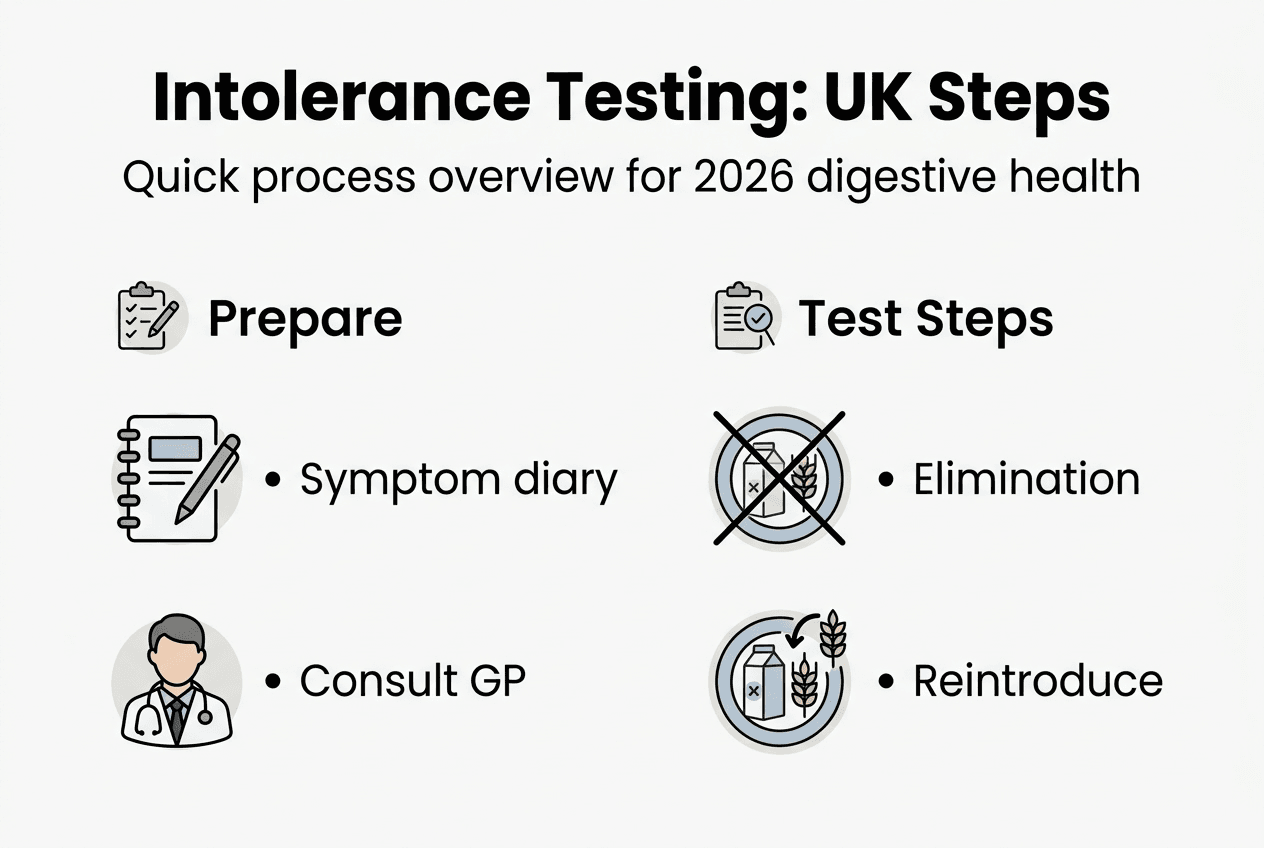
The elimination diet process provides the most reliable method for identifying food intolerances under professional guidance. This systematic approach involves removing suspected trigger foods completely from your diet for a set period, typically two to six weeks, then carefully reintroducing them one at a time whilst monitoring symptoms. Dietitian-led elimination and reintroduction remains the gold standard for safe, accurate identification.
Follow these elimination diet steps:
- Remove all suspected trigger foods simultaneously for the elimination phase
- Maintain strict adherence, checking ingredient labels carefully
- Continue detailed symptom tracking throughout
- Allow minimum three weeks for symptoms to settle
- Reintroduce one food at a time in controlled amounts
- Wait three to five days between each reintroduction
- Monitor and record any symptom changes during reintroduction
- Repeat the test food if results seem unclear
During each reintroduction phase, consume a normal serving of the test food and observe your body’s response over the following days. Some symptoms appear within hours, whilst others take up to 72 hours to manifest. Recording symptom timing, type, and severity helps distinguish genuine intolerances from coincidental discomfort.
Beyond elimination diets, several other testing methods offer value for specific intolerances:
- Hydrogen breath tests accurately diagnose lactose or fructose malabsorption
- Blood tests identify coeliac disease requiring gluten elimination
- Skin prick tests and IgE blood tests diagnose true food allergies
- Professional food challenges under medical supervision confirm suspected triggers
| Testing Method | Accuracy | Convenience | Scientific Support | Best For |
|---|---|---|---|---|
| Elimination diet | High | Moderate | Strong | Most intolerances |
| Hydrogen breath test | High | High | Strong | Lactose, fructose |
| IgE blood test | High | High | Strong | True allergies only |
| IgG food panels | Low | High | None | Not recommended |
| Hair sample tests | None | High | None | Avoid completely |
Pro Tip: Avoid self-diagnosing based on unvalidated commercial tests, as unnecessary food restrictions can create nutritional deficiencies and reduce quality of life without addressing actual triggers.
When following elimination protocols, work with healthcare professionals who can ensure nutritional adequacy and provide accountability. They help you identify intolerances naturally whilst maintaining balanced nutrition, particularly important when eliminating major food groups.

Some people explore at-home testing options that use different methodologies. If considering these services, research their scientific basis thoroughly and discuss results with qualified healthcare providers before making significant dietary changes. Legitimate services provide clear explanations of their testing methods and limitations.
The reintroduction phase requires patience and precision. Rushing this stage or testing multiple foods simultaneously makes identifying specific triggers nearly impossible. If symptoms return during reintroduction, eliminate that food again and continue testing remaining items. You may discover multiple intolerances requiring ongoing management.
Interpreting results and next steps for managing symptoms
Understanding your test results correctly prevents common mistakes that lead to overly restrictive diets or continued symptoms from unidentified triggers. Results indicating positive reactions don’t always mean permanent elimination is necessary. Many people tolerate small amounts of trigger foods or find their tolerance improves over time, especially with gut health improvements.
Distinguish between these result types:
- True food allergy: IgE antibody response requiring strict avoidance
- Food intolerance: Digestive difficulty allowing possible small amounts
- Normal immune response: IgG presence indicating exposure, not intolerance
- Temporary sensitivity: Reaction during gut inflammation that may resolve
Over-restricting your diet based on unreliable test results creates serious risks. Eliminating entire food groups without professional guidance can cause nutrient deficiencies, disordered eating patterns, and social isolation. Calcium deficiency from unnecessary dairy avoidance or iron deficiency from eliminating meat without proper substitutes harm long-term health.
Best practices for safe food reintroduction include:
- Start with small portions of eliminated foods
- Choose single-ingredient versions to isolate triggers
- Test during periods of low stress and good health
- Maintain detailed records of amounts consumed and reactions
- Wait several days between testing different foods
- Repeat tests that produce unclear results
- Consult healthcare providers about confusing outcomes
Even after identifying your intolerances, continue symptom tracking to monitor changes over time. Gut health improvements through probiotic foods, stress management, and adequate sleep may increase your tolerance for previously problematic foods. Conversely, illness, stress, or medication changes might temporarily reduce tolerance.
Unmanaged food intolerances create chronic discomfort, nutritional gaps, and reduced quality of life, making proper management essential for wellbeing. Working with registered dietitians ensures you maintain nutritional balance whilst avoiding genuine triggers. They help you plan varied diets that meet all nutrient requirements despite food restrictions.
Develop a personalised management plan addressing:
- Specific foods requiring elimination or limitation
- Nutritional substitutes for eliminated foods
- Symptom monitoring schedule and methods
- Retest timeline for reassessing tolerance
- Strategies for dining out and social situations
- Emergency protocols if accidental exposure occurs
Many people benefit from periodic reassessment, testing whether previously problematic foods still trigger symptoms. Gut healing, microbiome changes, and overall health improvements sometimes restore tolerance. However, approach retesting cautiously under professional guidance to avoid setbacks.
Post-test guidance from qualified professionals helps you implement findings safely and effectively. They provide meal planning support, recipe modifications, and strategies for maintaining social connections despite dietary restrictions. This ongoing support proves invaluable for long-term success and prevents the isolation that restrictive diets sometimes create.
Explore trusted food intolerance testing options with UK Food Intolerance
Navigating food intolerance testing becomes simpler with access to reliable, comprehensive services designed specifically for UK residents seeking answers about their digestive health. UK Food Intolerance offers extensive testing covering over 900 items, providing detailed insights into potential triggers affecting your wellbeing. These services complement the elimination diet approach by identifying suspects worth investigating through systematic reintroduction.

Exploring comprehensive intolerance tests gives you a structured starting point for your elimination journey, helping prioritise which foods to test first based on your unique profile. Professional testing services support better diet and symptom management by narrowing the field of potential triggers, making the elimination process more focused and efficient. Understanding your body’s specific sensitivities empowers you to make informed dietary choices that enhance rather than restrict your quality of life.
Pro Tip: Using a trusted testing service ensures accuracy and helps avoid unnecessary dietary restrictions that can result from unreliable commercial tests or self-diagnosis.
Whether you’re just beginning to investigate persistent symptoms or seeking to refine an existing elimination protocol, accessing various intolerance test options provides valuable data for your health journey. Combined with professional dietary guidance, comprehensive testing helps you discover how the right diet matches your body’s unique needs, transforming your relationship with food from frustrating to empowering.
Frequently asked questions
What is the difference between food intolerance and allergy?
Food intolerance involves digestive difficulties causing delayed symptoms like bloating, stomach pain, and diarrhoea that emerge hours or days after eating trigger foods. Food allergies trigger immediate immune system responses that can cause severe reactions including anaphylaxis, hives, and breathing difficulties within minutes of exposure. Whilst intolerances cause genuine discomfort and impact quality of life, allergies can be life-threatening and require strict avoidance and emergency medication.
Are home food intolerance tests reliable?
Most home intolerance tests lack scientific validation and can lead to unnecessary food restrictions that harm nutritional status. Commercial IgG panels, hair sample tests, and applied kinesiology methods have no proven accuracy for identifying food sensitivities. Professional guidance using elimination diets and symptom tracking remains the preferred, evidence-based approach for reliable intolerance identification.
How long does elimination diet testing take?
Elimination diet testing typically requires several weeks to complete properly, with two to six weeks eliminating suspected foods followed by gradual reintroduction phases. Each food requires three to five days of observation during reintroduction before testing the next item. The entire process may span two to three months depending on how many foods you’re testing. Symptom tracking throughout this period provides essential data for identifying genuine triggers reliably.
What should I do after receiving my food intolerance test results?
Consult a registered dietitian or healthcare professional for personalised interpretation and dietary planning based on your specific results and health status. Continue detailed symptom tracking to verify whether eliminating identified triggers actually improves your wellbeing. Avoid creating unnecessarily rigid diets without expert input, as over-restriction can cause nutritional deficiencies and reduce quality of life. Professional post-test guidance ensures you implement findings safely whilst maintaining balanced nutrition.










Leave a Reply
Want to join the discussion?Feel free to contribute!