

Bloating after meals, persistent fatigue, or that vague sense that something just isn’t right. These are the kinds of symptoms that send thousands of UK adults searching for answers every year. Symptoms like bloating and fatigue are common but frequently go undiagnosed for months or even years. The problem is that the world of intolerance testing has become crowded and confusing. Not all tests are created equal, and choosing the wrong one can leave you more frustrated than before. This article cuts through the noise, explains what the evidence actually says, and gives you practical steps to move forward with confidence.
Table of Contents
- Why are so many people seeking intolerance tests?
- What types of intolerance tests are available?
- How does intolerance testing influence your wellbeing?
- Expert advice: practical steps for safer intolerance testing
- A realistic view on intolerance testing and wellbeing
- Explore reliable intolerance testing options with expert support
- Frequently asked questions
Key Takeaways
| Point | Details |
|---|---|
| Test reliability varies | Not all intolerance tests provide accurate or helpful results for health improvement. |
| Supervised approaches are safest | Elimination diets guided by health professionals are the most effective way to find and address intolerances. |
| Evidence is mixed | Most commercial kits lack strong evidence for improving wellbeing, so set realistic expectations. |
| Ongoing support matters | Long-term wellbeing often requires more than a single test—track symptoms and seek qualified advice. |
Why are so many people seeking intolerance tests?
If you’ve spent time Googling your symptoms without finding a clear answer, you’re far from alone. Across the UK, a growing number of people are turning to intolerance testing because traditional routes haven’t given them the clarity they need. GP appointments are short, referrals can take months, and in the meantime, you’re still dealing with daily discomfort.
The symptoms that drive people to seek testing are wide-ranging. Some of the most frequently reported include:
- Bloating and abdominal discomfort after eating
- Persistent fatigue that doesn’t improve with rest
- Headaches that appear without an obvious trigger
- Skin reactions such as rashes or eczema flare-ups
- Brain fog and difficulty concentrating
- Digestive issues including loose stools or constipation
These symptoms are frustrating precisely because they’re so non-specific. They could point to dozens of different causes, which makes getting a clear diagnosis genuinely difficult.
Key statistic: 20 to 60% of people report persistent symptoms like bloating or fatigue without ever receiving a formal diagnosis.
This is exactly why so many people want to why track food intolerances and take matters into their own hands. The desire to feel better, to have more energy, and to enjoy food without fear is completely understandable. Understanding your common intolerance symptoms is often the first step towards making meaningful changes.
The frustration of living with unexplained symptoms is real. And that frustration is a powerful motivator. The challenge is channelling it in the right direction.
What types of intolerance tests are available?
With so many options on the market, it helps to know what you’re actually choosing between. The main types of intolerance tests available in the UK fall into a few broad categories, each with different methods and levels of evidence behind them.
| Test type | Method | Evidence level | Key limitation |
|---|---|---|---|
| IgG blood test | Measures antibodies to foods | Low | High false positives, limited clinical value |
| Bioresonance | Hair or skin sample analysis | Emerging | Not yet widely validated in clinical trials |
| Elimination diet | Remove and reintroduce foods | High | Time-intensive, requires professional support |
| Skin prick test | Allergen exposure on skin | High (for allergies) | Tests allergies, not intolerances |
IgG blood tests are popular because they’re quick and produce a long list of results. But expert consensus values supervised elimination diets and clinical history over commercial tests. The concern with IgG tests is that a positive result simply means your immune system has been exposed to a food, not that it’s causing harm. This can lead to unnecessary food restrictions.

Bioresonance testing, which analyses a hair sample to identify potential sensitivities, is a non-invasive option that many people find appealing. It’s accessible, painless, and doesn’t require a blood draw. Our guide to intolerance testing explains how this approach works and what to expect from results.
Elimination diets remain the gold standard in clinical settings. The process involves removing suspected foods for a set period, then reintroducing them one at a time to observe reactions. It’s thorough, but it requires commitment and ideally professional guidance.
Pro Tip: Use any commercial test result as a starting point for conversation, not a final verdict. Pair it with a food and symptom diary to build a fuller picture before making any major dietary changes.
You can also explore non-invasive testing trends to understand how the landscape is shifting and what newer approaches offer.
How does intolerance testing influence your wellbeing?
Many people approach intolerance testing hoping it will be a turning point. And for some, it genuinely is. Having a clearer picture of which foods might be contributing to your symptoms can bring real relief, both physically and mentally.
Positive changes people often report after acting on test results include:
- Reduced bloating and digestive discomfort
- Improved energy levels throughout the day
- Better sleep quality
- Clearer skin and fewer inflammatory flare-ups
- Greater confidence around food choices
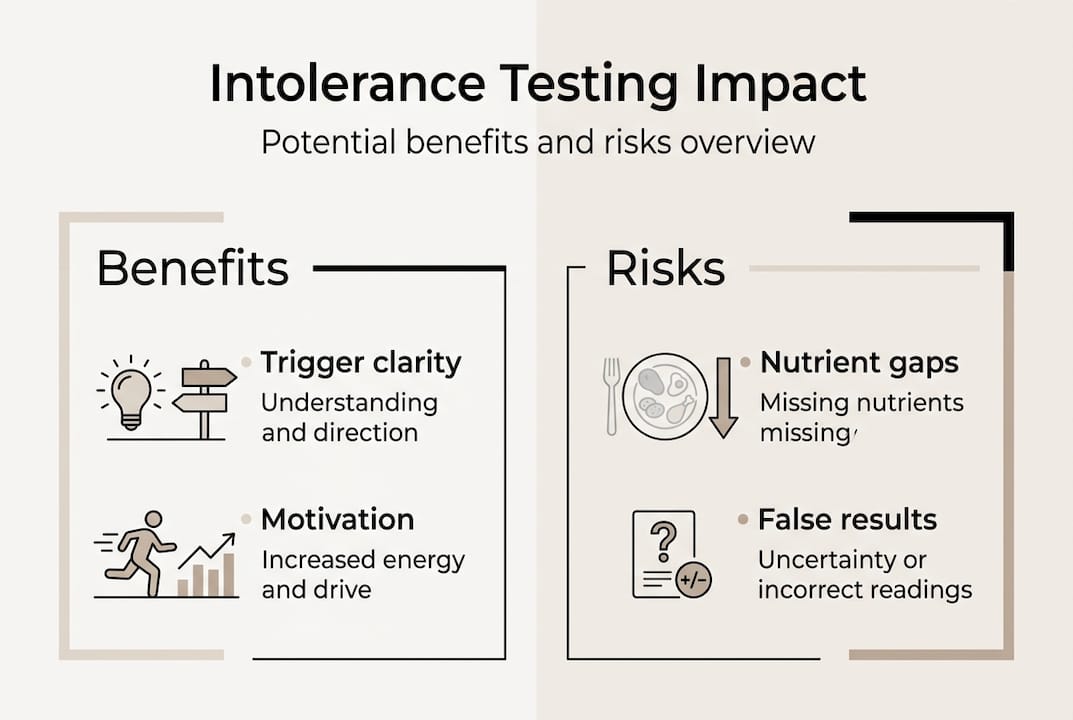
However, it’s important to be honest about the risks too. No strong RCTs show that commercial test kits improve wellbeing. Unsupervised dietary restrictions based on inaccurate results can risk nutritional deficiencies, particularly if you’re cutting out entire food groups like dairy or gluten without guidance.
| Potential benefit | Potential risk |
|---|---|
| Clarity about trigger foods | Nutritional deficiency from over-restriction |
| Motivation to eat more mindfully | Anxiety around food and social eating |
| Reduced symptoms if triggers identified | False reassurance if test misses real triggers |
| Starting point for elimination diet | Unnecessary stress from false positives |
The impact on wellbeing from intolerance testing is therefore very much dependent on how you use the results. A test result on its own changes nothing. What matters is the action you take afterwards, and whether that action is informed and proportionate.
Pro Tip: Before starting any elimination diet based on test results, speak to a registered dietitian. They can help you remove foods safely while ensuring your nutritional needs are fully met. Our step by step testing guide can also help you plan your approach.
Expert advice: practical steps for safer intolerance testing
Knowing the risks and benefits is one thing. Knowing what to actually do is another. Here are practical, expert-informed steps to help you approach intolerance testing as safely and effectively as possible.
- Start with your GP. Before spending money on any commercial test, speak to your doctor. They can rule out other conditions and refer you to a dietitian if needed.
- Keep a food and symptom diary. Track what you eat and how you feel for at least two weeks before any testing. This gives you and any professional a clearer baseline.
- Choose tests carefully. Look for providers who are transparent about their methods and limitations. Understand what the test does and doesn’t measure before you commit.
- Don’t act on results alone. Use test results as a guide, not a prescription. A single result should prompt further investigation, not immediate wholesale dietary change.
- Work with a professional for elimination diets. Supervised elimination diets, not commercial kits alone, are the recommended approach according to expert bodies including the NHS, BDA, and BSACI.
- Reintroduce foods systematically. If you do remove foods, reintroduce them one at a time and note any reactions carefully.
“The most reliable way to identify a food intolerance remains a carefully supervised elimination and reintroduction diet, guided by a qualified healthcare professional.” This view is shared consistently across Which? official guidance and major UK clinical bodies.
Understanding using intolerance tests in the UK within this framework helps you get more value from any test you choose. And if you’re considering a hair sample based approach, our 48-hour test approach explains how to interpret and act on results responsibly.
A realistic view on intolerance testing and wellbeing
Here’s something most articles on this topic won’t tell you: a single test is rarely the answer. We see people come to intolerance testing expecting a definitive list of foods to avoid, and then feel confused when the reality is more nuanced.
The truth is that wellbeing is not a problem you solve once. It’s something you manage continuously, with curiosity and patience. A test can be a genuinely useful starting point. It can give you a framework, spark new questions, and motivate you to pay closer attention to how your body responds to food. But it works best when it’s part of a broader approach.
Gradual changes tend to stick. Tracking your symptoms over weeks, not days, gives you far more useful information than any single snapshot result. And listening to your body, noticing patterns, adjusting slowly, matters more than any number on a report.
The most effective approach we’ve seen combines comprehensive intolerance screening with ongoing self-awareness and, wherever possible, professional input. Testing opens a door. What you do next determines whether you walk through it.
Explore reliable intolerance testing options with expert support
If you’re ready to take the next step in your wellbeing journey, UK Food Intolerance is here to support you. We offer non-invasive, at-home hair sample testing that screens for a wide range of potential food and environmental sensitivities, with clear digital reports delivered within 48 to 72 hours.

Explore our range of intolerance tests to find the option that suits your needs and budget. Not sure where to start? Read more about how find the right diet for you using your results. You can also review our bioresonance research and methods to understand the science behind our approach. We’re here to help you move forward with clarity.
Frequently asked questions
Are food intolerance tests scientifically reliable?
Most commercial IgG and bioresonance tests are not supported by rigorous clinical research. Commercial IgG tests carry high false positive rates and may lead to unnecessary dietary restrictions that risk nutritional deficiencies.
What is the safest way to identify a food intolerance?
The safest method is a supervised elimination diet carried out with a registered dietitian or healthcare provider. Expert consensus from the NHS, BDA, and BSACI consistently prioritises clinical history and supervised dietary approaches over commercial testing kits.
Can intolerance testing improve my wellbeing?
Testing can provide useful clues and motivate positive dietary changes, but no strong RCTs confirm that commercial kits alone reliably improve wellbeing. Supervised dietary changes remain the most evidence-backed route to symptom improvement.
What symptoms suggest I might have a food intolerance?
Common signs include bloating, fatigue, headaches, and persistent digestive issues without a clear cause. Surveys show that 20 to 60% of people experience these symptoms without ever receiving a formal diagnosis.










Leave a Reply
Want to join the discussion?Feel free to contribute!