

Many UK parents find themselves caught between worry and confusion when their child develops recurring tummy troubles, skin flare-ups, or persistent fatigue. Is it a food allergy? An intolerance? Something else entirely? Many parents mistakenly equate food intolerances and allergies, which only adds to the uncertainty when symptoms appear. This guide is here to change that. We will walk you through what food intolerances actually are, which ones are most common in UK children, how to spot the signs, and what safe, practical steps you can take next.
Table of Contents
- What is a food intolerance?
- How common are food intolerances in UK children?
- The most common child food intolerances
- What symptoms should parents watch for?
- Diagnosing and managing food intolerances safely
- Next steps: Expert support for identifying and managing intolerances
- Frequently asked questions
Key Takeaways
| Point | Details |
|---|---|
| Not the same as allergy | Child food intolerances differ from allergies by symptoms, risks and testing method. |
| Most common triggers | Lactose, gluten, histamine, and some additives are top intolerances in UK children. |
| Diagnosis needs expert help | NHS or dietitian-supervised elimination diets are safest for confirming a child’s intolerance. |
| Monitor and manage | Keep a diary and avoid drastic diet changes without professional input to protect your child’s nutrition. |
What is a food intolerance?
A food intolerance is not the same as a food allergy, and understanding that difference is genuinely important for your child’s health. Food intolerances involve digestive reactions, not the immune system. That means no anaphylaxis risk, no adrenaline pens, and no emergency room visits. Instead, the body struggles to process a particular food or chemical within it, leading to uncomfortable but non-life-threatening symptoms.
Allergies trigger an immediate immune response. Intolerances, by contrast, tend to cause delayed reactions that can appear hours after eating. This delay is one reason they are so tricky to pin down. Your child might eat something at lunch and not feel unwell until bedtime.
Here is a quick summary of the key differences:
- Food allergy: Immune system involved, symptoms rapid (minutes to two hours), potentially life-threatening
- Food intolerance: Digestive reaction, symptoms delayed (hours later), uncomfortable but not dangerous
- Overlap: Both can cause skin reactions, stomach pain, and general unwellness
“Food intolerances are not the same as allergies; they involve digestive reactions and not the immune system.” — NHS
Pro Tip: If your child has ever had a severe, sudden reaction to food (swelling, difficulty breathing, hives spreading rapidly), always treat this as a potential allergy and seek emergency help immediately. For slower, recurring symptoms, intolerance is more likely worth exploring. You can read more about childhood intolerance basics to build your understanding.
How common are food intolerances in UK children?
You may have seen figures suggesting that 20 to 30% of people have a food intolerance. The honest answer is that no reliable UK-specific prevalence data exists for food intolerances in children, and those commercial figures are likely exaggerated. Food allergies, by contrast, are far better studied, with parent-reported rates sitting at around 3 to 9% in the UK.
This matters because inflated statistics can cause unnecessary anxiety. If you believe one in three children has a food intolerance, you might start cutting foods from your child’s diet without good reason, which carries its own nutritional risks.
| Condition | Estimated UK prevalence | Evidence quality |
|---|---|---|
| Food allergy (parent-reported) | 3 to 9% | Well-studied |
| Food intolerance (self-reported) | Up to 20 to 30% | Unreliable, likely overstated |
| Confirmed food intolerance | Much lower | Limited clinical data |
The takeaway? Intolerances are real and worth investigating if your child has persistent symptoms. But they are not as universal as some sources suggest. Understanding the prevalence of intolerances helps you make calm, informed decisions rather than reactive ones.
The most common child food intolerances
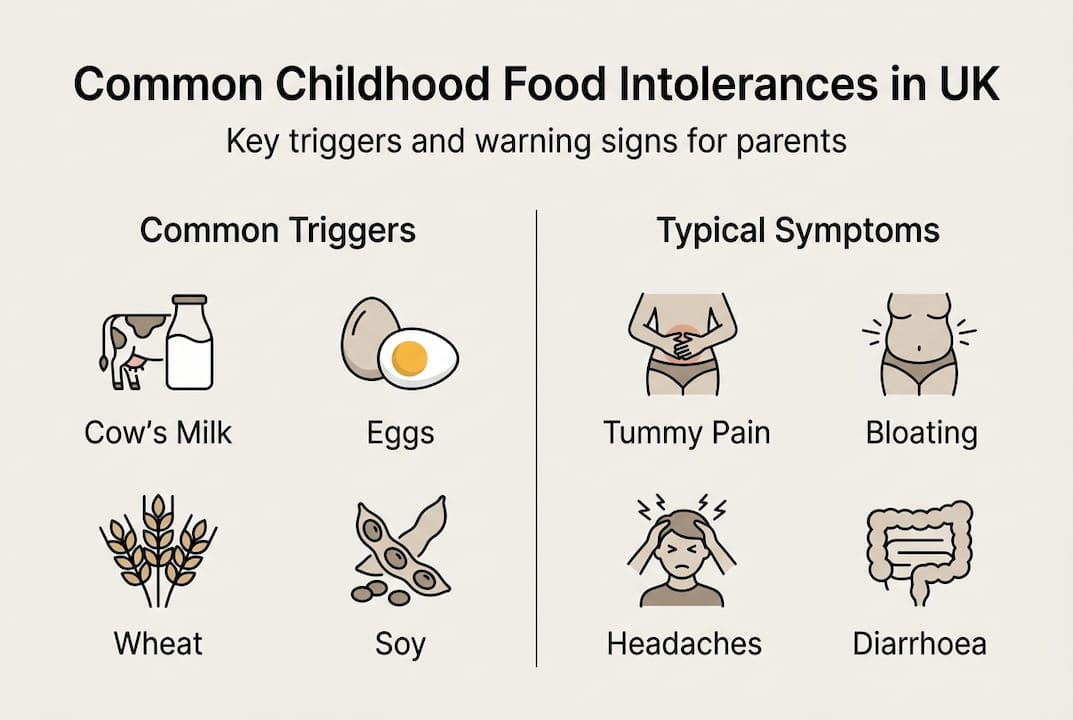
With prevalence in perspective, it helps to know which intolerances are actually most relevant for UK children. The most common include lactose, gluten (non-coeliac), histamine, caffeine, sulphites, salicylates, and MSG. Each one works differently and affects children in different ways.

Here is a comparison to help you tell them apart:
| Intolerance | Common sources | Typical symptoms |
|---|---|---|
| Lactose | Milk, cheese, yoghurt | Bloating, diarrhoea, stomach cramps |
| Non-coeliac gluten | Bread, pasta, cereals | Fatigue, bloating, loose stools |
| Histamine | Aged cheese, wine, processed meats | Headaches, flushing, itching |
| Sulphites | Dried fruit, squash, wine | Asthma-like symptoms, rashes |
| Salicylates | Fruit, tomatoes, some medicines | Hives, nasal congestion, stomach pain |
| MSG | Takeaways, crisps, sauces | Headaches, flushing, sweating |
Some key points to keep in mind:
- Lactose intolerance is the most frequently seen in children
- Non-coeliac gluten intolerance is separate from coeliac disease, which is an autoimmune condition
- Histamine and chemical intolerances are often overlooked but can cause significant discomfort
- Symptoms across these intolerances overlap considerably, which is why tracking is so important
For more detail on spotting specific intolerances in your child, our dedicated guide breaks things down clearly.
What symptoms should parents watch for?
Understanding which intolerances are common leads naturally to recognising their symptoms in your child. The key feature of intolerance symptoms is their timing. Unlike allergies, which strike fast, intolerance reactions appear hours after consumption and can include diarrhoea, bloating, headache, fatigue, and rashes.
Here are the most common symptoms to watch for:
- Stomach pain or cramps after meals, particularly recurring ones
- Bloating or wind that seems disproportionate to what was eaten
- Loose stools or diarrhoea without an obvious infection cause
- Headaches that appear a few hours after eating
- Skin rashes or eczema flare-ups with no clear trigger
- Fatigue or low energy that does not improve with rest
- Runny nose or congestion after certain foods
“Symptoms of food intolerances often emerge hours after eating the trigger food, making them harder to connect to a specific cause.” — NHS
Pro Tip: Keep a simple food and symptom diary for two weeks. Write down everything your child eats and any symptoms that follow, including the time gap. Patterns often become obvious quite quickly. You can find more guidance on common food intolerance symptoms and how to track them effectively.
If symptoms are severe, persistent, or accompanied by weight loss or blood in stools, always speak to your GP first.
Spotlight: Lactose intolerance in UK children
Given how often lactose intolerance comes up, it deserves a closer look. Lactose intolerance in UK children is often secondary or transient, meaning it develops temporarily after a stomach bug or illness rather than being a lifelong condition. The primary form, where the body simply never produces enough lactase enzyme, is actually rare among white British children.
This is an important distinction. If your child suddenly cannot tolerate milk after a bout of gastroenteritis, their gut lining may simply need time to recover. Cutting dairy permanently in that situation could be unnecessary and nutritionally risky.
Children most at risk of temporary lactose intolerance include:
- Those who have recently had a gastrointestinal infection
- Premature babies whose digestive systems are still developing
- Children with other gut conditions affecting the small intestine
Pro Tip: If you suspect lactose intolerance, do not simply remove all dairy without guidance. Calcium and vitamin D are critical for growing bones. A dietitian can help you find suitable alternatives and reintroduce dairy safely once the gut has healed. Our lactose intolerance information page offers further reading to support your next steps.
Diagnosing and managing food intolerances safely
Once you suspect an intolerance, the temptation is to act fast. But safe diagnosis takes a structured approach, and cutting foods without guidance can do more harm than good.
Here is the recommended process:
- Start a food and symptom diary to identify patterns over two to four weeks
- Speak to your GP to rule out other conditions and get a referral if needed
- Work with a dietitian to plan a supervised elimination diet, removing suspected foods for a set period
- Reintroduce foods systematically to confirm which ones cause symptoms
- Monitor nutrition throughout, especially if removing major food groups like dairy or wheat
Diagnosis involves clinical history, supervised elimination diets, and GP referral where appropriate. Unvalidated home tests should be avoided, as they are not clinically proven and can lead to unnecessary food restriction.
“Avoid unvalidated home IgG tests or bioresonance; diagnosis should be under professional supervision.” — NHS
Pro Tip: An elimination diet is not about starving your child of nutrients. It is a short, structured process designed to identify triggers. Always have a dietitian involved to ensure your child continues to get everything they need. Our testing steps for parents guide explains what to expect at each stage.
Long-term management is about balance. Once triggers are identified, most children can enjoy a varied diet with only specific items reduced or avoided. Keep an eye on nutritional guidance to avoid gaps, and use our resources on managing child intolerance and support for intolerant children to stay informed at every stage.
Next steps: Expert support for identifying and managing intolerances
If you have read this far, you are already taking your child’s wellbeing seriously. That matters. The next step is finding reliable support that helps you move from suspicion to clarity.

At UK Food Intolerance, we offer accessible, non-invasive testing using bio-resonance technology, with results delivered within 48 to 72 hours. Our intolerance test options include the Core Single Intolerance Test (covering 500 items) and the Ultimate Single Intolerance Test (covering over 1,100 items), both designed to give you a clear starting point. You can explore all our food intolerance tests and find the right fit for your child. We also have a helpful guide on matching diet with testing so you can use your results practically and confidently alongside professional advice.
Frequently asked questions
How can I tell if my child has a food intolerance?
Watch for recurring symptoms like tummy pain, diarrhoea, or headaches after specific foods, and keep a food and symptom diary to discuss with your GP or dietitian. Symptoms often emerge hours after eating the trigger, which is what makes them easy to miss.
Are food intolerance tests for children reliable?
Only NHS-recommended clinical approaches and dietitian-supervised elimination diets are considered reliable for diagnosing intolerances in children. Unvalidated home IgG tests and bioresonance kits are not clinically proven and should not replace professional assessment.
What is the difference between a food allergy and intolerance?
Food intolerances differ from allergies in that they are non-immune and cause delayed, less severe symptoms. Allergies involve the immune system and can cause immediate, potentially life-threatening reactions.
Is lactose intolerance common in children in the UK?
Primary lactose intolerance is rare in white British children, but secondary lactose intolerance can occur temporarily after tummy bugs or in premature infants, and usually resolves with time.









Leave a Reply
Want to join the discussion?Feel free to contribute!