

TL;DR:
- Monitoring delayed and complex food reactions through detailed, ingredient-level tracking over several weeks enables accurate identification of personal triggers. Consistent use of digital tools enhances data collection, revealing patterns that inform effective elimination diets and reduce adverse symptoms. Combining symptom logs with professional testing optimizes management of food sensitivities, allergies, and intolerances, improving overall health and quality of life.
If you have been struggling with bloating, skin flares, headaches, or persistent fatigue without any clear explanation, food reactions could be the reason. Understanding why monitor food reactions matters is the first step towards taking back control of your health. The problem is that reactions are rarely straightforward. They do not always appear right after a meal, and they do not always point to a single obvious ingredient. Without a structured approach, identifying what is actually causing your symptoms can feel like guessing in the dark.
Table of Contents
- Key takeaways
- Why monitor food reactions: the core case
- Allergies, intolerances, and sensitivities explained
- Why food triggers are so hard to pinpoint
- Effective methods for monitoring food reactions
- Benefits of monitoring food reactions
- How to start monitoring today
- My honest take on food reaction monitoring
- Find your triggers with Ukfoodintolerance
- FAQ
Key takeaways
| Point | Details |
|---|---|
| Delayed reactions are common | Symptoms can appear up to 48-72 hours after eating, making same-day tracking unreliable. |
| Allergies differ from intolerances | Allergic reactions are immune-driven and fast; intolerances are digestive, delayed, and dose-dependent. |
| Consistent tracking reveals patterns | Logging food and symptoms over 2-4 weeks gives you reliable data to identify real triggers. |
| Digital tools improve accuracy | App-based tracking produces significantly more data and better pattern recognition than paper diaries. |
| Monitoring improves quality of life | Evidence shows personalised elimination diets based on tracked data outperform generic dietary advice. |
Why monitor food reactions: the core case
Most people assume that if a food causes a reaction, they will know about it quickly. That assumption is wrong for a large proportion of food-related health issues. While true allergies often do trigger fast responses, intolerances are a different story entirely. They can cause symptoms anywhere from a few hours to two or three days after you ate the offending food. By that point, you have eaten several other meals, and the connection between cause and effect has become almost impossible to spot without a record.
This is exactly why the importance of food reactions monitoring goes far beyond simple curiosity. If you are experiencing recurring symptoms and you are not tracking, you are essentially trying to solve a puzzle while someone keeps changing the pieces. Systematic monitoring gives you a reliable picture of what you eat, what symptoms follow, and when. That picture is what allows you to make genuinely informed decisions about your diet.
Tracking also matters because reactions are not always black and white. Sometimes it is not a single food that causes a problem. It is the combination of several foods eaten within a short window, each contributing a portion of a chemical load that only tips you over the threshold when they add up together. Without monitoring, you will never detect that pattern.
Allergies, intolerances, and sensitivities explained
Before you can monitor food reactions effectively, you need to understand what you are actually looking for. The three terms used most often, allergies, intolerances, and sensitivities, describe very different processes in the body.
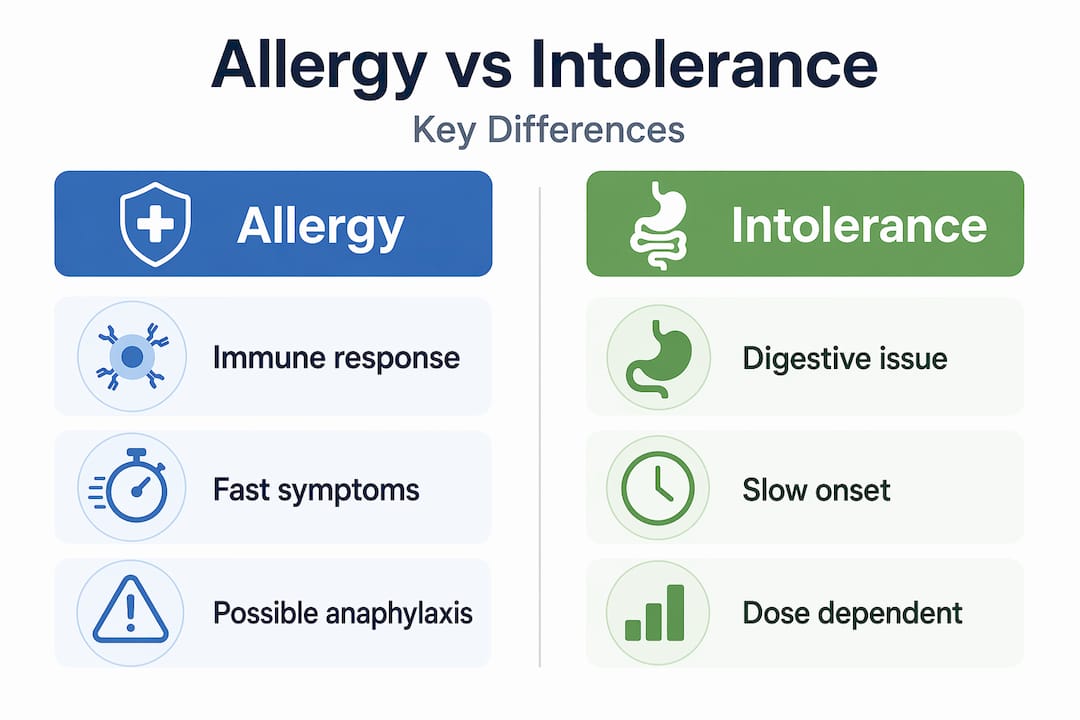
A food allergy involves the immune system. When you eat a trigger food, your body produces IgE antibodies and mounts a defence. Allergic reactions typically occur within two hours of eating and can include hives, swelling, breathing difficulties, or anaphylaxis. These reactions are serious, and in children especially, allergic sensitisation can alter behaviour and create food aversion before any visible gut symptoms appear.
A food intolerance is different. It does not involve the immune system in the same way. Instead, it relates to how your digestive system processes certain foods. Symptoms are typically delayed and digestive in nature, and they are often dose-dependent. Meaning that small amounts may not cause obvious problems, but larger quantities will.

Food sensitivity sits somewhere between the two and tends to be used as a broader, less clinical term. Here is a quick comparison to help you distinguish them:
| Feature | Food allergy | Food intolerance | Food sensitivity |
|---|---|---|---|
| Mechanism | Immune (IgE) response | Digestive | Varied |
| Onset speed | Within 2 hours | 2-72 hours | Varied |
| Dose-dependent | Often not | Yes | Often yes |
| Typical symptoms | Hives, swelling, anaphylaxis | Bloating, nausea, fatigue | Fatigue, headaches, skin issues |
| Life-threatening | Can be | Rarely | Rarely |
Understanding allergy vs intolerance differences is not just academic. It shapes how you monitor, what you look for, and how urgently you need clinical support.
Why food triggers are so hard to pinpoint
Here is the part that trips most people up. They eat something on Monday and feel terrible on Wednesday. By then, they have had six or seven other meals, and Monday’s dinner seems completely irrelevant. This is the delayed reaction problem, and it is one of the most common reasons people go months or years without identifying their triggers.
Food intolerance symptoms can appear anywhere within a 48-72 hour window after eating, which means a simple same-day food diary will miss the culprit almost every time. This is not a flaw in your approach. It is a structural problem with how most people track. And it is compounded further by combination effects.
Consider this: you might be fine eating a small amount of avocado, fine eating a small amount of mature cheese, and fine having a glass of wine with dinner. But eat all three together, and the combined histamine load tips you over your personal threshold. You feel rough the next morning and have no idea why. Eating multiple high-histamine or high-FODMAP foods within a short window can cause reactions that would never appear if those foods were eaten in isolation.
This is why basic symptom tracking fails:
- Checking only for same-day reactions misses delayed triggers entirely
- Logging meals without ingredient-level detail obscures chemical patterns
- Not tracking symptom severity means you cannot correlate dose with reaction strength
- Failing to note time of eating makes it impossible to build an accurate timeline
Pro Tip: When you start tracking, record the time of every meal and every symptom separately. Even a one-hour shift in your timeline can reveal patterns that otherwise look completely random.
Understanding these challenges explains exactly why monitoring food sensitivities requires more than a rough mental note. It requires structure, consistency, and ideally the right tools.
Effective methods for monitoring food reactions
Getting monitoring right is not about being obsessive. It is about being consistent and capturing the right kind of information. Here is what actually works:
-
Track at ingredient level, not meal level. Logging “pasta bolognese” tells you almost nothing. Logging “minced beef, tomatoes, onion, garlic, dried basil, spaghetti” gives you something to work with. This is how you spot patterns around specific chemicals like histamine, FODMAPs, or salicylates.
-
Use a multi-day review window. Multi-day pattern recognition across 48-72 hour windows surfaces connections that your brain simply cannot detect manually when you are reviewing a single day at a time.
-
Switch to a digital tool. The data is stark here. App users log 92 days of data over six months compared to just 29 days for paper diary users, with 89% adherence rates for digital trackers. More data means more reliable patterns and better outcomes.
-
Track for at least two to four weeks. One week is not enough. You need enough data to see repeating patterns across different days, different meal types, and different symptom clusters.
-
Record symptom severity. Use a simple 1-10 scale for each symptom. This helps you identify dose-dependent reactions where the amount of a food matters as much as the food itself.
-
Use a stepwise elimination and reintroduction approach. Once you have identified suspected triggers from your logs, remove them for two to three weeks and then reintroduce them one at a time. This is the gold-standard method for confirming food reaction triggers with confidence.
-
Combine tracking with a professional test. Monitoring your symptoms gives you data. A structured intolerance test gives you a biological baseline. Together, they are far more powerful than either approach alone.
Pro Tip: Look for apps that automatically tag your ingredients for histamine, FODMAPs, and salicylates. Doing this manually is time-consuming and error-prone. Automation is what makes ingredient-level tracking actually sustainable.
Benefits of monitoring food reactions
The payoff for consistent monitoring is real and evidence-backed. 81% of patients improved symptoms on personalised elimination diets compared to those following generic dietary advice. That is a significant difference, and it comes directly from the quality of the data gathered through tracking.
The benefits of food reaction logs extend well beyond symptom relief:
- Fewer unnecessary restrictions. When you know your actual triggers, you stop avoiding foods that are not causing you problems. This protects your nutritional intake and your quality of life.
- Reduced risk of severe reactions. For those with true allergies, careful food allergy monitoring builds awareness of hidden ingredients and exposure risks, reducing the chance of accidental reactions.
- Psychological clarity. Unexplained symptoms create anxiety. When you have data, you have answers. That clarity alone has a measurable impact on mental wellbeing.
- More productive clinical conversations. Arriving at a GP or dietitian appointment with weeks of detailed logs changes the consultation completely. You give the clinician something concrete to work with rather than a vague description of symptoms.
“Personalised food allergy care is becoming more proactive and focused on individual patients’ quality of life beyond avoidance.” HCPLive
The effects of food reactions left unmanaged compound over time. Inflammation, nutritional deficiencies from overly broad avoidance, and persistent digestive disruption all take a toll. Monitoring is how you stop the guessing and start actually managing.
How to start monitoring today
You do not need to overhaul your entire routine to begin. Starting simply and building consistency is far more effective than a complex system you abandon after a week.
-
Choose your tracking method. A dedicated app is the most effective option, but a structured spreadsheet works if that is what you will actually use consistently.
-
On day one, record everything you eat with ingredient-level detail. Include portion sizes if you can. Note the time of every meal and snack.
-
Log every symptom as it appears, including the time, type, and severity on a 1-10 scale. Do not wait until the end of the day. Log in real time.
-
Commit to tracking for a minimum of two weeks before drawing any conclusions. Patterns rarely show themselves in less than that.
-
At the end of each week, review your logs looking back 48-72 hours before each symptom cluster. Look for repeated ingredients, not just repeated meals.
-
Note any combined eating patterns. Did several potentially reactive foods appear together in the days before a symptom spike?
-
Once you have a hypothesis about a trigger, consult a healthcare professional before starting a strict elimination diet, particularly if the suspected food forms a significant part of your nutrition.
You can learn more about tracking intolerance symptoms at home to build a sustainable routine from the start.
My honest take on food reaction monitoring
I have seen a lot of people arrive at the idea of tracking their food reactions with the best of intentions, only to give up within a week because they did not see instant answers. And I understand that frustration. But in my experience, the failure is almost never about effort. It is about expectation.
Most people go in looking for a single guilty food. They want a clear culprit. What they find instead is a messy picture that takes time to resolve. That messiness is not a sign that the process is not working. It is a sign that the process is working exactly as it should, surfacing the real complexity of how your body responds to what you eat.
What I have observed consistently is that the people who stick with detailed, ingredient-level tracking for three or four weeks end up with something genuinely useful. Not just a list of foods to avoid, but an understanding of their personal thresholds, their trigger combinations, and the conditions under which they react. That level of knowledge changes everything.
I am also genuinely encouraged by where technology is taking this. AI-based tracking tools that analyse ingredient-level data are already making it possible to identify triggers that no human reviewing a paper diary could realistically spot. The future of food reaction management is data-driven, and that is good news for anyone who has spent years without answers.
Persevere. The data is there. You just need the right tools and enough time to let it speak.
— Rob
Find your triggers with Ukfoodintolerance
Tracking your symptoms is a powerful start. But pairing that data with a structured intolerance test gives you a clearer, more confident picture of what is actually going on in your body. At Ukfoodintolerance, our at-home testing kits use bio-resonance technology to analyse a small hair sample against over 900 food and non-food items, with detailed digital results delivered within 48-72 hours.

You do not need a clinic visit or a lengthy waiting list. Simply collect your sample at home, post it to our UK laboratory, and receive a clear, easy-to-read report that you can use directly to guide an elimination diet. Browse our full range of intolerance testing options and find the test that fits your needs and budget. Getting answers has never been more straightforward.
FAQ
Why is it important to monitor food reactions?
Monitoring food reactions helps you identify hidden triggers causing symptoms like bloating, fatigue, and skin flares. Because many reactions are delayed by up to 72 hours, consistent tracking is the only reliable way to find the connection between what you eat and how you feel.
How long should I track food and symptoms?
Track for a minimum of two to four weeks to gather enough data to spot repeating patterns. A single week rarely provides sufficient evidence, particularly for delayed intolerance reactions that appear days after eating.
What is the difference between a food allergy and a food intolerance?
A food allergy triggers an immune response, typically within two hours, and can be severe or life-threatening. A food intolerance causes digestive symptoms that are delayed and dose-dependent, making them harder to identify without structured monitoring.
Are digital food tracking apps better than paper diaries?
Yes, significantly. Digital app users log three times more data than paper diary users and maintain nearly 90% adherence over six months, producing far more reliable pattern insights than handwritten notes.
Can monitoring food reactions prevent severe reactions?
For those with known allergies, diligent food allergy monitoring builds awareness of hidden ingredients and potential exposures, reducing the risk of accidental contact with serious triggers. Combined with clinical guidance, it is an important part of safe food reaction management.










Leave a Reply
Want to join the discussion?Feel free to contribute!