

TL;DR:
- Food intolerance symptoms are delayed and include bloating, headaches, fatigue, and stomach discomfort.
- Tracking symptoms with a diary over two weeks aids in identifying potential food triggers.
- Reliable diagnosis involves professional elimination diets and tests, while home kits are often unvalidated.
Bloating after every meal. Headaches that appear from nowhere. Fatigue that no amount of sleep seems to fix. If this sounds familiar, you are not alone. Millions of people in the UK live with recurring, unexplained symptoms and never connect them to what they eat. Common symptoms of food intolerance include bloating, stomach discomfort, diarrhoea, constipation, fatigue, headaches, skin flare-ups, and feeling generally run down. The challenge is that these symptoms overlap with so many other conditions. This guide walks you through a clear, step-by-step approach to identifying, tracking, and verifying your symptoms safely at home, so you can finally start getting answers.
Table of Contents
- Understanding intolerance: Symptoms, causes and what sets them apart
- Preparing to track your symptoms: Tools and what to notice
- The step-by-step process: How to recognise your intolerance
- Testing, troubleshooting, and how to avoid common mistakes
- The uncomfortable truth: Why a cautious approach works best
- Explore safe, evidence-based testing options
- Frequently asked questions
Key Takeaways
| Point | Details |
|---|---|
| Recognise intolerance symptoms | Common signs include delayed digestive issues like bloating and tiredness after eating suspect foods. |
| Track carefully | A detailed diary over several weeks helps connect food with symptoms and avoids guesswork. |
| Beware unreliable test kits | Limit trust in commercial home kits and prioritise GP-guided approaches for safe, accurate results. |
| Consult a GP for safety | See your doctor to rule out serious causes before self-testing, especially for severe or ongoing symptoms. |
| Methodical steps work best | Stepwise tracking, elimination, and reintroduction give clearer answers than instant fixes. |
Understanding intolerance: Symptoms, causes and what sets them apart
Before you can spot an intolerance, you need to know what you are actually looking for. Many people confuse food intolerance with food allergy, and that confusion can lead to unnecessary worry or, worse, missing something important.
A food allergy involves your immune system. It can trigger severe, sometimes life-threatening reactions within minutes. Food intolerance is different. It is primarily a digestive issue. Your body struggles to process a particular food or ingredient, but your immune system is not involved. That means no immune system involvement, non-life-threatening responses, and symptoms that are focused on digestion rather than the whole body.
Here is a quick comparison to make the difference clearer:
| Feature | Food allergy | Food intolerance |
|---|---|---|
| System involved | Immune system | Digestive system |
| Onset of symptoms | Minutes | Hours to days |
| Severity | Can be life-threatening | Uncomfortable, rarely dangerous |
| Common examples | Peanuts, shellfish | Lactose, gluten, additives |
| Treatment | Avoidance, EpiPen | Dietary adjustment |
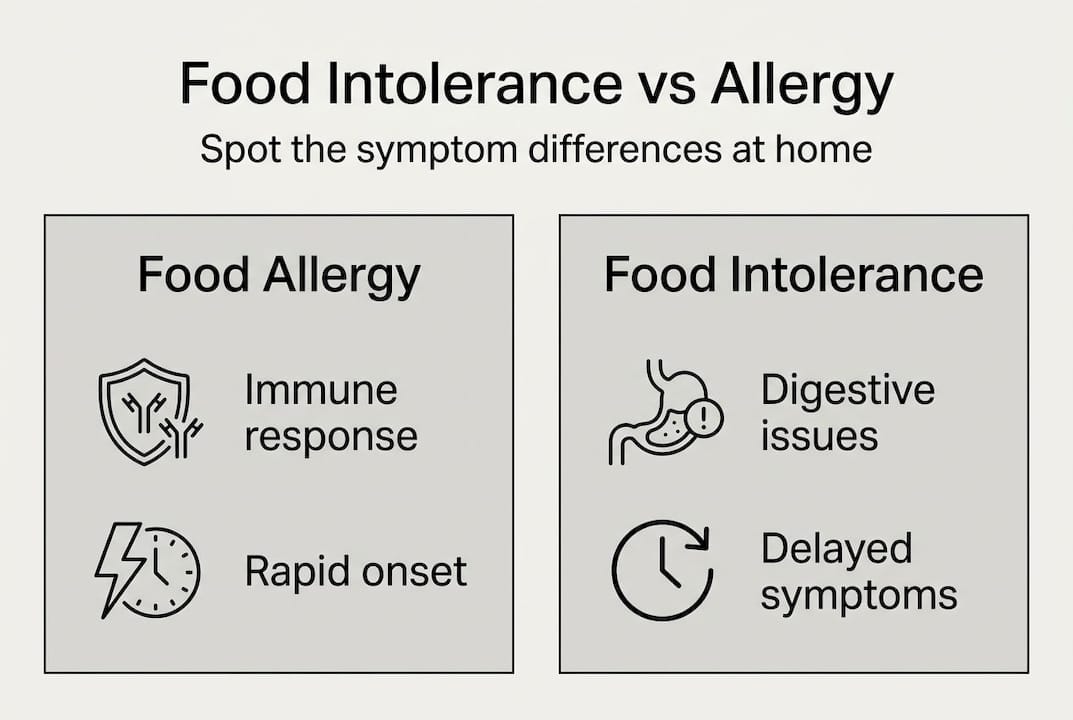
The delayed onset is one of the trickiest aspects of intolerance. You might eat something on Monday and not feel the effects until Wednesday. Symptoms such as bloating, discomfort, diarrhoea, headaches, and tiredness can appear hours or even days after eating the trigger food, which makes pinpointing the cause genuinely difficult.
Common symptoms to watch for include:
- Bloating and excess wind
- Stomach cramps or discomfort
- Diarrhoea or constipation
- Nausea
- Headaches or migraines
- Skin rashes or eczema flare-ups
- Fatigue and low energy
- Brain fog or difficulty concentrating
You can explore common intolerance symptoms in more detail to see how they present across different age groups. It is also worth reading about spotting symptoms in children, as the signs can look quite different in younger people.
Around 20% of UK adults report making dietary changes due to suspected intolerance, though the difference between allergy and intolerance is often misunderstood and true clinical intolerance rates are considerably lower. Getting the distinction right matters for your safety and your quality of life.
Preparing to track your symptoms: Tools and what to notice
Now that you know what to look for, the next step is preparing to track your symptoms efficiently. This is where most people either succeed or give up too early.
A food and symptom diary is your most powerful tool. It creates an evidence base that you and your GP can actually use. Without it, you are relying on memory, which is unreliable, especially when symptoms are delayed by a day or two.

You have several options for tracking symptoms at home:
| Tool | Pros | Cons |
|---|---|---|
| Paper diary | Simple, no tech needed | Easy to lose, harder to search |
| Smartphone app | Searchable, reminders, graphs | Requires consistent phone use |
| Spreadsheet | Customisable, easy to share with GP | Needs basic computer skills |
Whatever format you choose, record the following every day:
- Everything you eat and drink, including portion sizes
- The time of each meal and snack
- Any symptoms you notice, including their intensity on a scale of 1 to 10
- The time symptoms appeared
- Other possible triggers such as stress, poor sleep, or medication
Symptoms are often dose-dependent. A small amount of a trigger food might cause mild discomfort, while a larger portion causes significant distress. This variability is exactly why consistent recording over time reveals patterns that a single bad day never could.
There are also red-flag symptoms that should send you straight to your GP without waiting. Blood in your stool, unexplained weight loss, persistent vomiting, or difficulty swallowing are not intolerance symptoms. They need urgent medical attention.
Following food diary best practice means being consistent and thorough from the very first day.
Pro Tip: Do not skip days, even when you feel fine. A symptom-free day is just as useful as a bad one. It helps you identify which foods are safe and confirms your patterns are real.
The step-by-step process: How to recognise your intolerance
Equipped with your diary and knowledge, here is the structured process for recognising intolerance symptoms at home and with professional guidance.
- Document your symptoms for at least two weeks before drawing any conclusions. Note every food, every symptom, and every timing detail.
- Identify your suspects. Look for repeated patterns. Does bloating always follow dairy? Do headaches appear after eating wheat? Your diary will start to show you.
- See your GP to rule out serious conditions. Coeliac disease, irritable bowel syndrome (IBS), and inflammatory bowel disease can all mimic intolerance. Your GP needs to exclude these first.
- Begin an elimination diet. Remove the suspected food or food group for two to six weeks. Diagnosis via elimination diet involves removing suspect foods and carefully reintroducing them under guidance.
- Controlled reintroduction. Bring the food back in small amounts and monitor your response carefully. This is the most revealing step.
- Validate your results. If symptoms return on reintroduction and clear on removal, you have strong evidence of intolerance.
For lactose specifically, your GP may refer you for a hydrogen breath test, which is available on the NHS and provides a more objective result.
Review your symptom breakdown regularly as you work through the process. Patterns may shift as you eliminate certain foods.
For elimination diet advice from a trusted source, Allergy UK provides clear guidance on how to approach this safely.
Important: Never begin a strict elimination diet without speaking to a GP or registered dietitian first, especially if you have existing health conditions or are managing symptoms in a child.
Pro Tip: Involve your GP at every stage. Self-diagnosis without professional input can lead to unnecessary dietary restrictions that affect your nutrition and wellbeing.
Testing, troubleshooting, and how to avoid common mistakes
Even with careful tracking, pitfalls exist. Here is how you can test wisely and avoid common missteps.
The UK market is full of at-home intolerance test kits. Some use IgG antibody testing, others claim to use bioresonance or hair analysis. The problem is that home kits are not recommended by major UK health agencies due to inaccuracy and the risk of unnecessary dietary restriction.
Here is a comparison of the main options:
| Test type | Evidence base | Risk of false result | NHS-available |
|---|---|---|---|
| GP elimination diet | Strong | Low | Yes |
| Hydrogen breath test | Strong (lactose) | Low | Yes |
| IgG home kit | Weak | High | No |
| Hair bioresonance kit | Not validated | High | No |
Common mistakes people make include:
- Trusting unvalidated kits and cutting out entire food groups unnecessarily
- Ignoring red-flag symptoms that need urgent GP review
- Stopping the tracking diary too soon before patterns emerge
- Assuming one bad reaction confirms a permanent intolerance
- Overlooking overlapping conditions like IBS, which can produce identical symptoms
Around 20% of UK adults report changing their diet due to suspected intolerance, but true clinical rates are far lower. This gap shows how easy it is to misattribute symptoms.
If your results are unclear or symptoms persist despite eliminating suspected foods, return to your GP. Overlapping conditions are common and need proper investigation. You can also read about the practical benefits of at-home tests and convenient UK testing options to understand where supplementary testing fits into your wider health plan. For broader context, the expert allergy guide from the British Society for Allergy and Clinical Immunology is a reliable reference.
For further reading on non-invasive home testing guidance, we cover the latest UK trends and what the evidence actually supports.
The uncomfortable truth: Why a cautious approach works best
Here is something that does not get said enough: the fastest route to an answer is rarely the most accurate one.
Popular home test kits are appealing because they promise clarity within days. But when those results lead you to cut out five food groups unnecessarily, you are not better informed. You are nutritionally restricted and no closer to a real diagnosis. Prioritising a GP consultation for unexplained symptoms protects you from nutritional deficits caused by poorly guided self-testing.
Methodical elimination, supported by a GP or dietitian, takes longer. It can feel frustrating when you just want answers. But it is the approach most likely to give you a result you can actually trust and act on safely.
Real-world diagnosis is rarely instant. Symptoms shift, patterns take time to emerge, and other conditions need to be ruled out first. The people who persist with careful tracking and professional guidance are the ones who end up with a clear, actionable plan. Read more about whether intolerance tests are right for you before making any decisions.
Patience, consistency, and the right support are not the exciting answer. But they are the effective one.
Explore safe, evidence-based testing options
If you have been tracking your symptoms and want to take the next step, it helps to know what testing options are available and how to use them wisely alongside your GP’s guidance.

At UK Food Intolerance, we offer non-invasive at-home testing using bioresonance technology, with results delivered digitally within 48 to 72 hours. Our tests screen for sensitivities across hundreds of food and environmental items, giving you a clear starting point for further investigation. You can explore food intolerance tests or browse our full intolerance test range to find the right option for you. Once you have your results, our guidance on how to understand your test results will help you make sense of what they mean for your diet and wellbeing.
Frequently asked questions
What are the earliest signs of food intolerance?
Typical early signs include bloating, stomach discomfort, and fatigue, which may appear hours or even days after eating the trigger food, making them easy to overlook initially.
How long should I track my symptoms before seeing a GP?
Track your symptoms for at least two weeks to build a useful pattern, but see a GP urgently if you notice blood in your stool, unexplained weight loss, or persistent severe symptoms.
Are home intolerance test kits reliable in the UK?
Most home kits, including IgG and hair tests, lack scientific validation and can produce misleading results; GP-guided elimination diets remain the more reliable approach.
Can lactose intolerance cause symptoms beyond digestion?
Yes, lactose can cause headaches and tiredness alongside the more typical stomach symptoms, which is why it is easy to misattribute these to other causes.
What is the role of a food and symptom diary?
A diary helps reveal patterns between food and symptoms, especially when reactions are delayed, making it far easier to identify potential intolerances over time.










Leave a Reply
Want to join the discussion?Feel free to contribute!