

TL;DR:
- Preventative health focuses on actions to maintain well-being, detect diseases early, and prevent harm from existing conditions.
- UK policies prioritize reducing preventable causes of illness and increasing healthy life expectancy through coordinated efforts and NHS programs.
Preventative health means taking actions to keep yourself well, stop disease from developing, detect it early when it does, and reduce harm if you already have a condition. In the UK, this concept sits at the heart of NHS England’s long-term strategy and the UK government’s prevention vision, which sets a target to increase healthy life expectancy by at least five years by 2035 and to narrow health inequality gaps. Organisations including NHS England, NICE, and the UK Health Security Agency (UKHSA) all shape how these preventive services are designed and delivered. Put simply, prevention is not just about avoiding illness. It is about giving yourself more years of good health.
Table of Contents
- What preventative health actually covers
- The four levels of prevention, with UK examples
- Which NHS preventative services are available to you?
- Why prevention works: the evidence behind the benefits
- Common limits, harms, and misconceptions about preventative health
- A practical checklist: how to start or improve your preventative health
- Where at-home sensitivity testing fits into preventative health
- Key takeaways
- Why prevention deserves more than lip service
- Ukfoodintolerance: at-home sensitivity testing for preventative dietary insight
- Useful sources and further reading
What preventative health actually covers
Prevention and health promotion are related but distinct. Health promotion creates the conditions in which people can be healthy — think public campaigns encouraging physical activity or policies that make healthy food more affordable. Prevention, by contrast, targets specific diseases or harms: a vaccination stops a particular infection; a screening programme catches cancer at a stage when treatment works best.
Both matter. According to NHS England, the major causes of mortality and long-term illness in England are largely preventable and linked to modifiable risks: tobacco use, high blood sugar, high BMI, poor diet, high blood pressure, and alcohol. Addressing these is where preventive health measures deliver the greatest return.
Concrete components of preventative health include:
- Immunisation: — childhood and adult vaccination schedules through the NHS immunisation programme
- Workplace and population measures: — occupational health, air-quality regulation, and active-travel infrastructure
Pro Tip: Ask yourself whether a suggested action targets a specific disease or risk factor (prevention) or simply supports general wellbeing (health promotion). If it does both, that is fine — but knowing the difference helps you prioritise what to do first.
The King’s Fund makes a useful point here: prevention works best as a partnership. NHS services and clinical programmes can only do so much. Personal self-management, alongside systemic support, is what moves the dial on healthy life expectancy.
The four levels of prevention, with UK examples
Public health uses a structured framework to organise preventive actions. StatPearls on NCBI describes four main levels, plus a fifth that is increasingly recognised in clinical practice.
| Level | What it means | UK example |
|---|---|---|
| Primordial | Prevents the conditions that cause risk factors from developing in the first place | Sugar and tobacco taxes; active-travel infrastructure; housing policy |
| Primary | Stops disease occurring in healthy people | NHS vaccination programme; smoking-cessation services; dietary advice |
| Secondary | Detects disease early in apparently healthy people so treatment is more effective | NHS cancer screening (breast, cervical, bowel); NHS Health Check |
| Tertiary | Reduces disability and complications in people already diagnosed | Long-term condition management; cardiac rehabilitation; diabetes care plans |
| Quaternary | Protects patients from unnecessary or harmful medical interventions | Avoiding low-value tests; reducing overdiagnosis; clinical deprescribing |
Primordial prevention operates at the societal level. Stable employment, decent housing, and access to green space are not just nice-to-haves — the King’s Fund identifies them as fundamental protective factors for long-term health outcomes. UK policies such as the soft drinks industry levy sit squarely in this category.
Primary prevention is where most people start. Getting your flu jab, quitting smoking, or following NHS guidance on alcohol limits are all primary prevention actions. They reduce the probability of disease before it starts.
Secondary prevention is the domain of NHS screening. The NHS runs age-based and risk-based programmes, and eligibility varies by programme. Cervical screening invites women aged 25–64; bowel cancer screening invites adults aged 50–74; the NHS Health Check targets adults aged 40–74 who are not already on a disease register. These are not optional extras — early detection consistently improves outcomes.
Tertiary prevention is often overlooked in public discussions, yet it affects millions of people living with long-term conditions. Structured diabetes management, pulmonary rehabilitation after a COPD diagnosis, and cardiac rehab after a heart attack all belong here.
Quaternary prevention is the newest addition to the framework. It asks clinicians and patients to consider whether a test or treatment is actually necessary, or whether it risks causing more harm than good through overdiagnosis or unnecessary follow-up investigations.
Which NHS preventative services are available to you?
The NHS offers a range of free preventive services. Knowing which ones apply to you is the first practical step.
Key NHS prevention programmes:
- NHS Health Check: — a free cardiovascular risk assessment for adults aged 40–74 not already on a relevant disease register; offered every five years
| Programme | Who is invited | How to access |
|---|---|---|
| NHS Health Check | Adults aged 40–74 (not on disease register) | GP surgery or local council |
| Cervical screening | People with a cervix, aged 25–64 | Invitation letter; book via GP |
| Breast screening | Women aged 50–70 | Invitation letter; local screening unit |
| Bowel cancer screening | Adults aged 50–74 | Home test kit sent by post |
| Flu vaccination | Eligible groups (pregnant, clinical risk) | GP or pharmacy |
| NHS Diabetes Prevention | High-risk adults identified via Health Check or GP | GP referral |
NHS screening guidance explains that these programmes are designed for apparently healthy people. If you receive an invitation, respond promptly — the programmes are evidence-based and targeted. If you think you have missed an invitation or want to check your eligibility, contact your GP surgery directly. NICE and NHS England publish the clinical thresholds and guidance that underpin each programme, so you can read the evidence behind any recommendation.
Why prevention works: the evidence behind the benefits
Prevention’s case is not theoretical. The UK government’s prevention strategy sets a clear national ambition: five extra years of healthy life expectancy by 2035, with a specific focus on closing the gap between the most and least deprived communities.
“Prevention is better than cure. Our vision is to help people enjoy at least five extra healthy, independent years of life by 2035, while narrowing the gap between the richest and poorest.” — UK Government Prevention Strategy, Prevention is better than cure
At the individual level, the benefits are straightforward: fewer years lived with disability, lower risk of cardiovascular disease, cancer, and type 2 diabetes, and a better quality of life for longer. At the system level, effective prevention reduces demand on NHS services that are already under pressure.
The NHS Diabetes Prevention Programme offers one of the clearest demonstrations of what targeted prevention can achieve. Between 2016 and 2018, participating areas recorded a 7% reduction in new type 2 diabetes diagnoses. That is a measurable, real-world result from a structured lifestyle intervention, not a theoretical projection.
Prevention also addresses the root causes of the NHS’s biggest pressures. NHS England identifies tobacco use, high blood sugar, high BMI, dietary risk, high blood pressure, and alcohol as the six modifiable risk factors driving the most mortality and long-term illness in England. Each of these is addressable through preventive action.
Common limits, harms, and misconceptions about preventative health
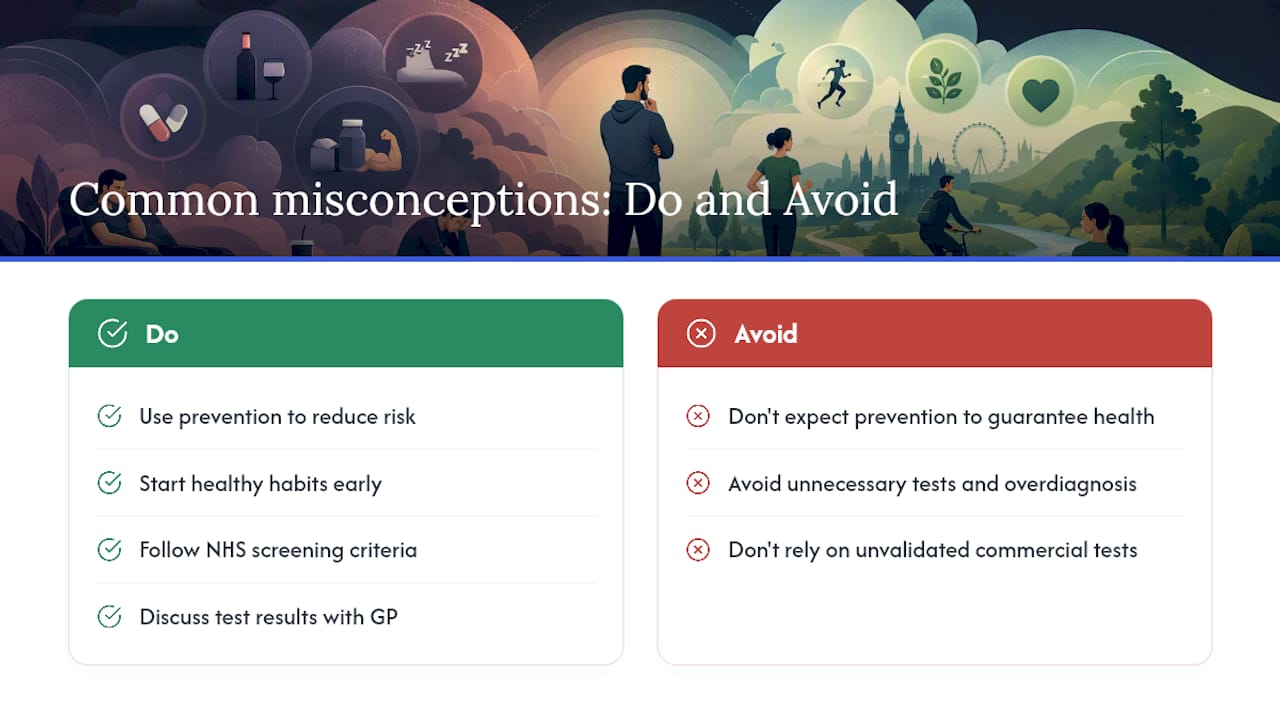
Prevention is powerful, but it is not a guarantee. Several misconceptions can lead people to make poor decisions about their health.
Misconception 1: Prevention means you will not get ill. Prevention reduces risk; it does not eliminate it. A non-smoker can still develop lung cancer. A person who attends every screening can still receive a late-stage diagnosis. The goal is to shift the odds, not to achieve certainty.
Misconception 2: More testing is always better. This is where quaternary prevention becomes relevant. Overuse of screening or unnecessary diagnostics can cause real harm: false positives lead to anxiety and invasive follow-up procedures; overdiagnosis results in treating conditions that would never have caused symptoms. NICE and NHS England design screening programmes with specific eligibility criteria precisely to avoid these harms.
Misconception 3: Commercial tests are clinically equivalent to NHS screening. They are not. Many commercial tests, particularly those sold online, are not validated to the same standard as NHS-commissioned programmes. A positive result from a commercial test does not confirm a diagnosis, and a negative result does not rule one out. Always discuss commercial test results with your GP before acting on them.
Misconception 4: Preventative health is only for older people. Primary prevention actions — diet, activity, not smoking — are most effective when started early. The NHS Health Check begins at 40, but lifestyle habits formed in your twenties and thirties shape your risk profile for decades.
The role of laboratory testing in health is real and growing, but it works best when tests are chosen thoughtfully and results are interpreted with clinical support.
A practical checklist: how to start or improve your preventative health
You do not need to overhaul everything at once. Work through these steps in order and build from there.
-
Assess your current lifestyle baseline — Note your smoking status, weekly alcohol units, physical activity level, and typical diet. The NHS recommends at least 150 minutes of moderate activity per week, no more than 14 units of alcohol, and a diet rich in vegetables, wholegrains, and lean protein.
-
Consider your diet and potential food sensitivities. Dietary adjustments for food sensitivity can support inflammation management and general wellbeing. If you suspect certain foods are affecting your health, a structured approach to identifying triggers is safer than guessing.
-
Set a review cadence — Preventative health is not a one-off event. Schedule an annual review with your GP, keep track of screening invitation dates, and revisit your lifestyle baseline every six to twelve months.
Questions to take to your GP:
Realistic timelines: blood-pressure improvements from lifestyle changes can appear within four to eight weeks. Weight-related metabolic improvements typically take three to six months to show in blood tests. Screening benefits operate over years, not weeks — the value is in catching something early, not in feeling different immediately.
Where at-home sensitivity testing fits into preventative health
At-home bioresonance and intolerance testing occupies a specific, useful niche within the broader preventative health picture. It is not clinical screening, and it does not diagnose allergies or disease. What it can do is help you identify potential food and environmental triggers that may be contributing to symptoms such as bloating, fatigue, skin reactions, or digestive discomfort.
The process is non-invasive: you collect a small hair sample at home, post it to a UK laboratory, and receive a detailed digital report, typically within 48–72 hours. Ukfoodintolerance’s tests cover over 1,450 items, including foods, environmental factors, nutritional indicators, and gut biome markers. That breadth makes the report a practical starting point for a structured elimination diet, rather than a definitive clinical verdict.

Consider how this works in practice. Someone experiencing persistent bloating and low energy might receive a report flagging several potential food sensitivities. Rather than eliminating everything at once, they share the report with their GP, agree on a supervised elimination protocol, and reintroduce foods one at a time to identify genuine triggers. That structured approach, combining at-home data with clinical oversight, is how these tests add real value.
The limitations are worth stating plainly. Bioresonance testing is not validated to the same standard as NHS allergy testing or clinical blood panels. Results should be treated as a guide for dietary investigation, not as a diagnosis. False positives are possible, and acting on results without GP input risks unnecessary dietary restriction. The intolerance testing in UK healthcare context matters here: these tests sit alongside NHS care, not instead of it.
Used thoughtfully, at-home sensitivity testing supports primary and tertiary prevention. It can prompt dietary changes that reduce inflammation and support long-term wellbeing, and it can help people with existing conditions manage their symptoms more effectively.
Key takeaways
Preventative health is most effective when NHS services, personal lifestyle choices, and targeted testing work together rather than in isolation.
| Point | Details |
|---|---|
| Clear definition | Preventative health covers actions to stay well, stop disease, detect it early, and reduce harm from existing conditions. |
| Four levels to know | Primordial, primary, secondary, and tertiary prevention each require different actions, from policy to personal lifestyle to NHS screening. |
| NHS services are free | The NHS Health Check, cancer screening programmes, and immunisation schedules are free and evidence-based — use them. |
| Prevention has limits | No test or lifestyle change eliminates risk entirely; quaternary prevention warns against unnecessary testing that can cause harm. |
| Ukfoodintolerance’s role | At-home bioresonance sensitivity tests from Ukfoodintolerance can support dietary investigation as part of a preventative approach, when used alongside GP guidance. |
Why prevention deserves more than lip service
Most people understand that prevention is better than cure. Fewer act on it consistently. What strikes me most, looking at the evidence, is how much of the burden falls on individuals to navigate a system that was largely built to treat illness rather than prevent it. The NHS Diabetes Prevention Programme’s 7% reduction in new diagnoses is genuinely impressive — but it required a structured, funded intervention to achieve it. Left to chance, those same people would have progressed to diagnosis.
The uncomfortable truth is that prevention asks you to act now for benefits you will not feel for years. That is a hard sell. But the alternative — waiting until symptoms appear — means starting from a much weaker position. The UK government’s target of five extra healthy years by 2035 is ambitious, and it will not be met by clinical services alone. It depends on people like you making small, consistent choices: booking the Health Check, responding to the screening letter, reviewing what you eat.
At-home testing, used wisely, can be part of that picture. Not as a shortcut to clinical diagnosis, but as a practical tool for understanding your body better and making informed dietary choices. The key word is “wisely” — with GP involvement, realistic expectations, and an understanding of what the results can and cannot tell you.
Ukfoodintolerance: at-home sensitivity testing for preventative dietary insight
If you are taking your preventative health seriously and want to understand how food and environmental factors might be affecting your wellbeing, Ukfoodintolerance offers a clear, non-invasive starting point. Rather than waiting for symptoms to become serious, you can get a detailed picture of potential sensitivities from a simple hair sample collected at home, analysed at a UK laboratory, and returned as a digital report within 48–72 hours.
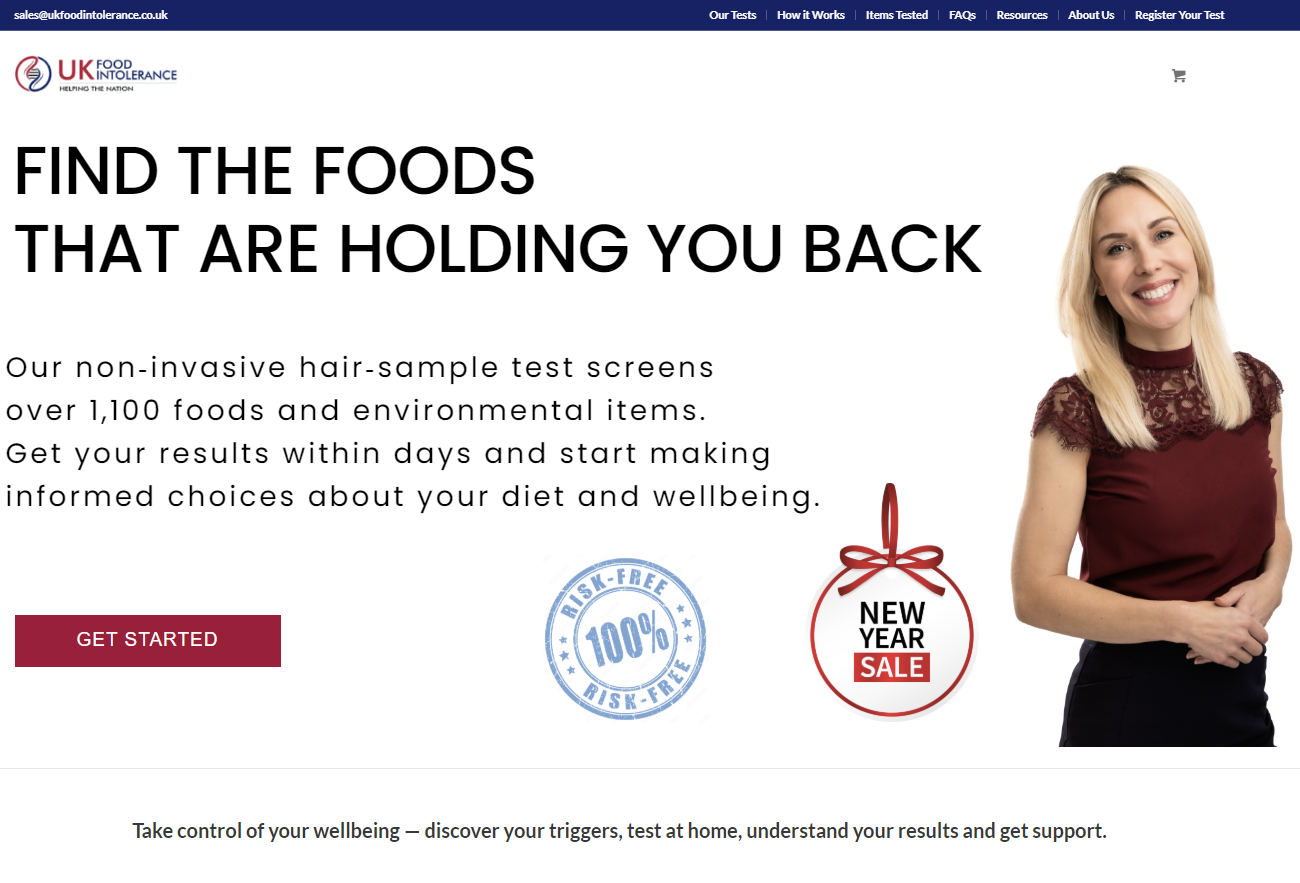
The tests cover over 1,450 items, including foods, environmental triggers, nutritional indicators, and gut biome markers. The digital report gives you specific, structured data you can use to start a supervised elimination diet or share directly with your GP. It is not a clinical diagnosis, and Ukfoodintolerance recommends discussing results with your GP before making significant dietary changes. Think of it as useful information that helps you and your doctor have a more informed conversation.
Browse the full range of food intolerance tests or explore all available tests to find the option that fits your needs.
Useful sources and further reading
These UK authorities are the best places to verify eligibility, check clinical guidance, and read the evidence behind prevention programmes:
- NHS screening — NHS.uk: official guidance on which screening programmes run in England, who is eligible, and how to access them.
- NHS Health Check — NHS.uk: full details on the free cardiovascular risk check for adults aged 40–74, including what to expect and how to book.
- NHS Prevention Programme — NHS England: overview of NHS England’s prevention initiatives, including the Diabetes Prevention Programme and population health priorities.
- Prevention is better than cure — GOV.UK: the UK government’s prevention strategy, including the healthy life expectancy target and policy commitments.
- What is prevention in health? — The King’s Fund: a thorough long-read covering the definition, levels, and social determinants of prevention, written for a general and policy audience.
- Prevention Strategies — StatPearls, NCBI: academic reference covering the four levels of prevention and quaternary prevention, useful for understanding the clinical framework.
- Population health and prevention — NHS England Workforce: explains how NHS England trains health professionals in prevention and works with UKHSA, OHID, and DHSC to improve population health.









Leave a Reply
Want to join the discussion?Feel free to contribute!