

Living with unexplained bloating, discomfort, or fatigue after meals can make everyday choices feel uncertain. For UK adults keen to improve their wellbeing, taking charge often starts with understanding the role of food in persistent symptoms. Using a comprehensive symptom tracking journal is a simple yet powerful way to uncover potential intolerance triggers, offering clarity and guiding you towards a more comfortable and informed diet.
Table of Contents
- Step 1: Prepare a Personal Symptom Tracking Journal
- Step 2: Identify and Record Daily Food and Lifestyle Changes
- Step 3: Monitor and Log Symptom Patterns Consistently
- Step 4: Review and Correlate Triggers with Test Results
- Step 5: Adjust Diet Based on Verified Triggers
Quick Summary
| Key Message | Explanation |
|---|---|
| 1. Maintain a Detailed Symptom Journal | Systematic logging of meals and symptoms helps identify potential food intolerances effectively. |
| 2. Track Food and Lifestyle Choices | Record various aspects of daily life to uncover broader patterns affecting wellbeing and symptoms. |
| 3. Monitor Symptom Patterns Consistently | Structured tracking of symptoms reveals recurring trends, aiding in understanding your body’s responses. |
| 4. Correlate Symptoms with Test Results | Comparing personal observations with medical test results confirms food intolerances with greater accuracy. |
| 5. Adjust Diet Based on Verified Triggers | Remove identified trigger foods while ensuring nutritional balance through thoughtful dietary modifications. |
Step 1: Prepare a Personal Symptom Tracking Journal
Creating a detailed symptom tracking journal is your first critical step in understanding potential food intolerances. This personalised record will help you systematically document your dietary intake and subsequent physical reactions, enabling you to identify potential trigger foods and patterns affecting your wellbeing.
To start your journal, you’ll need a few essential tools. Grab a dedicated notebook or digital tracking app, and prepare to become your own health detective. The key is consistency and detailed documentation. Comprehensive food and symptom diary templates recommend tracking several crucial elements:
- Date and time of each meal and symptom
- Specific foods consumed (including ingredients and quantities)
- Symptoms experienced (type, severity, duration)
- Medications or supplements taken
- Stress levels and sleep quality
Your tracking should be meticulous yet straightforward. For each meal, write down everything you consume – from your morning toast to your evening herbal tea. Immediately after eating, note any physical responses. Was there bloating? A headache? Skin irritation? Record these details within 15-30 minutes while the experience is fresh.
Consistency is your greatest ally in uncovering food intolerance patterns. Document everything, even seemingly insignificant reactions.
Consider using a digital spreadsheet or specialised food and symptom tracking resource that allows easy data entry and potential pattern recognition. Some individuals find digital tracking more convenient and less overwhelming than traditional handwritten journals.

Here’s a quick reference comparing handwritten and digital symptom tracking methods:
| Aspect | Handwritten Journal | Digital Tracking App |
|---|---|---|
| Ease of Use | Simple, no tech skills required | User-friendly interfaces |
| Pattern Recognition | Manual review needed | Auto-generated trends and graphs |
| Data Portability | Physical book only | Access from multiple devices |
| Privacy | Private if kept securely | Depends on app security settings |
| Editing Entries | Requires crossing out or rewriting | Instant editing and updates |
Top tip: Create a simple, consistent routine for your symptom tracking that fits seamlessly into your daily life, making documentation feel like a natural habit rather than a chore.
Step 2: Identify and Record Daily Food and Lifestyle Changes
Now that you’ve established your symptom tracking journal, it’s time to dive deeper into understanding how daily food and lifestyle choices impact your wellbeing. Comprehensive food hypersensitivity tracking requires meticulous attention to both dietary intake and environmental factors that might trigger intolerance symptoms.
Start by creating a comprehensive daily log that goes beyond just food. Your tracking should capture multiple dimensions of your lifestyle:
- Food consumption (type, quantity, preparation method)
- Meal timings
- Hydration levels
- Sleep quality and duration
- Stress and emotional state
- Physical activity
- Environmental exposures (workplace, home conditions)
The NHS recommends maintaining a detailed food and symptom diary for at least two weeks to identify potential patterns. Be ruthlessly honest in your documentation – record everything, no matter how insignificant it might seem. Note the time between consuming a food and experiencing any symptoms, as this can provide crucial insights into potential intolerances.
Consistent and detailed tracking transforms your journal from a simple log into a powerful diagnostic tool for understanding your body’s unique responses.
Consider using digital tracking apps or spreadsheets that allow easy data entry and pattern recognition. These tools can help you visualise connections between your diet, lifestyle, and symptoms more effectively than traditional handwritten journals.
Top tip: Schedule a consistent daily time for updating your journal, preferably immediately after meals or at the end of each day, to ensure you capture all relevant details accurately.
Step 3: Monitor and Log Symptom Patterns Consistently
Tracking your symptom patterns requires more than just sporadic notes – it demands a systematic and disciplined approach to understanding your body’s unique responses. Food hypersensitivity monitoring involves creating a consistent, detailed record that reveals subtle connections between your diet and physical reactions.
To effectively monitor your symptoms, establish a structured tracking methodology that captures nuanced details:
- Symptom severity (mild, moderate, severe)
- Exact time of symptom onset
- Duration of each symptom
- Specific body systems affected
- Potential environmental triggers
- Emotional state during symptom occurrence
- Any concurrent medications or supplements
Researchers recommend comprehensive symptom tracking protocols that encourage daily documentation with precision and honesty. Aim to record symptoms within 15-30 minutes of their occurrence to ensure accuracy and capture the most relevant details about your bodily responses.
Consistency in tracking transforms your journal from a simple log into a powerful diagnostic tool for understanding your body’s intricate signals.
Consider using digital tracking tools or specialised apps that allow you to quickly input symptom information and generate visual trend reports. These technological aids can help you identify patterns that might otherwise go unnoticed in manual journaling.
Top tip: Set a daily alarm as a reminder to review and update your symptom tracking journal, ensuring no critical information slips through the cracks.
Step 4: Review and Correlate Triggers with Test Results
Understanding the connection between your symptom journal and diagnostic test results is crucial for identifying precise food intolerances. Food hypersensitivity research demonstrates the importance of systematically comparing your personal observations with objective medical findings to develop a comprehensive understanding of your body’s unique responses.
To effectively correlate your triggers with test results, follow these critical steps:
- Compare symptom diary entries with test outcomes
- Highlight recurring symptom patterns
- Note discrepancies between perceived and tested intolerances
- Cross-reference symptom intensity with test sensitivity
- Identify potential secondary triggers
- Document unexpected reactions
- Create a visual correlation matrix
Researchers recommend comprehensive diagnostic approach that integrates self-monitoring data with clinical test interpretations. Look for consistent connections between your documented symptoms and laboratory findings, paying special attention to the timing, frequency, and severity of reactions.
Precise correlation between your symptom journal and test results transforms raw data into actionable insights about your health.
Consider creating a visual representation of your findings – perhaps a spreadsheet or chart that clearly illustrates the relationship between consumed foods, symptom occurrences, and test results. This approach helps you and potential healthcare professionals quickly identify patterns that might otherwise remain hidden.
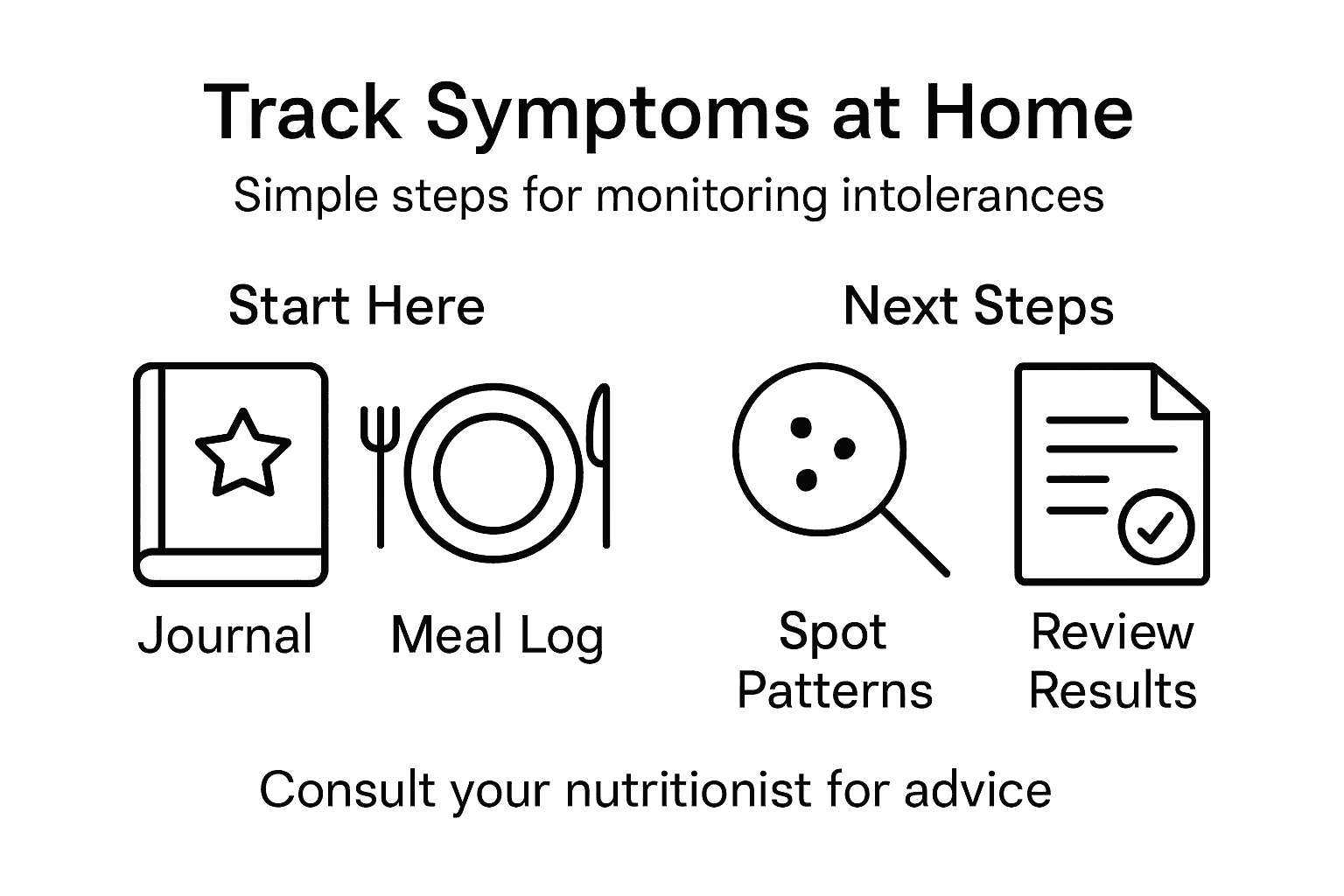
Top tip: Schedule a consultation with a nutritionist or healthcare professional who can help you interpret the complex relationships between your symptom tracking and test results.
Step 5: Adjust Diet Based on Verified Triggers
Transforming your diet after identifying specific food intolerances requires a strategic and thoughtful approach. Food hypersensitivity management demands careful planning to ensure you maintain nutritional balance while eliminating problematic foods.
When adjusting your diet, consider these essential strategies:
- Systematically eliminate verified trigger foods
- Replace eliminated foods with nutritionally equivalent alternatives
- Consult a registered dietitian for personalised guidance
- Monitor nutritional intake during dietary transitions
- Gradually introduce alternatives to prevent dietary monotony
- Keep detailed records of dietary changes and symptoms
- Plan balanced meal replacements for removed food groups
The UK government recommends healthy eating approaches that prioritise nutritional completeness when managing dietary restrictions. This means carefully selecting replacement foods that provide equivalent nutritional value to those you’re removing from your diet.
Strategic dietary adjustments transform food intolerances from a limitation into an opportunity for improved nutritional awareness.
Don’t view these dietary changes as a restriction, but as an opportunity to explore new foods and expand your nutritional knowledge. Consider working with a nutritionist who can help you design a balanced meal plan that accommodates your specific dietary needs while ensuring optimal health.
Top tip: Create a weekly meal plan in advance that strategically incorporates nutrient-rich alternatives to your identified trigger foods, making dietary transitions smoother and more sustainable.
Use this summary to understand the different steps in the food intolerance tracking process:
| Step | Main Focus | Key Benefit |
|---|---|---|
| Symptom Journal | Detailed meal and reaction logs | Identify potential trigger foods |
| Food & Lifestyle Log | Track routines, stress, activity | Reveal broader lifestyle links |
| Symptom Pattern Monitoring | Record severity and timing | Discover recurring trends |
| Correlate with Tests | Compare notes to test results | Confirm intolerances objectively |
| Dietary Adjustment | Remove triggers, add substitutes | Maintain health and balance |
Take Control of Your Food Intolerance Journey with Expert Home Testing
Tracking intolerance symptoms naturally at home can feel overwhelming when faced with detailed journals and lifestyle logs. You want clear insights into which foods are causing discomfort without guesswork or waiting times. If you are frustrated by persistent digestive distress or unexplained symptoms, the key is combining thorough symptom monitoring with reliable testing to confirm your triggers.
Discover how UK Food Intolerance makes this process simple and accurate with our non-invasive at-home testing services. Our Ultimate Single Intolerance Test and Core Single Intolerance Test provide fast, comprehensive analysis of hundreds of potential food and environmental sensitivities. With easy hair sample collection and detailed digital reports, you get clear results that perfectly complement your symptom tracking efforts. Take the stress out of identifying intolerances and start your journey to better wellbeing now. Learn more through our Food Sensitivities Archives – UK Food Intolerance and enhance your tracking with scientific insights from our Digestive Health Archives – UK Food Intolerance. Your solution for effective intolerance management is just a click away.
Frequently Asked Questions
How can I create a symptom tracking journal at home?
To create a symptom tracking journal, start by selecting a dedicated notebook or digital app to document your meals and symptoms. Record the date, time, specific foods consumed, any symptoms experienced, and factors like stress and sleep, to identify patterns over time.
What details should I log in my daily food and lifestyle changes?
Log each food item you consume, including its preparation method, portion sizes, and meal timing. Additionally, track hydration, sleep quality, stress levels, physical activity, and any environmental factors that may trigger symptoms.
How do I monitor my symptoms effectively?
Monitor your symptoms by documenting their severity, onset time, and duration consistently. Aim to note these details within 15-30 minutes of experiencing a symptom, which will help illuminate patterns in your reactions over time.
How can I correlate my symptom journal with test results?
To correlate your symptom journal with test results, compare the entries in your diary with the findings from any medical tests. Look for recurring patterns or discrepancies, and create a visual aid like a chart to better analyse the relationship between food, symptoms, and test results.
What steps should I take to adjust my diet based on observed triggers?
To adjust your diet, systematically eliminate verified trigger foods while replacing them with nutritionally equivalent alternatives. Monitor your nutritional intake during this transition, and consider consulting a nutritionist for personalised guidance.
How often should I update my tracking journal?
Update your tracking journal daily, ideally immediately after meals or at the end of each day, to ensure you capture all relevant details accurately. Maintaining this routine will help solidify the habit and provide a comprehensive view of your symptoms over time.










Leave a Reply
Want to join the discussion?Feel free to contribute!