
TL;DR:
- Bioresonance is an unproven alternative therapy claiming to detect and correct electromagnetic frequencies associated with health issues. Regulatory bodies state there is no strong clinical evidence supporting its diagnostic or treatment claims, especially for food sensitivities. It remains a non-invasive, exploratory tool best used alongside conventional medical assessment and validated testing methods.
Bioresonance is one of those alternative health topics that generates both genuine curiosity and strong scepticism. If you have been wondering whether bioresonance testing could help you identify food sensitivities or support your overall wellness, you are not alone. This educational guide to bio-resonance cuts through the confusion, explaining what the technology claims to do, what the science currently says, and how to make a genuinely informed decision. You will come away with a clearer picture of where bioresonance fits, what its real limitations are, and what other options are available to you.
Table of Contents
- Key takeaways
- The principles behind bio-resonance technology
- What the evidence and regulators say
- Practical applications and what to expect
- Why standardisation is such a problem
- Making an informed decision about bio-resonance
- My honest take on bio-resonance
- Explore food intolerance testing with Ukfoodintolerance
- FAQ
Key takeaways
| Point | Details |
|---|---|
| How bio-resonance works | Devices claim to detect and correct electromagnetic frequencies emitted by body cells using electrodes. |
| Regulatory position | ASA and CAP state there is no robust clinical evidence that bioresonance devices can diagnose or treat disease. |
| Food sensitivity limits | Current evidence does not support bioresonance as a validated method for diagnosing food intolerances. |
| Device variability matters | No standard protocol exists across devices or practitioners, making consistent results difficult to achieve. |
| Informed decisions count | Always use bioresonance as a complementary tool and maintain medical oversight for health concerns. |
The principles behind bio-resonance technology
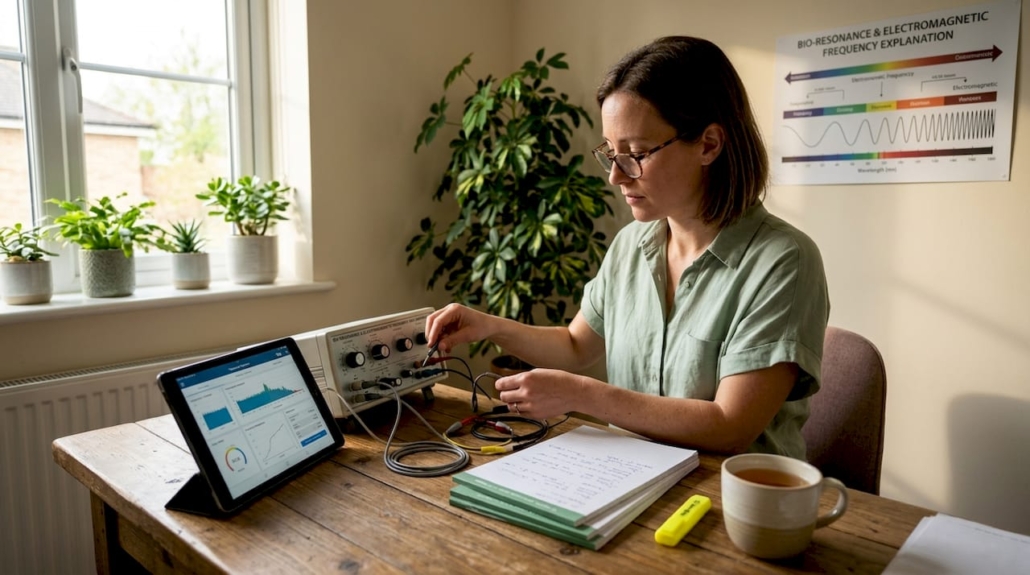
To understand bioresonance, you first need to know what it actually claims. Explaining bio-resonance technology starts with a straightforward concept: every cell, tissue, and organ in your body produces electromagnetic frequencies. Practitioners believe these frequencies carry information about your state of health, and that disrupted or abnormal frequency patterns signal illness or imbalance.
Bioresonance devices work by picking up these frequencies through electrodes placed on the skin. The process has three distinct phases:
- Detection: Electrodes read the electromagnetic frequency patterns from your body.
- Modulation: The device processes those signals, often inverting the frequencies associated with dysfunction. This phase is sometimes compared to noise-cancelling headphone technology, where an inverted frequency signal cancels out an unwanted one.
- Feedback: The modified signals are sent back into the body with the intention of restoring balance.
This three-phase model is the theoretical core of bioresonance therapy. It is described consistently in educational materials from practitioners, though as one insight notes, this frequency narrative remains unproven as a diagnostic method.
Different device manufacturers approach this process with their own frequency libraries and protocols, so the experience can vary considerably from one practitioner to the next. Some devices focus on allergy and food sensitivity testing, others on general wellness or detoxification. The technology itself is presented as non-invasive, which many people find appealing when conventional testing feels daunting.
Pro Tip: If you visit a bioresonance practitioner, always ask which specific device they use and what published protocols it follows. The answer tells you a lot about how seriously they approach the practice.
What the evidence and regulators say
This is where things get more complicated. Understanding the role of bio-resonance in diagnostics means looking honestly at the clinical evidence, and right now, that evidence is limited.
The Advertising Standards Authority and the Committee of Advertising Practice have taken a clear position: no robust clinical evidence supports bioresonance devices as tools for diagnosing or treating disease. The ASA has upheld complaints against bioresonance advertisers who claimed their devices could identify diseases or replace medical treatment. Critically, misleading advertising claims can actively discourage people from seeking the conventional care they need, which is why the regulatory position is firm.
“Advertising must not encourage patients to avoid or delay conventional medical care. This ethical nuance is critical when discussing alternative therapies like bioresonance.” — ASA/CAP guidance
Some recent research has produced nuanced findings. A 2024 paper in Scientific Reports found measurable physiological changes during biofield therapy sessions, with EEG and cellular marker changes correlating with practitioner activity. That is genuinely interesting. But the researchers themselves called for more study and explicitly noted no proof for food sensitivity diagnostics. A separate clinical trial showed bioresonance produced improvements in pain reduction and inflammatory markers in post-traumatic syndrome patients, but again, this did not confirm diagnostic accuracy for food intolerances.
| Study area | What it found | What it did not confirm |
|---|---|---|
| Biofield physiology (2024) | Measurable EEG and cellular changes during therapy | Diagnostic utility for food sensitivities |
| Post-traumatic syndrome trial | Pain reduction, lower CRP, faster rehabilitation | Food intolerance detection |
| Regulatory review (ASA/CAP) | No suitable clinical evidence found | Any diagnosis or disease treatment claims |
The pattern is consistent: some interesting signals in wellness-adjacent research, nothing that validates bioresonance as a diagnostic tool for food sensitivities specifically.
Practical applications and what to expect
Despite the regulatory cautions, millions of people seek out bioresonance sessions every year. Understanding what actually happens during a typical session helps you approach it with realistic expectations.
Here is what most bioresonance appointments involve:
- Initial consultation: You discuss your symptoms, diet history, and health concerns with the practitioner.
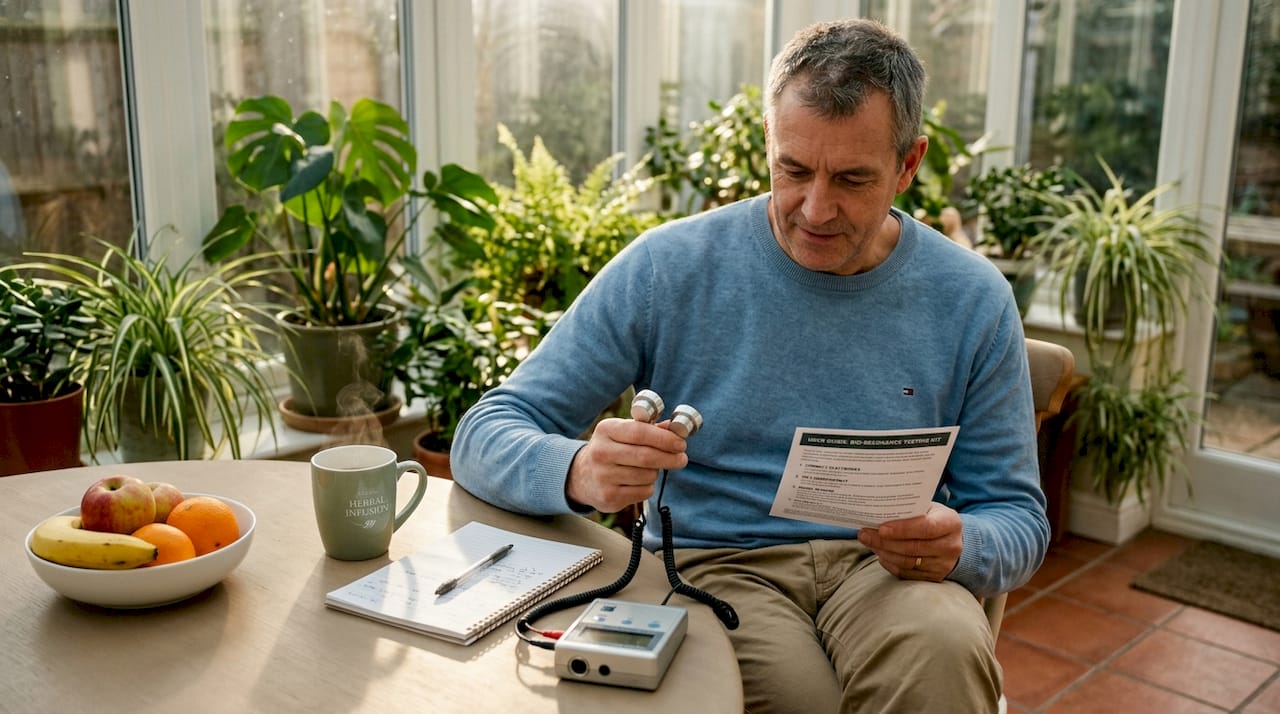
- Electrode placement: Sensors are placed on your hands, feet, or forehead. There is no blood draw and no invasive procedure.
- Frequency analysis: The device runs for anywhere from 30 to 90 minutes, recording and processing signals.
- Results discussion: The practitioner reviews a printed or digital report identifying supposed sensitivities or imbalances.
- Follow-up plan: You may receive dietary recommendations, a suggested elimination protocol, or further sessions.
The non-invasive nature of this process is genuinely appealing, particularly for people who struggle with needles or clinical environments. However, bioresonance food intolerance tests carry a real risk of producing false positives, potentially leading to unnecessary dietary restrictions and nutritional deficiencies if followed without medical guidance.
If a bioresonance result suggests you avoid a long list of foods, treat that outcome with caution. Eliminating entire food groups without a validated diagnosis can cause more harm than the suspected sensitivity itself. You can read more about how validated intolerance testing works to understand the difference between confirmatory and exploratory testing approaches.
Pro Tip: Never use bioresonance results alone to make significant dietary changes. Combine any findings with a food and symptom diary and, if possible, discuss the results with a registered dietitian.
Why standardisation is such a problem
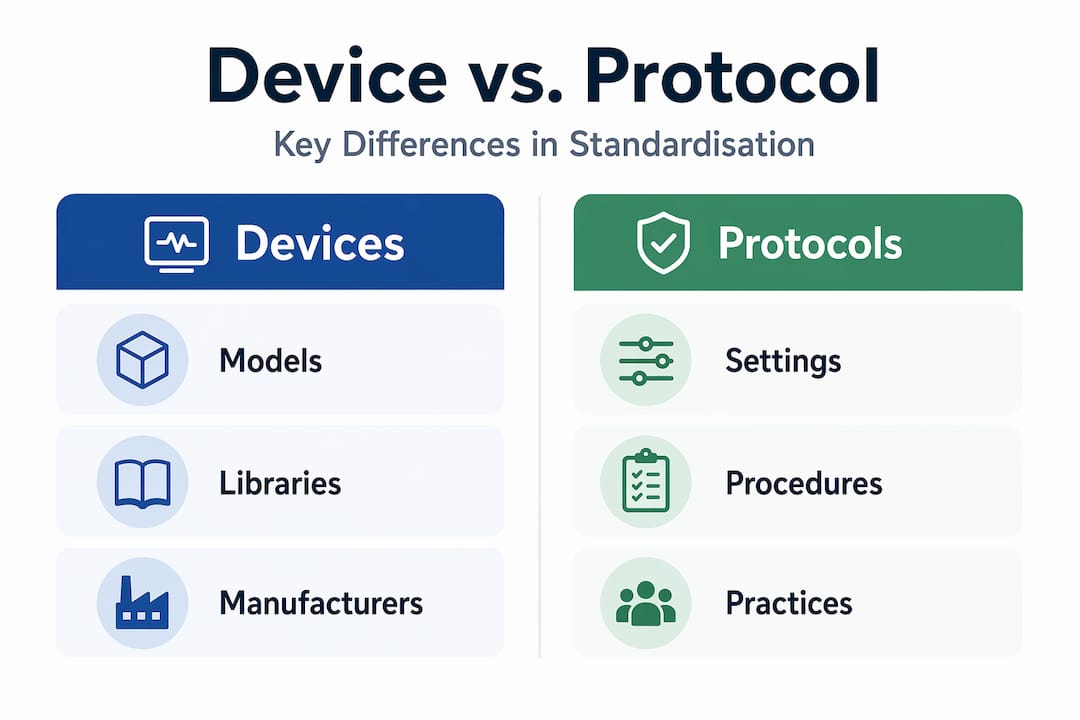
One of the biggest challenges in evaluating bioresonance fairly is the sheer variety of devices and practices operating under the same name. The variability of brands and methods makes it almost impossible to draw standardised conclusions about what bioresonance does or does not do.
Consider what varies between different offerings:
| Factor | What differs | Why it matters |
|---|---|---|
| Device model | Different manufacturers, frequency libraries, software | Results from one device cannot be compared to another |
| Practitioner training | No regulated qualification in the UK | Experience and interpretation vary enormously |
| Testing protocols | Session length, electrode placement, frequency parameters | No consistent method for replication |
| Reporting format | Some give detailed reports, others brief verbal summaries | Difficult to critically assess or act on results |
This lack of standardisation is not unique to bioresonance. Many complementary therapies face similar challenges. But for something that makes specific diagnostic claims about which foods you should eat or avoid, the inconsistency matters more than usual. When you see two practitioners using different devices and they produce completely different lists of sensitivities, neither result can be treated as definitive.
The differences in devices and protocols also confound attempts at independent clinical validation. It is very hard to run a proper randomised controlled trial on a treatment that varies this much between providers.
Making an informed decision about bio-resonance
You now have a clearer picture of what bio-resonance involves, what it claims, and where the evidence sits. So how do you use this information practically?
Here is a sensible framework for deciding whether bioresonance testing is worth exploring for your situation:
- Consider your starting point. If you have unexplained digestive symptoms, fatigue, or suspected food triggers, bioresonance may be one option to explore, but it should sit alongside rather than replace conventional assessment.
- Check the practitioner’s credentials. Look for someone who is transparent about their device, their training, and the limits of what the results can tell you. Anyone promising a definitive diagnosis should prompt scepticism.
- Know your regulatory landscape. In the UK, any health claim a bioresonance provider makes must comply with ASA guidelines. If their advertising promises to diagnose or cure conditions, that is a red flag.
- Interpret results carefully. A bioresonance report is a starting point for investigation, not a confirmed diagnosis. Use it to identify patterns worth exploring through an elimination diet or validated test.
- Maintain medical oversight. Always keep your GP or a registered specialist in the loop, particularly if you have an existing health condition. Avoiding or delaying conventional care based on alternative test results carries real risk.
- Explore validated alternatives. For food sensitivity detection specifically, hair sample analysis through bio-resonance technology, such as the approach used by Ukfoodintolerance, offers a non-invasive starting point. Understanding food intolerance symptoms is a useful place to begin that process.
My honest take on bio-resonance
In my experience, the conversation around bioresonance tends to fall into two unhelpful camps. One side dismisses it entirely as pseudoscience. The other promotes it as a diagnostic miracle. Neither position serves you well.
What I find genuinely interesting is that recent physiological research does show something is happening during biofield therapy sessions at a measurable level. That is not nothing. But interesting signals in a research setting are a long way from clinical proof that a specific device can tell you which foods are disrupting your digestion.
My concern is with the marketing, not the curiosity. When bioresonance is sold as a definitive food intolerance test, it risks replacing methods that have a stronger evidence base. I have seen people cut out entire food groups based on bioresonance reports, develop nutritional deficiencies, and only then discover their actual issue was something straightforward and diagnosable through conventional means.
What I think works best is treating bioresonance as one lens, not the whole picture. If a session prompts you to explore certain dietary patterns, and you follow that up with a structured elimination approach and proper symptom tracking, then the exercise has value even if the underlying mechanism is unproven. If you treat the report as gospel, the risks outweigh the benefits.
The responsibility for responsible marketing sits firmly with practitioners and regulators. Your responsibility is to stay curious, ask good questions, and not hand over your health decisions to any single test.
— Rob
Explore food intolerance testing with Ukfoodintolerance
If this guide has you thinking more carefully about your food sensitivities, Ukfoodintolerance is here to help you take a practical next step.

Ukfoodintolerance offers non-invasive at-home intolerance tests that use bio-resonance technology to screen over 1,100 food and environmental items from a simple hair sample. The process is straightforward: collect your sample at home, post it to the UK-based laboratory, and receive a clear digital report within 48 to 72 hours. There is no blood draw and no clinic appointment needed.
Whether you want to understand potential dietary triggers, start an informed elimination diet, or simply get more clarity on your food sensitivity testing options, Ukfoodintolerance provides accessible, fast results backed by clear guidance on how to act on them. Browse the full test range and find the option that fits your needs.
FAQ
What is bio-resonance technology?
Bio-resonance technology uses electrodes to detect electromagnetic frequencies emitted by the body, processes them through a device, and sends modified signals back with the aim of restoring balance. It is used in alternative health settings for wellness support and sensitivity screening.
How does bio-resonance work for food sensitivity testing?
A bio-resonance device records the body’s frequency patterns and compares them against a library of frequencies associated with specific foods. Any apparent discrepancies are flagged as potential sensitivities, though this process is not clinically validated for diagnosing food intolerances.
Is bio-resonance approved by regulators in the UK?
No. The ASA and CAP state there is no robust clinical evidence that bioresonance devices can diagnose or treat disease, and they require any advertising claims to be supervised by qualified health professionals.
What are the advantages of bio-resonance testing?
The main advantages are that sessions are non-invasive, require no blood samples, and are generally well-tolerated. The role of bio-resonance testing is best understood as exploratory rather than diagnostic.
Should I use bio-resonance instead of conventional medical tests?
No. Bio-resonance should be used alongside, not instead of, conventional medical assessment. Always consult your GP for persistent or serious health symptoms before relying on alternative test results.










Leave a Reply
Want to join the discussion?Feel free to contribute!