

Many UK parents struggle to pinpoint why their child suffers from unexplained tummy aches, skin rashes, or mood swings. When standard medical tests return normal results, frustration grows. Non-invasive bio-resonance testing combined with structured elimination diets offers a practical, evidence-based pathway to relief. Over 65% of children experience symptom reduction after intolerance-based dietary adjustments. This guide walks you through testing preparation, implementing diet changes, avoiding common pitfalls, and monitoring progress to restore your child’s wellbeing.
Table of Contents
- Understanding Non-Invasive Food Intolerance Testing
- Preparing for Your Child’s At-Home Food Intolerance Test
- Step-by-Step Guide to Implementing an Elimination Diet
- Avoiding Common Mistakes When Managing Food Intolerances
- Monitoring Progress and Knowing When to Seek Help
- Expected Results and Realistic Outcomes
- Support Your Child’s Health with Expert-Tested Food Intolerance Solutions
- Frequently Asked Questions
Key Takeaways
| Point | Details |
|---|---|
| Non-invasive testing uses hair samples | Bio-resonance analysis provides results for 1,100+ items within 48-72 hours from UK labs. |
| Elimination diets deliver rapid improvements | Over 70% of children show symptom relief within 2-4 weeks following structured dietary changes. |
| Proper preparation prevents test errors | Following kit instructions carefully avoids contamination and ensures accurate diagnostic outcomes. |
| Professional dietitian support is essential | Expert guidance maintains nutritional balance during food elimination and reintroduction phases. |
| Regular monitoring optimises long-term outcomes | Symptom tracking and retesting every 6-12 months adapts management as tolerances evolve. |
Understanding Non-Invasive Food Intolerance Testing
Bio-resonance testing analyses hair samples to identify sensitivities without needles, blood draws, or stressful clinic visits. Bio-resonance testing detects sensitivities via hair samples with results for over 1,100 items analyzed in UK labs. This approach suits children particularly well because it causes zero discomfort and requires only a small hair clipping collected at home.
Traditional clinical allergy tests measure IgE antibodies and typically cost significantly more. They also require venipuncture, which many young children find distressing. Bio-resonance testing costs between £100 and £180, delivers results digitally within 2-3 days, and assesses a far broader range of potential triggers including environmental factors. Parents receive comprehensive reports detailing reactive items across categories like dairy, gluten, additives, and pollen.
The benefits of at-home bio-resonance testing extend beyond convenience. You control the testing environment, reducing anxiety for sensitive children. Results arrive quickly, allowing faster dietary intervention. The future of food intolerance testing continues to refine accuracy and expand item databases, making this method increasingly reliable for UK families.
Pro Tip: Collect hair samples from an area near the scalp that hasn’t been chemically treated with dyes or perms. Clean, natural hair provides the most accurate reading. Avoid washing hair immediately before collection, as residual shampoo chemicals may interfere with analysis.
Understanding test capabilities helps set realistic expectations. Bio-resonance identifies intolerances and sensitivities, not life-threatening allergies requiring EpiPens. Always consult NHS guidance on food intolerance to distinguish between these conditions and ensure appropriate medical oversight for severe reactions.
Preparing for Your Child’s At-Home Food Intolerance Test
Ordering a reputable UK bio-resonance hair test kit represents your first practical step. Kits typically cost £100 to £180 depending on the number of items tested. Choose providers with transparent UK-based laboratory credentials and clear turnaround commitments.
Follow these steps to prepare properly:
- Order your chosen test kit from a verified UK provider with positive customer reviews.
- Read all instructions thoroughly before beginning sample collection.
- Identify a clean sampling area on your child’s head, ideally at the nape or crown.
- Use the sterile collection tools provided in the kit to snip a small hair sample.
- Place samples immediately into the provided container without touching them excessively.
- Complete all required paperwork accurately, including symptom descriptions and medical history.
- Post the sample using the prepaid envelope on the same day if possible.
Accurate hair sample collection following detailed guidelines is critical to avoid contaminated or invalid tests. Contamination from oils, lotions, or environmental pollutants can skew results. Handle samples minimally and avoid touching the hair shaft with bare hands.
When ordering and using at-home test kits, timing matters. Submit samples early in the week to avoid postal delays over weekends. Most UK laboratories process samples within 48 to 72 hours of receipt, delivering digital reports via email.
Pro Tip: Wash your hands thoroughly before handling sampling tools, but don’t wash your child’s hair immediately before collection. Natural sebum on the hair shaft contains valuable biological information. Use the scissors or cutting tool provided rather than household scissors to maintain sterility.
The UK children intolerance testing guide emphasizes involving your child in the process age-appropriately. Explain that the test helps identify foods making them feel unwell. Frame it positively as a detective mission to solve tummy troubles. Children who understand the purpose cooperate more readily and feel empowered in managing their health.
Preparing for intolerance testing also involves gathering baseline symptom information. Document current complaints, frequency, severity, and suspected food triggers before testing. This data helps correlate test results with real-world observations and guides elimination priorities.

Step-by-Step Guide to Implementing an Elimination Diet
Once test results identify reactive foods, systematic elimination begins. Elimination diets following intolerance testing lead to symptom reduction in over 70% of children within 2-4 weeks. Success depends on careful planning and gradual execution.
Implement these steps methodically:
- Review test results with a UK-registered dietitian to prioritize eliminations and plan nutritional replacements.
- Remove high-reactivity foods first, typically the top 3 to 5 triggers identified in your report.
- Eliminate foods gradually over 7 to 10 days rather than all at once to minimize shock and identify which removals correlate with improvements.
- Maintain a detailed symptom diary recording daily symptoms, foods consumed, and behavioral observations.
- Continue strict elimination for 2 to 4 weeks to allow the body to clear reactive substances fully.
- Reintroduce eliminated foods one at a time, waiting 3 to 5 days between each addition to monitor for reactions.
- Record any symptom returns carefully, noting timing, severity, and specific foods reintroduced.
The introduction to elimination diets emphasizes patience. Children’s bodies need time to respond. Rushing reintroduction clouds the picture and wastes weeks of careful dietary control.
| Phase | Timeline | Key Actions | Symptom Tracking |
|---|---|---|---|
| Elimination | 2-4 weeks | Remove identified triggers completely | Daily diary noting improvements or changes |
| Stabilization | 1-2 weeks | Maintain trigger-free diet | Confirm symptom baseline improvement |
| Reintroduction | 3-5 days per food | Add one food at a time | Watch for symptom return within 72 hours |
| Maintenance | Ongoing | Avoid confirmed triggers, rotate tolerated foods | Weekly check-ins, quarterly reviews |
Pro Tip: Keep a detailed symptom diary using a simple notebook or smartphone app. Note meal times, foods consumed, symptom severity on a 1 to 10 scale, and behavioral changes like irritability or fatigue. Patterns emerge clearly after 7 to 10 days of consistent tracking.
The intolerance testing impact in diets demonstrates how structured elimination transforms vague suspicions into concrete dietary plans. Testing removes guesswork, allowing focused interventions that work faster than trial and error approaches.
Seek support from a UK-registered dietitian throughout this process. Eliminating multiple food groups risks nutritional deficiencies, particularly calcium, iron, and B vitamins in growing children. Professional guidance ensures adequate replacements through fortified alternatives or supplements. The comprehensive food intolerance testing resource connects testing with practical dietary implementation strategies tailored for UK families.
Reintroduction reveals tolerance levels. Some children tolerate small amounts of reactive foods occasionally, while others require strict avoidance. Your symptom diary provides the evidence to make these distinctions confidently.
Avoiding Common Mistakes When Managing Food Intolerances
Even well-intentioned parents make missteps that delay improvements or create new problems. Awareness prevents these pitfalls.
- Never reintroduce multiple eliminated foods simultaneously. If symptoms return, you won’t know which food caused the reaction, forcing you to re-eliminate everything and start over.
- Avoid overly restrictive diets without professional guidance. Removing entire food groups like all grains or all proteins risks serious nutritional deficiencies in growing children.
- Don’t ignore symptom tracking. Memory fails. Written records provide objective data for healthcare consultations and reveal subtle patterns you might otherwise miss.
- Resist the temptation to give up after one week. Symptom improvements typically require 2 to 4 weeks as the body clears reactive substances and inflammation subsides.
- Never assume intolerances remain static. Children’s digestive systems mature. Foods causing problems at age three may be tolerated perfectly at age seven, making retesting valuable.
Pro Tip: Consult healthcare professionals if symptoms persist beyond 4 weeks despite strict adherence or if new symptoms emerge. Persistent issues may indicate underlying conditions requiring medical investigation beyond intolerance management.
Important Safety Notice: Always work with qualified healthcare professionals when managing children’s diets. Dietitians ensure nutritional adequacy while gastroenterologists rule out serious conditions. Ignoring professional guidance and symptom monitoring can prolong symptoms and risk nutritional deficiencies that impact growth and development.
The common mistakes in intolerance management often stem from impatience or information overload. Social media groups provide support but sometimes spread misinformation. Trust evidence-based resources and qualified practitioners over anecdotal advice from online forums.
Another frequent error involves assuming expensive specialty foods are necessary. Many eliminated foods have affordable, widely available alternatives. Oat milk replaces cow’s milk. Rice pasta substitutes wheat pasta. Creativity and simple ingredient swaps often suffice without exotic purchases.
Monitoring Progress and Knowing When to Seek Help
Systematic progress monitoring transforms subjective feelings into objective evidence. Most children show noticeable improvements within 2 to 4 weeks after removing trigger foods. Digestive symptoms typically improve first, followed by skin conditions and behavioral changes.
Track these indicators:
- Daily bowel movement consistency and frequency
- Skin condition, noting rash severity, itchiness, or eczema flare-ups
- Energy levels and sleep quality
- Mood stability and behavioral patterns
- Appetite and eating enthusiasm
Create a simple tracking system using these steps:
- Establish baseline measurements before dietary changes, documenting current symptom frequency and severity.
- Record daily observations consistently, preferably at the same time each day.
- Review weekly progress, comparing current symptoms to baseline measurements.
- Schedule monthly reviews with your dietitian to assess trends and adjust plans.
- Plan retesting every 6 to 12 months as tolerances change with growth and development.
Symptom improvement typically occurs within 2-4 weeks; retesting every 6-12 months is recommended. However, individual responses vary. Some children improve within days, while others need the full 4 weeks.
| Timeframe | Expected Milestone | Action if Not Met |
|---|---|---|
| Week 1-2 | Initial digestive improvements, reduced bloating | Continue strict elimination, review compliance |
| Week 2-3 | Skin condition improvements, better sleep | Document changes, maintain diet |
| Week 3-4 | Behavioral improvements, stable mood | Begin planning reintroduction if improvements solid |
| Week 4+ | 70%+ symptom reduction achieved | Start systematic reintroduction protocol |
| Beyond 6 weeks | No improvement despite adherence | Seek medical review for underlying conditions |
Watch for warning signs requiring professional consultation. Unexplained weight loss, persistent pain, blood in stools, or worsening symptoms despite dietary changes warrant immediate medical attention. These may indicate conditions beyond food intolerance requiring different interventions.
The test retesting process ensures your management plan evolves appropriately. Children’s immune systems and digestive capabilities mature significantly between ages 2 and 12. Foods problematic at age 4 may be perfectly tolerable at age 8. Annual retesting identifies these shifts, preventing unnecessarily restrictive diets.
Pro tip: Celebrate small wins. Acknowledge when your child has three consecutive days without tummy aches or sleeps through the night without discomfort. Positive reinforcement builds cooperation and reduces stress around dietary restrictions.
Expected Results and Realistic Outcomes
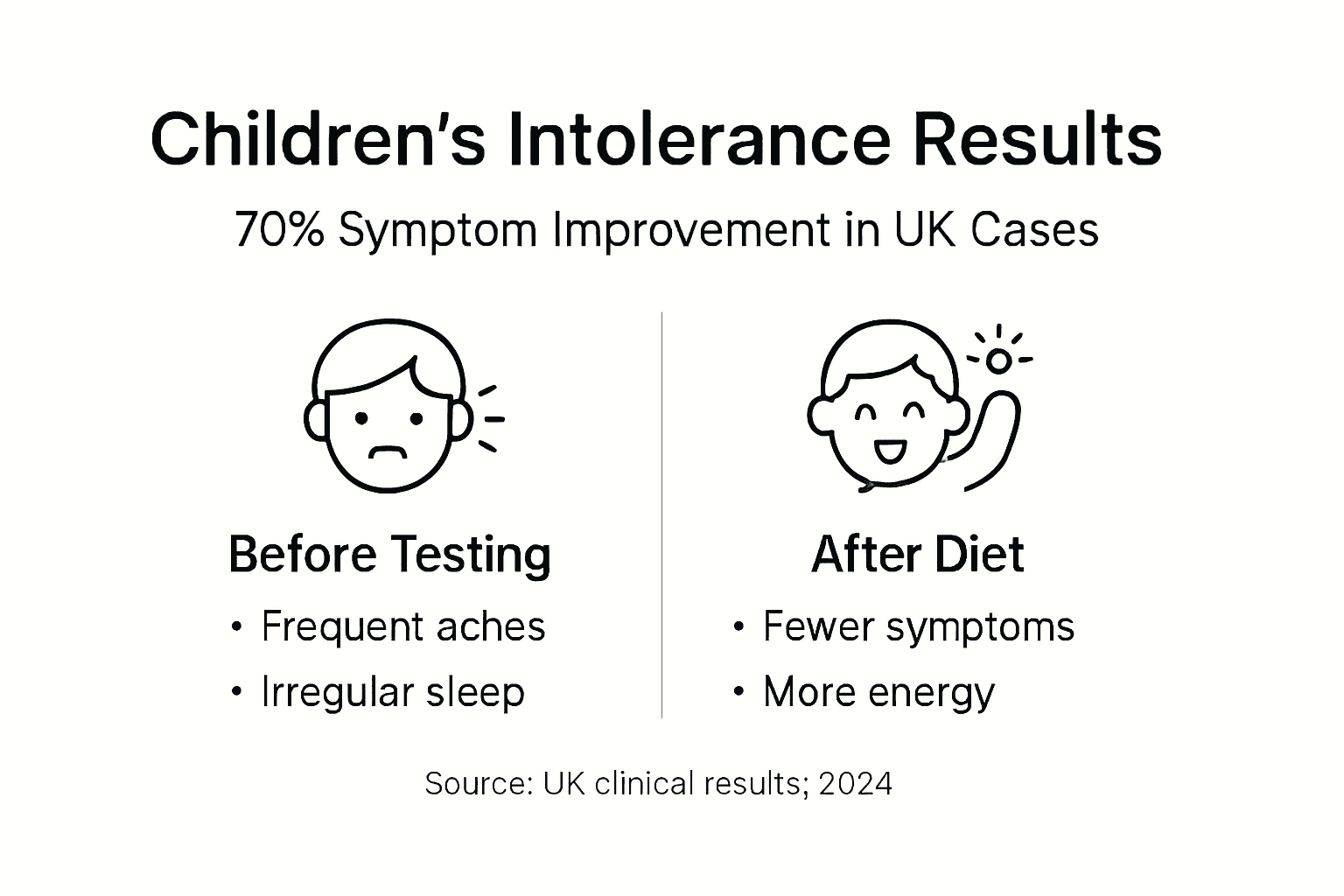
Evidence-based expectations prevent disappointment while maintaining motivation. 70%+ of children experience symptom improvement including digestion and mood within weeks after diet adjustment. This statistic represents carefully managed elimination diets following proper testing.
Key Statistic: Over 70% of children achieve significant symptom reduction within 2-4 weeks when following structured elimination diets based on bio-resonance testing results.
Commonly improved symptoms include:
- Reduced bloating, gas, and abdominal discomfort
- More regular, comfortable bowel movements
- Clearer skin with fewer eczema or rash flare-ups
- Improved sleep quality and easier bedtimes
- Better mood stability with reduced irritability
- Increased energy and enthusiasm for activities
- Enhanced focus and concentration at school
- Healthier appetite and less food-related anxiety
Outcomes depend heavily on adherence. Partial compliance yields partial results. Children who strictly avoid identified triggers for the full elimination period experience the most dramatic improvements. Even small amounts of reactive foods can trigger symptoms in highly sensitive individuals, undermining weeks of effort.
Realistic expectations account for individual variation. Some children respond rapidly, showing improvements within 5 to 7 days. Others need the full 4 weeks. A minority may need longer or discover that testing identified some but not all problematic foods, requiring additional investigation.
Long-term outcomes improve with consistent management. Children who learn which foods affect them develop self-awareness and advocacy skills. They make better food choices independently as they mature. Many eventually outgrow intolerances as digestive systems strengthen, particularly for items like dairy or certain vegetables.
Success isn’t always complete elimination of all symptoms. Reducing symptom frequency by 70% to 80% while maintaining nutritional adequacy and quality of life represents excellent outcomes. Perfect health isn’t always achievable, but significant improvement transforms daily experiences for both children and families.
Support Your Child’s Health with Expert-Tested Food Intolerance Solutions
Taking action transforms knowledge into results. UK Food Intolerance provides trusted bio-resonance testing kits that identify your child’s specific triggers quickly and painlessly. Comprehensive food intolerance tests analyze over 1,100 potential reactive items, delivered through simple at-home hair sampling.

UK-based laboratory analysis ensures fast, reliable results within 48 to 72 hours. Digital reports detail exactly which foods and environmental factors may be impacting your child’s wellbeing. This clarity empowers confident dietary decisions backed by scientific analysis rather than guesswork.
Expert support extends beyond testing. Access tailored diet plans that translate test results into practical elimination and reintroduction strategies. Professional guidance helps maintain nutritional balance while systematically identifying and managing triggers.
Thousands of UK families have transformed their children’s health through this approach. The combination of accurate testing, structured dietary management, and ongoing support delivers the symptom relief your child deserves. Visit UK Food Intolerance today to begin your family’s journey toward improved wellbeing and freedom from unexplained discomfort.
Frequently Asked Questions
How soon can I expect to see improvements after starting the elimination diet?
Most children show noticeable symptom reduction within 2 to 4 weeks of strict trigger food elimination. Digestive improvements often appear first, within 7 to 10 days, followed by skin and behavioral changes. Individual responses vary based on sensitivity severity and adherence quality.
Is bio-resonance testing safe for young children?
Bio-resonance testing is completely safe for children of all ages, including infants. It requires only a small hair sample collected painlessly at home, involving no needles, blood draws, or stressful procedures. The non-invasive nature makes it ideal for sensitive or anxious children.
What should I do if symptoms don’t improve after following the diet?
If symptoms persist beyond 4 weeks despite strict adherence, consult your GP or pediatrician to rule out underlying medical conditions. Some symptoms may stem from issues beyond food intolerance, such as inflammatory bowel disease or celiac disease, requiring different diagnostic approaches and treatments.
How often should food intolerance retesting be done?
Retest every 6 to 12 months, particularly for growing children whose digestive systems mature significantly. Tolerances change as immune systems develop, and foods problematic at younger ages may become tolerated. Annual retesting prevents unnecessarily restrictive diets and identifies newly developed sensitivities.
Can I start an elimination diet without testing?
While possible, elimination diets without testing risk removing the wrong foods while missing actual triggers. Testing provides targeted guidance, making elimination more effective and less restrictive. Random elimination wastes time and increases the chance of nutritional deficiencies without addressing root causes.
Do I need a dietitian for managing my child’s food intolerances?
Professional dietitian support is highly recommended, especially when eliminating multiple food groups. Dietitians ensure adequate nutrition during elimination phases, suggest appropriate substitutes, and guide safe reintroduction protocols. Their expertise prevents deficiencies that could impact your child’s growth and development.










Leave a Reply
Want to join the discussion?Feel free to contribute!