

TL;DR:
- Hidden food intolerances can cause delayed, wide-ranging symptoms affecting the gut, skin, joints, and brain. Diagnosing them is difficult due to symptoms appearing days after eating and often require professional guidance and systematic tracking. Unsupervised elimination diets and unvalidated testing kits can lead to nutritional deficiencies and misdiagnosis.
Hidden food intolerances are adverse reactions to certain foods that produce delayed, wide-ranging symptoms affecting multiple body systems. The impact of hidden intolerances extends far beyond the gut, touching your skin, joints, brain, and energy levels in ways that are easy to dismiss or misattribute. Symptoms can appear anywhere from 2 hours to 3 days after eating a trigger food, which makes the connection to diet genuinely difficult to spot. Estimates suggest up to 45% of people in the UK experience some form of food sensitivity, yet many go undiagnosed for years. If you have been struggling with persistent fatigue, brain fog, migraines, or unexplained skin flare-ups, a hidden food sensitivity may be the cause.
What symptoms arise from hidden food intolerances?
The symptoms of silent intolerances cover a surprisingly broad range of body systems. Most people associate food reactions with an upset stomach, but the reality is far wider. Bloating, diarrhoea, and constipation are common, but so are headaches, joint pain, eczema, chronic fatigue, and brain fog.
The delayed onset is what makes these symptoms so confusing. Because a reaction can take up to three days to appear, you may never connect Tuesday’s lunch to Thursday’s migraine. This gap between cause and effect is one of the main reasons hidden food intolerances effects go unrecognised for so long.
Here is a breakdown of the most frequently reported symptoms:
- Digestive: bloating, cramping, diarrhoea, constipation, nausea
- Neurological: brain fog, difficulty concentrating, headaches, migraines
- Skin: eczema, hives, rashes, general skin irritation
- Musculoskeletal: joint pain, muscle aches, stiffness
- Energy and mood: chronic fatigue, low mood, anxiety, irritability
The systemic nature of these symptoms matters. When your body is chronically stressed by trigger foods, it depletes your energy reserves and clouds your mental clarity over time. Many people spend years treating individual symptoms without ever addressing the underlying dietary trigger.
Pro Tip: Keep a brief daily log of what you eat and how you feel, including energy, mood, and any physical discomfort. Even two weeks of consistent notes can reveal patterns that are invisible in the moment.
How do hidden intolerances differ from food allergies?
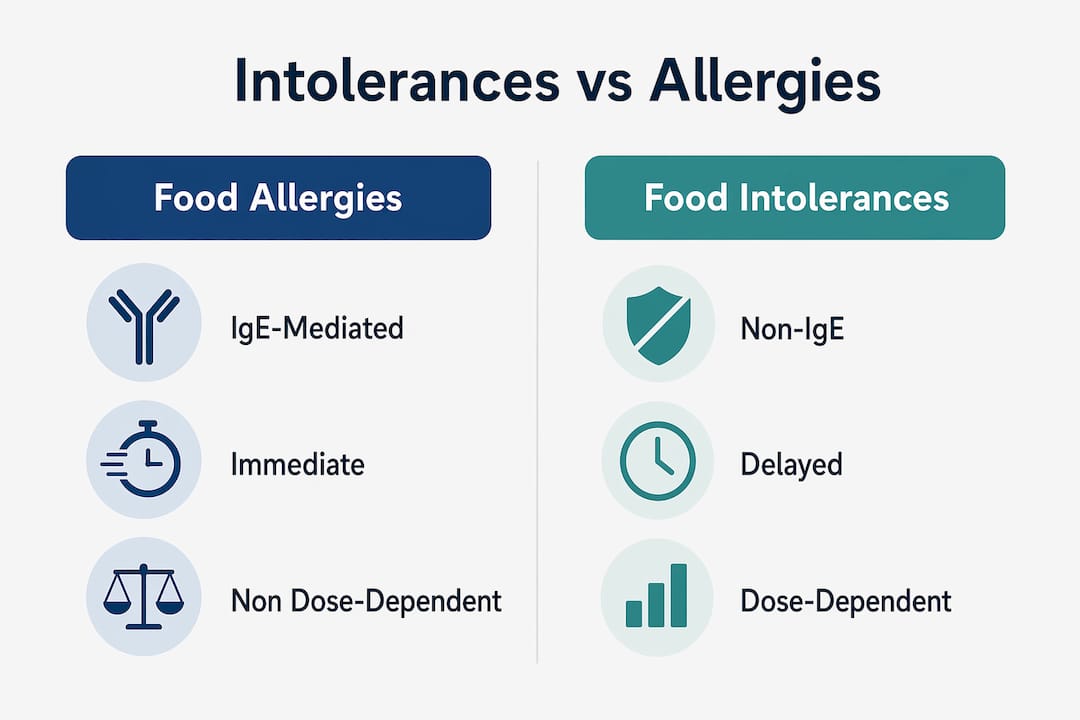
Food intolerances and food allergies are not the same condition, and confusing them leads to poor management decisions. Understanding the difference helps you set realistic expectations and choose the right path forward.
A food allergy involves an IgE-mediated immune response, meaning the immune system identifies a food protein as a threat and reacts immediately. Symptoms appear within minutes and can include anaphylaxis, which is a life-threatening emergency. Food intolerances, by contrast, do not involve IgE antibodies. They are typically non-immune or involve different immune pathways, and symptoms are slower, milder, and more chronic in nature.
| Feature | Food allergy | Food intolerance |
|---|---|---|
| Immune mechanism | IgE-mediated | Non-IgE or non-immune |
| Symptom onset | Minutes | 2 hours to 3 days |
| Severity | Can be life-threatening | Rarely life-threatening |
| Dose dependency | Small amounts can trigger | Often dose-dependent |
| Primary concern | Anaphylaxis risk | Quality of life and chronic symptoms |
| Diagnosis method | Skin prick test, IgE blood test | Elimination diet, symptom diary |
One important nuance is dose dependency. Intolerances are often dose-dependent, meaning a small amount of a trigger food may cause no reaction, while a larger portion triggers symptoms. This is why gradual reintroduction during an elimination diet is so useful. It helps you find your personal threshold rather than eliminating a food entirely and unnecessarily.
Why is diagnosing hidden intolerances so difficult?
The core challenge in diagnosing hidden intolerances is the time gap between eating and reacting. When symptoms appear days later, the natural instinct is to blame stress, poor sleep, or illness rather than a meal you ate on monday. This is why the impact of undiagnosed intolerances can persist for years without resolution.
UK health experts recommend a structured approach to identification:
- See your GP first. Rule out serious gastrointestinal conditions such as coeliac disease, inflammatory bowel disease, or colorectal cancer before starting any dietary changes. This step is non-negotiable.
- Keep a detailed food and symptom diary. Record everything you eat and drink, alongside any symptoms, their timing, and severity. Tracking symptoms against food intake is the most effective method clinicians recommend for identifying triggers.
- Work with a registered dietitian. A dietitian can design a supervised elimination diet that removes suspected trigger foods for a set period, then reintroduces them one at a time to confirm reactions.
- Reintroduce foods gradually. Reintroduction must be methodical. Adding one food back every few days allows you to observe reactions clearly without confounding variables.
- Avoid unsupervised elimination of multiple food groups. Cutting out multiple foods without professional guidance risks nutritional imbalances that can worsen your health rather than improve symptoms.
A word on home IgG testing kits: most home-based IgG tests lack clinical validation. UK health guidance warns that IgG tests can mislead, producing false positives that lead to unnecessary food restrictions and, in turn, deficiencies in calcium, vitamin D, fibre, and B vitamins. Professional evaluation remains the safest route.
Pro Tip: When starting a food diary, note the time of eating and the time symptoms appear. This timeline data is what a dietitian needs to identify delayed reactions accurately.
What are the physiological and psychological impacts on wellbeing?
The health issues from food intolerances go well beyond discomfort. Unmanaged intolerances create a state of low-grade, chronic inflammation that affects how your body absorbs nutrients, manages energy, and maintains mental clarity.

Food intolerances impair nutrient absorption, particularly of iron, magnesium, and B vitamins. These nutrients are central to energy production, nerve function, and mood regulation. When absorption is compromised, the downstream effects include fatigue, anxiety, poor concentration, and slower physical recovery.
| Body system | Effect of unmanaged intolerance | Consequence |
|---|---|---|
| Digestive | Gut irritation and inflammation | Bloating, diarrhoea, nutrient malabsorption |
| Neurological | Reduced B vitamin and magnesium absorption | Brain fog, poor focus, low mood |
| Musculoskeletal | Systemic inflammation | Joint pain, slower muscle recovery |
| Metabolic | Unstable blood sugar and energy crashes | Fatigue, irritability, poor endurance |
| Immune | Ongoing inflammatory response | Skin flare-ups, increased susceptibility to illness |
For people who exercise regularly, the consequences are particularly clear. Food intolerance reduces recovery speed, increases inflammation, and disrupts heart rate and metabolic function. Athletes and active people often attribute poor performance to overtraining when the real cause is a dietary trigger they have never identified.
The psychological toll is equally significant. Chronic fatigue and brain fog affect confidence, productivity, and mood. Continued exposure to undiagnosed intolerances can worsen conditions such as irritable bowel syndrome and coeliac disease, leading to nutrient malabsorption, anaemia, and long-term gut damage. The longer intolerances go unaddressed, the more entrenched these effects become.
How can you safely manage and reduce the impact of food sensitivities?
Managing food sensitivities effectively requires a structured, patient approach. Quick fixes rarely work, and extreme dietary restriction without guidance often creates new problems.
Practical steps that work:
- Work with a registered dietitian before removing any major food group. A dietitian will help you identify food triggers safely without compromising your nutritional intake.
- Use a structured elimination diet. Remove one or two suspected trigger foods at a time, not entire food categories. This keeps your diet nutritionally complete while still generating useful data.
- Reintroduce foods methodically. Reintroduce each food individually, waiting several days between each addition. This is the only reliable way to confirm a specific trigger.
- Monitor nutrient intake actively. Avoiding dairy reduces calcium and vitamin D; avoiding gluten affects fibre and B vitamin intake. Plan substitutes before you remove foods, not after.
- Support digestive health through lifestyle. Adequate sleep, stress management, and hydration all reduce baseline gut inflammation and make symptom patterns easier to read.
- Use validated testing where appropriate. If you want a structured starting point before seeing a dietitian, choose a test with clear methodology and professional support for interpreting results.
The goal is not to eliminate as many foods as possible. The goal is to identify your specific triggers and find your personal tolerance threshold. Most people with food intolerances can still eat small amounts of trigger foods without significant symptoms. Understanding that boundary is what gives you real dietary freedom, not restriction.
You can find practical guidance on managing food triggers and building a sustainable approach to your diet without unnecessary guesswork.
Key takeaways
The impact of hidden intolerances is systemic, affecting digestion, energy, mental clarity, and physical performance, and requires structured identification and professional guidance to manage safely.
| Point | Details |
|---|---|
| Symptoms are delayed and wide-ranging | Reactions can appear up to 3 days after eating, affecting skin, joints, mood, and energy. |
| Intolerances differ from allergies | Intolerances are non-IgE mediated, dose-dependent, and chronic rather than immediately dangerous. |
| IgG home tests lack validation | UK health guidance warns these tests can mislead and cause unnecessary nutritional deficiencies. |
| Unsupervised elimination carries risks | Removing multiple food groups without dietitian support can deplete calcium, vitamin D, and B vitamins. |
| Structured tracking is the most reliable method | A food and symptom diary, reviewed with a clinician, remains the gold standard for identifying triggers. |
What I have learned from years of watching people struggle with unexplained symptoms
The most common pattern I see is this: someone has felt unwell for years, visited their GP multiple times, and been told their tests are normal. They leave with no answers and start self-diagnosing online. They cut out gluten, then dairy, then eggs, then soy. Within six months, they are eating a diet so restricted that they are nutritionally depleted and more anxious about food than ever. Their original symptoms have not improved, and now they have new ones.
The frustration is completely understandable. When you feel unwell every day and nobody can tell you why, you want to do something. But the instinct to eliminate aggressively is usually counterproductive. The body needs a methodical approach, not a dramatic one.
What actually works is slower and less dramatic. A food diary kept consistently for two to four weeks, reviewed with someone who knows what to look for, produces more useful information than any elimination spree. The patterns are almost always there. They just need time and structure to become visible.
I am also cautious about the proliferation of unvalidated home testing kits. The marketing around these products is persuasive, and I understand why people buy them. But a positive IgG result does not confirm an intolerance. It often reflects foods you eat regularly, not foods that are harming you. Acting on those results without professional interpretation leads people further from answers, not closer.
The most encouraging thing I can tell you is that once you identify your actual triggers, the improvement can be significant and relatively fast. People who have felt foggy and exhausted for years often notice a clear difference within weeks of removing the right foods. That outcome is worth the patience the process requires.
— Rob
How Ukfoodintolerance can support your next step
If you are ready to move beyond guesswork and get a clearer picture of what might be affecting your wellbeing, Ukfoodintolerance offers at-home intolerance testing using bio-resonance technology, covering over 900 food and non-food items. The process is simple: collect a small hair sample at home, send it to the UK-based laboratory, and receive a detailed digital report within 48–72 hours.

The reports are designed to be clear and practical, giving you a structured starting point for an elimination diet or a conversation with your dietitian. Ukfoodintolerance also provides educational resources to help you interpret your intolerance results and understand what the findings mean for your diet. You can browse the full range of intolerance tests and find the option that fits your needs and budget.
FAQ
What is a hidden food intolerance?
A hidden food intolerance is an adverse reaction to a food that produces delayed symptoms, typically appearing 2 hours to 3 days after eating the trigger food. Because the reaction is not immediate, the link to diet is often missed for months or years.
Can hidden intolerances cause fatigue and brain fog?
Yes. Unmanaged intolerances create chronic systemic stress that depletes energy and reduces mental clarity over time. Impaired absorption of iron, magnesium, and B vitamins directly contributes to fatigue and poor concentration.
Are IgG food intolerance tests reliable?
UK health guidance indicates that most IgG home testing kits lack clinical validation and can produce misleading results. A supervised elimination diet, guided by a GP and registered dietitian, remains the most reliable diagnostic approach.
How long does it take to see improvement after removing trigger foods?
Many people notice meaningful improvements in energy, digestion, and mental clarity within a few weeks of removing confirmed trigger foods. The timeline varies depending on the severity of the intolerance and how long it has been unmanaged.
What are the risks of unsupervised elimination diets?
Removing multiple food groups without professional guidance risks deficiencies in calcium, vitamin D, fibre, and B vitamins. These deficiencies can worsen overall health and create new symptoms, making it harder to identify the original trigger.










Leave a Reply
Want to join the discussion?Feel free to contribute!