

TL;DR:
- Recognize common symptoms like bloating, headaches, and fatigue that may indicate food sensitivities.
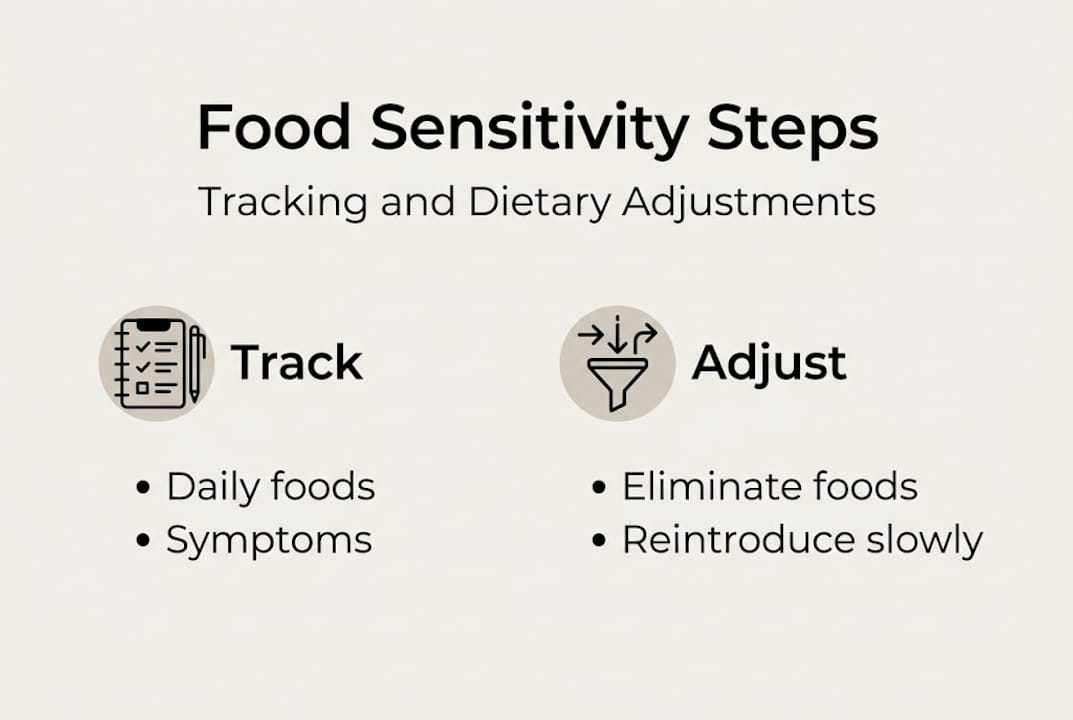
- Use a food diary for at least two weeks to track patterns before making dietary changes.
- Rely on professional medical advice and evidence-based elimination diets rather than unproven commercial tests.
If you regularly feel bloated, foggy, or exhausted without a clear reason, food sensitivities could be the missing piece. The frustrating part is that symptoms are often vague, delayed, and easy to dismiss. Yet for many people in the UK, the right dietary adjustments bring genuine, lasting relief. This guide walks you through a clear, safe roadmap: from spotting the early signs, to keeping a food diary, to carrying out an evidence-based elimination process. Every step here is grounded in NHS and leading UK expert guidance, so you can feel confident you are making changes that are practical, measured, and genuinely helpful.
Table of Contents
- recognising the signs: are you sensitive to certain foods?
- preparing to make changes: safe first steps before adjusting your diet
- How to carry out an elimination and reintroduction diet
- Testing options: what works, what doesn’t, and how to interpret results
- Expert perspective: why personal tracking beats most commercial tests
- Next steps: support for your food sensitivity journey
- frequently asked questions
Key Takeaways
| Point | Details |
|---|---|
| Consult before changing | Always speak to your GP first to exclude serious health issues before adjusting your diet. |
| Track before you test | Keep a detailed food and symptom diary to spot patterns and guide safe changes. |
| Elimination works best | The NHS recognises elimination and reintroduction as the most reliable approach for sensitivity. |
| Test wisely | Many commercial sensitivity tests lack scientific backing; use them with caution and seek professional advice. |
recognising the signs: are you sensitive to certain foods?
Symptoms of food sensitivity are easy to overlook precisely because they feel so ordinary. That afternoon headache. The bloating after lunch. The tiredness that just will not lift. These are the kinds of complaints many people brush off as stress or poor sleep. But if they keep coming back, and especially if they cluster around mealtimes, it is worth paying closer attention.
Common symptoms linked to food intolerance symptoms include:
- bloating and wind after eating
- stomach cramps or discomfort
- diarrhoea or loose stools
- headaches or migraines
- fatigue and brain fog
- skin issues such as rashes, itching, or mild hives
- joint stiffness or generalised achiness
It is important to understand the difference between a food allergy and a food intolerance. A food allergy triggers an immediate immune response, sometimes severe, and can be life-threatening. A food intolerance tends to produce slower, less dramatic symptoms, often appearing hours after eating. Both matter, but they require different management approaches.
Some symptoms are red flags that need prompt attention. If you experience unexplained weight loss, blood in your stools, persistent vomiting, or severe abdominal pain, see your GP without delay. These are not typical intolerance symptoms and may point to something more serious.
Important: Before you change your diet based on symptoms alone, consult your GP to rule out serious conditions like coeliac disease, IBS, or allergies. Self-observation is a useful starting point, but it is not a diagnosis.
Following IBS guidelines is especially relevant if your main symptoms are gut-related, as IBS shares many features with food intolerance and requires its own specific management approach. Getting the right professional input early saves a great deal of confusion later.
preparing to make changes: safe first steps before adjusting your diet
Once you have recognised the signs, what practical steps can you safely take to explore sensitivities?
The single most important first step is to see your GP. This is not just formality. Your doctor can rule out coeliac disease, inflammatory bowel conditions, and allergies before you begin any elimination process. Acting without that clarity risks masking something that needs treatment.
Once you have that green light, start a food and symptom diary. According to expert consensus, the empirical approach of diary keeping combined with supervised elimination and reintroduction is the gold standard recommended by both the NHS and organisations like guts UK.
Run your diary for a minimum of two weeks before drawing any conclusions. You need enough data to spot patterns, not just coincidences.
What to track each day:
| Category | What to record | Why it matters |
|---|---|---|
| Food and drink | Every item eaten, including portion size | Links meals to symptoms |
| Time of eating | Hour of each meal or snack | Shows delay patterns |
| symptoms | Type, severity, and duration | Maps reactions accurately |
| Other factors | Sleep, stress, medications | Rules out other triggers |
tracking symptoms at home does not need to be complicated. A simple notebook works just as well as an app. The goal is consistency, not perfection.
For lactose intolerance guidance, the NHS offers specific dietary advice that can help you understand whether dairy is a trigger before you begin a formal elimination.

Pro tip: Set a daily reminder to update your diary at the same time each evening. A few minutes at the end of the day is enough to capture everything accurately without it feeling like a chore.
Getting the basics right before you change anything gives you a reliable foundation. You will make far better decisions from a position of clear evidence than from guesswork. Read more about managing sensitivities daily to help set realistic expectations from the start.
How to carry out an elimination and reintroduction diet
Preparation is key. Now, step confidently into the elimination and reintroduction journey.
The elimination diet is widely regarded as the most reliable method for identifying food triggers. It works by removing suspected foods for a set period, then reintroducing them one at a time to observe any reaction. This structured step-by-step guide approach removes guesswork and gives you genuinely actionable results.
Here is how the process typically unfolds:
- Set a baseline (one to two weeks): Continue eating normally while keeping your diary. This gives you a clear picture of your usual symptoms before any changes.
- Remove suspected foods (two to six weeks): Cut out the foods you suspect are problematic. Common culprits include gluten, dairy, eggs, soy, and certain additives. Remove them completely, not just partially.
- Monitor symptoms: Keep your diary going throughout. Note any improvements, how quickly they appear, and how significant they feel.
- reintroduce foods one at a time: Add each food back every three days. This gap gives your body time to react before you move to the next item.
- Record and review: Log everything. Look for patterns across multiple reintroductions before drawing conclusions.
The evidence-backed elimination methods recommended by guts UK emphasise doing this under the supervision of a dietitian, especially if you are removing several food groups at once.
| approach | How it works | Best for |
|---|---|---|
| elimination diet | Remove foods, then reintroduce gradually | Multiple suspected triggers |
| direct food challenge | Test single foods without prior elimination | One specific suspected food |
Pro tip: Do not start an elimination diet during a period of high stress or illness. Your symptoms will be harder to interpret, and you risk false conclusions.
Common mistakes to avoid include removing too many foods at once, reintroducing foods too quickly, and abandoning the process mid-way. Stay methodical. Learn more about adjusting your diet safely and sustainably.
Testing options: what works, what doesn’t, and how to interpret results
Using food and symptom monitoring is central, but what about commercially available tests?
There are several validated NHS testing pathways worth knowing about. For suspected lactose intolerance, the hydrogen breath test measures how your body processes lactose and is considered reliable. For coeliac disease, a blood test followed by a gut biopsy is the clinical standard. These are carried out under medical supervision and come with clear, evidence-based interpretation.
Commercial at-home IgG antibody tests are a very different matter. IgG stands for immunoglobulin G, a type of antibody your body naturally produces when exposed to food proteins. Having raised IgG levels simply shows you have eaten a food regularly, not that you are intolerant to it.
Commercial IgG tests lack scientific evidence and are not endorsed by the NHS, the British dietetic association, or the American Academy of allergy, asthma and immunology. They may lead to unnecessary and potentially harmful dietary restrictions.
For guidance on choosing intolerance tests, it pays to understand what a result actually means before spending money on a test.
A simple checklist for interpreting any test result:
- Does the result align with symptoms recorded in your diary?
- Has a qualified dietitian or GP reviewed the findings?
- Is the test method supported by published clinical evidence?
- Are you being advised to restrict many foods simultaneously?
If a test leads you to cut out large food groups without professional oversight, that is a warning sign. Read more about what sensitivity tests mean before acting on any result.
Unreliable testing can leave you nutritionally deficient, more confused than before, and no closer to understanding your actual triggers. That is why grounding your process in diary evidence and professional input remains the most sensible approach.
Expert perspective: why personal tracking beats most commercial tests
The appeal of a quick test is understandable. You send off a sample and receive a neat list of foods to avoid. It feels efficient. It feels certain. But certainty is exactly what those results cannot provide.
Experience and expert consensus are clear: non-invasive IgG-based commercial tests are not endorsed and can mislead. People who rely on them often end up restricting fifteen or twenty foods unnecessarily, creating real nutritional gaps and considerable stress around eating.
A well-kept food and symptom diary, combined with a methodical elimination and reintroduction process, gives you something no commercial panel can: evidence drawn directly from your own body and your own daily life. It is slower. It requires more effort. But the clarity it produces is real and lasting.
The most effective long-term managers of food sensitivities are rarely those who found a magic test. They are the ones who learned their own patterns through consistent observation. That knowledge becomes second nature over time. For practical support in building those natural management methods, structured guidance makes the process far more manageable.
Next steps: support for your food sensitivity journey
Armed with practical know-how, you may want extra support. Here is where to get it.
If you are ready to go beyond diary keeping, exploring food intolerance test options from a trusted UK source can give you a useful starting point for your elimination plan. At UK Food intolerance, our at-home tests analyse hair samples using bio-resonance technology, providing detailed reports within 48 to 72 hours.

Tests work best when combined with professional dietary support. Find out how personalised diet with intolerance tests can help you move from confusion to confidence. Visit UK Food intolerance to explore your options and take the next step forward.
frequently asked questions
What’s the safest first step if I suspect a food sensitivity?
Consult your GP to rule out serious conditions such as coeliac disease, IBS, or allergies before making any changes to your diet. The NHS advises this clearly for anyone with suspected food sensitivity concerns.
Are at-home IgG food intolerance tests reliable?
Most at-home IgG tests lack scientific backing and are not recommended by the NHS or expert bodies, as they may lead to unnecessary dietary restrictions.
How long should I use a food and symptom diary?
Keep your diary for a minimum of two weeks before drawing conclusions. This is the gold standard approach recommended by both the NHS and guts UK for identifying sensitivity patterns.
What tests are reliable for diagnosing lactose intolerance?
The NHS recommends the hydrogen breath test as a reliable clinical method for diagnosing lactose intolerance, often supported by a low-lactose trial diet under dietitian guidance.










Leave a Reply
Want to join the discussion?Feel free to contribute!