
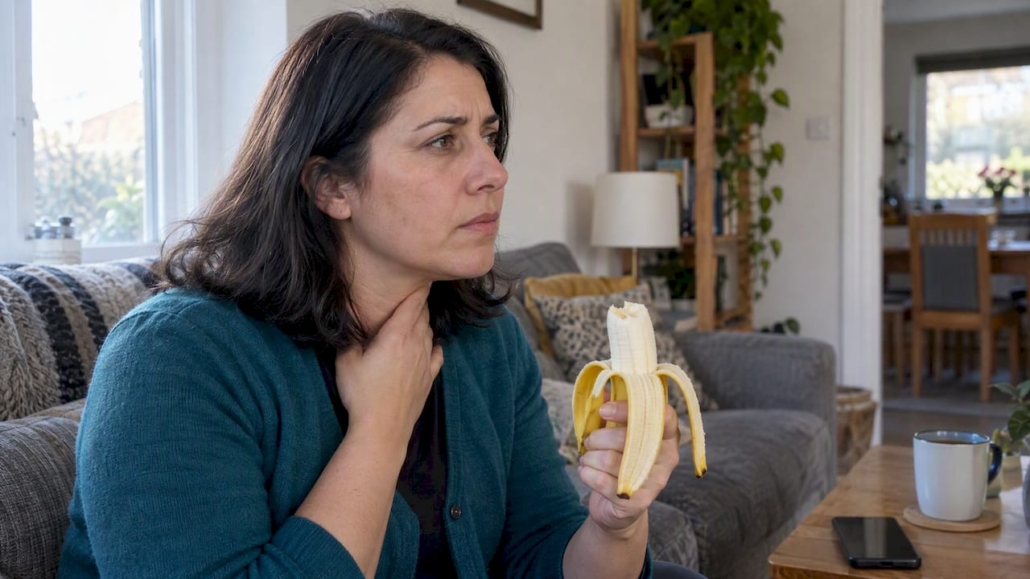
An itchy throat after eating a banana is most often a mild, quick reaction called oral allergy syndrome, also known as pollen food syndrome. Your immune system mistakes proteins in the raw fruit for similar proteins in pollen or natural rubber latex. It usually starts within seconds or minutes and stays in the mouth and throat. It is worth understanding properly, because the right next step depends on what is actually going on, and a few symptoms mean you should not wait at all.
We know how unsettling it is when a simple snack makes your throat tingle. This guide explains the likely causes, how to tell them apart, when to get urgent help, and where a home sensitivity test might (and might not) fit in.
TL;DR
- An itchy mouth or throat within minutes of eating a raw banana is commonly oral allergy syndrome (pollen food syndrome), caused by cross-reactivity with pollen or latex.
- Throat tightness, trouble swallowing, breathing difficulty, widespread hives or feeling faint need emergency help: call 999.
- Write down what you ate, how it was prepared, how fast symptoms started and the time of year. A clear history is what an allergy specialist values most.
- Delayed symptoms such as bloating, headaches or tiredness are a different pattern. A hair-based sensitivity test can help you plan an elimination diet, but it is not an allergy test.
Table of Contents
- Why bananas can make your throat itch
- Typical symptoms and how long they last
- Allergy or intolerance: what is the difference?
- What to do when a banana makes your throat itch
- Where a home sensitivity test fits
- Our perspective
- Practical tips if you have pollen food syndrome
- A home test option from us
- FAQ
- Sources
Why bananas can make your throat itch
Bananas are not a classic troublemaker like peanuts or shellfish, yet they cause a lot of tingling mouths. The reason is usually cross-reactivity rather than a banana-only problem.
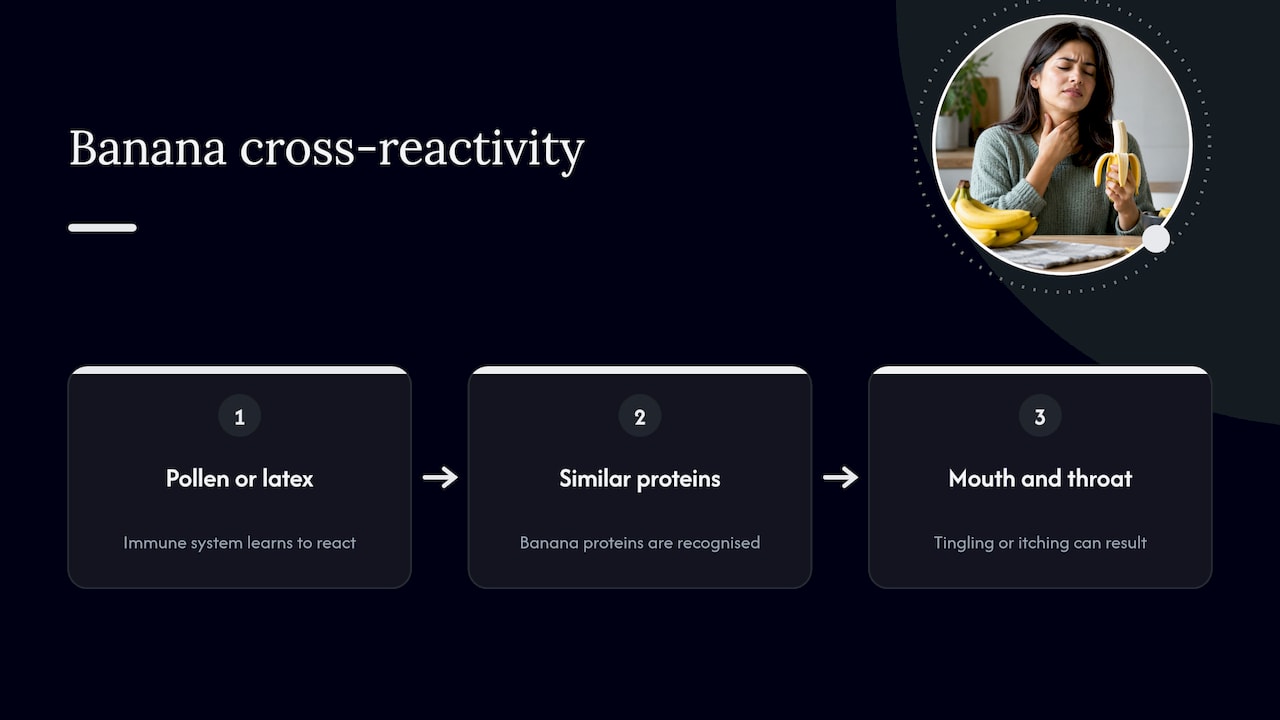
According to Anaphylaxis UK, proteins in banana are similar to proteins in certain pollens and in latex. If your immune system has learned to react to one of those, it can react to the banana too. The result mainly affects the mouth and throat.
Pollen food syndrome
Allergy UK describes pollen food syndrome as a reaction to fruits, vegetables and nuts that usually causes mild irritant symptoms, such as itching of the mouth. The North West Allergy Network notes it is a common food-related allergy in adults and is increasingly diagnosed in older children.
If you get hay fever in spring or summer, this is the first explanation to consider. Birch pollen is the best-known link, and people with it often notice the same itch from raw apples, pears, carrots or hazelnuts.
Latex-fruit syndrome
Less commonly, the cross-reaction is with natural rubber latex. A research summary on latex-fruit syndrome lists banana alongside avocado, kiwi, chestnut and potato as foods linked to latex allergy. If you work with latex gloves, or notice itching around rubber products as well, mention that to your GP.
A true banana allergy
Sometimes banana itself is the trigger. Reactions can include itching in the mouth and throat, hives and skin swelling, and in rare cases narrowing of the throat or wheezing. This is the situation where guessing is risky, and where proper medical assessment matters most.
Typical symptoms and how long they last
With oral allergy syndrome, the pattern is usually easy to recognise:
- Itching, tingling or mild swelling of the lips, mouth, tongue or throat
- Onset within seconds or minutes of eating the raw fruit
- Symptoms that fade without treatment, often within an hour or two
Anaphylaxis UK says reactions usually start within seconds or minutes, though rarely they can take up to two or three hours. That fast timing is a useful clue. If your discomfort starts many hours later, it is less likely to be a pollen-type reaction.
Signs you should not ignore
The NHS food allergy page lists signs of a more serious reaction, including dizziness or lightheadedness, swelling of the lips, face and eyes, coughing, wheezing, breathlessness, noisy breathing or a hoarse voice. If you or your child has any of these after eating a banana, or throat tightness or difficulty swallowing, call 999. Do not wait to see if it settles, and do not treat it with a diet change.
If you have had any reaction beyond mild mouth itching, book a GP appointment, even if it passed. Ask whether a referral to an NHS allergy service makes sense.
Allergy or intolerance: what is the difference?
People search for banana sensitivity symptoms and find both words used loosely. They mean different things.
| Food allergy (including pollen food syndrome) | Food intolerance or sensitivity | |
|---|---|---|
| Body system involved | Immune system | Often digestion or other, less clearly defined processes |
| Timing | Usually seconds to minutes | Often hours, sometimes a day or more |
| Typical symptoms | Itchy mouth or throat, hives, swelling, wheeze | Bloating, wind, stomach discomfort, headaches, tiredness |
| Can be serious? | Occasionally | Generally not life-threatening |
| Standard UK route | GP, then NHS allergy testing if appropriate | Food diary and supervised elimination |
An itchy throat within minutes sits firmly on the allergy side of this table. That matters for what you do about it.
What to do when a banana makes your throat itch
1. Stop and note what happened
If the itch is mild, stop eating the banana and rinse your mouth with water. Keep an eye on how you feel for the next hour or so. If anything beyond the mouth and throat appears, treat it as urgent.
2. Keep a short food and symptom diary
Medical professionals treat clinical history as the gold standard for spotting true allergy, and the BSACI is clear that testing should follow a convincing history. So make your history convincing. Record:
- The type and ripeness of the banana (raw, baked, in a smoothie, in banana bread)
- How much you ate
- How many minutes passed before symptoms started
- How long symptoms lasted
- The time of year and whether you had hay fever symptoms
- Other foods eaten at the same time
Our guide on tracking food symptom triggers walks you through a simple format. Bring the notes to your GP. They give far more useful information than a vague memory.
3. See how preparation changes things
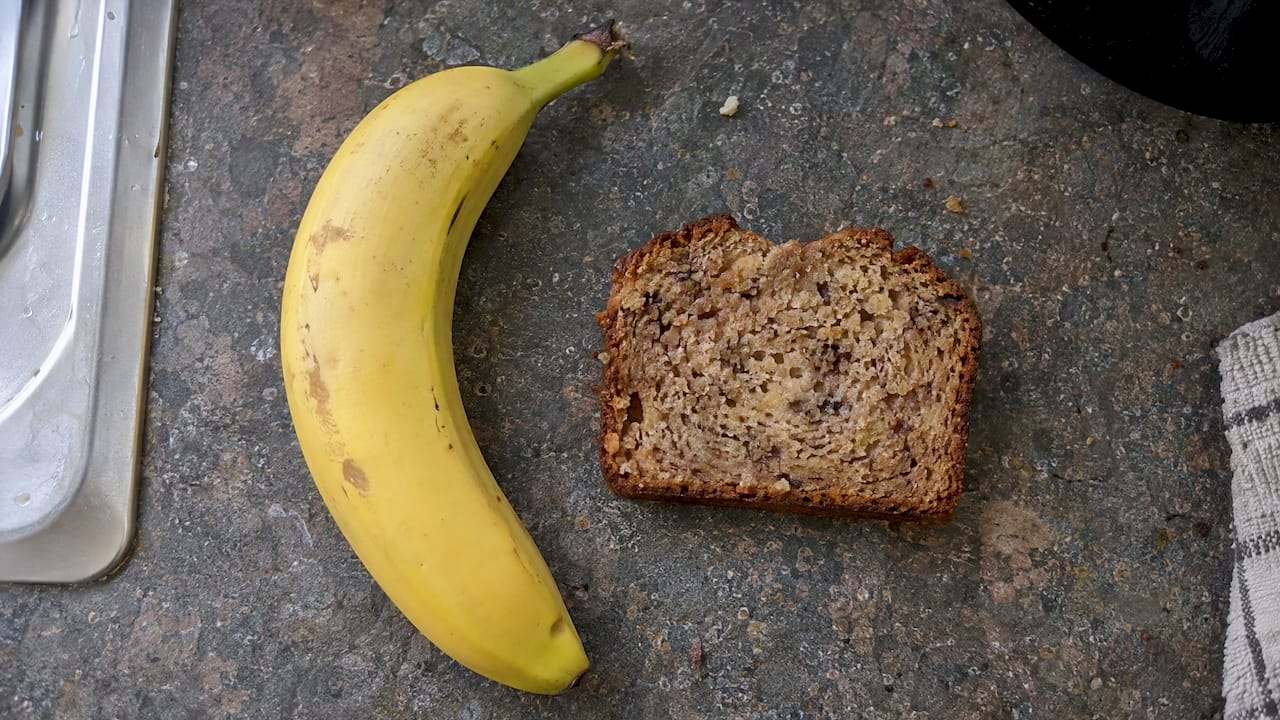
Pollen-related proteins are fragile. Anaphylaxis UK explains that many people react to raw fruit but tolerate it cooked, because heat changes the protein structure so the immune system no longer recognises it. That is why a raw banana may itch while baked banana bread does not.
A word of caution: the same charity also says that, for anyone diagnosed with a banana allergy, it is sensible to avoid bananas. So do not experiment with cooked banana on your own if you have ever had more than mild mouth itching. Ask your GP or an allergy specialist whether it is safe for you.
4. Ask about proper testing
In the UK, allergy diagnosis relies on a detailed history, then validated tests such as skin prick tests or specific IgE blood tests. The BSACI laboratory testing guideline advises against indiscriminate panels of allergy tests, because broad screening produces false positives that can lead to unnecessary food avoidance. If your banana reaction is quick and involves the mouth, throat or skin, this is the route to follow first.
Where a home sensitivity test fits
We want to be straightforward here, because you deserve a clear answer.
Hair-based bio-resonance testing is not a diagnostic test for food allergy. NHS guidance for referrers says that private tests such as hair analysis, bioresonance or IgG testing have no established validity for allergy diagnosis. Our own tests are designed as an intolerance screening tool, and we say so openly on our site. You can read how the method works in our bio-resonance guide and our research and methodology page.
So when might a home test be useful?
- You have had a mild, quick mouth itch and your GP has reassured you it fits pollen food syndrome, but you also have slower symptoms such as bloating, fatigue or headaches that you cannot link to a food.
- You want a structured starting list of foods to look at before running an elimination diet.
- You prefer a non-invasive option, for yourself, for a child or for a pet, with no needles or clinic visit.
When should you not rely on it?
- You have had swelling, hives, wheeze, breathing trouble or any reaction that worried you. See a doctor first.
- You hope to rule banana in or out as a safe food. A test report cannot tell you that a food is safe where there is any allergic risk.
- You are thinking of cutting out many foods based on a report alone, especially for a child. Do that only with guidance from a GP or dietitian.
A sensible order of steps
- Get any quick, throat-related, hive-related or breathing-related symptoms checked by a GP.
- Keep your diary for two to four weeks.
- If you still have slower, unexplained symptoms, consider a sensitivity screen to help structure an elimination diet.
- Reintroduce foods one at a time and watch your diary, rather than treating a report as a final verdict.
Our perspective
We hear from many people who start with one clear symptom, like an itchy throat after a banana, and end up wondering whether everything they eat is a problem. That worry is understandable, and it is exactly why we want to keep the picture simple.
An immediate itch in the mouth is an immune-system story, and the NHS and allergy charities are the right first stop. Our tests are different. They look at possible food and environmental sensitivities through bio-resonance hair analysis, processed at a UK laboratory, with a digital report back in 48 to 72 hours. We built them to help people who live with slow, hard-to-pin-down symptoms get a starting point for an elimination diet, not to replace a clinical allergy work-up.
In our experience, the people who get the most from a report are the ones who treat it as a prompt for careful experiments: remove a small number of foods for a set period, keep notes, reintroduce one at a time and see what the diary shows. Our elimination diet checklist and guide to the food elimination process are written for exactly that. Our aim is to give you clarity and a sense of control without pushing you away from proper medical care.
— Rob
Practical tips if you have pollen food syndrome
If your GP confirms that pollen food syndrome is the likely cause, these points from the allergy charities and common practice may help. Check each with your clinician for your own case.
- Expect a pattern. You may notice similar itching with other raw fruit, vegetables or nuts. Note them in your diary.
- Watch the season. Symptoms are often worse when your hay fever is active. The timing is worth recording.
- Compare raw and cooked. Allergy UK and Anaphylaxis UK both describe heat as reducing the reaction for many people, though it is not guaranteed for everyone.
- Do not assume it stays mild. Anaphylaxis UK notes that severe reactions are possible, though uncommon. Ask your GP whether you need an action plan.
- Mention latex. If you also react to rubber gloves or balloons, say so at your appointment.
A home test option from us
If you and your GP agree that slower, non-allergic symptoms deserve a closer look, we offer at-home sensitivity tests using a simple hair sample. You collect the sample at home, post it to our UK laboratory and receive a digital report within 48 to 72 hours. Our Ultimate Plus Intolerance Test is £140.99 one-off per person. You can compare every option, including the Core, Essential, Premium and Ultimate tests, on our tests page. If you are curious how collection works, see our step-by-step home collection guide and our page on hair sample testing, which explains the difference between sensitivity and allergy.
The report also comes with guidance to help you plan an elimination diet. If you want to know what you will receive, our guide to digital intolerance reports explains the format.
FAQ
Why are bananas making my throat itch?
Most often it is oral allergy syndrome, where proteins in raw banana resemble those in pollen or latex and trigger a mild reaction in the mouth and throat. It can also be a true banana allergy. A GP can help you work out which, ideally with your food diary in hand.
How long does an itchy throat from a banana last?
With oral allergy syndrome the itch typically begins within seconds or minutes and often settles within one to two hours without treatment. If it lasts longer, spreads, or comes with swelling, hives or breathing difficulty, seek medical help, and call 999 for severe symptoms.
Can I eat bananas if they are cooked?
Many people with pollen food syndrome tolerate cooked fruit because heat breaks down the fragile proteins involved. That is not true for everyone, and Anaphylaxis UK advises avoiding bananas if you have a banana allergy. Check with your GP or an allergy specialist before testing it yourself.
Is an itchy throat after bananas a sign of anaphylaxis?
Not usually. A mild itch limited to the mouth and throat is the typical pattern of oral allergy syndrome. Anaphylaxis involves signs such as throat swelling, noisy breathing, wheezing, dizziness or collapse, and needs a 999 call straight away.
Will a hair sensitivity test tell me if I am allergic to bananas?
No. Allergy is diagnosed through clinical history and tests such as skin prick or specific IgE blood tests, arranged through your GP. Our hair-based tests screen for possible intolerances and are meant to support an elimination diet, not to confirm or exclude an allergy.
Sources
- NHS: Food allergy
- Anaphylaxis UK: Banana allergy
- Anaphylaxis UK: Banana allergy fact sheet
- Anaphylaxis UK: Banana allergy factsheet (PDF)
- Allergy UK: Oral allergy syndrome (pollen food syndrome)
- North West Allergy Network: Oral allergy syndrome
- BSACI: Laboratory testing guideline, January 2025
- BSACI: Skin prick tests and specific IgE tests
- NHS immunology referral guidance (BNSSG)
- The latex-fruit syndrome (ResearchGate)










Leave a Reply
Want to join the discussion?Feel free to contribute!