

Oral allergy syndrome (OAS) is an allergic reaction to certain raw fruits, vegetables and nuts. It usually shows up as itching or tingling in the lips, mouth and throat within minutes of eating. In the UK it is more often called pollen food syndrome (PFS), and it is closely linked to hay fever. If your mouth itches when you bite into a raw apple, you may well be reading about yourself. This guide explains what is happening, which foods are the usual culprits, what to do in the moment, and how diagnosis works. It also explains where an at-home intolerance test does and does not fit.
TL;DR
- OAS (pollen food syndrome) is caused by proteins in raw fruit, veg and nuts that resemble pollen proteins. It mostly affects people with hay fever.
- Symptoms are typically mild and local: itchy or tingling lips, mouth and throat that develop within a few minutes of eating.
- Cooking often makes trigger foods safe, but nuts and soya can behave differently. Reactions to cooked food, or breathing difficulty, need urgent medical advice.
- Diagnosis is mainly based on your history. A GP or allergy specialist is the right route, not a home kit.
- An intolerance test cannot diagnose OAS. It can help if you also have wider digestive or other symptoms you want to explore.
Table of Contents
- What oral allergy syndrome actually is
- Oral allergy symptoms to look for
- Foods that commonly trigger oral allergy syndrome
- What to do when a reaction starts
- How oral allergy syndrome is diagnosed in the UK
- Oral allergy syndrome testing: where a home test fits
- Our perspective: clarity without false promises
- Eating out and shopping when you have trigger foods
- Testing children: a gentle word for parents
- Our intolerance tests, if you want a wider picture
- FAQ
- Sources
What oral allergy syndrome actually is
OAS is a true allergy, but an unusual one. It is an IgE-mediated food allergy that affects children and adults, and Allergy UK describes it as becoming more common in the UK.
The mechanism is cross-reactivity. Your immune system first becomes sensitised to pollen, often birch, grass or weed pollen. Certain fruits, vegetables and nuts contain proteins with a similar shape, so your body reacts to them as if they were pollen. The North West Allergy Network explains that the allergy is to proteins in the food that resemble those in tree, grass or weed pollens.
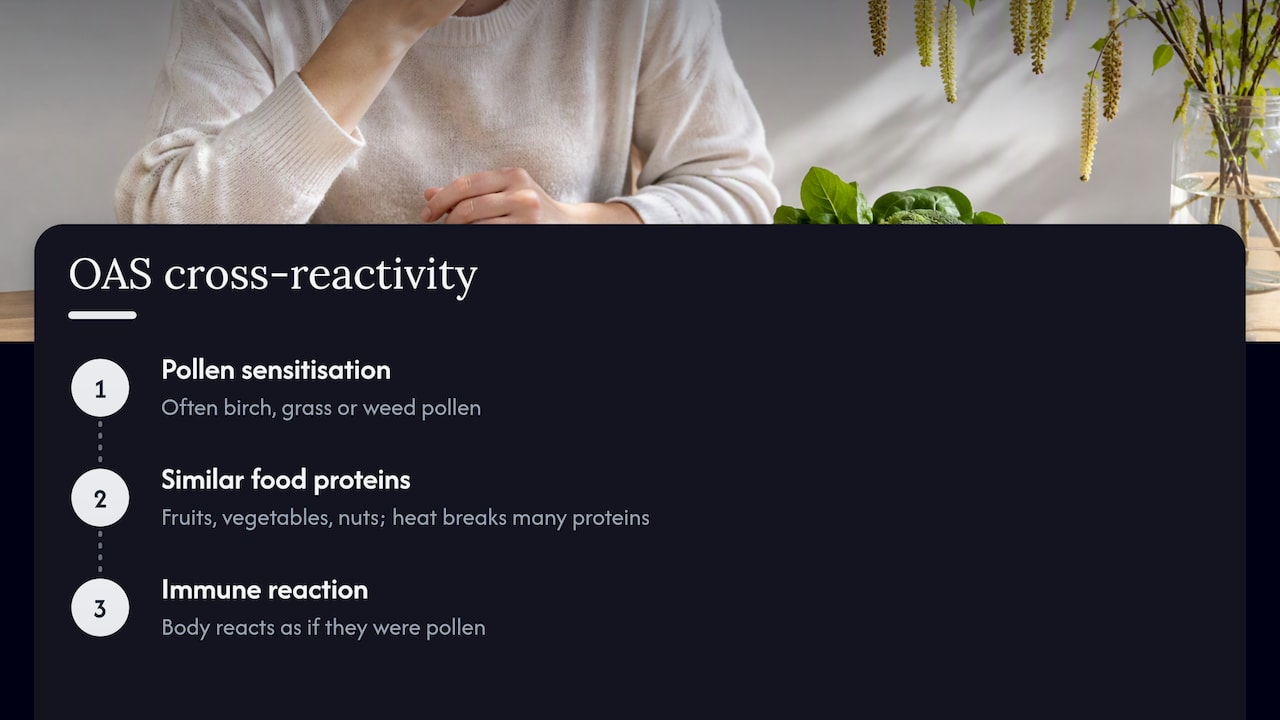
Because the proteins involved usually break down with heat, many people can eat the same food cooked or canned without trouble. That one clue is the most useful thing you can notice about your own reactions.
OAS or pollen food syndrome?
They are the same condition. Many UK clinical sources now prefer “pollen food syndrome”, partly because the reaction is not always confined to the mouth. You will also see “pollen food allergy syndrome” (PFAS). If you are searching for leaflets or GP advice, try all three names.
How common is it?
A UK study reported an average prevalence of about 2% in the general population, with a range of 0.8% to 4.1%. The same source notes that the true figure is probably underestimated because it often goes undiagnosed. It tends to begin in childhood and become more frequent with age.
Oral allergy symptoms to look for
Most reactions are brief and stay close to where the food touched. Anaphylaxis UK describes immediate symptoms in the lips, mouth and throat, usually after raw fruit or vegetables. Typical signs include:
- itching or tingling in the lips, mouth, tongue or throat
- a fuzzy or furry feeling in the mouth
- itchy ears
- mild swelling of the lips or tongue
- redness around the mouth
Less commonly, people report a nettle-type rash, stomach pain or eczema flares. Mild symptoms usually settle within 30 to 60 minutes, and rinsing the mouth with water may ease them sooner.
Reactions that are not typical of OAS
The pattern matters. Reactions to cooked food, to roasted nuts, or any symptoms such as wheezing or difficulty breathing are not typical of OAS. According to the Anaphylaxis UK factsheet, these need urgent referral to an allergy specialist. They may point to a primary food allergy rather than a pollen-related one.
If you or your child have swelling of the face or throat, trouble breathing, dizziness or collapse after eating, call 999. Do not wait to see whether it passes.
Severe reactions in PFS are uncommon. The same Anaphylaxis UK document puts anaphylaxis at roughly 1 in 50 patients, which is low but not zero. That is why a proper assessment is worth having if your symptoms are more than a tingle.
Foods that commonly trigger oral allergy syndrome
Your triggers depend on which pollen you are sensitised to. The commonest group are fruits and vegetables related to birch pollen allergy, but the list varies from person to person. Allergy UK describes reactions to raw fruit, vegetables, spices, herbs, seeds, legumes and nuts in people who are allergic or sensitised to pollen.
| Food group | Examples often mentioned | Usually safe when… |
|---|---|---|
| Fruit | Apple, pear, cherry, peach, plum, kiwi | Cooked, baked or canned |
| Vegetables | Raw carrot, celery, raw tomato | Cooked |
| Nuts | Hazelnut, almond, walnut | Not always: heat may not remove the reaction |
| Legumes | Soya, peanut | Not reliably: can be heat-stable |
This table is a guide, not a prescription. You are unlikely to react to every food in it. Experts stress that people should avoid only the specific raw foods that have personally caused reactions, rather than cutting out a wide range pre-emptively.
The variety of apple matters
Not all apples are equal. Allergy UK notes that varieties such as Granny Smith, Golden Delicious and Cox’s Orange Pippin contain higher levels of the proteins linked to PFS, so they are more likely to cause a reaction. If you react to one variety, it can be worth discussing with your clinician whether others are tolerated.
Nuts and soya: the exception to the cooking rule
It is a common assumption that processed or roasted food is always safe. For classic PFS proteins that is often true, but the same Allergy UK document explains that proteins in nuts and soya can be heat-stable. They may still cause reactions when roasted or processed. If you react to a roasted nut, treat that as a reason to see an allergy specialist, not as something to manage alone.
Peeling and handling can trigger symptoms too
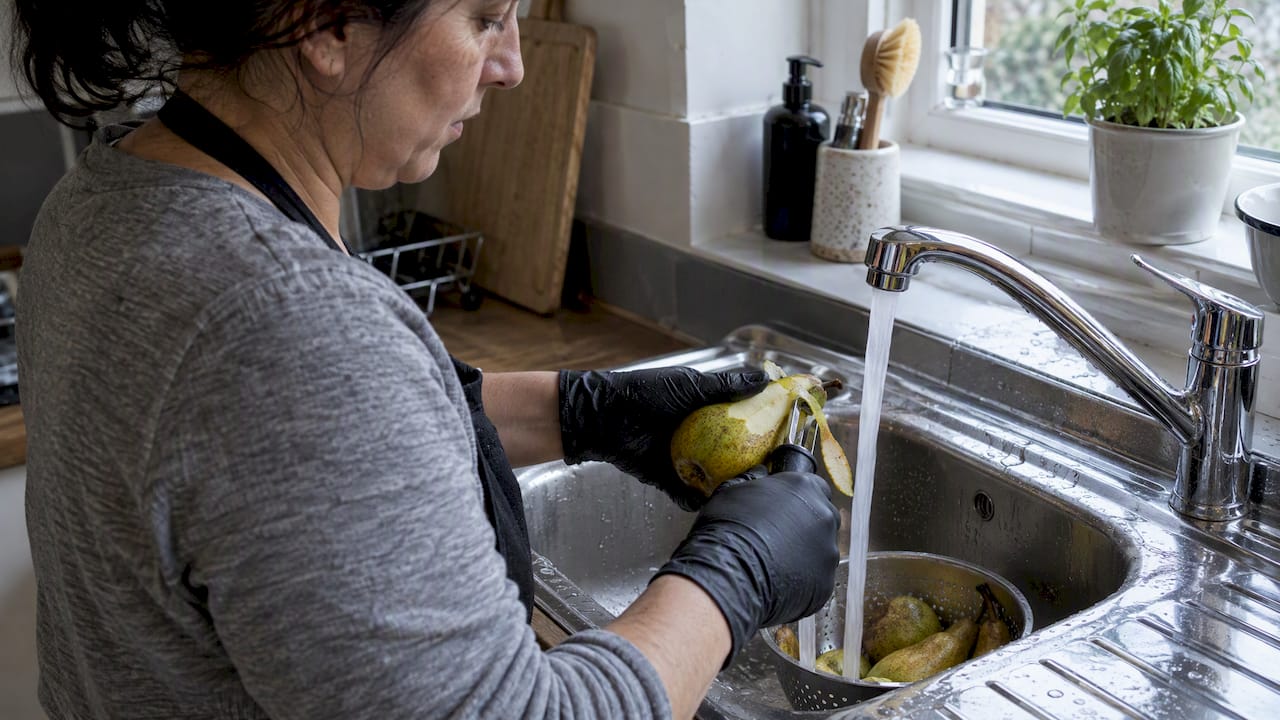
The allergen can become airborne. The Worcestershire Acute Hospitals leaflet says that peeling or scraping raw fruit and vegetables may cause sneezing, itchy eyes or skin wheals. Gloves, or peeling under running water, can help reduce exposure.
What to do when a reaction starts
For a mild reaction, this is a sensible sequence based on NHS hospital guidance:
- Stop eating the food and spit out what is left in your mouth.
- Rinse your mouth with water.
- Wait. Mild symptoms usually pass within 30 to 60 minutes.
- If they linger, ask your GP or pharmacist about an oral antihistamine, and take it as directed.
- Make a note of the food, how it was prepared and how long the symptoms lasted.
It is the last step that helps most later. A short diary of what you ate, whether it was raw or cooked, and the time of year is exactly what a clinician will ask about.
Some people at higher risk are prescribed adrenaline: auto-injectors such as EpiPen or Jext, or the EURneffy nasal spray. Leeds Teaching Hospitals notes that OAS rarely leads to life-threatening reactions and an auto-injector is rarely warranted, so this is for your clinician to decide, not something to self-assess.
How oral allergy syndrome is diagnosed in the UK
Diagnosis rests mainly on your story. The Anaphylaxis UK factsheet quotes BSACI guidance: if you react only to raw foods, tolerate them cooked, and have hay fever or pollen sensitisation, the diagnosis is almost certainly PFS without further tests.
Further testing, such as skin prick tests or component blood tests, is for less clear-cut cases. Examples are reactions to cooked food, symptoms beyond the mouth, or nut and soya reactions. Those are done through the NHS or a registered clinician, who can interpret them alongside your history.
Healthcare professionals also advise looking at the bigger picture. Management often starts in primary care, and co-existing hay fever, asthma and eczema should be as well controlled as possible. If hay fever is part of your story, our guide to making hay fever easier to live with has practical coping ideas.
Oral allergy syndrome testing: where a home test fits
We want to be clear here, because it matters. OAS is an IgE-mediated allergy. Our tests are bioresonance-based intolerance screening using a hair sample, and they are not an allergy test. They do not diagnose OAS, pollen food syndrome or any other allergy, and they should never replace an assessment by your GP or an allergy specialist. If you suspect an allergy, particularly with swelling, breathing difficulty or reactions to cooked foods, see a clinician first. Our guide on allergy versus intolerance explains the difference in more detail.
So why would someone with OAS look at an intolerance test at all? Usually because the mouth itching is not the only thing going on. Many people also deal with bloating, headaches, fatigue or skin flare-ups, and want a starting point for working out which foods might be involved. For that, a screening report can give you a structured list of items to explore with an elimination diet. You can read about the method and its limits in our bioresonance research and methodology page and our educational guide to bio-resonance technology.
Keep restriction proportionate
One risk with OAS is over-restriction. Experts point to the psychological burden of PFS, including anxiety and unnecessarily limited diets. Whatever route you take, aim to remove only foods you have a reason to remove, and bring them back where it is safe to do so. Our elimination diet checklist and guide to identifying food triggers safely are built around that careful approach.
Our perspective: clarity without false promises
At UK Food Intolerance we hear from people every week who have a confusing mix of symptoms and no clear answer. Some of them have an itchy mouth in spring and a bloated stomach all year round, and they assume it is all one problem. Often it is two or three separate things.
Our view is simple. Allergies, including OAS, belong with the NHS and allergy specialists, because the stakes can be higher and the testing is clinical. Intolerances are a different conversation: they are not usually dangerous, they tend to be about digestion and wellbeing, and they are where a non-invasive screening test can be a useful first step. We are open that our tests are best suited to intolerance screening, and we would rather you used them for the right job than expect them to do a different one.
What we can offer is a calm, practical way in. You collect a hair sample at home, it is analysed at a UK-based laboratory, and you receive a digital report within 48 to 72 hours, with guidance on using the results in an elimination diet. If you have a diagnosed allergy as well, share your report with your GP or dietitian rather than acting on it alone.
— Rob
Eating out and shopping when you have trigger foods
Living with OAS is mostly about small habits. A few that help:
- Ask how it is prepared. Raw salads, fresh fruit toppings and smoothies are the usual trouble spots. Baked or stewed versions are often fine for classic PFS triggers, but not for nuts.
- Read labels for nuts and soya. These can be heat-stable, so processed does not mean safe.
- Choose cooked or canned alternatives when a fresh trigger is your only issue, for example stewed apple instead of raw.
- Check allergen information before ordering. Allergen rules cover 14 main allergens, and this takeaway allergen checklist shows the kind of menu questions worth asking, even though it is written around Belgian practice.
- Eat with the season in mind. Many people notice symptoms are worse during their pollen season, so keep your diary up to date.
If your list of avoided foods keeps growing, step back. Our tips for managing food triggers walk through ways to keep a varied diet without guesswork.
Testing children: a gentle word for parents
OAS often begins in childhood, and children can find it hard to describe a “fuzzy” mouth. If your child complains of itching after raw fruit, note the food and whether cooked versions are fine, then speak to your GP. Reactions with swelling, rashes or breathing changes need prompt medical attention. For broader digestive or behavioural concerns, our parent’s guide to top food triggers for kids and parental guide to food sensitivity set out sensible, low-stress steps.
Our intolerance tests, if you want a wider picture
If your symptoms go beyond the mouth and you want a structured starting point, our Ultimate Plus Intolerance Test is £140.99 one-off per person. We also have a range of other options, including core, essential, premium, gluten and dairy and lactose tests, on our tests page. Our panels cover up to 1,450 items, it is non-invasive, and your report comes back in 48 to 72 hours. For help picking the right level, our at-home health tests guide explains what to expect.
Remember: the test is screening for intolerance, not a diagnosis of allergy. Use it alongside, not instead of, medical advice.
FAQ
Is oral allergy syndrome dangerous?
For most people it is mild and short-lived, with itching or tingling in the mouth that settles within an hour. Serious reactions are uncommon, but they can happen, particularly with nuts and soya. If you have swelling of the throat, wheeze or trouble breathing, call 999.
Can you grow out of oral allergy syndrome?
The sources we reviewed describe it as starting in childhood and becoming more frequent with age, rather than usually fading. Symptoms can vary with the pollen season and your hay fever control. Ask your GP or an allergy specialist about your own outlook.
Can you test for oral allergy syndrome at home?
Not reliably. OAS is an allergy diagnosed mainly from your history, with skin prick or blood tests in some cases through a clinician. Our home test screens for food intolerances and does not diagnose allergies.
Does cooking food stop the reaction?
Often, yes, for classic triggers such as apple or carrot, because the proteins break down with heat. Nuts and soya are the exception, as their proteins can survive roasting and processing. A reaction to cooked food should be checked by an allergy specialist.
What helps oral allergy symptoms quickly?
Rinse your mouth with water and stop eating the food. If symptoms linger, ask your GP or pharmacist whether an oral antihistamine is right for you. Mild symptoms usually pass within 30 to 60 minutes.
Sources
- NHS: Food allergy
- Allergy UK: Pollen Food Syndrome
- Allergy UK: Pollen Food Syndrome (PFS) factsheet
- Anaphylaxis UK: Pollen food syndrome factsheet
- Anaphylaxis UK: Pollen food syndrome (PDF, updated)
- Anaphylaxis UK: Pollen food syndrome (PDF, earlier edition)
- Worcestershire Acute Hospitals NHS Trust: Pollen food syndrome
- North West Allergy Network: Oral allergy syndrome
- Leeds Teaching Hospitals NHS Trust: Adverse reactions to food
- DermNet: Pollen-food allergy syndrome









Leave a Reply
Want to join the discussion?Feel free to contribute!