

TL;DR:
- Lab analysis plays a supportive role in food intolerance diagnosis but cannot provide definitive answers.
- Hydrogen breath tests are the most clinically validated, reliably detecting lactose and fructose intolerance when properly prepared.
- Unvalidated IgG and hair tests are unreliable, often producing false positives that do not reflect actual intolerance.
Lab analysis plays a supporting role in food intolerance diagnosis, not a definitive one. No single universally accepted laboratory test exists to diagnose general food intolerance as of 2026. That fact surprises many people who expect a blood test to hand them a clear list of foods to avoid. The reality is more nuanced. Clinical diagnosis relies on a combination of symptom diaries, structured elimination diets, and, in specific cases, validated breath tests. Understanding what lab tests can and cannot do helps you make better decisions about your health and avoid wasting time on tests that will not give you reliable answers.
What is the role of lab analysis in intolerance diagnosis?
Lab analysis contributes useful information in specific circumstances, but it cannot stand alone as a diagnostic tool. The most clinically validated lab tests for intolerance are hydrogen breath tests, which detect lactose and fructose intolerance by measuring gas produced when undigested sugars are fermented by gut bacteria. A positive result gives a clinician a clear, evidence-based signal. That is the kind of lab output that genuinely changes a diagnosis.
IgG antibody tests are a different matter entirely. IgG antibodies reflect food exposure, not clinical intolerance. They function as memory antibodies, recording foods you eat frequently rather than foods causing adverse reactions. A high IgG reading for eggs simply means you eat eggs often. It does not mean eggs are harming you.
Hair analysis tests fall into the same category. The NHS and the British Dietetic Association do not recommend IgG or hair-based tests for diagnosing food intolerance. Both produce frequent false positives that bear no clinical relationship to actual intolerance. Knowing this upfront saves you from acting on misleading results.
What breath tests actually measure
A hydrogen breath test requires fasting beforehand. You consume a measured dose of a specific sugar, such as lactose or fructose, and then breathe into a collection device at timed intervals. Elevated hydrogen levels in the breath indicate that bacteria are fermenting undigested sugar in the gut. Strict fasting protocols before testing are non-negotiable. Eating beforehand skews the baseline and produces false positives. This is one area where lab analysis genuinely aids intolerance identification, provided the preparation is followed correctly.

Pro Tip: If you are scheduled for a hydrogen breath test, ask your clinician for a written preparation checklist. Even small dietary errors in the 24 hours before the test can invalidate the result.
How does clinical diagnosis complement lab analysis?
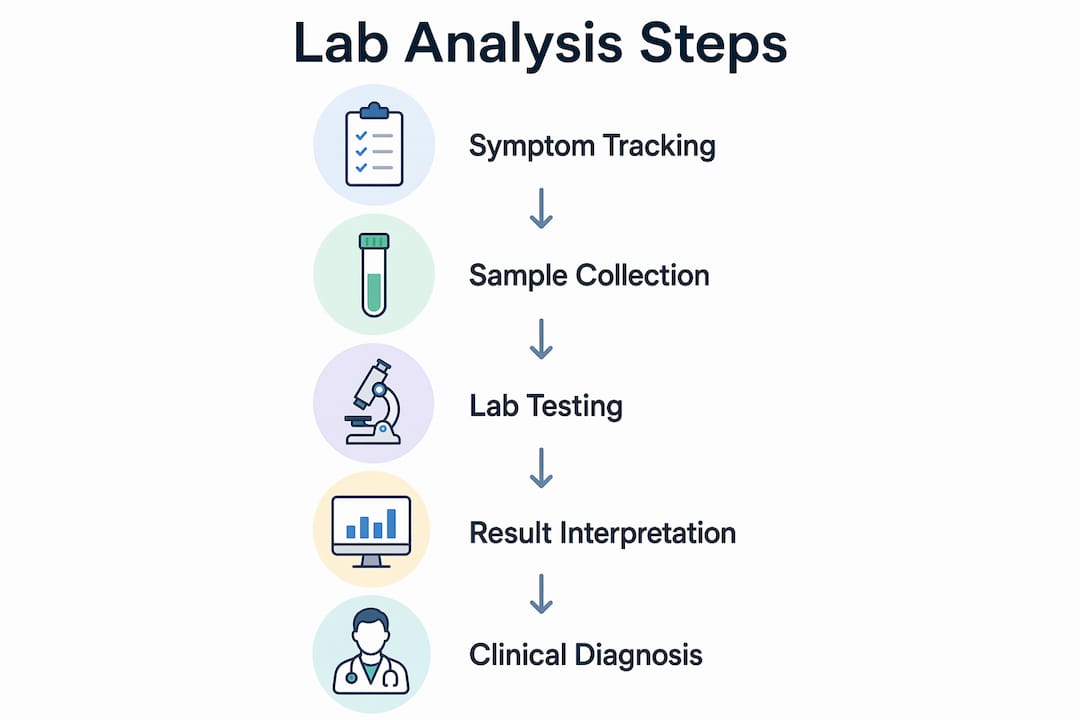
Clinical diagnosis does the heavy lifting that lab tests cannot. A structured elimination and reintroduction diet, supervised by a dietitian, remains the most reliable method for identifying food triggers across a wide range of intolerances. The process is systematic and, when done correctly, produces clear answers.
A typical clinical approach follows these steps:
- Symptom and food diary. You record everything you eat and every symptom you experience, including timing, severity, and frequency. Accuracy here is critical. Vague entries produce vague conclusions.
- Elimination phase. Suspected trigger foods are removed from your diet for a set period, typically two to six weeks. During this time, symptoms are monitored closely.
- Reintroduction phase. Foods are reintroduced one at a time, in a controlled and blinded reintroduction process where possible. Each food is tested individually, with enough time between introductions to observe any reaction.
- Symptom correlation. A dietitian reviews the diary alongside the reintroduction timeline to identify patterns. Introducing multiple foods at once or failing to track symptom timing ruins diagnostic accuracy.
- Confirmation. Suspected triggers are removed again and reintroduced a second time to confirm the finding.
This process takes weeks, not days. That is not a flaw. It is what makes the results trustworthy.
Pro Tip: Use a dedicated app or printed template to log your food diary. Handwritten notes on scraps of paper are easy to lose and hard to analyse. Consistent formatting makes patterns far easier to spot. You can find practical guidance on tracking food symptom triggers to help you build a reliable logging habit.
What is the difference between allergy, intolerance, and sensitivity in lab diagnosis?
These three terms are often used interchangeably, but they describe different biological processes and require different diagnostic approaches. Getting the distinction right matters because the wrong test will give you the wrong answer.
- Food allergy involves an immune response mediated by IgE antibodies. Symptoms appear quickly, often within minutes, and can be severe. Validated IgE antibody blood tests and skin prick tests are the standard diagnostic tools. These are clinically endorsed and widely available through the NHS.
- Food intolerance is a metabolic or digestive response, not an immune one. It is dose-dependent, meaning small amounts of a trigger food may cause no symptoms while larger amounts do. Lab tests have limited value here. Diagnosis relies on clinical evaluation, symptom tracking, and elimination diets.
- Food sensitivity is a broader, less precisely defined term. It often describes reactions that do not fit neatly into allergy or intolerance categories. There is no single validated lab test for sensitivity. Clinical assessment remains the primary route.
The key distinction is this: allergy testing uses validated lab methods because the immune mechanism is measurable. Intolerance testing relies on clinical methods because the mechanism is metabolic and dose-dependent by nature. Confusing the two leads people to spend money on tests that were never designed to answer their question. For a clear breakdown of where the line falls, the Ukfoodintolerance guide on food intolerance vs allergy is worth reading.
Practical advice before you book a lab test for intolerance
Knowing which tests are worth your time and money is half the battle. These points will help you approach food intolerance testing with clear expectations.
- Speak to your GP first. A GP can refer you for clinically validated tests, such as hydrogen breath tests, and rule out conditions like coeliac disease or inflammatory bowel disease that require their own diagnostic pathways.
- Be cautious with commercial test kits. Unvalidated commercial tests often lead to unnecessary restrictive diets. Cutting out multiple food groups without clinical justification risks nutritional deficiencies, particularly in children.
- Use a breath test when appropriate. If lactose or fructose intolerance is suspected, a hydrogen breath test is the right tool. Ask your GP for a referral rather than seeking a private test without clinical oversight.
- Start a symptom diary before any test. A detailed record of your symptoms and food intake gives a clinician far more useful information than most commercial test results. You can learn how to track intolerance symptoms at home as a first step.
- Work with a registered dietitian. Dietitian-led elimination and reintroduction diets are the safest and most accurate diagnostic approach for most food intolerances. A dietitian also helps you maintain nutritional balance during the process.
- Interpret results in context. A positive IgG result or a sensitivity flagged by a commercial test is not a diagnosis. Treat it as a prompt to keep a symptom diary and seek professional advice, not as a reason to eliminate entire food groups.
Pro Tip: Before spending money on any private intolerance test, ask the provider one question: “Is this test validated by clinical studies?” If the answer is unclear or evasive, that tells you everything you need to know.
Key takeaways
Lab analysis is most useful in food intolerance diagnosis when it is clinically validated, correctly prepared for, and interpreted alongside symptom tracking and professional guidance rather than used in isolation.
| Point | Details |
|---|---|
| No single definitive lab test | No universally accepted lab test exists to diagnose general food intolerance as of 2026. |
| Breath tests are clinically valid | Hydrogen breath tests reliably detect lactose and fructose intolerance when preparation protocols are followed. |
| IgG and hair tests are unreliable | These tests measure food exposure, not intolerance, and produce frequent false positives. |
| Elimination diets are the gold standard | Structured elimination and reintroduction diets, supervised by a dietitian, remain the most accurate diagnostic method. |
| Allergy and intolerance need different tests | IgE blood tests and skin prick tests work for allergies; intolerance requires clinical evaluation, not simple lab panels. |
What I have learned from watching people navigate intolerance testing
People come to food intolerance testing with a reasonable expectation: they want a test to give them a list. They want certainty. The frustrating truth is that most lab tests marketed for intolerance are not built to deliver that. I have seen people receive IgG results flagging 30 or 40 foods and then spend months eating an increasingly restricted diet, feeling no better and sometimes worse.
The tests that actually help are the ones clinicians have been using for decades: breath tests for specific sugar intolerances, IgE panels for allergy, and the painstaking but reliable elimination diet. The problem is that these methods take time and require professional support. Commercial tests feel faster and more accessible, and that is exactly why they sell so well.
What I find encouraging is that awareness is improving. More GPs are now directing patients toward dietitian-led approaches rather than simply validating commercial test results. The role of diagnostics in health is shifting toward a more integrated model, where lab results inform rather than replace clinical judgement.
If you are struggling with unexplained symptoms, the most useful thing you can do right now is start a detailed food and symptom diary. That single habit, done consistently, gives any clinician or dietitian the raw material they need to help you. No lab test replaces it.
— Rob
How Ukfoodintolerance can support your next step
If you are ready to move beyond guesswork and get a clearer picture of your potential food and environmental triggers, Ukfoodintolerance offers non-invasive at-home testing using bio-resonance technology. The process is simple: collect a small hair sample at home, send it to a UK-based laboratory, and receive a detailed digital report within 48–72 hours.
The Ultimate Single Intolerance Test covers over 1,100 items, including foods, drinks, and environmental factors. The Core Single Intolerance Test covers 500 items and offers a more affordable entry point. Both reports are designed to be used alongside symptom tracking and, where appropriate, professional dietary guidance. Ukfoodintolerance also provides clear guidance on interpreting your results so you know exactly what to do with the information you receive.
FAQ
Is there a lab test that definitively diagnoses food intolerance?
No single lab test definitively diagnoses general food intolerance. Clinical diagnosis relies on symptom diaries combined with a structured elimination and reintroduction diet.
What does a hydrogen breath test show?
A hydrogen breath test detects lactose and fructose intolerance by measuring gas produced when undigested sugars are fermented by gut bacteria. Strict fasting before the test is required for accurate results.
Why do the NHS and British Dietetic Association not recommend IgG tests?
IgG antibodies reflect foods you eat frequently, not foods causing adverse reactions. These tests produce frequent false positives and are not considered clinically valid for diagnosing food intolerance.
How is food allergy testing different from intolerance testing?
Food allergy testing uses validated IgE antibody blood tests or skin prick tests to detect immune responses. Food intolerance diagnosis is metabolic and dose-dependent, requiring clinical evaluation rather than simple lab panels.
Can commercial intolerance tests cause harm?
Yes. Unvalidated commercial tests often lead to unnecessary restrictive diets, which can cause nutritional deficiencies, particularly in children. Dietitian-led elimination diets are the safer and more accurate alternative.










Leave a Reply
Want to join the discussion?Feel free to contribute!