

TL;DR:
- Food sensitivities are caused by immune responses, enzyme deficiencies, or chemical reactions within the body. Supporting gut health and managing stress can help reduce sensitivities over time, rather than just avoiding foods. Testing and symptom tracking are essential to accurately identify triggers and improve long-term management.
Food sensitivities are defined as adverse reactions to food driven by immune responses, digestive enzyme deficiencies, or chemical interactions within the body. They are not the same as food allergies, though the two are often confused. Allergies affect more than 1 in 4 people in the UK, which gives a sense of how widespread immune-related food reactions have become. Understanding the root causes of these reactions is the first step towards managing your symptoms and improving your daily wellbeing.
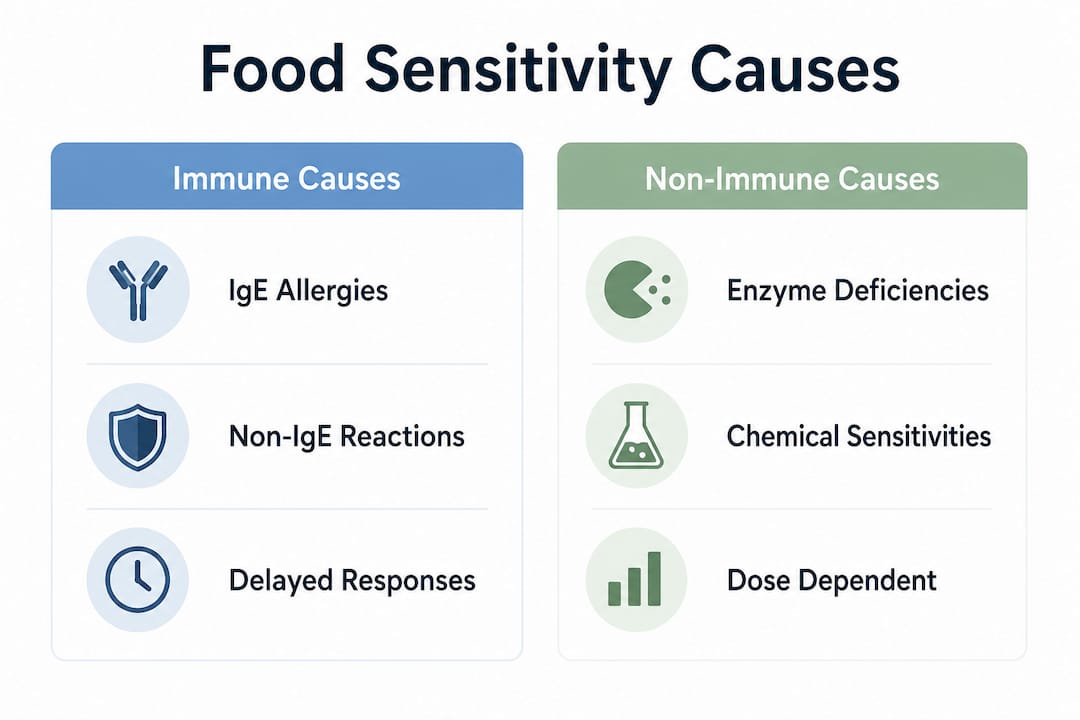
Food sensitivities sit under the broader clinical term “food hypersensitivity,” which covers both immune-mediated and non-immune-mediated reactions. The distinction matters because the cause shapes the solution. Whether your body is mounting an immune response, struggling to digest a specific compound, or reacting to a food chemical, each pathway requires a different approach. This guide explains all three in plain terms.
What causes food sensitivities in the immune system?
The immune system is the most common driver of food sensitivities. Reactions fall into two main categories: immediate IgE-mediated responses and delayed non-IgE-mediated responses. IgE-mediated reactions trigger symptoms within minutes of eating a trigger food, producing hives, swelling, or breathing difficulties. Non-IgE reactions are slower and subtler, often appearing hours or even days later as bloating, fatigue, or skin flares.
Non-immune hypersensitivities are as common as true IgE-mediated reactions. That finding challenges the assumption that most food reactions involve a straightforward allergy mechanism. Many people experiencing persistent symptoms are actually dealing with a delayed or non-immune pathway, which is why standard allergy tests sometimes return negative results even when symptoms are real.
A third mechanism worth knowing is the pseudoallergic reaction. Pseudoallergic reactions are triggered by chemicals that directly activate mast cells without involving the immune system’s sensitisation process. This means you can react to a food the very first time you eat it, with no prior exposure needed. Histamine-rich foods such as aged cheese, red wine, and cured meats are common culprits.
The epithelial barrier in your gut also plays a central role. When this barrier is intact, it prevents undigested food particles from entering the bloodstream. When it weakens, the immune system encounters fragments it was never meant to see, and loss of immune tolerance can follow. The result is a body that begins reacting to foods it previously handled without issue.
- IgE-mediated reactions: Fast onset, classic allergy symptoms, detectable via standard skin-prick or blood tests.
- Non-IgE-mediated reactions: Delayed onset, harder to link to a specific food, often missed by standard testing.
- Pseudoallergic reactions: No prior sensitisation needed, dose-dependent, triggered by food chemicals.
- Loss of immune tolerance: The immune system begins treating harmless food proteins as threats, often after gut barrier damage.
Pro Tip: If your symptoms appear several hours after eating rather than immediately, a non-IgE or delayed reaction is far more likely than a classic allergy. A detailed food and symptom diary will help you spot these slower patterns.
How does gut health influence food sensitivities?
Gut health is a major factor in whether food sensitivities develop or worsen. Increased gut wall permeability and reduced microbiome diversity are two of the most significant drivers. When the gut lining becomes more permeable than it should be, a condition often called “leaky gut,” food particles and bacterial fragments pass into the bloodstream. The immune system responds to these particles as threats, which can trigger or amplify sensitivity reactions.

Lifestyle factors accelerate this process. Chronic stress, poor sleep, antibiotic use, and low-fibre diets all reduce immune tolerance and increase the likelihood of developing new sensitivities. Antibiotics, for example, wipe out beneficial gut bacteria alongside harmful ones. Without a diverse microbiome, the gut struggles to regulate immune responses to food proteins.
Practical steps to support gut health include:
- Increase dietary fibre. Aim for a wide variety of vegetables, legumes, and wholegrains to feed beneficial gut bacteria.
- Limit processed foods. Ultra-processed products often contain emulsifiers and additives that disrupt the gut lining.
- Manage stress actively. Chronic stress raises cortisol levels, which directly suppresses immune regulation in the gut.
- Prioritise sleep. Poor sleep reduces the gut’s ability to repair its lining overnight.
- Use antibiotics only when necessary. Always follow a course of antibiotics with probiotic-rich foods such as live yoghurt or kefir to support microbiome recovery.
Pro Tip: Fermented foods like sauerkraut, kimchi, and kefir introduce live bacteria that support microbiome diversity. Adding even a small portion daily can make a measurable difference over several weeks.
What are enzyme deficiencies and chemical sensitivities?
Not all adverse food reactions involve the immune system. Many are caused by the body’s inability to break down specific food components. Food intolerance is caused by the body’s inability to digest certain foods, with lactose intolerance being the most common example. People who lack sufficient lactase enzyme cannot break down lactose, the sugar found in dairy products, leading to bloating, cramps, and diarrhoea.
Gluten-related disorders sit in a similar category, though they span a spectrum from coeliac disease (an autoimmune condition) to non-coeliac gluten sensitivity (a non-immune reaction). Chemical sensitivities add another layer of complexity. These occur when the body reacts to naturally occurring or added chemicals in food rather than to the food protein itself.
Common food chemicals that trigger reactions include:
- Histamine: Found in aged cheese, fermented foods, alcohol, and tinned fish. Causes headaches, flushing, and digestive upset.
- Sulphites: Used as preservatives in wine, dried fruit, and processed meats. Can trigger asthma-like symptoms in sensitive individuals.
- Salicylates: Naturally present in many fruits, vegetables, and spices. Associated with skin reactions and nasal congestion.
- Caffeine: A stimulant found in coffee, tea, and energy drinks. Causes palpitations, anxiety, and disrupted sleep in sensitive people.
- MSG (monosodium glutamate): A flavour enhancer in many processed and restaurant foods. Linked to headaches and flushing in some individuals.
| Reaction type | Mechanism | Example trigger | Typical symptoms |
|---|---|---|---|
| Enzyme deficiency | Missing or insufficient digestive enzyme | Lactose (dairy) | Bloating, cramps, diarrhoea |
| Chemical sensitivity | Direct chemical effect on body tissues | Histamine (aged cheese) | Headaches, flushing, hives |
| Pseudoallergic | Direct mast cell activation | Sulphites (wine) | Breathing difficulties, skin reactions |
The key distinction between these and true allergies is that non-immune hypersensitivities are dose-dependent. A small amount of the trigger food may cause no symptoms at all, while a larger portion crosses the threshold and produces a reaction. This dose-dependency makes diagnosis particularly tricky without structured tracking.
How can you identify your food sensitivities?
Identifying food sensitivities requires a structured approach because symptoms vary widely, spanning digestive, skin, respiratory, and neurological complaints. Bloating, loose stools, and stomach cramps are the most recognised signs, but fatigue, brain fog, eczema, and persistent headaches are equally common and frequently overlooked as food-related.
Follow these steps to begin identifying your triggers:
- Keep a food and symptom diary. Record everything you eat and drink alongside any symptoms, their timing, and severity. Do this for at least two weeks before drawing conclusions.
- Note the timing of reactions. Immediate reactions (within two hours) suggest IgE-mediated or chemical triggers. Delayed reactions (six to 24 hours later) point towards non-IgE or enzyme-related causes.
- Look for patterns, not single incidents. One bad day after eating a food means little. Consistent reactions across multiple exposures are meaningful.
- Try a structured elimination diet. Remove the suspected trigger food completely for four to six weeks, then reintroduce it slowly. Use Ukfoodintolerance’s elimination diet checklist to guide this process safely.
- Seek professional testing when patterns are unclear. Testing can confirm or rule out specific sensitivities, particularly when multiple foods appear to be involved.
Symptoms shift as the immune system is stressed, which is why a food diary completed before any testing is so valuable. A snapshot of your symptoms over time gives far more useful information than a single test result taken in isolation. The step-by-step guide to identifying food sensitivities from Ukfoodintolerance walks you through this process in detail.
Pro Tip: Rate your symptoms on a simple scale of 1 to 5 each day. Numerical tracking makes it far easier to spot correlations between specific foods and symptom spikes than written descriptions alone.
What practical steps reduce food sensitivities over time?
Managing food sensitivities is not only about avoidance. Addressing the underlying causes, particularly gut health and immune tolerance, can reduce the severity of reactions over time. A purely avoidance-based approach often leads to an increasingly restricted diet without resolving the root problem.
Practical strategies that support long-term management include:
- Reintroduce foods gradually after a period of avoidance. Complete elimination followed by careful reintroduction helps identify true triggers and avoids unnecessary dietary restriction.
- Eat a wide variety of plant foods. Dietary diversity supports microbiome health, which in turn supports immune regulation. Aim for 30 different plant foods per week as a practical target.
- Reduce ultra-processed food intake. Additives, emulsifiers, and artificial sweeteners in processed foods disrupt the gut lining and alter the microbiome.
- Address stress and sleep as health priorities. Both directly affect gut permeability and immune tolerance. Mindfulness, regular exercise, and consistent sleep schedules all contribute.
- Work with a registered dietitian or nutritionist. Professional guidance prevents nutritional deficiencies during elimination phases and supports safe food reintroduction.
- Use structured testing to guide decisions. Testing removes guesswork from the process and helps you focus dietary changes where they will have the most impact. Ukfoodintolerance offers food intolerance testing covering 900+ food and non-food items to support this process.
Testing for food sensitivities requires cautious interpretation because reactions can change as gut permeability and immune status shift. A food that triggers symptoms today may be tolerated in six months if gut health improves. This is why retesting and ongoing dietary adjustment are part of effective long-term management.
Key takeaways
Food sensitivities arise from immune responses, gut barrier dysfunction, enzyme deficiencies, and chemical reactions, and addressing the underlying cause is more effective than avoidance alone.
| Point | Details |
|---|---|
| Three core causes | Immune reactions, enzyme deficiencies, and chemical sensitivities each require a different management approach. |
| Gut health is central | Increased gut permeability and low microbiome diversity are leading drivers of developing new sensitivities. |
| Symptoms vary widely | Digestive, skin, respiratory, and neurological symptoms can all signal a food sensitivity. |
| Diary before testing | A food and symptom diary completed before testing provides the most useful diagnostic information. |
| Avoidance is not enough | Supporting gut health and immune tolerance reduces sensitivity severity over time, not just symptom frequency. |
What I have learned from years of watching people manage food sensitivities
The most common mistake I see is treating food sensitivities as a fixed, permanent problem. People remove a food, feel better for a while, then assume they must avoid it forever. The reality is more interesting and more hopeful than that. Sensitivities shift. The immune system responds to its environment, and when that environment improves, tolerance often follows.
The second mistake is chasing a single culprit food when the real issue is a stressed gut. I have seen people eliminate gluten, dairy, and eggs simultaneously, lose a significant amount of nutritional variety, and still feel unwell. The problem was not the foods. The problem was a gut lining under pressure from stress, poor sleep, and a diet low in fibre. Fixing those factors reduced the reactions more effectively than any elimination diet alone.
Symptom tracking is underrated. Most people rely on memory, which is unreliable when symptoms are delayed by 12 to 24 hours. A simple diary, even just notes on a phone, changes the quality of information you have to work with. It also makes conversations with healthcare professionals far more productive.
Testing has real value, but only when interpreted carefully. Results reflect your immune status at a specific point in time. They are a useful starting point, not a permanent verdict. The most useful approach combines testing with ongoing symptom tracking and gradual dietary adjustment, rather than treating a single report as the final word.
— Rob
Finding clarity with Ukfoodintolerance
If you have been experiencing unexplained symptoms and suspect food may be involved, structured testing gives you a clear place to start.

Ukfoodintolerance offers at-home intolerance tests covering over 900 food and non-food items, all from a simple hair sample collected at home. Results arrive as a detailed digital report within 48–72 hours, with clear guidance on how to interpret your findings and adjust your diet. The process is non-invasive, fast, and designed for people who want real answers without waiting months for a GP referral. For those ready to take the next step, Ukfoodintolerance also provides dietary adjustment guidance to help you act on your results with confidence.
FAQ
What is the difference between a food sensitivity and a food allergy?
A food allergy involves an IgE-mediated immune response that can cause severe, immediate symptoms. A food sensitivity typically involves delayed, non-immune reactions such as bloating, fatigue, or skin issues, and is rarely life-threatening.
Can food sensitivities develop in adulthood?
Yes. Loss of immune tolerance driven by gut permeability changes, stress, or antibiotic use can trigger new sensitivities at any age, even to foods you have eaten without issue for years.
What are the most common symptoms of food sensitivities?
Food hypersensitivity symptoms include bloating, diarrhoea, skin rashes, fatigue, headaches, and nasal congestion. Symptoms can appear hours after eating, making the trigger food difficult to identify without structured tracking.
How do I identify my food sensitivity triggers?
Keep a detailed food and symptom diary for at least two weeks, note the timing of reactions, and follow a structured elimination diet. Professional testing, such as the services offered by Ukfoodintolerance, can confirm specific triggers when patterns remain unclear.
Can improving gut health reduce food sensitivities?
Yes. Supporting gut barrier integrity through a high-fibre diet, stress management, adequate sleep, and reduced antibiotic use can restore immune tolerance and reduce the severity of reactions over time.










Leave a Reply
Want to join the discussion?Feel free to contribute!