

Autism does not cause food intolerance, but the two often overlap and are easy to confuse. Many autistic children and adults have tummy troubles, and many eat a narrow range of foods for sensory reasons. From the outside, both can look like “something in the diet is upsetting them”. Working out which is which matters, because the right support is very different. This guide explains what research says, where food intolerance testing can and cannot help, and how to take careful, supported steps.
We are an at-home sensitivity testing company, so we want to be upfront: no test replaces a conversation with your GP, health visitor or a registered dietitian, especially for a child. Our aim is to help you walk into that conversation better prepared.
TL;DR
- Digestive symptoms such as constipation, tummy pain and diarrhoea are more common in autistic children, but they are not automatically caused by a food intolerance.
- Restricted eating in autism is often driven by sensory differences (texture, smell, temperature), not by an intolerance. Both can exist together.
- There is no robust evidence that a gluten-free, casein-free (GFCF) diet treats core autism features, and cutting out food groups without a dietitian can cause nutrient gaps.
- Keep a food and symptom diary, speak to your GP first, and treat any at-home test as a starting point for a supervised conversation, not a diagnosis.
- Gentle approaches such as food chaining can widen a diet without turning mealtimes into a battle.
Table of Contents
- Why autism and food problems so often appear together
- Food intolerance, food allergy and sensory eating: telling them apart
- What about ARFID?
- Gluten-free, casein-free diets: what the evidence says
- Our perspective: where testing fits, and where it does not
- A safer way to look for food triggers
- Widening a diet gently: food chaining
- Where our tests can help
- Supporting an autistic adult
- When to seek urgent help
- FAQ
- Sources
Why autism and food problems so often appear together
There are three separate things that tend to get lumped together:
- Gut symptoms. Constipation, tummy pain, bloating and loose stools.
- Food selectivity or avoidance. Eating only a small range of accepted foods, often by texture, colour or brand.
- Food intolerance or allergy. A bodily reaction to a specific food or ingredient.
They can overlap, and one can cause the other. A child with constipation may refuse food because eating is uncomfortable. A child who only accepts pasta, crackers and milk may have a low-fibre diet that leads to constipation. And a child who has a genuine lactose intolerance may also be sensitive to the feel of certain foods.
How common are gut symptoms?
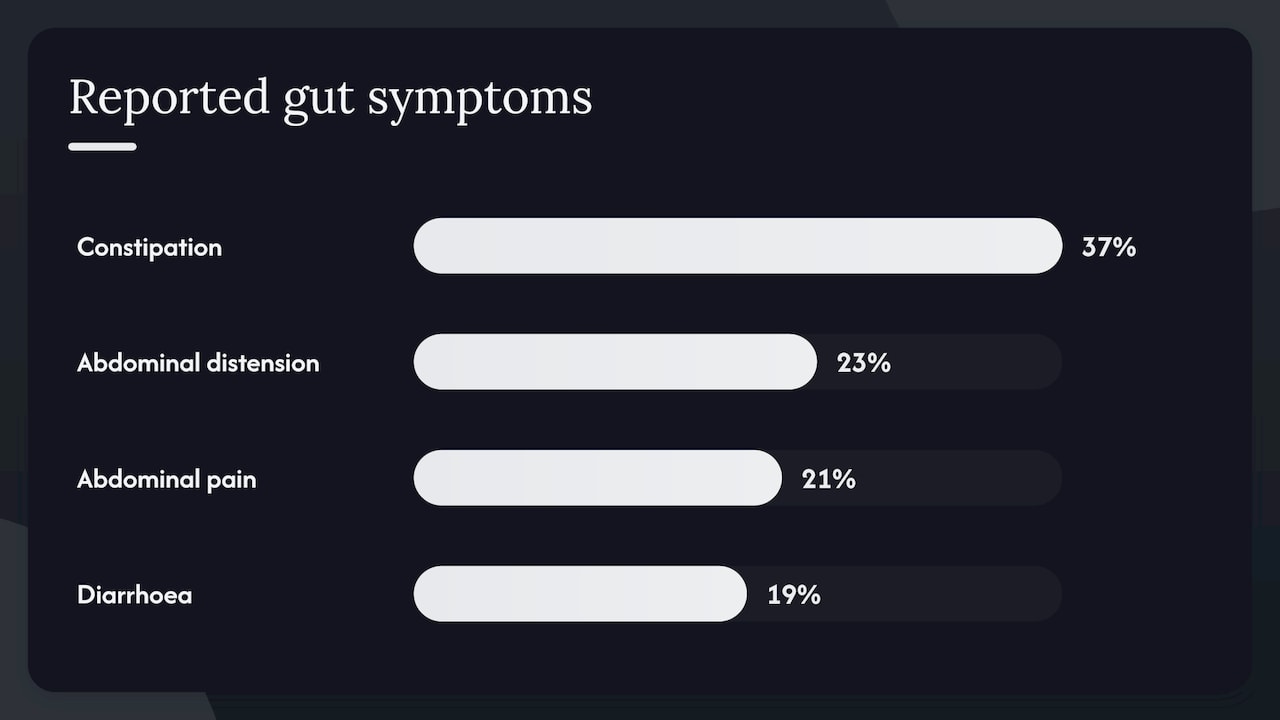
A 2023 systematic review and meta-analysis found autistic children were 3.64 times more likely to have at least one gastrointestinal symptom than typically developing children. Constipation (37%) and abdominal pain (21%) were the most common complaints, followed by abdominal distension (23%) and diarrhoea (19%). Studies vary a lot in how they measure this, which is why reported rates cover a very wide range.
A 2025 systematic review in Frontline Gastroenterology also looked at functional gut disorders in autistic children, which shows how seriously clinicians now take the link. The key point for parents: gut symptoms are common, real and worth treating. But “common” does not mean “caused by a food intolerance”. Constipation, for example, is a frequent culprit and has its own treatment route through your GP.
How common is restricted eating?
Feeding difficulties, including selective or restrictive eating, affect between 21% and 80% of autistic children depending on the study and definition. A 2024 systematic review of food selectivity reaches a similar picture: it is a common feature, not a rare complication.
Food intolerance, food allergy and sensory eating: telling them apart
The NHS describes food intolerance as difficulty digesting certain foods or ingredients. It is usually not serious, but eating the trigger can make you feel unwell. Unlike a food allergy, it does not involve the immune system in the same way, and it does not cause life-threatening reactions. If you are unsure about the difference, our guide to food intolerance vs allergy sets it out simply.
Here is a quick way to think about it:
| Food allergy | Food intolerance | Sensory-driven food selectivity | |
|---|---|---|---|
| Cause | Immune reaction | Difficulty digesting a food or ingredient | Heightened sensitivity to texture, smell, taste, temperature or appearance |
| Timing | Usually quick | Often hours later | Immediate refusal, before or at first contact |
| Typical signs | Hives, swelling, breathing trouble | Bloating, wind, tummy pain, loose stools | Gagging, distress, refusing foods that look, feel or smell “wrong” |
| Who to see | GP urgently if severe; 999 for anaphylaxis | GP, then a dietitian | GP, paediatrician, dietitian, feeding specialist |
If your child has ever had swelling of the lips or face, difficulty breathing, or widespread hives after eating, that is an allergy question for your GP or emergency services, not a home-test question.
Why sensory eating is easy to mistake for intolerance
The National Autistic Society explains that some autistic people have a restricted diet or are very sensitive to how food looks, smells and feels. Another factor is interoception, the body’s ability to sense hunger, fullness or discomfort. If a child cannot easily read those signals, they may not be able to tell you that a food makes them feel unwell, and you may be left guessing.
Anxiety adds another layer. When mealtimes become stressful, appetite drops, and the stress itself can cause tummy aches. That can look just like an intolerance when the real driver is the pressure around eating.
NHS paediatric guidance makes the same point: it matters to separate a true intolerance from selectivity rooted in sensory differences. Children with autism do not usually outgrow restricted eating overnight, because it is more about sensory processing than behaviour. Variety tends to widen gradually as the senses become less heightened.
What about ARFID?
Sometimes selective eating becomes more than a preference. Avoidant and Restrictive Food Intake Disorder (ARFID) is diagnosed when restricted eating leads to significant nutritional deficiency, poor weight gain, or real interference with daily life. NHS clinicians note that ARFID is commonly associated with autism, where avoidance often stems from sensory sensitivity, though not everyone with ARFID is autistic and not every autistic person has ARFID.
Speak to your GP if you notice:
- weight loss or a drop in growth
- a shrinking list of accepted foods
- fainting, tiredness or dizziness
- strong distress or panic around food
- a child who only accepts a handful of foods
These are not signs to fix with an elimination diet. They need a clinician.
Gluten-free, casein-free diets: what the evidence says
Many parents search for gluten casein free autism advice because the idea is widely shared online: remove wheat, barley, rye and dairy, and behaviour or communication may improve. It is a heartfelt hope, and we understand why it appeals.
The honest picture is this. NHS children’s services guidance states that there is no robust research evidence that a gluten-free, casein-free diet treats core autism symptoms, and advises against starting special diets without clinical supervision. The risk is real: removing whole food groups from an already narrow diet can leave gaps in energy, calcium, protein, vitamin D and other nutrients that matter for growth and development.
That does not mean gluten or dairy are never a problem for an autistic person. Coeliac disease, wheat allergy and lactose intolerance exist in the autistic population just as they do in everyone else. The difference is how you get to the answer: through your GP, using proper clinical routes, rather than by guessing and restricting.
One practical note for households that do have a diagnosed coeliac member: gluten can turn up in places beyond food. If that is your situation, this article on gluten-free toothpaste for people with coeliac disease covers one such everyday product.
Our perspective: where testing fits, and where it does not
We get messages from parents who are worried, tired and looking for something they can act on. We take that seriously. This is how we see it.
The NHS does not recommend at-home food intolerance tests and notes that evidence for their accuracy is limited, with a risk of unnecessary dietary restriction. We say plainly that our bio-resonance hair test is best suited to screening for possible sensitivities. It is not a medical diagnosis, it does not diagnose allergies, coeliac disease or autism, and it should never be the only thing that decides what your child eats.
The Food Standards Agency has found that 73% of people who believe they have a food hypersensitivity have never had a formal diagnosis. That is a reminder that many of us, parents included, are working from hunches. A good screening report can give a hunch some structure, but it works best when it is used alongside a food diary and professional advice.
Our view for autistic families is therefore specific:
- Start with your GP if there are persistent gut symptoms, weight concerns or any allergy signs.
- Use a test as a conversation starter, not a verdict. Take the report to your dietitian or GP and ask what makes sense to explore.
- Never remove several foods at once, particularly in a child with a narrow diet.
- Keep mealtimes calm. A food that causes a fight is a food the child will learn to fear.
If you want to understand our method and its limits, our bio-resonance research and methodology page and our educational guide to bio-resonance technology explain it in plain English.
— Rob
A safer way to look for food triggers
Whether or not you use a test, the same careful process applies. Our guide to identifying food triggers safely and effectively goes deeper, but here are the core steps.
- Book a GP appointment. Mention gut symptoms, eating patterns and any family history of coeliac disease or allergy. Ask whether constipation has been checked, as it is common and treatable.
- Keep a diary for two weeks. Record what was eaten, when, and any symptoms, mood changes, sleep and toilet habits. Include non-food factors: noisy classrooms, changes in routine and illness all affect appetite and tummy comfort.
- Look for patterns, not single events. One bad day tells you little. The same symptom repeating after the same food, hours later, is more meaningful.
- Ask for dietitian support. A paediatric dietitian can check the nutrition of your child’s current diet and design any trial safely.
- Change one thing at a time. If you and your clinician agree to trial removing a food, do one food, for a set period, then reintroduce it and watch. Our article on elimination diets and how to try one safely explains the logic.
- Review and stop if it is not helping. A diet that is not clearly helping should not become permanent by default.
Making the environment part of the plan
The National Autistic Society stresses that the setting often matters as much as the food. Noise, bright lighting and pressure to eat socially can all make eating harder. A quiet table, predictable routine, and the same plate and cutlery can help. Reducing anxiety may improve appetite and tummy comfort before you change a single ingredient.

Widening a diet gently: food chaining
If the main issue is selectivity rather than intolerance, a technique called food chaining is often recommended by feeding specialists. It means introducing new foods that are similar in texture, temperature or flavour to those your child already accepts.
For example:
- A child who accepts one brand of fish fingers might move to a different brand, then to a home-baked version with the same crumb.
- A child who eats plain crisps might try a thicker-cut crisp, then oven-baked potato wedges.
- A child who only drinks a particular milk might be offered a similar-tasting alternative only after talking to a dietitian about calcium.
Success here is small. Touching, smelling or licking a new food counts, and progress can take months. Forcing a full meal or removing safe foods usually backfires.
Where our tests can help
If you and your clinician agree that screening for possible sensitivities would be useful, a hair-sample test is a gentle option. There are no needles, no blood draws and nothing that needs a child to sit through a procedure, which can matter a great deal for children who find medical settings stressful.
Here is how our process works, in short:
- You order your kit online and collect a small hair sample at home. Our step-by-step sample collection guide shows you how.
- You post it to our UK laboratory.
- You receive a digital report, usually within 48 to 72 hours. Our guide to what a digital intolerance report contains helps you read it.
- You use the results as a prompt for discussion with your GP or dietitian and, if agreed, a carefully planned trial.
Our Ultimate Plus Intolerance Test is £140.99 one-off per person. You can also compare the other options on our tests page, including smaller panels and single-ingredient tests for gluten, or dairy and lactose. If you would like an overview first, read why people use intolerance tests and the evidence and risks in our wellbeing guide.
A result that flags a food does not mean that food must be removed. In a child who already eats few foods, we would always suggest taking the report to a professional before changing anything.
Supporting an autistic adult
Much of the research focuses on children, but autistic adults also report gut symptoms and restricted eating. The same principles apply. Rule out medical causes through your GP first, particularly if you have lost weight or have blood in your stools. Keep a diary. Be cautious about cutting out food groups, and think about sensory factors such as texture and cooking method before assuming a food is the problem.
If you are an adult who has been self-managing for years, it can be reassuring to have your own data in front of you. A report can help you see which foods to discuss with a dietitian, and it keeps the conversation specific.
When to seek urgent help
Contact your GP, NHS 111 or, in an emergency, 999, if you see:
- swelling of the lips, tongue or face, or difficulty breathing after eating
- blood in the stools, or persistent vomiting
- significant weight loss or a child not growing as expected
- severe pain, or a swollen, hard tummy
- signs of dehydration
These are not situations for a home test or a diet change.
FAQ
Can food intolerance cause autism?
No. There is no evidence that a food intolerance causes autism. Autism is a neurodevelopmental difference. What can happen is that gut discomfort or sensory-driven eating affects mood, sleep and behaviour, which is why it is worth looking after both.
Does a gluten-free, casein-free diet help autism?
NHS children’s services say there is no robust research evidence that it treats core autism symptoms and warn about nutrient gaps. If you are considering it, speak to your GP or a dietitian first. Some people do have coeliac disease or lactose intolerance and will need tailored advice.
How do I know if my child’s fussy eating is sensory or an intolerance?
Sensory eating usually shows up immediately, as refusal based on how a food looks, smells or feels. Intolerance symptoms such as bloating or loose stools tend to appear hours after eating. A food diary and a conversation with your GP or dietitian are the best way to separate them, and both can be present at once.
Can I use an at-home test for my autistic child?
You can, but treat it as a screening tool rather than a diagnosis, because the NHS does not recommend at-home intolerance tests. A hair-sample test avoids needles, which many families find helpful. Share the results with your GP or dietitian before removing any food.
Sources
- Frontiers in Pediatrics: autism and gastrointestinal symptoms, systematic review and meta-analysis (2023)
- Frontline Gastroenterology: functional gastrointestinal disorders in children with autism (2025)
- Sheffield Children’s NHS Foundation Trust: children with neurodevelopmental difficulties who avoid or refuse food
- Tidsskrift for Den norske legeforening: food selectivity in autism, systematic review (2024)
- NHS: food intolerance
- National Autistic Society: eating, a guide for all audiences
- South Warwickshire NHS Foundation Trust: feeding guidance for children with ASD
- CNTW NHS Foundation Trust: ARFID professional support
- Cambridgeshire and Peterborough NHS: healthy eating after an autism assessment
- Food Standards Agency








Leave a Reply
Want to join the discussion?Feel free to contribute!