

TL;DR:
- Many people in the UK suffer from unexplained symptoms linked to food or environmental sensitivities without clear diagnosis. Proper preparation, professional guidance, and validated testing methods are crucial for accurately identifying triggers and avoiding unnecessary restrictions. A comprehensive, patient-centered approach—including diaries, supervised elimination, and clinical tests—provides trustworthy answers and effective management strategies.
If you’ve been dealing with persistent headaches, bloating, skin flare-ups, or fatigue that no one seems able to explain, you are far from alone. Millions of people across the UK live with symptoms that point to food or environmental sensitivities, yet never get a clear answer. This environmental sensitivity testing guide walks you through the preparation, testing methods, and follow-up steps you actually need, cutting through the noise of misleading commercial products so you can make informed decisions about your health.
Table of Contents
- Preparing to identify environmental and food sensitivities
- Evidence-based methods for testing food sensitivities in the UK
- Understanding and testing environmental sensitivities safely
- How to safely carry out home food challenges
- The overlooked truths about sensitivity testing and patient experience
- Explore expert food intolerance tests and support at UK Food Intolerance
- Frequently asked questions
Key Takeaways
| Point | Details |
|---|---|
| Start with your GP | A medical consultation is essential to exclude serious conditions before exploring sensitivities. |
| Keep a detailed diary | Recording foods and symptoms for 2-4 weeks helps spot patterns and guides testing. |
| Use validated tests | NHS-approved tests like hydrogen breath and skin prick tests are reliable for specific triggers. |
| Beware unvalidated tests | IgG, bioresonance, and hair tests lack scientific support and can mislead. |
| Professional guidance matters | Working with dietitians and clinicians ensures safe, accurate testing and diet management. |
Preparing to identify environmental and food sensitivities
Before you start any kind of sensitivity testing, groundwork matters enormously. Going straight into elimination diets or purchasing tests without proper preparation often leads to confusion, missed diagnoses, or unnecessary food restrictions. Done properly, this stage saves you a great deal of time and frustration later on.
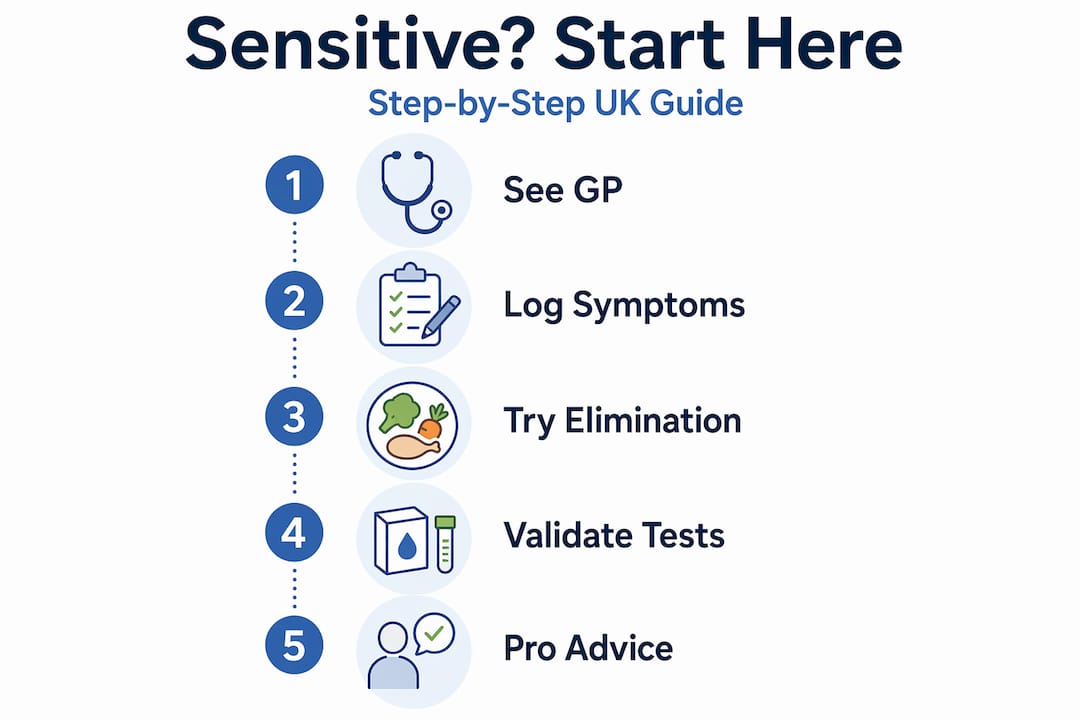
The first step is always your GP. This is not just a formality. Symptoms like persistent bloating, joint pain, fatigue, and skin conditions can overlap with serious medical conditions including coeliac disease, inflammatory bowel disease, and thyroid disorders. Your GP can rule these out and refer you to the appropriate specialist if needed.
Once serious conditions are excluded, tracking your symptoms becomes essential. NHS guidance recommends starting with a GP consultation and keeping a food and symptom diary for 2 to 4 weeks before starting an elimination diet. This diary becomes your most valuable tool throughout the process.
Here is what to track in your diary:
- Every food and drink consumed, including ingredients and portion sizes
- Time of eating and time symptoms appeared
- Severity of symptoms on a simple scale of 1 to 10
- Sleep quality, stress levels, and physical activity, since these affect symptom patterns
- Any medications or supplements taken
Recognising your food intolerance symptoms early and documenting them carefully gives clinicians far more to work with than a vague description of “feeling off.” It also helps you notice patterns yourself, such as symptoms consistently appearing several hours after eating a particular food group.
| Preparation task | Why it matters | Timeframe |
|---|---|---|
| GP consultation | Rules out serious conditions | Before testing begins |
| Symptom and food diary | Identifies patterns and triggers | 2 to 4 weeks |
| Compile medical history | Informs clinician assessment | Ongoing |
| Review current medications | Some affect test results | Before appointments |
| Read up on UK allergy standards | Sets realistic expectations | During diary phase |
Pro Tip: Note symptoms even on “good” days. Absence of symptoms after avoiding a food is just as informative as their presence after eating it.
Evidence-based methods for testing food sensitivities in the UK
This is where many people go wrong. The market is flooded with food sensitivity tests, and not all of them have scientific backing. Knowing which methods are valid and which are not could genuinely protect your health.
The most reliable workflow for environmental sensitivity testing and food sensitivity assessment follows these steps:
- Remove suspect foods from your diet for 2 to 6 weeks under the supervision of a registered dietitian. This is the elimination phase, where your symptoms should stabilise if those foods are triggers.
- Complete clinically validated tests where appropriate. The NHS recommends elimination diets supervised by dietitians, hydrogen breath tests for lactose intolerance, and blood tests for coeliac disease.
- Reintroduce foods one at a time, every 3 days, to detect delayed reactions accurately. Reintroducing multiple foods at once makes it impossible to identify which one caused a reaction.
- Document all reactions during reintroduction, including the specific food, quantity consumed, and any symptoms within 72 hours.
- Review findings with your dietitian or GP to confirm which foods are genuine triggers and develop a sustainable long-term eating plan.
One test to be wary of is the IgG food sensitivity test, which is widely marketed online. IgG antibodies indicate food exposure, not intolerance, and relying on these results can lead to unnecessary and potentially harmful dietary restrictions. Similarly, bioresonance tests are not clinically validated and should not be used as the basis for major dietary changes.
| Testing method | Clinically validated | Available on NHS | Suitable for |
|---|---|---|---|
| Elimination diet | Yes | Yes, with dietitian | Most food sensitivities |
| Hydrogen breath test | Yes | Yes | Lactose intolerance |
| Coeliac blood test | Yes | Yes | Gluten-related conditions |
| IgG food sensitivity test | No | No | Not recommended |
| Bioresonance testing | No | No | Not recommended |
For practical help identifying food triggers safely, working with a qualified professional remains the gold standard. Once you have results, interpreting them correctly is its own skill worth developing.
Pro Tip: If your symptoms persist even after a successful elimination phase, ask your GP about a food intolerance assessment that includes gut health evaluation. Sometimes what appears to be a food sensitivity is actually an underlying digestive condition.
Understanding and testing environmental sensitivities safely
Food is not always the culprit. Many people experiencing unexplained symptoms are reacting to environmental allergens (substances in their surroundings that trigger an immune response). In the UK, the most common triggers are:
- Grass and tree pollen, particularly problematic from March through September
- House dust mites, found in bedding, carpets, and soft furnishings year-round
- Pet dander, microscopic skin particles shed by cats, dogs, and other animals
- Mould spores, often worse in damp or poorly ventilated homes
- Urban air pollution, which can worsen existing sensitivities considerably
Testing for environmental sensitivity should follow a validated clinical pathway. The NHS uses skin prick tests and specific IgE blood tests to diagnose common environmental allergies like pollen, dust mites, pet dander, and mould. Skin prick testing involves placing a tiny amount of allergen on the forearm and pricking the skin lightly. A small raised bump indicates a potential allergy. It is minimally invasive and produces results within 15 to 20 minutes.
However, a positive test result alone does not confirm a diagnosis. Allergy tests must always be interpreted alongside your clinical history to avoid false positives. For example, someone might test positive for cat dander but only experience symptoms in heavily polluted city environments where multiple triggers combine.

| Environmental trigger | Peak season in UK | Validated test type |
|---|---|---|
| Grass pollen | May to July | Skin prick, specific IgE |
| Tree pollen | February to May | Skin prick, specific IgE |
| House dust mites | Year-round | Specific IgE blood test |
| Pet dander | Year-round | Skin prick, specific IgE |
| Mould spores | August to November | Specific IgE blood test |
It is worth noting that hair-based bioresonance tests are not clinically valid for environmental allergies and are not recommended by the NHS or NICE. If you are exploring environmental allergy examples and want to compare your options, reviewing a UK allergy testing kits comparison can help you understand what each test genuinely measures.
Pro Tip: Keep a seasonal diary noting when symptoms worsen. If they flare every spring, pollen is a strong candidate. If they are constant regardless of season, dust mites or pet dander are more likely triggers.
How to safely carry out home food challenges
A food challenge is the process of reintroducing a suspected trigger food in a controlled way to confirm whether it causes a reaction. When done carefully, it is one of the most reliable ways to verify sensitivity. Here is how to conduct sensitivity testing at home safely.
- Choose a day when you feel well. Perform challenges early in the day so you have time to monitor any delayed reactions before bedtime.
- Have someone with you. Never conduct a food challenge alone, particularly if you have a history of allergic reactions.
- Begin with a lip rub test. Rub a tiny amount of the food on your lower lip and wait 10 minutes for any local reaction before progressing.
- Increase amounts gradually, waiting 10 minutes between each increase. Home food challenges involve stepwise exposure starting from the lip rub and escalating amounts at controlled intervals.
- Stop immediately if any symptoms appear, including tingling, swelling, redness, stomach cramps, or breathing changes.
- Seek emergency help if you experience difficulty breathing, throat swelling, or a sudden drop in blood pressure. These are signs of anaphylaxis, which is a severe and life-threatening allergic reaction.
- Record your findings in detail and contact your healthcare provider to discuss next steps.
Important: Home food challenges are suitable for testing mild intolerances under professional guidance. If you have a known history of severe allergic reactions, food challenges should only be carried out in a clinical setting with trained staff and emergency equipment present.
Making practical dietary adjustments after a confirmed reaction is the final piece of the puzzle. Knowing your trigger is only useful if you then act on it safely and nutritionally.
Pro Tip: Reintroduce foods in their simplest form first. If you are testing wheat, start with plain cooked pasta rather than bread, which contains multiple ingredients that could confuse your results.
The overlooked truths about sensitivity testing and patient experience
Here is something the wellness industry rarely tells you plainly. The sheer number of tests available does not mean you are better equipped to find answers. It often means the opposite.
Many commercial IgG and hair tests lead to unnecessary food exclusions and significant confusion among patients. We have seen people eliminate entire food groups based on a single, unvalidated test, only to develop nutritional deficiencies without ever resolving their original symptoms. That is not progress. That is harm dressed up as health information.
The reality of environmental sensitivity analysis is that symptoms rarely exist in isolation. A person reacting to mould spores in a damp flat, sleeping poorly, and eating a diet low in fibre will produce a symptom picture that no single test can decode reliably. MCS diagnosis relies heavily on excluding other causes and thorough patient history rather than specific tests. That principle applies broadly to most sensitivity conditions.
What genuinely moves people forward is patience combined with professional oversight. Following the full workflow for environmental sensitivity testing, from GP consultation to diary keeping to supervised elimination and validated clinical tests, takes longer than ordering a kit online. But it produces answers you can actually trust. It also protects you from the anxiety that comes from receiving a list of 40 “reactive” foods with no clinical context to explain what any of it means.
The most useful thing you can do is read how to interpret intolerance results before you act on them. Context changes everything.
Explore expert food intolerance tests and support at UK Food Intolerance
Reading a guide is a strong starting point. Taking action is what creates change. If you are ready to move forward with testing for environmental sensitivity and want results you can actually use, UK Food Intolerance offers testing that covers over 900 items, including both food and environmental factors.

Our comprehensive intolerance tests are simple to use at home, require only a small hair sample, and return detailed digital reports within 48 to 72 hours. Once your results arrive, our clear guidance on interpreting your intolerance results helps you understand exactly what they mean and what to do next. Pair that with our dietary adjustment guide and you have a practical, supported path forward without the guesswork.
Frequently asked questions
What is the first step if I suspect I have a food or environmental sensitivity?
Consult your GP to rule out serious conditions and start a detailed symptom and food diary for at least two weeks. NHS guidance recommends this as the foundation before any elimination or testing begins.
Are IgG food sensitivity tests reliable?
No. IgG antibodies indicate food exposure, not intolerance, and acting on these results can lead to unnecessary dietary restrictions that affect your nutrition without resolving your symptoms.
How can I test for environmental allergies safely?
Validated NHS-approved methods include skin prick tests and specific IgE blood tests, both of which must be interpreted alongside your clinical history by a qualified professional to avoid false positives.
Can I do a food challenge test at home?
Yes, under careful conditions. Home food challenges should be done early in the day with someone present, starting with a lip rub and increasing amounts gradually, stopping immediately if any reaction occurs.
What should I do if my symptoms persist despite testing?
Ask your GP for a referral to a specialist such as a gastroenterologist or allergist. Persistent symptoms after elimination require further investigation beyond standard sensitivity testing.










Leave a Reply
Want to join the discussion?Feel free to contribute!