

Fatigue, bloating, or headaches that seem to appear out of nowhere can leave even the most health-conscious adults frustrated and searching for answers. Many in the UK brush off these symptoms or blame stress, unaware that a hidden food intolerance might be the real culprit. Recognising the difference between food intolerance and allergy is crucial for finding relief, and this guide explains how non-invasive testing empowers you to uncover triggers, personalise your diet, and reclaim your wellbeing.
Table of Contents
- What Food Intolerance Means In The UK
- Frequently Overlooked Symptoms And Key Triggers
- Differences Between Food Allergy And Intolerance
- How At-Home Tests Identify Dietary Triggers
- Interpreting Test Results For Elimination Diets
- Risks, Misconceptions, And Next Steps
Key Takeaways
| Point | Details |
|---|---|
| Understanding Food Intolerance | Food intolerance differs from food allergy; it involves digestive issues without immune system involvement, leading to symptoms that appear hours after eating. |
| Identifying Triggers | Keeping a detailed food diary helps link symptoms to specific foods, making it easier to uncover intolerances. |
| Management Approach | Management focuses on avoiding identified trigger foods through dietary changes, rather than requiring emergency interventions. |
| Professional Guidance | Consulting healthcare professionals is important for accurate diagnosis and avoiding nutritional deficiencies due to self-diagnosis. |
What Food Intolerance Means In The UK
A food intolerance is not the same as a food allergy, though people often confuse the two. The key difference lies in what causes the problem. With a food intolerance, your body struggles to digest certain foods or ingredients, triggering unpleasant symptoms hours after eating. Your immune system is not involved, which means reactions are typically less severe than allergies.
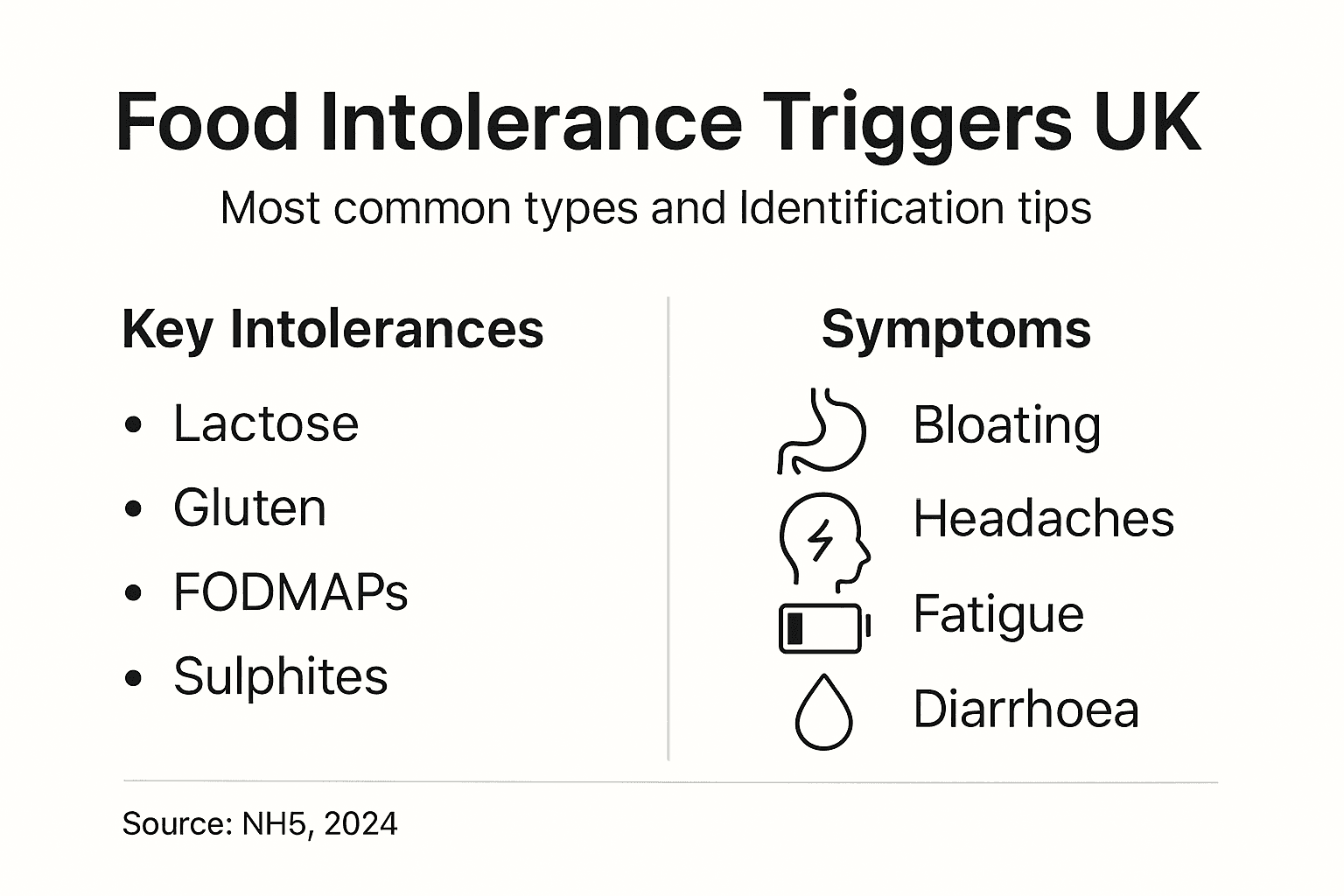
When you have a food intolerance, non-immune reactions to food cause discomfort each time you eat the trigger food. Common symptoms include bloating, stomach pain, diarrhoea, headaches, and tiredness. Some people experience skin reactions or respiratory symptoms. The symptoms are real and bothersome, but they do not pose the life-threatening risks associated with food allergies.
Lactose intolerance and gluten sensitivity are among the most prevalent food intolerances in the UK. Others include reactions to histamine, caffeine, or various food additives. Each person’s triggers differ, which is why identifying your specific culprits matters so much. What causes problems for your friend may not affect you at all.
The challenge with food intolerances is that symptoms can appear hours after eating, making it difficult to spot the trigger on your own. You might eat something at lunch and not feel the effects until evening. This timing gap often leads people to miss the connection between what they ate and how they feel. Understanding your intolerance symptoms is the first step toward uncovering what your body cannot tolerate.
Management centres on identifying and avoiding your trigger foods. Unlike allergies that require medical emergency plans, food intolerances respond well to dietary changes. Once you know which foods cause problems, you can plan meals that keep you feeling your best and free from unnecessary discomfort.
Pro tip: Start keeping a food diary before testing, noting what you eat and any symptoms that follow within 24 hours, as this helps identify patterns and supports your investigation into potential triggers.
Frequently Overlooked Symptoms And Key Triggers
When most people think of food intolerances, they picture someone rushing to the toilet with digestive distress. Yet some of the most frustrating symptoms happen away from your gut entirely. Headaches, fatigue, joint pain, and skin rashes are all common signs that something you ate is causing trouble. These symptoms feel disconnected from food, which is precisely why people miss them.
You might wake up with a pounding headache or feel inexplicably exhausted by mid-afternoon, never connecting it to your lunch. Or you might notice your skin breaking out without realising a specific ingredient triggered it. Key food triggers include lactose, gluten, histamine, and caffeine, alongside alcohol, sulphites, salicylates, and various food additives. The list is longer than you probably expect.
Lactose intolerance affects millions in the UK, causing bloating and digestive symptoms within hours of consuming dairy. Gluten sensitivity impacts people differently, sometimes causing joint pain or brain fog rather than stomach issues. Histamine, found in fermented foods, aged cheeses, and cured meats, can trigger headaches and skin reactions. Caffeine sensitivity often manifests as anxiety or sleep disruption rather than obvious digestive complaints.

The timing makes identification tricky. Symptoms may appear several hours after eating, so the connection feels invisible. You might eat pizza at lunch and experience a migraine at 8 pm, never suspecting the link. This delay is exactly why keeping a detailed food and symptom diary becomes so valuable.
Some triggers overlap too. Alcohol and certain foods containing sulphites or salicylates can cause similar reactions, making it hard to pinpoint which culprit caused your discomfort. Multiple sensitivities sometimes exist together, compounding the puzzle.
The following table summarises typical food intolerance triggers and their most common associated symptoms in the UK:
| Trigger Food/Compound | Main Symptoms | Example Sources |
|---|---|---|
| Lactose | Bloating, diarrhoea | Milk, cheese, yoghurt |
| Gluten | Joint pain, fatigue | Bread, pasta, cereals |
| Histamine | Headaches, rashes | Aged cheese, wine, cured meats |
| Caffeine | Anxiety, sleep issues | Coffee, tea, energy drinks |
| Sulphites | Respiratory issues, skin rash | Wine, dried fruit, some processed foods |
| Salicylates | Stomach pain, hives | Spices, tomatoes, berries |
Pro tip: Note the time you eat foods and when symptoms appear, tracking the full window between consumption and reaction, as longer gaps between trigger and symptom make connections harder to spot without detailed records.
Differences Between Food Allergy And Intolerance
The distinction between a food allergy and a food intolerance matters enormously. Your immune system is the key difference. With a food allergy, your body’s immune system mistakenly treats a harmless food protein as a threat, triggering a rapid response. With an intolerance, no immune involvement occurs at all. Your digestive system simply struggles to process certain foods.
Food allergies cause immediate reactions, often within minutes of eating. You might notice itching in your mouth, swelling of the lips or throat, wheezing, hives, or in severe cases, anaphylaxis. These symptoms appear quickly and demand urgent attention. IgE antibody reactions cause rapid symptoms that can be life-threatening if not managed carefully.
Food intolerances work differently. Symptoms arrive hours later, sometimes even the next day. You experience bloating, stomach cramps, diarrhoea, headaches, or fatigue. These symptoms are unpleasant and uncomfortable, but not dangerous. They stem from digestive difficulties, such as missing enzymes like lactase, rather than immune system confusion.
Allergies are rarer than intolerances. In the UK, roughly 2% of adults have food allergies, whilst intolerances affect far more people. Allergies can be diagnosed reliably through skin prick tests or blood tests. Intolerances are trickier to diagnose because no standardised medical test exists. Doctors often rely on elimination diets and symptom tracking instead.
The management approaches differ too. With allergies, you must avoid the trigger food completely and carry emergency medication if needed. With intolerances, you have more flexibility. Some people can tolerate small amounts of their trigger foods, and symptoms may improve over time with dietary management.
Understanding which condition you have shapes your entire approach to food. The timing, severity, and testing methods are all different, which is why getting clarity matters so much.
Here is a concise comparison between food allergy and food intolerance:
| Aspect | Food Allergy | Food Intolerance |
|---|---|---|
| Immune System | Directly involved | Not involved |
| Onset of Symptoms | Within minutes | Several hours or next day |
| Common Symptoms | Swelling, hives, wheezing | Bloating, fatigue, headaches |
| Severity | Can be life-threatening | Uncomfortable but not dangerous |
| Diagnosis Method | Blood or skin tests | Elimination diet and diary |
| Management | Complete avoidance, emergency meds | Often partial avoidance, flexible diet |
Pro tip: If symptoms appear within minutes of eating and involve swelling, wheezing, or difficulty breathing, seek immediate medical attention rather than waiting to see if it passes, as these are hallmark allergy signs requiring urgent care.
How At-Home Tests Identify Dietary Triggers
Identifying your dietary triggers at home starts with awareness and documentation. The most practical method involves keeping a detailed food and symptom diary. Write down everything you eat, portion sizes, and the exact times you consume foods. Then record any symptoms that appear, noting when they start and how severe they feel. Track this for at least two weeks to spot patterns.
Patterns emerge when you review your records. You might notice bloating always follows dairy products, or that headaches appear six hours after eating certain foods. Symptom diaries help identify connections between meals and reactions, making invisible triggers suddenly visible. The key is consistency and detail.
For more complex cases where patterns remain unclear, an elimination diet offers deeper insight. You remove suspected trigger foods for one to two weeks and watch your symptoms improve. Then you reintroduce each food individually, observing whether symptoms return. This controlled approach pinpoints culprits with remarkable accuracy.
Modern at-home testing goes further. Advanced testing methods can analyse your body’s responses to hundreds of food items simultaneously, providing comprehensive results in days rather than weeks. These tests work differently from traditional allergy testing because they target non-immune reactions. You simply provide a hair sample, submit it to a UK-based laboratory, and receive a detailed report showing which foods your body struggles to tolerate.
The advantage of at-home methods is control and convenience. You test in your own environment, eating your normal foods at your normal times. There is no waiting room, no appointment scheduling, and no delays. Results arrive within 48 to 72 hours, giving you actionable information quickly.
Combining diary tracking with professional testing creates the strongest approach. Your food diary provides context and confirms patterns, whilst at-home intolerance testing identifies triggers comprehensively, eliminating guesswork from the process.
Pro tip: Include environmental factors in your diary too, such as stress levels and sleep quality, as these influence digestion and can mask or amplify intolerance symptoms.
Interpreting Test Results For Elimination Diets
Your test results provide a roadmap, but interpreting them correctly is crucial. Results typically list foods ranked by sensitivity level, from high reactivity to mild. Foods showing high reactivity are your primary suspects. Start by eliminating these completely for at least two weeks, keeping careful notes of how you feel.
During the elimination phase, your symptoms should noticeably improve. You might sleep better, experience less bloating, or have clearer skin. These improvements signal that you have identified genuine triggers. If you feel no different after two weeks, the suspected foods may not be your culprits, and you can reintroduce them.
The challenge phase confirms intolerance through reintroduction of suspected foods one at a time. Reintroduce a single food in small amounts, then wait 48 to 72 hours and observe your symptoms carefully. If symptoms return, you have confirmed that food as a trigger. If nothing happens, that food may be safe for you after all.
This process requires patience and precision. Only reintroduce one food every few days to avoid confusion. Keep documenting everything in your diary so you have clear evidence of cause and effect. Multiple simultaneous reintroductions muddy the picture and waste your time.
Some people discover they can tolerate small portions of trigger foods if eaten infrequently. Others cannot tolerate any amount. Your individual tolerance level emerges through systematic testing. This knowledge lets you make informed choices rather than avoiding foods unnecessarily.
Combining test results with elimination diet methodology transforms vague suspicions into concrete answers. Your test identifies candidates, whilst the elimination and challenge phases confirm them. Working systematically through this process takes weeks, but the clarity you gain lasts months or years.
Pro tip: Introduce foods on days when you are calm and well rested, as stress and poor sleep can trigger digestive symptoms independently and create false positives in your elimination diet results.
Risks, Misconceptions, And Next Steps
One major misconception is that all commercial intolerance tests are equally reliable. Some lack proper scientific validation and may produce inaccurate results. This leads people to unnecessarily avoid safe foods or miss genuine triggers. Not all tests use the same methodology, so quality varies significantly across providers.
Self-diagnosis without professional guidance carries real risks. You might eliminate nutritionally important foods and create deficiencies without realising it. Cutting out dairy entirely without considering calcium and vitamin D intake, for example, can weaken your bones over time. Improper dietary changes from misdiagnosis can cause nutrient deficiencies, which brings its own health problems.
Another common misconception is that food intolerances last forever. Many people find their tolerance improves over time with proper management. You might reintroduce foods successfully after six months or a year. Your gut health is not static, and neither are your sensitivities.
People often confuse food intolerances with food aversions or psychological dislike of foods. An aversion means you dislike a food’s taste or texture. An intolerance is a physical reaction. These require different approaches, so clarity matters greatly.
If symptoms persist despite elimination efforts, consult your GP. Persistent symptoms might indicate something beyond food intolerance, such as irritable bowel syndrome or coeliac disease. Professional medical input ensures you address the actual cause rather than chasing symptoms.
Your next step after identifying triggers is creating a sustainable eating plan. Work with a dietitian if possible to ensure your diet remains nutritionally balanced. They can suggest alternatives to trigger foods that provide similar nutrients. This transforms trigger avoidance from restrictive eating into positive, health-focused choices.
Pro tip: Keep your test results and elimination diary for future reference, as your sensitivities may change over time and having documented baseline information helps you recognise patterns if symptoms return years later.
Discover and Manage Your Food Intolerances with Confidence
Struggling to identify the hidden food triggers behind your discomfort can feel overwhelming. Many experience delayed symptoms such as bloating, headaches, or fatigue without realising the foods causing them. Understanding specific intolerances like lactose or gluten sensitivity is the first step towards relief. If you want to take control of your digestive health and uncover the root causes of your symptoms, explore our Digestive Health Archives – UK Food Intolerance for expert insights and support.

Take action today with UK Food Intolerance’s reliable at-home testing services. Choose between our Ultimate Single Intolerance Test covering over 1,100 foods or the Core Single Intolerance Test for 500 items. Our simple process involves collecting a hair sample at home, sending it to a UK laboratory, and receiving a personalised report within 72 hours. This empowers you to create effective elimination diets based on clear data rather than guesswork. Don’t let unexplained symptoms control your life. Visit https://ukfoodintolerance.co.uk now and start your journey to improved wellbeing and informed dietary choices. For additional guidance, see our helpful resources in Uncategorized Archives – UK Food Intolerance.
Frequently Asked Questions
What are the common symptoms of food intolerance?
Common symptoms of food intolerance include bloating, stomach pain, diarrhoea, headaches, and tiredness. Some individuals may also experience skin reactions or respiratory symptoms.
How can I identify my food triggers?
To identify food triggers, keep a detailed food and symptom diary for at least two weeks. Record everything you eat and any symptoms that appear, noting the timing to spot patterns.
What is the difference between a food allergy and a food intolerance?
The key difference is that food allergies involve an immune response, causing immediate symptoms, while food intolerances involve digestive difficulties, leading to symptoms that can appear hours after eating.
Can food intolerances change over time?
Yes, food intolerances can improve over time with proper management. Some individuals may successfully reintroduce previously intolerant foods after a period of dietary management.









Leave a Reply
Want to join the discussion?Feel free to contribute!