

Nearly 30% of UK adults experience food hypersensitivity symptoms annually, yet many struggle to identify triggers through NHS pathways. Affordable at-home bio-resonance testing offers a rapid, non-invasive alternative, using hair samples to screen over 1,100 potential sensitivities. This guide explains how these tests work, their limitations, and how to use results effectively to improve your wellbeing through informed dietary choices.
Table of Contents
- Understanding Affordable Intolerance Testing
- The UK Context: Why Affordable Testing Matters
- How At-Home Intolerance Testing Works
- Comparing Bio-Resonance To Traditional Allergy Testing
- Interpreting Your Test Results And Next Steps
- Common Misconceptions About Intolerance Testing
- Practical Application: Using Testing To Improve Your Health
- Discover Affordable Intolerance Testing With UK Food Intolerance
- Frequently Asked Questions
Key takeaways
| Point | Details |
|---|---|
| Affordable bio-resonance tests screen sensitivities non-invasively using hair samples | Tests analyse 500 to 1,100+ food and environmental items with results in 48-72 hours |
| Tests indicate sensitivities, not clinical allergies | Bio-resonance is CAM, not NHS-recognised diagnostic; professional consultation advised |
| NHS allergy testing has limited access and scope | At-home options provide faster, broader screening for intolerance symptoms |
| Results guide elimination diets and symptom tracking | Effective use requires monitoring dietary changes and reintroducing foods systematically |
| Tests empower health decisions but need context | Interpret findings with healthcare professionals to avoid over-restriction risks |
Understanding affordable intolerance testing
Affordable intolerance testing uses bio-resonance technology to detect potential food and environmental sensitivities from hair samples. Unlike traditional allergy tests that measure IgE antibodies in blood, bio-resonance analyses electrical energy signatures to identify items that may trigger delayed, non-IgE symptoms like bloating, fatigue, or skin issues.
Intolerance differs fundamentally from allergy. Allergies cause immediate, potentially severe reactions mediated by IgE antibodies. Intolerances trigger delayed symptoms through non-immune mechanisms, making them harder to identify without systematic testing or elimination diets.
UK intolerance tests typically screen 500 to over 1,100 items, covering common foods, additives, preservatives, and environmental factors like pollen or dust mites. This broad coverage helps identify multiple potential triggers in a single test, something clinical allergy panels rarely offer.
The testing process is accessible and non-invasive. You collect a small hair sample at home, send it to a UK laboratory, and receive digital results within 48 to 72 hours. No needles, blood draws, or clinic visits required.

However, bio-resonance intolerance testing is categorized as a Complementary and Alternative Medicine (CAM) method and is not currently recognised as a diagnostic tool by conventional UK medicine. Results provide indicative guidance rather than definitive diagnoses, making professional interpretation essential.
Key characteristics of affordable intolerance testing:
- Non-invasive hair sample collection
- Broad screening panels (500 to 1,100+ items)
- Rapid digital results (48 to 72 hours)
- CAM status with limited clinical recognition
- Cost-effective compared to clinical allergy testing
The UK context: why affordable testing matters
Nearly 30% of UK adults experience some form of food hypersensitivity symptoms annually, including digestive discomfort, fatigue, headaches, and skin reactions. Many struggle to identify triggers due to NHS service limitations and long waiting times for specialist referrals.
NHS allergy testing primarily focuses on IgE-mediated allergies, often excluding intolerance investigations. Referrals to allergy clinics can take months, and testing panels typically cover fewer than 300 items. This leaves many experiencing intolerance symptoms without accessible diagnostic pathways.
Affordable at-home food intolerance testing fills this gap. Home kits provide quicker, more comprehensive screening for individuals seeking answers about unexplained symptoms. The convenience of sample collection at home, combined with rapid turnaround, makes testing accessible to busy adults nationwide.
Cost-effectiveness drives growing demand. Clinical allergy testing can cost hundreds of pounds privately, whilst home intolerance tests range from £65 to £150 depending on panel size. This affordability democratises access to health insights previously available only through expensive private consultations.
The role of at-home intolerance tests extends beyond diagnosis. Tests empower individuals to take proactive steps towards symptom relief through dietary adjustment, potentially improving quality of life whilst awaiting NHS appointments or alongside conventional care.
Statistic spotlight: With nearly one-third of UK adults affected by food hypersensitivity symptoms, affordable intolerance testing UK options have become essential tools for self-directed health management in 2026.
Why UK residents choose at-home testing:
- Faster results than NHS pathways
- Broader screening panels than clinical tests
- Convenient home sample collection
- Affordable pricing (£65 to £150)
- Discreet, private health investigation
How at-home intolerance testing works
The at-home testing procedure simplifies sensitivity screening through five straightforward steps:
- Order your test kit online. Choose a panel size that matches your needs, from 500-item core tests to comprehensive 1,100+ item panels.
- Collect your hair sample. Cut approximately 4 to 5 strands close to the scalp from different head areas. Place strands in the provided collection envelope, ensuring no contamination from products or oils.
- Complete your registration form. Provide basic health information and symptom details to help laboratory analysts contextualise results.
- Post your sample. Use the prepaid return envelope to send your sample to the UK-based laboratory. No trip to a post office required.
- Receive digital results. Access your detailed report via secure online portal within 48 to 72 hours of the lab receiving your sample.
Bio-resonance technology analyses the electromagnetic frequency patterns of your hair sample against reference frequencies for hundreds of food and environmental items. The laboratory identifies potential sensitivities based on frequency mismatches that may indicate your body’s reactive responses.
This non-invasive method eliminates common testing barriers. No needles mean no pain or anxiety about blood draws. No clinic visits save time and travel costs. The simplicity encourages more people to investigate potential triggers they might otherwise ignore.
UK-based laboratories process samples rapidly, maintaining quality standards whilst delivering quick turnaround. Digital reports break down findings by category (dairy, grains, vegetables, additives, etc.), making results easy to understand and apply.
Pro Tip: Collect hair samples before washing or applying products for cleanest results. If you’ve recently coloured or chemically treated your hair, wait at least 48 hours before sampling to avoid interference with analysis.
Comparing bio-resonance to traditional allergy testing
Understanding the differences between bio-resonance intolerance tests and clinical IgE allergy tests helps set realistic expectations about what each method offers.
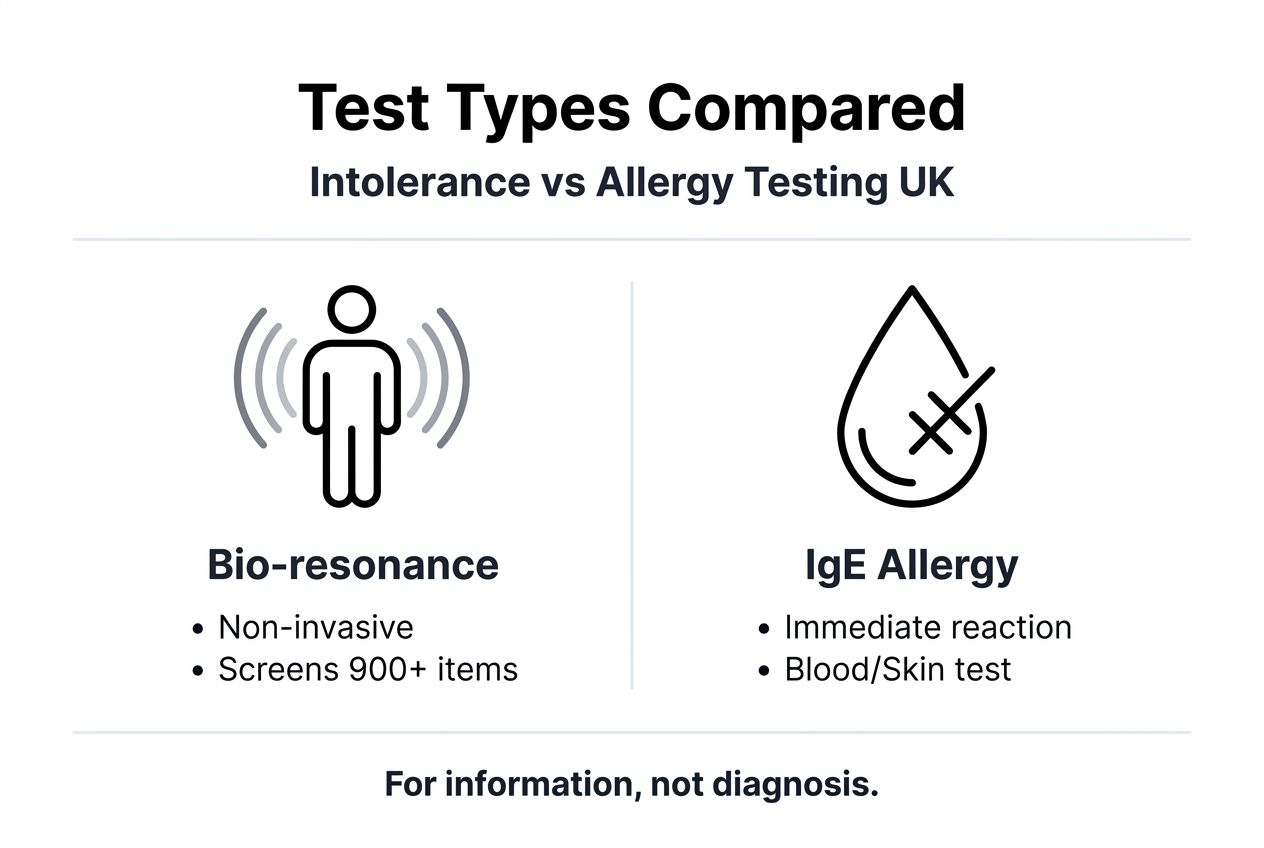
| Feature | Bio-resonance intolerance test | IgE allergy test |
|---|---|---|
| Sample type | Hair (non-invasive) | Blood (requires needle) |
| Items tested | 500 to 1,100+ foods and environmental factors | Typically under 300 allergens |
| Turnaround time | 48 to 72 hours digital | 1 to 2 weeks or longer |
| Clinical recognition | CAM, not NHS-recognised | NHS-recognised diagnostic |
| Cost | £65 to £150 | £200+ privately, free via NHS referral |
| Purpose | Identifies sensitivities for dietary guidance | Diagnoses IgE-mediated allergies |
IgE tests diagnose immediate allergic reactions that can be life-threatening, like anaphylaxis to peanuts or shellfish. Bio-resonance tests detect sensitivities causing delayed symptoms like bloating, fatigue, or skin irritation, which rarely involve IgE antibodies.
Bio-resonance panels cover far more items than clinical tests, including obscure additives, preservatives, and environmental triggers. This breadth helps identify multiple potential problem foods in one test, something blood panels cannot match affordably.
However, bio-resonance lacks the clinical validation of IgE testing. NHS guidelines do not recognise bio-resonance as a diagnostic tool, meaning results cannot replace medical allergy diagnoses. UK allergy testing kits comparison highlights this distinction clearly.
Key differences to remember:
- Bio-resonance detects sensitivities, not allergies
- IgE tests diagnose immediate allergic reactions
- Bio-resonance offers broader screening at lower cost
- IgE tests provide NHS-recognised diagnostic results
- Both methods serve different health investigation purposes
Interpreting your test results and next steps
Your bio-resonance test report categorises identified sensitivities by food groups and environmental factors, often using colour-coded severity indicators. Results are indicators, not definitive clinical diagnoses, so understanding their limitations ensures safe, effective use.
Reports help guide elimination or adjustment diets to identify symptom triggers. Start by removing high-sensitivity items for four to six weeks whilst monitoring symptoms. If symptoms improve, you’ve likely identified problematic foods. Gradually reintroduce items one at a time to confirm which cause reactions.
Reading intolerance test reports effectively requires tracking symptoms during dietary changes. Keep a food and symptom diary noting what you eat, when symptoms occur, and their severity. This validates test usefulness and helps identify patterns.
Consult health professionals to contextualise test results safely. A nutritionist or dietitian can ensure elimination diets remain balanced and nutritionally adequate. GPs can rule out underlying medical conditions that may mimic intolerance symptoms.
Common misconceptions include believing intolerance tests provide definitive allergy diagnoses, which they do not; tests indicate sensitivities needing professional health interpretation. Avoid self-diagnosing or drastically restricting your diet without guidance.
Practical steps after receiving results:
- Remove high-sensitivity items for 4 to 6 weeks
- Track symptoms daily in a food diary
- Consult a nutritionist for balanced elimination diet planning
- Reintroduce foods systematically to confirm triggers
- Reassess symptoms and adjust diet accordingly
Pro Tip: Take before-and-after photos if skin issues are a concern. Visual records help you objectively assess improvement during elimination periods when daily changes may seem subtle.
Common misconceptions about intolerance testing
Misunderstandings about bio-resonance intolerance testing can lead to unrealistic expectations or unsafe dietary practices. Clearing up these misconceptions ensures you use testing responsibly.
Misconception 1: Tests diagnose allergies. Bio-resonance tests do not detect IgE allergies and are not NHS-recognised diagnostic tools. They identify sensitivities that may cause delayed symptoms, not immediate allergic reactions requiring emergency treatment.
Misconception 2: Results are medical diagnoses. Bio-resonance intolerance testing is categorized as a Complementary and Alternative Medicine (CAM) method and is not currently recognised as a diagnostic tool by conventional UK medicine. Results require professional interpretation to avoid misdiagnosis risks.
Misconception 3: Positive results mean permanent avoidance. Sensitivities can change over time. Many people tolerate previously problematic foods after gut healing or dietary adjustments. Regular symptom monitoring and occasional reintroduction trials help assess tolerance changes.
Misconception 4: Tests replace medical evaluation. Self-diagnosis based solely on test results can lead to inappropriate dietary restrictions, potentially causing nutritional deficiencies. Always consult healthcare providers if symptoms persist or worsen.
Misconception 5: All sensitivities cause equal harm. Reports often show varying sensitivity levels. Low-level sensitivities may not require strict avoidance, especially if rotation diets prevent symptom accumulation. Focus elimination efforts on high-sensitivity items first.
“Common misconceptions include believing intolerance tests provide definitive allergy diagnoses, which they do not; tests indicate sensitivities needing professional health interpretation.”
Key facts to remember:
- Tests indicate sensitivities, not allergies or medical diagnoses
- Results need professional context for safe application
- Sensitivities can change; regular reassessment helps
- Avoid extreme dietary restriction without guidance
- View tests as supportive tools, not medical replacements
Practical application: using testing to improve your health
Translating test results into health improvements requires systematic dietary changes and careful symptom monitoring. These actionable steps empower you to identify triggers and optimise your diet for symptom relief.
- Begin an elimination diet. Remove all high-sensitivity items identified in your report for four to six weeks. This baseline period allows your body to clear potential irritants and symptoms to settle.
- Track symptoms daily. Record digestive comfort, energy levels, skin condition, headaches, and any other relevant symptoms in a diary. Note severity on a scale of 1 to 10 for objective comparison.
- Maintain nutritional balance. Work with a nutritionist to ensure your elimination diet includes adequate protein, vitamins, minerals, and fibre from alternative sources. Avoid creating new deficiencies whilst investigating intolerances.
- Reintroduce foods systematically. After the elimination period, add one food back every three days. Monitor for symptom return. If symptoms occur, remove that food again and wait until symptoms clear before testing the next item.
- Adjust your long-term diet. Based on reintroduction results, create a personalised eating plan that excludes confirmed triggers whilst including all tolerated foods. This supports varied, enjoyable nutrition.
- Reassess periodically. Retest annually or when symptoms change significantly. Gut health improvements may increase food tolerance over time, allowing previously problematic items back into your diet.
Consult healthcare providers if symptoms persist despite dietary changes. Underlying medical conditions like coeliac disease, inflammatory bowel disease, or infections may mimic intolerance symptoms and require specific treatment.
Post-test action steps include joining support communities where others share elimination diet experiences and recipes. Learning from others’ successes and challenges accelerates your journey to symptom relief.
Pro Tip: Photograph your meals during elimination and reintroduction phases. Visual records help you remember exactly what you ate when symptoms occurred, making pattern identification easier during review.
Discover affordable intolerance testing with UK Food Intolerance
Ready to identify what’s triggering your symptoms? UK Food Intolerance offers comprehensive intolerance tests designed for UK adults seeking answers about unexplained health issues.
Our comprehensive intolerance tests screen over 900 food and environmental items using bio-resonance technology, with samples processed in UK laboratories and digital reports delivered within 48 to 72 hours. Whether you choose our affordable Core Test (500 items) or Ultimate Test (1,100+ items), you’ll receive detailed, easy-to-understand results that guide your dietary decisions.
Discover how a food intolerance test can matchmake your body with the right diet, reducing symptoms and improving your daily wellbeing. Our support team helps interpret findings and suggests practical elimination strategies tailored to your lifestyle and health goals.
Frequently asked questions
What is the difference between intolerance and allergy testing?
Intolerance tests detect delayed sensitivities causing symptoms like bloating or fatigue, whilst allergy tests diagnose immediate IgE-mediated reactions like anaphylaxis. Intolerance testing uses bio-resonance or IgG methods, whereas allergy testing measures IgE antibodies in blood.
How quickly will I receive my test results?
Most UK providers deliver digital results within 48 to 72 hours after your hair sample reaches the laboratory. You’ll receive an email notification when your report is ready to view via secure online portal.
Can intolerance tests detect environmental sensitivities?
Yes, comprehensive panels screen environmental triggers like pollen, dust mites, pet dander, and moulds alongside food items. This helps identify non-dietary factors contributing to symptoms like congestion, skin irritation, or fatigue.
How often should I repeat intolerance testing?
Retest annually or when symptoms change significantly. Gut healing, dietary improvements, or lifestyle changes can alter sensitivity patterns over time, making periodic reassessment valuable for maintaining optimal health.
Are there risks to restricting my diet based on test results?
Yes, over-restricting without professional guidance can cause nutritional deficiencies or disordered eating patterns. Always consult a nutritionist or dietitian to ensure elimination diets remain balanced and nutritionally adequate whilst investigating triggers.










Leave a Reply
Want to join the discussion?Feel free to contribute!