

Digestive problems in children are almost always caused by one of a handful of common, treatable conditions: constipation, gastroenteritis, food allergy or intolerance, functional abdominal pain, trapped wind, threadworms, or the after-effects of antibiotics. Most cases settle without tests or specialist treatment. Your first priorities are checking your child is staying hydrated, watching for red-flag symptoms that need same-day care, and keeping a simple food and symptom diary to share with your GP.
Three immediate actions for parents:
- Check hydration first. Offer small, frequent sips of water or oral rehydration solution (ORS) if your child has been vomiting or has diarrhoea.
- Look for red flags. Blood in the stool, persistent severe pain, bilious (green) vomiting, or signs of dehydration (no wet nappies, sunken eyes, extreme drowsiness) all need urgent assessment via NHS 111 or A&E.
- Start a food and symptom diary. Note what your child eats, when symptoms appear, stool frequency and consistency, and any recent antibiotics or travel. This single step speeds up every GP or specialist appointment.
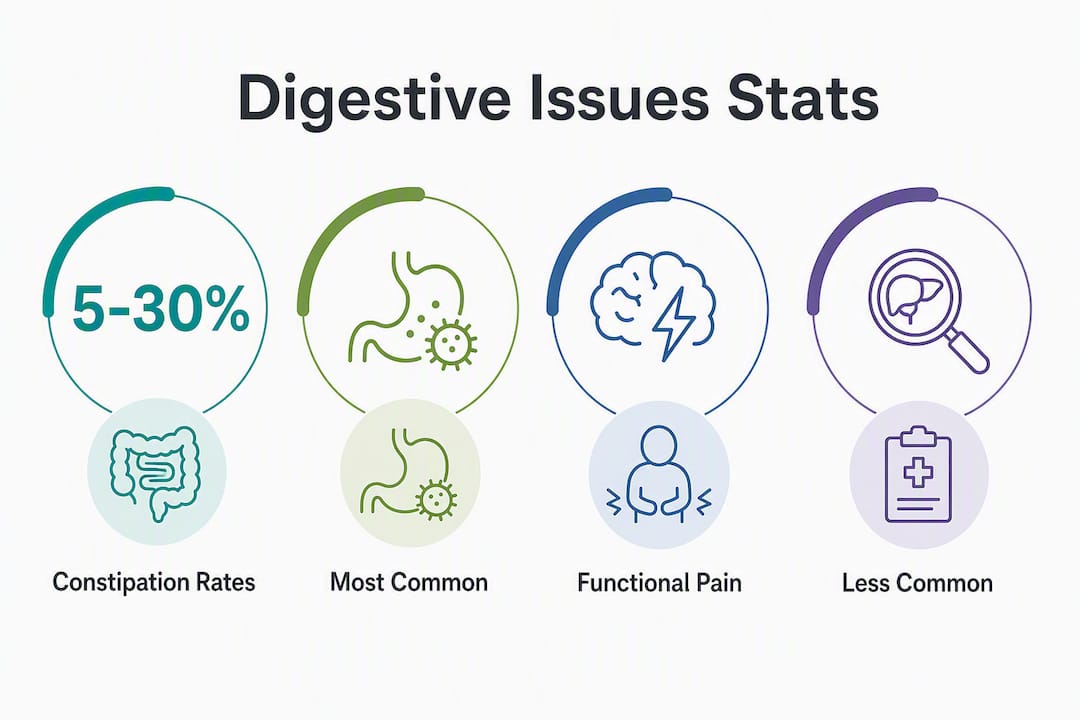
NICE estimates that constipation affects between 5% and 30% of children depending on the diagnostic criteria used, and NHS England states that around 1 in 3 children will experience constipation at some point. That makes it the single most common cause of children’s tummy troubles in UK primary care.
Table of Contents
- What causes digestive issues in children: the main groups
- Why does my child keep getting constipated?
- Gastroenteritis and tummy bugs: what to expect and when to worry
- Food allergy, intolerance, and coeliac disease: what is the difference?
- Functional abdominal pain and the role of stress and anxiety
- Less common organic causes and the red flags you should not ignore
- How do clinicians work out what is causing the problem?
- Practical steps you can take at home right now
- Testing options in the UK: NHS, private, and at-home
- Key takeaways
- What parents often get wrong about children’s gut health
- How Ukfoodintolerance can support your next step
- Useful UK sources for parents
What causes digestive issues in children: the main groups
Understanding the broad categories helps you have a more productive conversation with your GP and avoid unnecessary worry about rare conditions.
Functional causes (no structural disease, but real symptoms):
- Idiopathic constipation — by far the most common
- Functional abdominal pain and childhood IBS
Infectious causes:
- Viral gastroenteritis (norovirus, rotavirus, adenovirus)
- Bacterial gastroenteritis (Salmonella, Campylobacter, E. coli)
- Protozoal infections (Giardia, especially after travel)
- Threadworms (Enterobius vermicularis)
Immune and allergic causes:
- IgE-mediated food allergy (cow’s milk protein, egg, peanut)
- Coeliac disease (autoimmune gluten reaction)
- Non-IgE food allergy
Intolerances:
- Lactose intolerance
- Fructose and other FODMAP-related sensitivities
- Reactions to high-sugar or high-fat foods
Organic and anatomical causes (less common but important):
- Inflammatory bowel disease (Crohn’s disease, ulcerative colitis)
- Surgical problems (intussusception, malrotation)
- Peptic ulcers, systemic disease
Medication-related and psychosocial:
- Antibiotic-associated diarrhoea and gut microbiome disruption
- Stress, anxiety, school pressures, and conditioned withholding behaviours
Age matters here. Viral gastroenteritis is the most likely cause of sudden vomiting and diarrhoea in a toddler who attends nursery. Constipation is the most likely explanation for recurrent tummy pain in a school-age child. Recent antibiotics, foreign travel, or a known outbreak at school or nursery all shift the probability towards specific infectious causes.

Why does my child keep getting constipated?
Constipation is the most under-recognised cause of children’s digestive problems in UK primary care. NICE CG99 describes idiopathic constipation as multifactorial: contributing factors include pain, fever, dehydration, low-fibre diet, psychological stress, toilet training difficulties, certain medicines, and family history. There is rarely a single cause.
Symptom checklist — signs your child may be constipated:
- Fewer than three complete bowel movements per week
- Hard, dry, or unusually large stools
- Painful straining or crying when trying to pass a stool
- Withholding behaviours: tiptoeing, crossing legs, back arching, going very still
- Soiling or “accidents” in a child who is already toilet trained
- Reduced appetite or a distended, uncomfortable tummy
- Waxing and waning abdominal pain that improves after a bowel movement
NHS England’s clinical pathway is clear: constipation often does not resolve on its own, and waiting for a child to “grow out of it” can allow symptoms to worsen. Laxatives, specifically macrogol (polyethylene glycol) preparations such as Movicol Paediatric Plain, are first-line treatment per NICE. Diet and fluid changes alone are not enough to break down hard, impacted faeces; they support treatment but do not replace it.
Alongside laxatives, a regular toilet routine (sitting for five to ten minutes after meals, feet supported on a step) and a calm, non-pressured approach to toileting are both recommended. Withholding behaviours tend to perpetuate the cycle, so addressing anxiety around toileting is part of the management, not an optional extra.
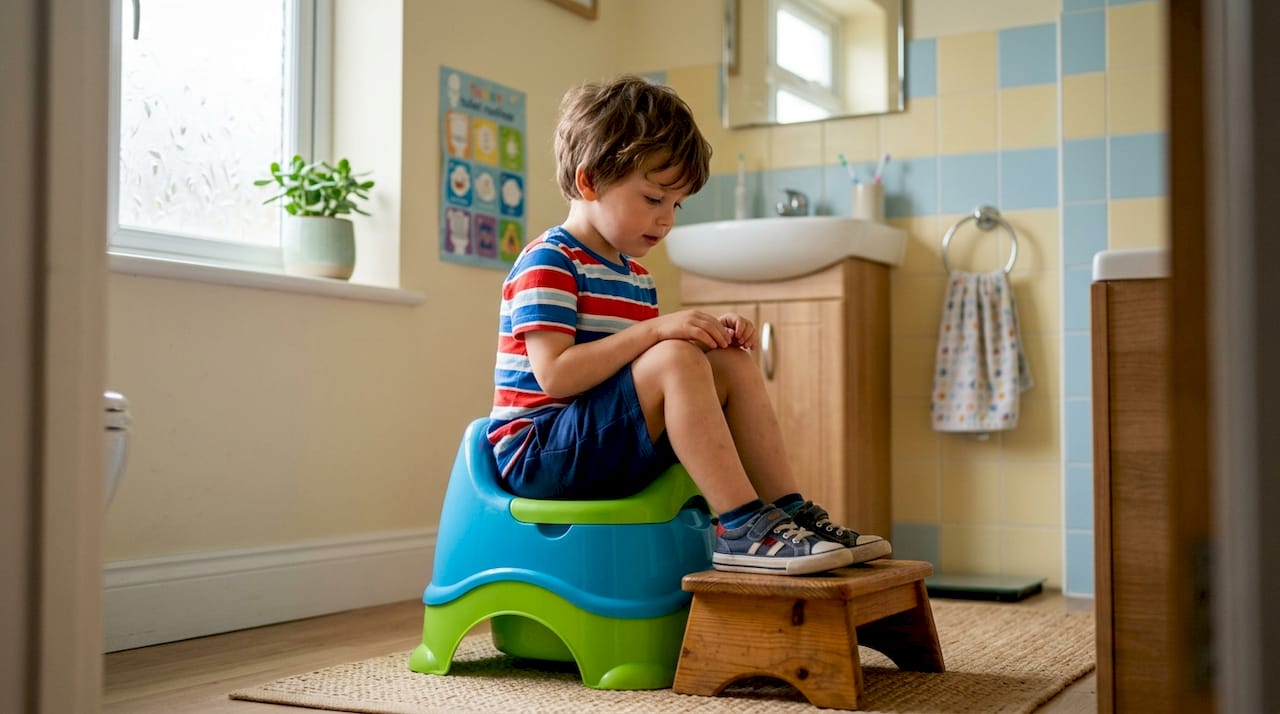
Pro Tip: If your child has frequent loose, smelly “accidents” but you have not seen a formed stool for days, do not assume it is diarrhoea. Overflow soiling — liquid stool leaking around a hard impaction — is a classic diagnostic trap. Treat it as constipation until a clinician confirms otherwise.
Gastroenteritis and tummy bugs: what to expect and when to worry
Viral gastroenteritis is the most common cause of sudden vomiting and diarrhoea in young children. Norovirus, rotavirus, and enteric adenoviruses account for the majority of cases; bacterial causes (Campylobacter, Salmonella) and protozoa (Giardia) are less frequent but more likely after travel or exposure to contaminated water.
Typical illness timeline:
- Vomiting usually starts first and often resolves within 1–2 days
- Diarrhoea follows and typically clears within 5–7 days
- Most children are well again within a week
- Diarrhoea lasting beyond two weeks is considered prolonged and needs GP review
- Post-infectious carbohydrate malabsorption, including temporary lactose intolerance, can extend diarrhoea for up to six weeks in some children (note: this is US-sourced guidance from the NIDDK; UK clinical thresholds may vary slightly)
Signs of dehydration requiring urgent assessment:
- No wet nappy or urine for more than six hours (under one year) or eight hours (older children)
- Sunken eyes or, in infants, a sunken fontanelle
- Dry mouth and lips
- Extreme drowsiness, limpness, or unusual irritability
- Unable to keep any fluids down for more than a few hours
NICE CG84 places dehydration risk and the child’s age at the centre of urgency decisions. A young infant with any dehydration signs needs same-day assessment; an older child who is alert and drinking small amounts can usually be managed at home with close monitoring.
First-aid steps for gastroenteritis at home:
- Offer oral rehydration solution (ORS such as Dioralyte) in small, frequent sips — a few teaspoons every few minutes is better than large amounts that trigger vomiting.
- Continue breastfeeding if applicable; do not stop.
- Reintroduce normal foods as soon as your child is willing — there is no need for a prolonged bland diet.
- Avoid anti-diarrhoeal medicines (such as loperamide) in children under 12 unless specifically prescribed.
- Contact NHS 111 if dehydration signs appear, symptoms worsen significantly, or your child is under three months with any fever.
Food allergy, intolerance, and coeliac disease: what is the difference?
These three conditions are often confused, but they have different mechanisms, different tests, and different management approaches.
Key differences at a glance:
- IgE-mediated food allergy: Immune-driven, rapid onset (usually within minutes to two hours). Symptoms include urticaria (hives), swelling, vomiting, and in severe cases anaphylaxis. Common triggers in children: cow’s milk, egg, peanut, tree nuts, wheat, soya. Needs urgent care if breathing is affected; managed with allergen avoidance and an adrenaline auto-injector where prescribed.
- Food intolerance (non-immune): No immune antibody involved. Symptoms are digestive: bloating, loose stools, abdominal pain, wind. Onset is slower, often hours after eating. Common triggers: lactose, fructose, certain FODMAPs, high-sugar foods and caffeine, which can reach the large bowel undigested and cause fermentation-related symptoms.
- Coeliac disease: Autoimmune reaction to gluten (found in wheat, barley, rye). Causes intestinal damage, leading to malabsorption, poor growth, chronic diarrhoea, and fatigue. Diagnosis requires specific blood tests (anti-tTG IgA serology) and, usually, intestinal biopsy. Managed by strict, lifelong gluten-free diet.
If you suspect a food allergy, speak to your GP before removing foods from your child’s diet. Unsupervised elimination diets in children carry a real risk of nutritional deficiency, particularly for calcium if dairy is removed. A supervised elimination diet, guided by a paediatric dietitian and supported by a food intolerance in children resource or GP referral, is the safer route. Keeping a detailed food and symptom diary for two to four weeks before the appointment gives the clinician the clearest picture.
For coeliac disease, the GP will arrange anti-tTG IgA blood tests. Do not start a gluten-free diet before testing, as this can produce a false-negative result.
Functional abdominal pain and the role of stress and anxiety
Functional abdominal pain (FAP) and childhood IBS are real conditions. The pain is not imagined, even when no structural disease is found. The gut and brain communicate constantly via the gut-brain axis, and stress, anxiety, and life events can genuinely alter gut motility and pain sensitivity in children.
Common psychosocial triggers include school transitions, exam pressure, friendship difficulties, family changes, and conditioned toilet avoidance (a child who has had a painful stool will often withhold to avoid repeating the experience, which worsens constipation and pain).
Management approaches that help:
- Normalise the symptoms with your child: explain that the gut is sensitive, not broken
- Maintain regular meals, sleep, and physical activity
- Avoid repeatedly keeping your child home from school, as this reinforces avoidance
- Simple cognitive behavioural techniques (available via CAMHS or school counsellors) can reduce symptom frequency
- Liaise with school if anxiety is a clear driver
- Graded return to normal diet and activity, rather than prolonged restriction
Consider asking for a referral to paediatric psychology or paediatric gastroenterology if symptoms are severe enough to affect daily life, if your child is losing weight, or if red-flag signs appear alongside the functional symptoms.
Less common organic causes and the red flags you should not ignore
Most children with digestive symptoms have functional or infectious causes. A smaller number have organic disease, and a few have conditions that need urgent intervention.
Less common but significant causes:
- Inflammatory bowel disease (IBD): Crohn’s disease and ulcerative colitis can present in childhood with chronic diarrhoea (sometimes bloody), weight loss, fatigue, and poor growth. Diagnosis requires colonoscopy and biopsy via paediatric gastroenterology.
- Coeliac disease: Often missed for years; consider it in any child with chronic diarrhoea, poor growth, or unexplained iron-deficiency anaemia.
- Surgical emergencies: Intussusception (bowel telescoping into itself) causes sudden, severe, colicky pain with “redcurrant jelly” stools in infants and young children. Malrotation with volvulus causes bilious vomiting and is a surgical emergency.
- Peptic ulcers and H. pylori infection: Less common in children than adults, but possible, particularly with recurrent epigastric pain.
- Systemic disease: Thyroid disorders, diabetes, and other systemic conditions can present with GI symptoms.
Red-flag checklist — seek urgent help for any of these:
- Persistent, severe abdominal pain that is not relieved by passing wind or a bowel movement
- Bilious (green or yellow) vomiting at any age
- Blood in the stool (bright red or dark/tarry)
- Unexplained weight loss or faltering growth
- Ongoing high fever alongside abdominal pain
- Persistent vomiting causing signs of dehydration
- Markedly delayed development alongside GI symptoms
If you see any of these, contact your GP for same-day review, call NHS 111, or attend A&E if the child appears seriously unwell.
How do clinicians work out what is causing the problem?
Diagnosis is almost always history-led. The GP will ask about symptom pattern, stool consistency, diet, recent travel, antibiotic use, family history, and school or home stressors before ordering any tests. NICE recommends a risk-based approach for both constipation and gastroenteritis, meaning tests are targeted rather than routine.
| Test | What it checks | When typically ordered |
|---|---|---|
| Faecal sample (stool culture) | Bacterial and protozoal infection | Diarrhoea lasting more than 7 days, blood in stool, recent travel |
| Faecal calprotectin | Intestinal inflammation (IBD marker) | Chronic diarrhoea, suspected IBD, before endoscopy referral |
| Blood tests (FBC, CRP, ESR) | Anaemia, inflammation, infection | Suspected IBD, weight loss, persistent symptoms |
| Coeliac serology (anti-tTG IgA) | Coeliac disease | Chronic diarrhoea, poor growth, family history of coeliac |
| Stool ova and cysts | Parasitic infection (Giardia, etc.) | Travel history, prolonged diarrhoea |
| Breath tests (hydrogen) | Lactose or fructose malabsorption | Limited paediatric utility; usually secondary care |
| Specific IgE / skin prick test | IgE-mediated food allergy | Suspected immediate allergic reaction; via allergy specialist |
| Imaging / endoscopy | Structural or mucosal disease | Red flags, suspected IBD, inconclusive blood tests |
Before your GP appointment:
- Bring your food and symptom diary (at least two weeks of entries)
- Note any recent antibiotics, travel, or known contacts with similar symptoms
- Write down stool frequency and consistency using the Bristol Stool Chart if possible
- Ask specifically about coeliac serology or faecal calprotectin if symptoms have been going on for more than four weeks
Practical steps you can take at home right now
For suspected constipation:
- Increase fluid intake throughout the day, particularly water.
- Add more fruit, vegetables, and wholegrains to meals, but do not rely on diet alone.
- Establish a toilet routine: five to ten minutes after each main meal, feet on a step.
- If symptoms persist beyond two weeks or your child is in pain, see the GP. Laxatives are first-line treatment and are safe for children when prescribed appropriately.
- Avoid giving over-the-counter adult laxatives without GP advice.
For mild gastroenteritis:
- Start ORS immediately — Dioralyte sachets are available from UK pharmacies without a prescription.
- Offer small amounts frequently rather than large drinks.
- Reintroduce normal food as soon as your child is willing to eat.
- Keep your child away from nursery or school until 48 hours after the last episode of vomiting or diarrhoea.
- Wash hands thoroughly with soap and water (not just hand sanitiser) after nappy changes and before preparing food.
For suspected food intolerance:
- Keep a detailed food and symptom diary for two to four weeks.
- Do not remove whole food groups without GP or dietitian guidance.
- Discuss your diary with the GP, who can refer to a paediatric dietitian or arrange appropriate testing.
Dos and don’ts:
- Do use ORS for rehydration rather than fruit juice or fizzy drinks, which can worsen diarrhoea.
- Do contact NHS 111 if you are unsure whether symptoms need urgent review.
- Don’t use anti-diarrhoeal medicines in children under 12 without medical advice.
- Don’t start an elimination diet without professional supervision.
- Don’t assume loose stools are always diarrhoea — overflow soiling from constipation looks identical.
Testing options in the UK: NHS, private, and at-home
The NHS pathway starts with your GP. Targeted blood tests, stool samples, and referral to paediatric gastroenterology or allergy clinics are available without charge. This route is best for red-flag symptoms, suspected coeliac disease, IBD, or confirmed food allergy, where clinical interpretation and follow-up are non-negotiable.
Private clinic testing offers faster access to the same NHS-standard tests (specific IgE panels, coeliac serology, colonoscopy) and can be useful when NHS waiting times are long and symptoms are significantly affecting your child’s quality of life. Costs vary and are not publicly listed by most providers.
At-home sensitivity tests, including bioresonance-based hair sample tests, offer a different kind of insight. They are not diagnostic tools for allergy or coeliac disease, and results should not be used to make major dietary changes without clinical input. Their value lies in helping parents identify potential sensitivity patterns across a broad range of foods and environmental items, which can then inform a more focused conversation with the GP or dietitian. Ukfoodintolerance’s at-home intolerance tests cover over 1,450 items and return a detailed digital report within 48–72 hours, giving parents a structured starting point for that conversation.
When testing is most useful:
- Symptoms have persisted for more than four weeks despite basic home measures
- Your child has poor growth, unexplained anaemia, or blood in the stool (NHS testing is essential here)
- You want to identify potential food sensitivity patterns before an elimination diet
- You have already had NHS tests and want a broader sensitivity screen to guide dietary adjustments
When watchful waiting is more appropriate:
- Symptoms started with a clear trigger (a stomach bug, a new food) and are improving
- Your child is growing well, has normal energy, and symptoms are mild
- A recent course of antibiotics is the likely cause (allow four to six weeks for the gut microbiome to recover)
Pro Tip: If you have used a private or at-home test, bring the report to your GP appointment and ask specifically whether coeliac serology or faecal calprotectin would be appropriate next steps. A printed report gives the GP something concrete to work from and often speeds up the referral process.
Key takeaways
Most children’s digestive problems are caused by constipation, gastroenteritis, food intolerance, or functional abdominal pain, and the majority improve with straightforward home measures and GP-guided treatment.
| Point | Details |
|---|---|
| Constipation is the most common cause | NICE estimates prevalence at 5–30%; laxatives, not diet alone, are first-line treatment. |
| Red flags need same-day review | Blood in stool, bilious vomiting, severe pain, or dehydration signs require urgent GP or NHS 111 contact. |
| Food diary before any elimination | Never remove whole food groups without GP or dietitian guidance; a two-to-four-week diary is the safest first step. |
| Overflow soiling mimics diarrhoea | Loose “accidents” in a toilet-trained child may signal constipation with faecal impaction, not a tummy bug. |
| Ukfoodintolerance at-home testing | Hair-sample sensitivity tests covering 1,450+ items can support GP conversations about potential food triggers. |
What parents often get wrong about children’s gut health
The most common mistake I see parents make is treating every loose stool as a tummy bug and every tummy ache as anxiety. Both assumptions delay the right treatment by weeks, sometimes months.
Constipation is the clearest example. A child who soils regularly, eats poorly, and complains of tummy pain is often labelled as “just anxious” or “going through a phase.” The NHS England pathway is explicit: constipation does not resolve on its own in a significant proportion of children, and waiting costs the child months of unnecessary discomfort. Laxatives are not a last resort; they are the first step.
The opposite trap is equally common. Parents who suspect food intolerance sometimes remove dairy, gluten, and several other foods simultaneously, without testing and without dietitian input. The child’s diet becomes nutritionally restricted, and because multiple foods were removed at once, nobody knows which one was actually the problem. A structured approach, starting with a symptom diary and a GP conversation, is always more useful than a wholesale elimination.
At-home sensitivity testing sits in a genuinely useful middle ground when it is used correctly: as a way to generate hypotheses about potential triggers, not as a replacement for clinical diagnosis. The key is bringing those results to a clinician rather than acting on them alone.
The gut microbiome is also worth mentioning here. Antibiotics disrupt the balance of gut bacteria, and this disruption can cause loose stools, bloating, and abdominal discomfort for several weeks after a course ends. Parents who do not connect a recent antibiotic course to ongoing symptoms often end up back at the GP unnecessarily. If your child had antibiotics in the past four to six weeks, that is almost certainly part of the picture.
How Ukfoodintolerance can support your next step
When your child has had persistent digestive symptoms and you want a clearer picture of potential food and environmental sensitivities before your next GP appointment, Ukfoodintolerance offers a practical, non-invasive starting point.

The process is straightforward: collect a small hair sample at home, post it to a UK laboratory, and receive a detailed digital report within 48–72 hours. Reports cover over 1,450 food and environmental items, including common childhood triggers such as dairy, gluten, eggs, and various additives. The results give you a structured list of potential sensitivities to discuss with your GP or paediatric dietitian, making that appointment more focused and productive.
Browse the full range of at-home sensitivity tests and choose the option that fits your child’s needs. Always share results with your GP before making significant dietary changes, particularly if coeliac disease or a confirmed food allergy is a possibility.
This article provides general health information only and is not a substitute for professional medical advice. Always consult your GP or a qualified clinician for diagnosis and treatment.
Useful UK sources for parents
These are the most reliable UK resources for further reading on children’s digestive health:
- NHS: Constipation in children — clear, parent-friendly explanation of symptoms, causes, and when to see a GP.
- NHS England: National primary care clinical pathway for constipation in children — the pathway GPs follow for assessment and treatment.
- Healthier Together: Abdominal pain (tummy ache) — NHS-backed guidance on common causes of tummy pain and when to seek help.
For urgent concerns, always contact your GP, call NHS 111, or attend A&E if your child appears seriously unwell.









Leave a Reply
Want to join the discussion?Feel free to contribute!