

TL;DR:
- Most UK adults report food intolerances, but only around 6% have diagnosed allergies.
- Accurate identification requires professional testing and careful elimination diets guided by healthcare providers.
- At-home tests are generally unreliable; consultation with professionals is essential for safe, effective management.
Nearly 40% of UK adults self-report a food intolerance, yet only around 6% have a clinically diagnosed food allergy. That gap tells a story. Millions of people in the UK are living with bloating, fatigue, skin issues, and digestive discomfort, quietly blaming the foods they eat, yet without a clear answer. The confusion between food allergies and intolerances is real, and it matters. Getting it wrong can lead to unnecessary dietary restrictions, missed diagnoses, or even nutritional deficiencies. This guide walks you through the most common UK food triggers, explains the key differences between reactions, and helps you understand which identification methods are actually worth your time.
Table of Contents
- Understanding food reactions: allergy vs intolerance
- Most common UK food triggers and their symptoms
- Evidence-based ways to identify your food triggers
- Risks and limitations of at-home food intolerance tests
- Why chasing every ‘trigger’ can harm your wellbeing (and what actually works)
- How at-home testing can support your food journey
- Frequently asked questions
Key Takeaways
| Point | Details |
|---|---|
| Know common triggers | Dairy, gluten cereals, eggs, nuts, fish, and some fruits are the top culprits for food reactions in the UK. |
| Check allergy vs intolerance | Allergies involve the immune system and can be dangerous, whilst intolerances are usually slower and affect digestion. |
| Trust evidence-based methods | Elimination diets and professional guidance are safer and more reliable than most at-home intolerance test kits. |
| Beware unreliable home tests | Unproven tests can mislead you and cause long-term health issues if they prompt unnecessary dietary restrictions. |
| Seek professional advice | GPs and dietitians help interpret symptoms to maintain a varied, healthy diet and avoid nutrition gaps. |
Understanding food reactions: allergy vs intolerance
These two terms get used interchangeably all the time. They are not the same thing, and that distinction shapes everything from how you manage symptoms to which tests are actually useful.
A food allergy is an immune system response. Your body mistakenly identifies a food protein as a threat and launches a defence. This can happen within minutes of eating the trigger food. In serious cases, it causes anaphylaxis, a life-threatening reaction requiring immediate medical attention. The NHS food allergy guidance outlines how quickly and severely these reactions can escalate.
A food intolerance, by contrast, is not immune-mediated. It typically involves the digestive system struggling to process a particular food or ingredient. Symptoms are usually delayed, sometimes appearing hours after eating, and are rarely dangerous, though they can significantly affect your quality of life. As Allergy UK explains, an allergy involves an IgE-mediated immune reaction, while intolerance is a non-immune, digestive response with delayed symptoms.
There is also a middle ground worth knowing about: oral allergy syndrome. This causes itching or tingling in the mouth when eating certain raw fruits or vegetables, particularly in people with hay fever. It is immune-related but usually mild and often confused with intolerance.
| Feature | Food allergy | Food intolerance |
|---|---|---|
| Immune system involved | Yes (IgE-mediated) | No |
| Onset of symptoms | Rapid (minutes) | Delayed (hours) |
| Severity | Can be life-threatening | Rarely dangerous |
| Diagnosis method | Skin prick, IgE blood test | Elimination diet, breath test |
| Prevalence (UK adults) | ~6% clinically diagnosed | Up to 40% self-reported |
Key differences at a glance:
- Allergies can cause hives, swelling, and breathing difficulties
- Intolerances typically cause bloating, cramps, diarrhoea, and fatigue
- Both can overlap in symptoms, making self-diagnosis unreliable
- A proper assessment is essential before cutting out major food groups
“Many people assume they have a food intolerance when they may actually have a different digestive condition entirely. Accurate identification is the first step to feeling better.”
Exploring common UK food intolerances can help you start recognising patterns before you speak to a professional. You might also find our food triggers list a useful reference point.
Most common UK food triggers and their symptoms
Once you understand the type of reaction you might be having, the next question is: which foods are most likely to blame?
For intolerances, the data is clear. According to the Food and You 2 survey, 39% of those reporting intolerance cite milk and dairy as a trigger, 26% point to gluten-containing cereals, and eggs, soy, nuts, fish, and shellfish represent a significant minority. These are the foods worth paying attention to first.
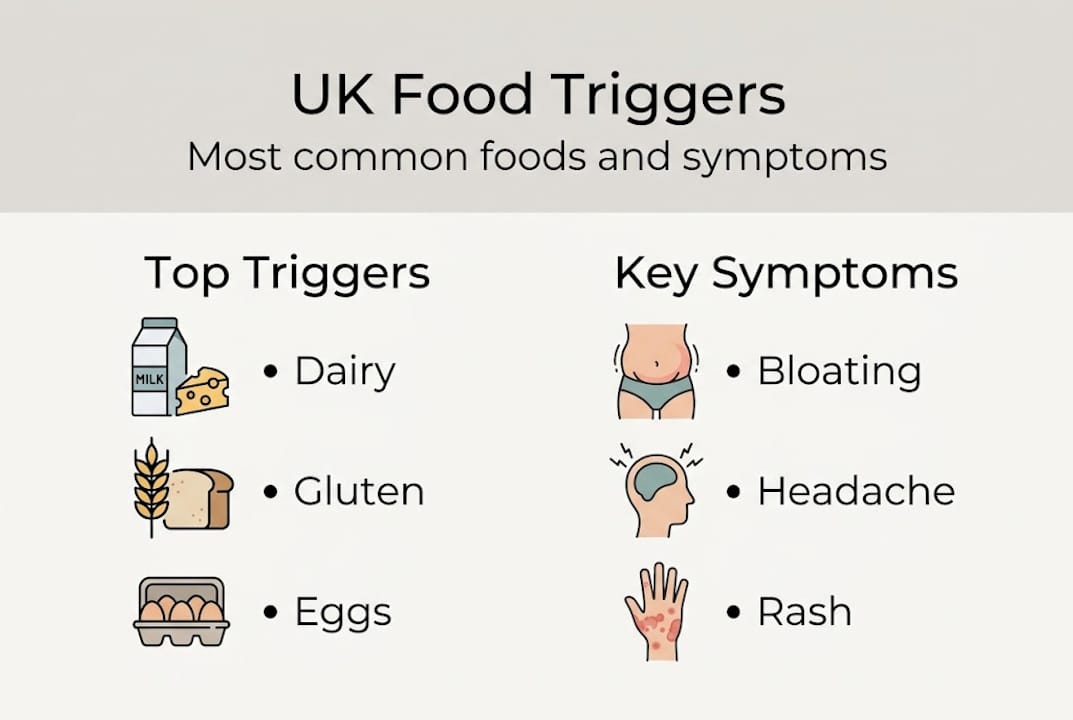
For allergies in adults, peanuts, tree nuts, fish, shellfish, and certain fruits are among the most frequent culprits, according to NHS guidance.
| Food | Reaction type | Common symptoms |
|---|---|---|
| Cow’s milk and dairy | Intolerance or allergy | Bloating, diarrhoea, skin rashes |
| Gluten cereals (wheat, rye, barley) | Intolerance (or coeliac) | Fatigue, cramps, loose stools |
| Eggs | Intolerance or allergy | Nausea, hives, digestive upset |
| Peanuts and tree nuts | Allergy | Swelling, hives, anaphylaxis risk |
| Fish and shellfish | Allergy | Hives, breathing issues, vomiting |
| Soy | Intolerance or allergy | Bloating, skin reactions |
Symptom spotlight:
- Intolerance symptoms tend to be digestive: bloating, wind, stomach cramps, loose stools, and sometimes fatigue or brain fog
- Allergy symptoms are more systemic: hives, swelling of the lips or throat, difficulty breathing, or a sudden drop in blood pressure
- Oral allergy syndrome sits in between, causing localised itching in the mouth from raw fruits or vegetables, particularly apples, peaches, and celery
It is easy to confuse the two. Someone who feels unwell after eating a cheese-heavy meal might assume they have a dairy allergy, when lactose intolerance is far more likely. Getting the right label matters because the management strategies differ significantly. If you are concerned about reactions in younger family members, our guide to childhood food triggers covers what to look out for. You can also read more about the full range of symptoms of food intolerance to help you build a clearer picture.

Evidence-based ways to identify your food triggers
Knowing which foods are common triggers is helpful. But your body is unique, and what affects someone else may not affect you at all. Here is how to identify your personal triggers in a way that is actually reliable.
- Keep a food and symptom diary. Write down everything you eat and drink, alongside any symptoms and their timing. Even a week of detailed notes can reveal patterns that are easy to miss in day-to-day life.
- Eliminate suspect foods. Remove one or two likely triggers at a time, not everything at once. Cutting out too much simultaneously makes it impossible to pinpoint the cause.
- Reintroduce foods gradually. After two to four weeks, reintroduce each food one at a time and monitor your response carefully. This is the core of an elimination diet.
- Consult your GP or a registered dietitian. This step is not optional if you want reliable results. Cutting out major food groups without guidance can lead to nutritional gaps. A dietitian can help you do this safely.
- Consider clinical testing where appropriate. For lactose intolerance, a hydrogen breath test is a validated diagnostic tool. For suspected allergies, an oral food challenge under clinical supervision remains the gold standard.
As NHS Inform confirms, a dietitian-guided elimination diet combined with a food and symptom diary and a supervised challenge is the most reliable approach available.
Pro Tip: Note not just what you ate, but how much, how it was prepared, and what else you consumed alongside it. Cooking methods and portion sizes can significantly affect how your body responds.
“An oral food challenge, conducted under medical supervision, remains the most accurate way to confirm or rule out a food allergy.”
For those who want a non-invasive starting point, our guide to non-invasive tests for digestive intolerance explains what is available. You can also browse our overview of intolerance test options to understand the choices. For allergy-specific testing, the Anaphylaxis UK allergy testing guidance is a trustworthy resource.
Risks and limitations of at-home food intolerance tests
At-home testing kits are everywhere. They promise quick answers, long lists of foods to avoid, and the appeal of taking control from your sofa. But the reality is more complicated.
The most common types of at-home tests include IgG blood tests (fingerprick), hair analysis, and bioresonance testing. None of these are endorsed by the NHS, Allergy UK, or major clinical bodies. Which? found that at-home kits, including IgG blood, hair, and bioresonance tests, lack clinical endorsement and can prompt unnecessary dietary restrictions.
Here is why IgG tests in particular are misleading:
- Elevated IgG antibodies simply show that your immune system has been exposed to a food, not that you are intolerant to it
- People who eat a varied diet will naturally have higher IgG levels for many foods
- A positive result does not mean you need to avoid that food
- False positives can lead to cutting out nutritious foods without any benefit
Pro Tip: Be cautious of any test that hands you a long list of foods to avoid without any professional assessment or follow-up support. That is a red flag, not a solution.
The FSA intolerance data reinforces how widespread self-reported reactions are, which is precisely why the market for these kits has grown. But as expert commentary highlights, the consensus is clear: consult your GP or a dietitian before using any at-home test.
This does not mean at-home options are worthless. It means they work best as a starting point, not a final answer. Read more about at-home food intolerance test reliability and the role of at-home tests in a broader health strategy. You can also explore trends in non-invasive testing to see how the landscape is evolving.
Why chasing every ‘trigger’ can harm your wellbeing (and what actually works)
Here is something that does not get said enough: cutting out more foods is not always better. In fact, it can make things worse.
We see people who have eliminated gluten, dairy, eggs, soy, and nightshades all at once, based on a combination of test results and online advice, only to find themselves anxious around food, nutritionally depleted, and no clearer on what was actually causing their symptoms. The restrictive diet became its own problem.
True food allergies are relatively rare. Most people experiencing digestive discomfort are dealing with intolerances that are manageable, often dose-dependent, and sometimes temporary. The goal should not be to find every possible trigger and eliminate it forever. The goal is to understand your body well enough to make informed, confident choices.
Clinical oversight matters here. A registered dietitian will not just tell you what to cut out. They will help you build a sustainable eating pattern that supports your health long-term. Tracking your symptoms carefully, as outlined in our guide to preventing food intolerance reactions, gives you real data to work with rather than guesswork. Measured, evidence-led approaches consistently outperform the scatter-gun method of eliminating everything and hoping for the best.
How at-home testing can support your food journey
If you have been struggling with unexplained symptoms and want a practical starting point, at-home testing can play a useful role when approached sensibly.

At UK Food Intolerance, we offer non-invasive hair sample testing that screens for reactions across hundreds of food and environmental items, processed at a UK-based laboratory. Our exploring intolerance test options page outlines both our Core and Ultimate test panels, so you can choose the level of detail that suits you. Results arrive within 48 to 72 hours, giving you a clear, actionable report to discuss with your GP or dietitian. Browse our home test kits to find the right option for your needs and take a confident first step towards understanding your food responses.
Frequently asked questions
What is the difference between food allergy and food intolerance?
A food allergy involves the immune system and can cause immediate, severe reactions, while a food intolerance is usually non-immune, mainly affects digestion, and symptoms tend to appear gradually. Allergy UK provides a clear breakdown of these distinctions.
Which foods are most likely to trigger intolerances in the UK?
The top triggers are cow’s milk and dairy products, cereals containing gluten, and to a lesser extent, eggs, soy, nuts, fish, shellfish, and yeast. This reflects UK-wide survey data on self-reported intolerance triggers.
Are at-home food intolerance tests accurate?
Most at-home intolerance tests, including IgG fingerprick and hair analysis, are not clinically validated and may lead to unnecessary restrictions. Which? research confirms these tests are not endorsed by the NHS or major allergy charities.
How can I safely identify my food triggers?
Keep a food and symptom diary, consult your GP or a registered dietitian, and consider evidence-based elimination diets with professional guidance. NHS Inform outlines this stepwise approach as the most reliable route to accurate identification.
What symptoms suggest a possible food allergy rather than intolerance?
Symptoms like hives, swelling, difficulty breathing, or rapid onset after eating may indicate a food allergy and need urgent medical attention. The NHS food allergy page details which symptoms require immediate assessment.










Leave a Reply
Want to join the discussion?Feel free to contribute!