

Routine commercial intolerance tests, including hair analysis, IgG panels and vega tests, are not reliable ways to identify your migraine food triggers. The NHS and The Migraine Trust both recommend starting with a headache diary and a structured elimination and reintroduction process instead. If you suspect a sudden allergic reaction, a GP can arrange proper skin-prick or IgE blood testing.
TL;DR:
- Commercial intolerance tests like hair analysis and IgG panels lack scientific validation and can lead to unnecessary dietary restrictions.
- Proper migraine trigger identification relies on a diary-based elimination and reintroduction process over several weeks, not commercial testing.
- Food triggers such as chocolate, cheese, and alcohol are often misattributed; cravings during prodrome may be mistaken for causation.
- Allergy tests confirm immune responses, but intolerance tests and commercial kits do not reliably diagnose migraine-related food sensitivities.
- Trusting unvalidated tests may cause nutritional gaps, delay correct diagnoses, and complicate effective migraine management strategies.
Table of Contents
- What clinicians recommend about testing
- Common migraine food triggers and how reliable those links really are
- How to test whether a food triggers your migraines
- Which commercial tests exist and why clinicians advise caution
- About at-home bioresonance testing and how to use it responsibly
- A balanced, patient-centred view on food triggers
- Screening support for safer elimination diets
- FAQ
- Sources
What clinicians recommend about testing
The NHS is clear: there is no validated blood, skin or hair test that can diagnose a food intolerance. This matters because many at-home kits are marketed as scientific when they have not been through the clinical checks that real diagnostic tools require.
It helps to separate two different things. Allergy testing, including skin-prick tests and specific IgE blood tests, checks for an immune response and is appropriate when you suspect a genuine allergic reaction. Intolerance or sensitivity testing is a different matter entirely, and this is where most commercial kits fall short.
NHS guidance states that commercial tests such as hair analysis, IgG panels and kinesiology are not recommended for diagnosing food intolerances. Acting on an inaccurate result can mean cutting out entire food groups unnecessarily, which risks nutritional gaps and makes your diet harder to sustain for no real benefit.
- Hair analysis and vega testing have no accepted scientific basis for diagnosing intolerance.
- IgG antibody tests often reflect normal food exposure rather than a genuine problem.
- Unnecessary restriction can affect your nutrition and your quality of life.
Common migraine food triggers and how reliable those links really are
Certain foods come up again and again in migraine discussions: chocolate, mature cheese, caffeine, cola, citrus fruit and alcohol. Several of these contain compounds such as tyramine, nitrates or added MSG, which are often blamed for triggering attacks.
The evidence behind these links is weaker than the lists suggest. The Migraine Trust notes that what feels like a food trigger can actually be a prodrome symptom, meaning your body was already heading into an attack and the craving for chocolate or coffee was an early sign, not the cause.
- Chocolate cravings often appear during the prodrome phase, before the headache starts.
- Cheese, cured meats and alcohol contain tyramine and nitrates, commonly reported as triggers.
- Single-food triggers are rare; most attacks involve several factors interacting together.
How to test whether a food triggers your migraines
A proper test takes patience, but it gives you an answer you can trust far more than any kit. Clinical guidance from the GP headache pathway sets out a straightforward process built around observation rather than guesswork.
- Keep a headache diary for several weeks, recording the date and time of each attack, its severity, any medication taken, your meals, sleep and stress levels.
- Look for patterns across several weeks rather than judging anything from a single episode.
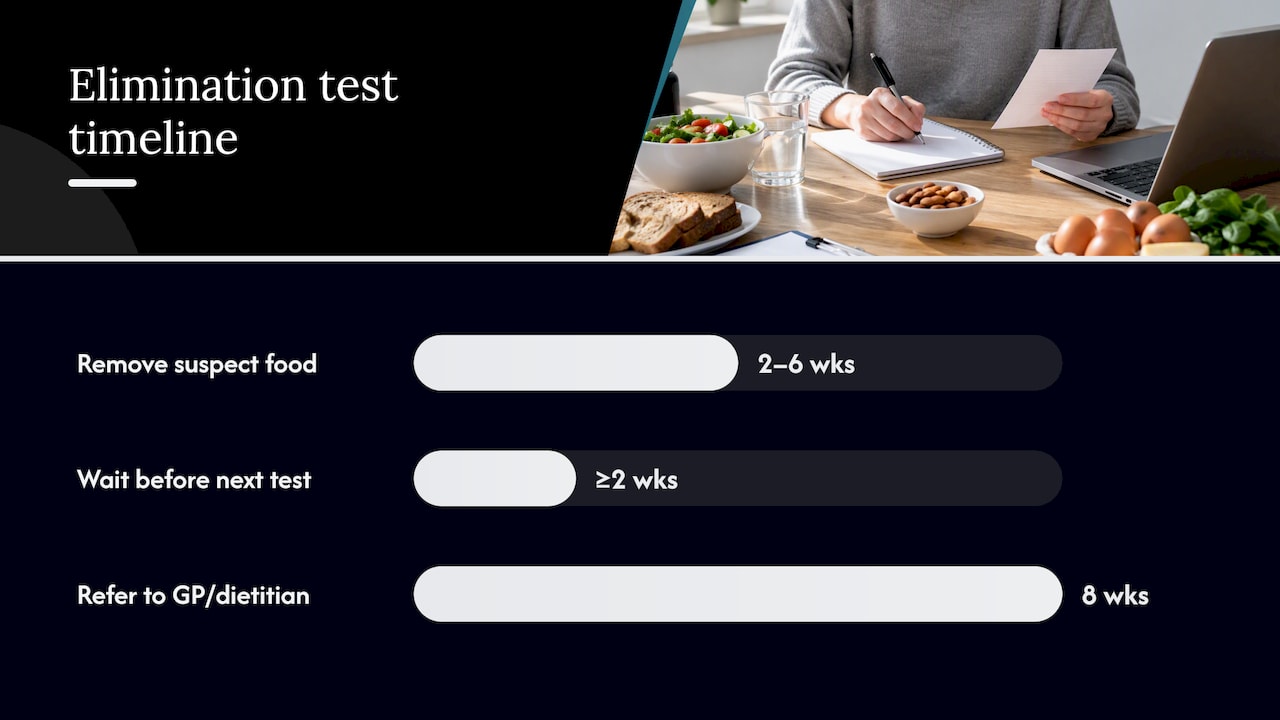
- Pick one suspect food from your diary and remove it completely for two to six weeks.
- Reintroduce that food on its own, then wait at least two weeks before testing anything else to avoid overlapping results.
- Keep sleep, hydration and meal timing as consistent as possible throughout, since these factors can muddy your results if they change at the same time.
Pro Tip: Note your menstrual cycle, stress levels and sleep quality alongside food in your diary. Hormonal and lifestyle factors are common migraine triggers and can easily be mistaken for a food reaction.
If several factors seem to be involved at once, or your diary shows no clear pattern after eight weeks, it is worth asking a GP for a referral to a registered dietitian. Allergy UK recommends professional supervision for any elimination diet that removes more than one food group, partly to protect your nutrition and partly because a dietitian can interpret confusing results far more reliably than you can alone. Our guide to the food elimination process walks through this timeline in more detail if you want a step-by-step checklist to follow.
Which commercial tests exist and why clinicians advise caution
Several types of at-home test are sold for food intolerance: hair analysis, IgG antibody panels, vega or bioresonance-style bioreactivity tests, and breath tests for specific sugars such as lactose or fructose. Each works on a different principle, but none has been validated for diagnosing migraine-related food intolerance specifically.
The NHS and specialist allergy centres advise against relying on these tests for identifying food intolerance, since they lack the evidence base of recognised diagnostic methods. A related view comes from Leeds Teaching Hospitals, which notes that for many non-IgE intolerances, diagnosis by history and supervised elimination remains the practical standard, since no blood or hair test reliably confirms the answer.
The real-world consequences of trusting an unvalidated result can be significant:
- A false positive can lead you to cut out foods you actually tolerate well, for no benefit.
- Over-restriction can create nutritional gaps, especially when whole food groups are removed.
- A false sense of certainty can delay you seeking a proper diagnosis for another cause of your headaches.
About at-home bioresonance testing and how to use it responsibly
The process works like this: you collect a small hair sample at home, send it to a laboratory, and receive a digital report within a few days covering a wide panel of food and environmental items. Our hair sample testing page explains the collection process and what the report covers in more detail.
We are open about what this kind of screening can and cannot do. A bioresonance report is a starting point for your own observation, not a clinical diagnosis, and we built our supportive materials around that idea.
- Treat your results as a prompt for structured elimination, not a final answer.
- Cross-check any suggested foods against your own headache diary before changing your diet.
- Discuss significant or long-term exclusions with a GP or registered dietitian before committing to them.
- Use the report alongside, not instead of, the clinical process described above.
A balanced, patient-centred view on food triggers
The most useful thing you can do is get boring: keep a diary, eat at regular times, stay hydrated and sleep consistently before you start blaming any single food. Most migraine patterns only become visible with that kind of routine in place.
Be wary of cutting out whole food groups on a hunch. Treat any test result, however it was generated, as one piece of evidence to bring to a GP conversation rather than a verdict to act on alone.
— Rob
Screening support for safer elimination diets
Working out your migraine triggers through diary-keeping and elimination takes commitment, and having a starting point can make the process feel less like guesswork. Our Core Test and Ultimate Plus Intolerance Test use a simple at-home hair sample to screen a wide range of items, with digital results delivered in 48 to 72 hours from our UK laboratory.

- The Ultimate Plus Intolerance Test covers a broad panel and costs £140.99 one-off per person.
- Smaller panels, including the Core, Essential and Premium Tests, are listed on our tests page with full details.
- Our elimination diet checklist supports safe reintroduction once you have a shortlist of foods to test.
We see this as screening information to support the clinical process, not a replacement for it. If your results suggest several possible triggers, bring them to your GP or dietitian alongside your headache diary, and view them as a prompt for conversation rather than a final answer. Visit our tests page to see which panel suits your situation.
This article is general information, not a substitute for advice from a qualified doctor. Consult a qualified healthcare professional about your own circumstances before acting on anything here.
FAQ
What is the 5 4 3 2 1 rule for migraines?
This is not a recognised clinical guideline, and definitions of it vary widely online. If you have come across it as advice for managing an attack, it is worth checking with a GP rather than relying on an unverified rule, since the clinically supported approach remains a headache diary and structured elimination.
Will the NHS do a food intolerance test?
No single NHS-approved blood, skin or hair test exists for diagnosing food intolerance, and the NHS does not recommend commercial kits for this purpose. Where an intolerance is suspected, the usual NHS route is a supervised elimination and reintroduction process, sometimes with dietitian input.
How long after eating a trigger food do you get a migraine?
There is no fixed timeframe, which is part of why food triggers are so hard to pin down through memory alone. The Migraine Trust notes that cravings and other symptoms can appear during the prodrome phase before an attack, so a food eaten just before a migraine may be a symptom of the approaching attack rather than its cause.
What are the 5 C’s for migraines?
This term is not a standard clinical classification, and different sources use it to mean different things. Rather than relying on an informal list, the more reliable approach is tracking your own patterns through a detailed headache diary over at least eight weeks, as recommended in clinical headache guidance.
How is a food intolerance different from a food allergy?
A food allergy involves the immune system and can be confirmed through skin-prick or specific IgE blood tests, sometimes causing a rapid, sometimes serious, reaction. Allergy UK explains that intolerance does not involve the immune system in the same way and typically causes slower, less severe symptoms, which is why it is usually diagnosed through elimination and reintroduction rather than a blood test.










Leave a Reply
Want to join the discussion?Feel free to contribute!