

TL;DR:
- Food sensitivities are more common than allergies and often cause subtle, delayed symptoms in children.
- Proper diagnosis involves keeping a food and symptom diary and supervised elimination diets, not unvalidated tests.
- Early identification and professional support help prevent nutrient deficiencies and improve children’s wellbeing.
When your child keeps complaining of a tummy ache after meals, or seems tired and irritable for no clear reason, it is easy to jump to conclusions. Many UK parents assume every food reaction means a serious allergy. But childhood intolerances in the UK are far more common than allergies, and far more likely to be the quiet culprit behind your child’s unexplained symptoms. Food sensitivities, also called food intolerances, tend to show up slowly and subtly. That makes them genuinely difficult to spot. This guide explains the difference clearly, shows you what to look for, and gives you practical steps to help your child feel better.
Table of Contents
- Understanding food sensitivities versus allergies in children
- How food sensitivities affect children’s health and development
- Why food sensitivities are often missed or misdiagnosed
- How to identify and manage food sensitivities: evidence and options
- Our perspective: what most parents miss about childhood food sensitivities
- Discover trusted food intolerance support for your family
- Frequently asked questions
Key Takeaways
| Point | Details |
|---|---|
| Allergy vs intolerance | Food intolerances cause delayed digestive symptoms and are more common than immune-based allergies in UK children. |
| Hidden impacts | Undiagnosed food sensitivities can quietly disrupt children’s learning, mood, and wellbeing. |
| Diagnosis approach | Evidence-based symptom diaries and supervised elimination diets are safest—avoid unproven commercial tests. |
| Professional support matters | Consult your GP or an NHS dietitian for any suspected food sensitivity before making changes. |
Understanding food sensitivities versus allergies in children
The words “allergy” and “intolerance” get used interchangeably all the time. They are not the same thing, and the difference matters enormously when you are trying to help your child.
A food allergy is an immune system response. The body mistakes a harmless food protein for a threat and reacts quickly, sometimes severely. Symptoms can include hives, swelling, vomiting, or in serious cases, anaphylaxis. These reactions tend to appear within minutes.
A food sensitivity or intolerance is different. It does not involve the immune system in the same way. Instead, it usually involves the digestive system struggling to process a particular food. As food intolerances explained by nutrition sources, this leads to symptoms like bloating, cramps, diarrhoea, fatigue, and skin rashes. Crucially, these symptoms are delayed reactions without immune involvement, often appearing hours after eating.
Common foods that trigger intolerances in children include:
- Lactose (found in dairy products)
- Gluten (found in wheat, barley, and rye)
- Histamine (found in fermented foods, aged cheese, and some fish)
- Sulphites (found in dried fruit, wine, and some processed foods)
Here is a simple comparison to help you tell the two apart:
| Feature | Food allergy | Food intolerance |
|---|---|---|
| Immune system involved | Yes | No |
| Onset of symptoms | Minutes to 2 hours | Hours to a day later |
| Severity | Can be life-threatening | Rarely dangerous |
| Symptoms | Hives, swelling, anaphylaxis | Bloating, fatigue, cramps, rashes |
| Prevalence in children | Around 5% | Up to 20 to 30% |
That prevalence figure is worth pausing on. True food allergies affect roughly 5% of children, while food intolerance in children may affect up to 20 to 30%. That means the majority of children with food-related symptoms are dealing with intolerances, not allergies.
Pro Tip: Most food reactions in children are not classic allergies and do not require an emergency action plan. But they do need careful dietary attention and proper investigation.
How food sensitivities affect children’s health and development
Now that you know the difference between sensitivities and allergies, let us examine how sensitivities manifest in children’s day-to-day lives.
The impact of an undiagnosed food sensitivity goes well beyond an upset stomach. Undiagnosed food intolerances can cause chronic symptoms including headaches, tiredness, gut upset, and disrupted behaviour, all of which affect a child’s ability to learn, grow, and thrive.

Think about what a persistent stomach ache does to a child sitting in a classroom. Or what broken sleep from gut discomfort does to their mood the next morning. These are not minor inconveniences.
Subtle signs parents often overlook include:
- Recurring headaches with no obvious cause
- Persistent irritability or mood swings
- A noticeable drop in concentration or school performance
- Frequent loose stools or constipation
- Skin issues like eczema or unexplained rashes
- Waking in the night or difficulty settling
Here is how common symptom types can affect different areas of a child’s daily life:
| Symptom | Impact on learning | Impact on energy | Impact on mood |
|---|---|---|---|
| Bloating and cramps | Distraction in class | Low physical activity | Irritability |
| Fatigue | Poor concentration | Reluctance to play | Low motivation |
| Sleep disruption | Difficulty retaining information | Exhaustion | Emotional sensitivity |
| Skin rashes | Self-consciousness | Discomfort during activity | Anxiety or withdrawal |
There is also a longer-term risk to consider. Children who avoid whole food groups without proper guidance can develop nutrient deficiencies. Calcium, iron, and B vitamins are particularly at risk when dairy or wheat is removed without a replacement plan. You can find a practical nutrient checklist for intolerant children to help you cover the basics.
For managing intolerance in children effectively, early identification really does matter. The sooner you understand what is triggering symptoms, the sooner your child can feel comfortable, focused, and like themselves again.
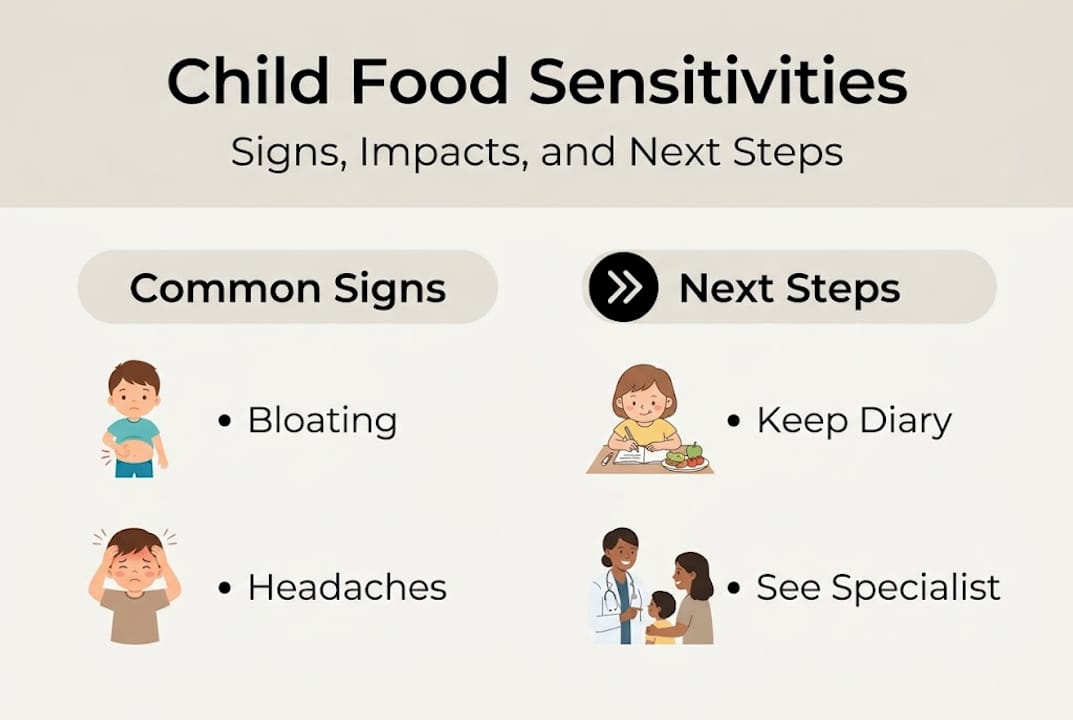
As paediatric gut specialists note, distinguishing between allergy and intolerance in children is essential for appropriate management and preventing unnecessary dietary restriction.
Why food sensitivities are often missed or misdiagnosed
Despite their real effects, food sensitivities often go undetected or are mistaken for other issues.
The main reason is timing. Because symptoms appear hours after eating, it is genuinely hard to connect them to a specific food. A child who eats cheese at lunch and wakes with a headache the next morning does not obviously link the two. Neither does their parent.
Many children with intolerance symptoms are initially dismissed as fussy eaters or given unnecessary dietary restrictions without proper specialist oversight. This is a real problem.
Here is how misdiagnosis typically unfolds:
- Symptom confusion: Parents attribute symptoms to a virus, growth spurts, or general childhood behaviour.
- Self-diagnosis: A parent removes a food group based on a hunch, sometimes correctly, often not.
- Inappropriate testing: Families turn to unvalidated commercial tests that lack clinical evidence.
- Unnecessary restriction: Foods are cut without evidence, risking nutritional gaps and food anxiety in children.
The GP route is the right starting point. NHS guidance on food allergies outlines clear clinical pathways for investigating food reactions, including referral to a paediatric dietitian when needed.
It is worth knowing that NHS and NICE guidance specifically advises against using commercial hair testing or IgG blood tests for diagnosing food intolerances. These tests are not clinically validated for this purpose.
For testing for intolerances in UK children, the evidence base matters. Understanding common UK food triggers is a helpful first step, but professional input is essential before making significant dietary changes.
Pro Tip: Before you remove any food from your child’s diet, keep a detailed food and symptom diary for at least two weeks. Note what they eat, when symptoms appear, and how long they last. This gives your GP or dietitian genuinely useful information to work with.
How to identify and manage food sensitivities: evidence and options
The right diagnosis and management approach can help your child thrive. Here is how to approach it safely and effectively.
The most reliable path starts with clinical history and a symptom diary, followed by a supervised elimination diet. This means removing the suspected food under professional guidance, then reintroducing it in a controlled way to confirm the trigger. NHS and NICE guidance supports this approach as the gold standard for diagnosing food intolerances in children under 19.
For confirmed allergies, skin prick tests and specific IgE blood tests are the validated clinical tools. These must be carried out by a qualified specialist.
Symptoms worth recording before your GP appointment:
- Exact foods eaten and portion sizes
- Time of eating and time symptoms appeared
- Type and duration of symptoms
- Sleep quality and mood changes
- Any pattern across days or weeks
Here is a clear comparison of evidence-based approaches versus unvalidated commercial options:
| Approach | Evidence base | Recommended for children |
|---|---|---|
| Symptom diary plus elimination diet | Strong, NHS and NICE supported | Yes, with dietitian guidance |
| Skin prick test (for allergies) | Strong, clinically validated | Yes, via specialist referral |
| Specific IgE blood test (for allergies) | Strong, clinically validated | Yes, via GP or specialist |
| Hair testing or bioresonance | No clinical validation | Not recommended |
| IgG antibody blood test | Not validated for intolerance | Not recommended |
Emerging gut microbiota research suggests that the balance of bacteria in a child’s gut may play a role in how they respond to certain foods. This is a promising area, but it is not yet standard practice. For now, the elimination diet remains the most reliable tool.
For a full overview of child food intolerance testing options and UK allergy diagnosis standards, it is worth reading up before your first GP visit. You can also review the allergy testing factsheet from Anaphylaxis UK for a clear summary of what is and is not validated.
Pro Tip: Never make major dietary changes for your child without professional guidance. Cutting out dairy or gluten without a plan can lead to real nutritional gaps, especially in growing children.
Our perspective: what most parents miss about childhood food sensitivities
So what is our honest take, after reviewing the latest evidence and seeing many families through this process?
The biggest mistake we see is the rush to find a quick answer. It is completely understandable. Watching your child struggle is distressing, and the promise of a simple test that identifies every trigger is appealing. But unvalidated commercial tests can lead families down the wrong path, causing unnecessary food restriction and real anxiety around eating.
The families who get the best outcomes are the ones who stay patient, keep clear records, and work persistently with their GP or dietitian. A balanced, varied diet that supports gut health, with gradual, supervised dietary adjustments, consistently outperforms any shortcut.
Emerging science on the gut microbiome is genuinely exciting, and it should shape how we think about daily wellbeing in intolerant children in the years ahead. But right now, the evidence still points to the same fundamentals: good food, professional support, and careful observation.
Pro Tip: Look for patterns across days and weeks, not reactions to single meals. One-off symptoms are rarely the full picture.
Discover trusted food intolerance support for your family
Ready for evidence-based support on your family’s food journey? Here is where to start.
If your child has been struggling with unexplained symptoms and you want clearer answers, exploring your options is a positive and empowering step. At UK Food Intolerance, we offer non-invasive, UK-based testing that can help you build a clearer picture of potential triggers.

Our tests are simple to use at home, require only a small hair sample, and return detailed digital reports within 48 to 72 hours. Whether you want to explore the full range of intolerance tests or start by understanding the symptoms of intolerance, we are here to help. Browse our UK food intolerance tests and take the first step towards helping your child feel their best.
Frequently asked questions
What are the most common signs my child might have a food sensitivity?
Typical signs include recurring bloating, diarrhoea, tiredness, rashes, or headaches that persist after eating certain foods. Common intolerance triggers in UK children include lactose, gluten, histamine, and sulphites.
How quickly do food sensitivity symptoms appear in children?
Symptoms usually appear hours after eating and can last into the next day, unlike allergies which are often immediate and more severe.
Should I try a home test kit or see my GP for food sensitivities?
Start by keeping a detailed food and symptom diary, then see your GP for advice. NHS and NICE guidance advises against unvalidated commercial tests such as hair or bioresonance testing for intolerances.
Can food sensitivities lead to serious health issues if ignored?
Yes. Untreated food intolerances can cause fatigue, poor growth, nutrient deficiencies, and emotional or behavioural changes in children over time.










Leave a Reply
Want to join the discussion?Feel free to contribute!