

If chocolate leaves you bloated, headachy, tired or itchy, you are not imagining it, and you are not alone. Chocolate sensitivity usually shows up as digestive upset, headaches, tiredness or skin flare-ups that start a few hours after eating. Often the trigger is not cocoa itself but milk, nuts, caffeine, sweeteners or another ingredient in the bar. This guide helps you spot the pattern, tell it apart from an allergy, and take clear next steps.
TL;DR
- Chocolate intolerance symptoms are usually digestive (bloating, tummy pain, diarrhoea), plus headache, tiredness or rashes, and they tend to appear a few hours after eating.
- A true cocoa allergy is rare. Milk, nuts, soy or wheat in the product are more common culprits.
- Swelling of the lips or throat, breathing difficulty or fainting needs a 999 call, not a diary.
- A food and symptoms diary plus a structured elimination and reintroduction is the established way to find your trigger.
- Our at-home hair test is designed to screen for possible triggers so your elimination diet has a clear starting point.
Table of Contents
- What chocolate sensitivity can feel like
- When do symptoms start?
- Chocolate intolerance or chocolate allergy?
- Chocolate, headaches and migraine
- Other ingredients that can cause the symptoms
- When to get urgent help
- How to find your chocolate trigger
- Where an at-home test fits
- Ready to find your triggers?
- FAQ
- Sources
What chocolate sensitivity can feel like
The NHS lists the common food intolerance symptoms as diarrhoea, bloating, wind, tummy pain, headache, feeling tired or exhausted, feeling sick, constipation, joint pain and rashes. Chocolate sensitivity follows the same pattern. Most people notice one or two of these, not all of them.
Digestive symptoms
These are the most common. You might notice:
- Bloating and wind within hours of a bar, a hot chocolate or a dessert
- Tummy cramps or a heavy, uncomfortable feeling
- Loose stools, or the opposite, constipation
- Nausea after a larger portion
For people with IBS, Healthline notes that the fat and milk content, caffeine or sweeteners in chocolate may be what sets symptoms off.
Headaches and tiredness
Headache is one of the most reported complaints. Some people also describe fatigue, a foggy afternoon or feeling run down after chocolate. Healthline’s overview lists digestive symptoms, fatigue, headache and inflammatory symptoms such as joint pain or swelling as signs of sensitivity. We cover the headache question in more detail below, because it is more complicated than it looks.
Skin and other signs
Some people notice flushing, an itchy rash or an eczema flare after chocolate. Skin symptoms can have several causes, so a pattern over several weeks tells you far more than one bad evening.

When do symptoms start?
The NHS says intolerance symptoms usually appear a few hours after eating the food, and can last for a few hours or days. That delay is why chocolate is so hard to pin down. By the time you feel unwell, you may have eaten three other things.
Some reactions are faster. University Hospitals Plymouth NHS Trust explains that sensitivity to vasoactive amines, a group of natural chemicals found in some foods, can cause symptoms within 30 minutes of a meal, but they can also be delayed. The trust notes the reason for this sensitivity is not fully understood, and that it is described as a chemical sensitivity rather than a food allergy.
Allergy UK adds that intolerance can take time to work out and, although not life threatening, can make you feel extremely unwell and affect work and social life. If that sounds familiar, wanting answers is completely reasonable.
Chocolate intolerance or chocolate allergy?
The difference matters because the response is different.
| Intolerance or sensitivity | Allergy | |
|---|---|---|
| Immune system involved | No IgE antibodies | Yes |
| Typical timing | Often a few hours later | IgE reactions generally within 30 minutes; non-IgE can be over 2 hours |
| Typical symptoms | Gut-related, headache, tiredness | Hives, swelling, wheeze, vomiting, in some cases anaphylaxis |
| Amount that matters | Often depends on how much you eat | Even small amounts can trigger a reaction |
The BSACI explains that food allergy involves the immune system, while intolerance symptoms are usually gut-related and occur when intake goes beyond your personal tolerance level, so complete avoidance is not usually required. That is useful news: many people with chocolate intolerance find a smaller portion, or a different type of chocolate, works for them.
The NHS describes food allergy symptoms as including itchy skin or hives, swelling of the lips, face or eyes, coughing, wheezing or breathlessness, sneezing, feeling dizzy, feeling sick, tummy pain and diarrhoea.
Is a cocoa allergy common?
No. Cocoa Runners reports that confirmed cocoa allergy appears to be very rare, is mostly described in case reports, and is not on the UK list of 14 mandatory allergens. Healthline agrees that in most cases something else in the food is the actual cause, such as milk, wheat, peanuts, other nuts or soy.
If you suspect a true allergy, your GP can refer you to an allergy specialist. The BSACI says food allergies are best diagnosed by a specialist using tests that detect IgE.
Chocolate, headaches and migraine
“Chocolate gives me a headache” is one of the most common things people say. The evidence is more nuanced than you might expect, and it is worth knowing.
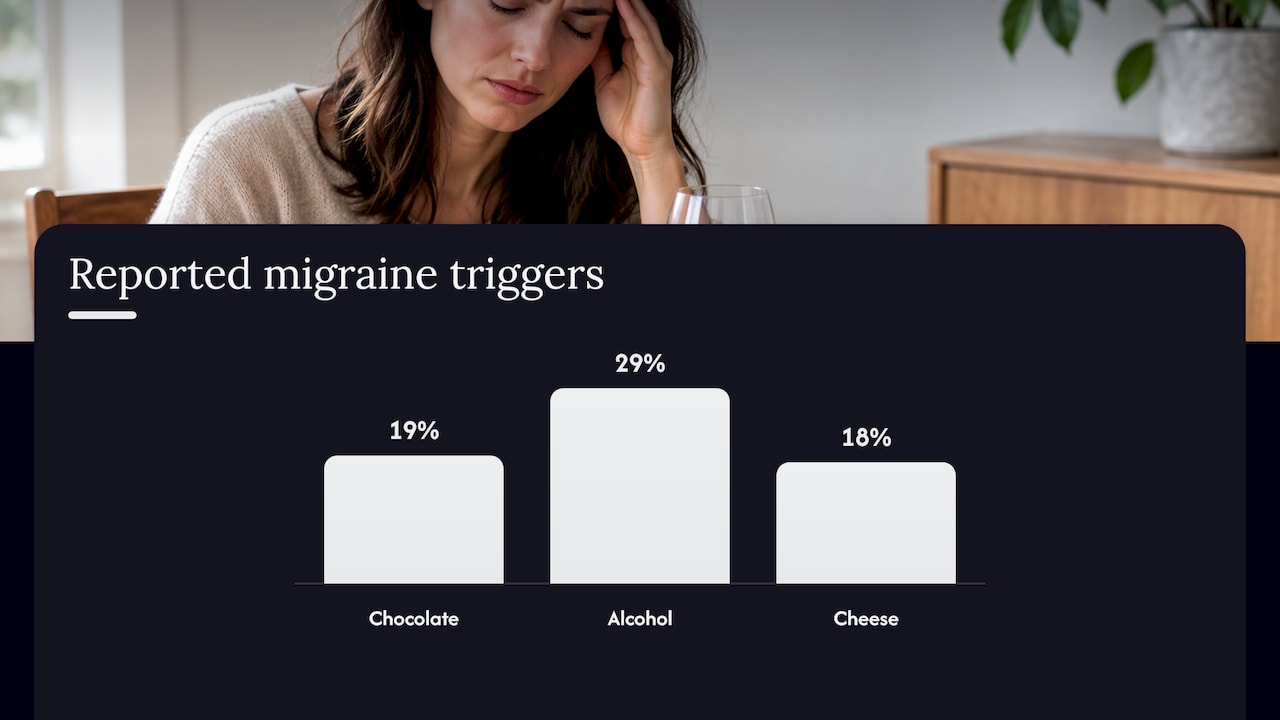
The National Migraine Centre reports that 19% of people with migraine in one study named chocolate as a trigger, compared with 29% for alcohol and 18% for cheese. It also points out that the early warning phase of a migraine can bring on cravings for chocolate, so the chocolate may seem like the cause when it was actually a symptom.
Research points the same way:
- A 1991 double-blind study of people who believed chocolate set off their attacks found 5 of 12 had a typical migraine after chocolate, and none of 8 on placebo did. The median time to onset was 22 hours, which is a long gap to connect to a snack.
- A 2020 review of 23 studies found chocolate was reported as a trigger by between 1.3% and 33% of participants, and concluded there was not enough evidence to call it a trigger. It also noted that chocolate may act as a trigger and a protective factor.
What does this mean for you? Chocolate may be a trigger for some people, but it is not the same for everyone, and timing is tricky. If you get frequent or severe headaches, speak to your GP. Keeping a diary that records sleep, stress, hormones, hydration, caffeine and meals alongside chocolate gives you a far clearer picture.
Other ingredients that can cause the symptoms
A bar of chocolate is rarely just cocoa. When symptoms appear, look at the whole label and the whole meal:
- Milk and lactose: milk chocolate, hot chocolate and many desserts contain dairy.
- Nuts, soy and wheat: common in filled chocolates, spreads and biscuits.
- Caffeine: Healthline notes that in sensitive people caffeine may cause anxiety, headaches or changes in blood pressure.
- Sweeteners and fat: these can bother some people with IBS.
- Natural amines: the Plymouth NHS Trust guidance above covers vasoactive amines, a group of chemicals found in some foods.
This is why a pattern across different products helps. If dark chocolate with no milk is fine but milk chocolate is not, dairy is a strong suspect. If every form of chocolate bothers you, cocoa itself or its natural compounds come into focus.
When to get urgent help
Most chocolate sensitivity is uncomfortable rather than dangerous. Some symptoms are different. The NHS says to call 999 for any of the following, as they can signal a serious allergic reaction:
- Sudden swelling of the lips, mouth, throat or tongue
- Very fast or difficult breathing
- Tightness in the throat or difficulty swallowing
- Blue, grey or pale skin, tongue or lips
- Sudden confusion, drowsiness or dizziness
- Fainting and not waking up, or a limp, unresponsive child
Do not wait for a diary entry. Get emergency help straight away if you see these signs in yourself or your child.
How to find your chocolate trigger
The reliable way to work out a trigger is the same whether you are curious about chocolate or any other food. The BSACI says that for food reactions that are not IgE-mediated, diagnosis is made through elimination and reintroduction, ideally with specialist support. Allergy UK suggests a trial elimination, usually for 2 to 6 weeks, and a food and symptoms diary to build up patterns.
Here is a simple way to start:
- Keep a diary for two weeks. Write down everything you eat and drink, the time, and any symptoms with the time they began.
- Read labels. Note milk, nuts, soy, wheat, caffeine and sweeteners in any chocolate product.
- Remove chocolate and the likely partner ingredients. Do this for the period a healthcare professional suggests, rather than cutting out many foods at once.
- Reintroduce one item at a time. Try plain dark chocolate first, then milk chocolate, so you can see which one matters.
- Compare notes. Reactions that repeat each time are worth discussing with your GP or a registered dietitian.
You can also use our elimination diet checklist to keep the process organised, and our guide on how to tell if you have an intolerance for the wider picture. If you are weighing up allergy against intolerance, this comparison lays out the differences.
A note on restricting foods
Cutting out too much, for too long, can leave your diet short of nutrients. Focus on removing only what your diary points to, and ask a dietitian for help if you plan to exclude whole food groups such as dairy. Children should have any dietary changes guided by their GP or a dietitian.
Where an at-home test fits
Many readers searching for chocolate intolerance are really asking: where do I begin? When you eat dozens of ingredients a week, a diary alone can feel overwhelming. That is where our testing is designed to help.
Our tests use bioresonance technology on a small hair sample you collect at home. The sample goes to a UK-based laboratory and you receive a digital report in 48 to 72 hours. The report is designed to flag foods and environmental items your body may be sensitive to, so you have a focused list to take into your elimination diet. We are open about what it is: a screening tool for possible intolerances, which is best used alongside a diary and reintroduction. It is not a substitute for an allergy diagnosis, and if you have had symptoms like swelling or breathing difficulty, you should see your GP first.
You can read more in our guides to at-home food intolerance tests in the UK and how a test can match your body with the right diet. Parents can see our steps for testing children at home.
Our perspective
Chocolate is a good example of why food sensitivity feels so confusing. It is rarely one ingredient. A bar can contain cocoa, milk, soy, nuts, sweeteners and caffeine, and a reaction can arrive hours later. People tell us they have been guessing for months, and that is tiring in itself.
We built our service to give you somewhere to start. With a panel of up to 1,450 items, a UK laboratory and results in 48 to 72 hours, our report is designed to point you toward the foods and ingredients worth looking at first. That means your elimination diet can be targeted, rather than a long list of foods you cut at random.
We are also clear about where our test sits. It is best suited to intolerance screening, and it works best when you pair it with a food diary and careful reintroduction. If you have severe symptoms, see your GP. For ongoing, everyday discomfort, a clear list can bring real relief and a sense of control.
Rob
Ready to find your triggers?
If you want a clear, focused starting point for your elimination diet, our Ultimate Plus Intolerance Test is available for £140.99 one-off per person. You collect a hair sample at home, post it to our UK laboratory and receive your digital report within 48 to 72 hours. See the Ultimate Plus Intolerance Test.

Prefer a smaller panel? Our Core test covers 500 items, and you can compare options on our tests page. Not sure which fits? Our Core vs Ultimate guide explains the difference.
FAQ
What are the most common chocolate sensitivity symptoms?
The most common are bloating, tummy pain, wind, diarrhoea or constipation, headache and tiredness. Some people also notice rashes or flushing. Symptoms usually appear a few hours after eating and can last a few hours or days.
Can chocolate cause migraines?
Some people with migraine report chocolate as a trigger, but research is mixed. The National Migraine Centre notes that cravings in the early phase of a migraine can make chocolate look like the cause. A diary that records sleep, stress and other foods gives a clearer answer, and your GP can help with frequent attacks.
Is chocolate intolerance the same as a chocolate allergy?
No. An allergy involves the immune system and can cause hives, swelling or breathing problems, sometimes within minutes. Intolerance does not involve IgE antibodies and tends to cause gut-related symptoms and tiredness. Allergy is diagnosed by a specialist, and breathing difficulty or throat swelling needs a 999 call.
Could it be something in the chocolate rather than the cocoa?
Very often, yes. Milk, nuts, soy, wheat, caffeine and sweeteners are all common culprits. Comparing how you react to plain dark chocolate, milk chocolate and filled chocolates is a practical way to narrow it down.
Can I test for chocolate sensitivity at home?
Yes. Our at-home hair test screens for possible intolerances across up to 1,450 items, with results in 48 to 72 hours. We recommend using the report as a guide for an elimination and reintroduction diet, alongside a food diary.
Sources
- Food intolerance – NHS
- Food allergy – NHS
- Food Allergy and Food Intolerance – BSACI
- Allergy vs Intolerance – Allergy UK
- Sensitivity to histamines and other vasoactive amines – University Hospitals Plymouth NHS Trust
- Chocolate and Allergies – Cocoa Runners
- Is It Chocolate Allergy or Sensitivity? – Healthline
- Migraine and food – National Migraine Centre
- Chocolate is a Migraine-Provoking Agent – Cephalalgia, 1991
- To Eat or Not to Eat: relationship between food and migraine – Nutrients, 2020










Leave a Reply
Want to join the discussion?Feel free to contribute!