

TL;DR:
- Many in the UK believe they have food allergies, but most reactions are actually intolerances.
- Allergies involve the immune system and can be life-threatening, while intolerances are digestive.
- Proper diagnosis, including clinical tests and professional guidance, is essential for safe management.
Many people in the UK assume that any unpleasant reaction to food must be an allergy. In reality, up to 24% of Britons self-report some form of food sensitivity, yet a significant proportion of those reactions are intolerances rather than true allergies. The distinction is not just academic. Getting it wrong can mean years of unnecessary food avoidance, missed diagnoses, or even putting yourself at risk by dismissing a genuine allergy as a minor stomach upset. This article explains exactly what separates the two conditions, how to recognise the symptoms, and what steps you can take to get real answers.
Table of Contents
- What is the difference between intolerance and allergy?
- How common are allergies and intolerances in the UK?
- Recognising symptoms: allergy vs intolerance
- Getting a diagnosis: tests and steps you can take
- Why most people get it wrong, and what you should do instead
- Take control of your wellbeing with tailored testing and support
- Frequently asked questions
Key Takeaways
| Point | Details |
|---|---|
| Allergy and intolerance differ | Allergy involves the immune system and can be life-threatening, while intolerance affects digestion and is rarely dangerous. |
| Diagnosis matters | Proper diagnosis with professional input is crucial for effective symptom management and a healthy diet. |
| Symptoms can be subtle | Intolerance symptoms are often gradual and dose-related, unlike the immediate reactions of allergy. |
| Testing needs evidence | Validated non-invasive tests help for certain intolerances, but not all home kits are reliable. |
| Personalised approach pays off | Tracking symptoms and choosing the right test with guidance leads to the best health outcomes. |
What is the difference between intolerance and allergy?
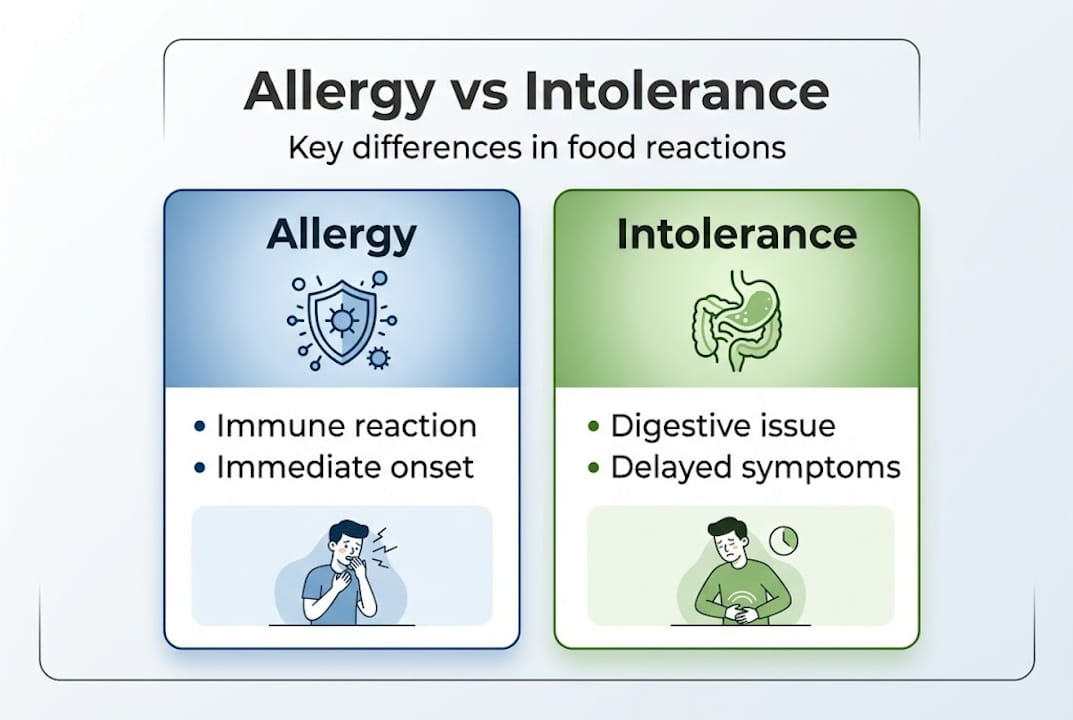
The simplest way to understand the difference is this: an allergy involves your immune system, while an intolerance usually involves your digestive system. Both can make you feel unwell, but the mechanisms, timing, and risks are very different.
Food allergy explained
A food allergy occurs when your immune system mistakenly identifies a harmless food protein as a threat. It then produces antibodies called IgE (immunoglobulin E) to fight it. The next time you eat that food, those antibodies trigger a rapid release of chemicals like histamine, causing symptoms that can appear within minutes. According to BSACI guidance, food allergy involves the immune system overreacting to food proteins, producing IgE antibodies leading to rapid symptoms such as hives, swelling, vomiting, or in severe cases, anaphylaxis. Non-IgE mediated allergies do exist and can cause more delayed symptoms, but they still involve an immune response.

Common allergy triggers include peanuts, tree nuts, shellfish, fish, milk, eggs, wheat, and soya. Even a tiny amount of the trigger food can cause a serious reaction. This is what makes allergies potentially life-threatening.
Food intolerance explained
Food intolerance works differently. The NHS explains that food intolerance is non-immune mediated, typically arising from digestive issues such as enzyme deficiencies. Lactose intolerance is the classic example: the body does not produce enough lactase enzyme to break down lactose (the sugar in milk), so undigested lactose ferments in the gut, causing bloating, gas, and diarrhoea. Crucially, intolerance symptoms are usually dose-dependent. You may be able to tolerate a small amount of the trigger food without any reaction at all.
Side-by-side comparison
| Feature | Food allergy | Food intolerance |
|---|---|---|
| Mechanism | Immune system (IgE or non-IgE) | Digestive or metabolic |
| Onset of symptoms | Minutes to 2 hours (IgE); hours to days (non-IgE) | Usually hours to days |
| Severity | Can be life-threatening | Rarely dangerous |
| Dose-dependent? | No; even trace amounts can trigger reaction | Yes; larger amounts cause worse symptoms |
| Common triggers | Peanuts, shellfish, milk, eggs | Dairy, gluten, FODMAPs, histamine |
| Treatment | Strict avoidance, carry adrenaline | Reduction or elimination; often manageable |
Key differences at a glance:
- Allergy reactions can be severe and require emergency treatment
- Intolerance symptoms, while uncomfortable, are rarely dangerous
- Allergy requires strict avoidance; intolerance may allow small amounts
- Allergy is confirmed via medical tests; intolerance via elimination diets or breath tests
Understanding these fundamental differences is the first and most important step in managing your health effectively.
How common are allergies and intolerances in the UK?
Having defined both concepts, let’s consider how widespread allergies and intolerances truly are across the UK. The numbers might surprise you.
The scale of food reactions in the UK
Ipsos research shows that up to 20% of the UK population alter their diet because they believe they have a food reaction, with self-reported allergies or intolerances affecting around 24% of Britons. However, medically confirmed allergies are considerably less common, affecting around 1 to 2% of adults. The gap between perceived and confirmed reactions is significant, and it highlights just how much confusion exists.
Statistic to note: Around 70% of people with IBS (irritable bowel syndrome) report that food triggers their symptoms, which makes distinguishing IBS-related food sensitivity from true intolerance or allergy especially challenging.
Intolerance rates vary considerably by background. Lactose intolerance, for example, affects around 5% of white UK adults but can affect up to 75% of non-white adults. This is a striking difference, and it is worth keeping in mind if you come from a South Asian, East Asian, African, or Middle Eastern background and have never felt comfortable with dairy.
You can read more about UK food intolerance trends to understand how these figures are shifting and which foods are generating the most concern right now.
Common trigger foods in the UK
Understanding the most frequent triggers can help you narrow down what might be affecting you. Here are the most commonly reported culprits:
- Dairy: Lactose or dairy protein (casein) can trigger intolerance or allergy
- Gluten: Found in wheat, barley, and rye; linked to coeliac disease and non-coeliac gluten sensitivity
- Eggs: A common childhood allergy that many outgrow
- Nuts: Both peanuts (a legume) and tree nuts such as almonds, cashews, and walnuts
- Shellfish and fish: Often cause IgE-mediated allergies in adults
- Soya: Widely used in processed foods, making avoidance tricky
- FODMAPs: A group of fermentable carbohydrates that commonly trigger IBS and gut symptoms
It is also worth knowing that NHS Inform notes some complex edge cases exist. Oral allergy syndrome (OAS), for instance, occurs when the immune system cross-reacts between pollen proteins and similar proteins in certain fruits or vegetables. This can mimic intolerance but is actually an immune response. You can explore a full list of common food triggers to see whether your symptoms match any of these patterns.
Why self-diagnosis falls short
The scale of self-reported reactions tells us that many people are trying to manage their health without professional support. That is understandable, but it carries risk. You might be avoiding foods unnecessarily, or you might be missing a serious condition that needs medical attention.
Recognising symptoms: allergy vs intolerance
Once you know these conditions are common, the next step is recognising the key symptoms to look out for.
Allergy symptoms
BSACI confirms that food allergy involves rapid symptoms like hives, vomiting, swelling, or anaphylaxis, though non-IgE allergy can be delayed. Here is what to watch for:
- Hives or urticaria: Red, itchy welts appearing on the skin within minutes of eating
- Swelling (angioedema): Puffiness around the lips, tongue, throat, or eyes
- Vomiting or nausea: Rapid onset, often within an hour
- Difficulty breathing or wheezing: A sign the airways may be affected
- Anaphylaxis: A severe, life-threatening reaction requiring immediate use of an adrenaline auto-injector (such as an EpiPen)
If you experience any of these symptoms after eating, seek medical help immediately. Do not wait to see if symptoms improve on their own.
Intolerance symptoms
According to the NHS, food intolerance causes gut symptoms such as bloating, gas, and diarrhoea, and these are often dose-dependent. Common food intolerance symptoms include:
- Bloating: A feeling of fullness or tightness in the abdomen, often hours after eating
- Flatulence and wind: Caused by fermentation of undigested foods in the gut
- Diarrhoea or loose stools: Especially after consuming dairy, high-FODMAP foods, or alcohol
- Stomach cramps or discomfort: Often linked to gut motility changes
- Fatigue or brain fog: Particularly with conditions like non-coeliac gluten sensitivity
- Skin reactions: Conditions such as eczema can sometimes worsen with specific food triggers
For a closer look at one of the most reported symptoms, our bloating information page breaks down the likely causes and what to do about them.
“Keeping a food and symptom diary for at least two weeks is one of the most powerful self-assessment tools available. It costs nothing and gives your GP or dietitian genuinely useful information.”
Pro Tip: Note the time you ate, what you ate, portion sizes, and when symptoms appeared. Even small details like stress levels or alcohol consumption can reveal patterns you would not otherwise notice.
Getting a diagnosis: tests and steps you can take
Recognising your own symptoms is a good start, but formal diagnosis is essential for managing your health safely.
The medical route for allergy
Patient.info explains that allergy diagnosis uses an allergy-focused history, skin prick tests, and specific IgE blood tests for IgE-mediated reactions. Non-IgE mediated allergies are typically investigated through elimination diets lasting two to six weeks, followed by a supervised food reintroduction under specialist care.
Here is what the typical diagnostic pathway looks like:
- Visit your GP: Describe your symptoms, their timing, and what you ate. A detailed history is the foundation of all allergy diagnosis.
- Skin prick test: A tiny amount of the suspected allergen is placed on your forearm and a lancet creates a small prick. A raised bump confirms an IgE-mediated reaction.
- Specific IgE blood test: Measures the level of IgE antibodies to specific foods in your blood.
- Referral to an allergy specialist: If tests are inconclusive or symptoms are complex.
- Oral food challenge: Conducted in a clinical setting where you eat increasing amounts of the suspected food under close supervision.
The diagnostic route for intolerance
Medscape UK outlines that intolerance diagnosis relies on symptom diaries, supervised elimination diets, and reintroduction, with validated non-invasive tests such as hydrogen and methane breath tests available for specific intolerances like lactose or fructose. There are currently no clinically validated home tests for general food intolerances.
The practical steps for intolerance investigation include:
- Record a symptom diary: At least two weeks of detailed notes before seeing your GP
- Supervised elimination diet: Remove the suspected food for a set period, typically two to six weeks
- Systematic reintroduction: Reintroduce the food in stages to confirm whether symptoms return
- Breath testing: If lactose or fructose malabsorption is suspected, a lactose intolerance test measures hydrogen gas produced when unabsorbed sugars ferment in the gut
- Dietitian support: Especially important if you are removing multiple food groups, to avoid nutritional gaps
Pro Tip: Never cut out entire food groups without professional support. Removing dairy, gluten, and eggs simultaneously, for example, makes it impossible to pinpoint the actual trigger and can leave you short of important nutrients.
Why most people get it wrong, and what you should do instead
After exploring the clinical approach, it is time to address why misinformation still prevails and how to cut through the confusion.
Here is the uncomfortable truth: Ipsos research shows that around 39% of people who believe they have an intolerance have arrived at that conclusion through personal research or home testing kits, rather than clinical assessment. That is a lot of people restricting their diets based on unconfirmed information. Unnecessary food avoidance can lead to nutritional deficiencies, disordered eating patterns, and in some cases, a delayed diagnosis of something more serious.
At the same time, dismissing a genuine allergy as “just an intolerance” because symptoms seem mild can be genuinely dangerous. Non-IgE mediated allergies, for instance, can look a lot like intolerance on the surface, with delayed gut symptoms that feel manageable. But the underlying mechanism is still immune-mediated, and continued exposure can carry cumulative risk.
The practical wisdom here is straightforward. Use symptom diaries and elimination diets as tools, not as final answers. As the NHS recommends, start with your GP for an allergy-focused history to distinguish allergy from intolerance, and use supervised elimination to avoid nutritional risks. That one conversation can save you months of guesswork.
When it comes to at-home sensitivity tools, use them as a starting point for conversations with healthcare professionals, not as a replacement for them. Exploring resources like intolerance testing and wellbeing can help you understand what information is available and how to use it wisely alongside professional advice.
Take control of your wellbeing with tailored testing and support
You now understand the crucial differences between allergy and intolerance, the importance of professional guidance, and what a proper diagnostic pathway looks like. The next step is finding practical tools to support your journey.

At UK Food Intolerance, we offer non-invasive at-home testing using bio-resonance technology, analysed at our UK-based laboratory. Our Ultimate Single Intolerance Test screens over 1,100 food and environmental items, while the Core Single Intolerance Test covers 500 items at a more accessible price point. You simply collect a small hair sample at home, send it to us, and receive a detailed digital report within 48 to 72 hours. Our reports are designed to support elimination diets and give you a clear, actionable starting point for discussing your symptoms with a healthcare professional.
Frequently asked questions
How can I tell if my reaction is an allergy or an intolerance?
Allergy symptoms tend to be immediate and severe, including hives, swelling, vomiting, or anaphylaxis, while intolerance symptoms are usually delayed, affect the gut, and are dose-dependent. If you experience rapid or severe symptoms after eating, seek medical advice promptly.
Are there any reliable home tests for food intolerance?
Hydrogen breath tests are clinically validated for specific conditions like lactose or fructose malabsorption, but there are currently no clinically validated home tests for general food intolerances. Sensitivity testing tools can help guide conversations with healthcare professionals.
Is it safe to cut out potential trigger foods on my own?
Major dietary changes should be supervised by a healthcare professional or dietitian to avoid nutritional deficiencies, as the NHS advises, particularly for children or those already following restricted diets. Removing multiple food groups at once also makes it harder to identify the true trigger.
Can intolerance turn into an allergy over time?
No. Intolerance and allergy are entirely separate biological mechanisms, and one does not lead to or develop into the other. They may co-exist, but they are distinct conditions requiring different management approaches.
Do all intolerances require complete avoidance of the food?
No. Most intolerances are dose-related, meaning complete avoidance is not always needed and you may tolerate small amounts without symptoms. This is quite different from a true allergy, where even trace amounts can sometimes trigger a serious reaction.









Leave a Reply
Want to join the discussion?Feel free to contribute!