
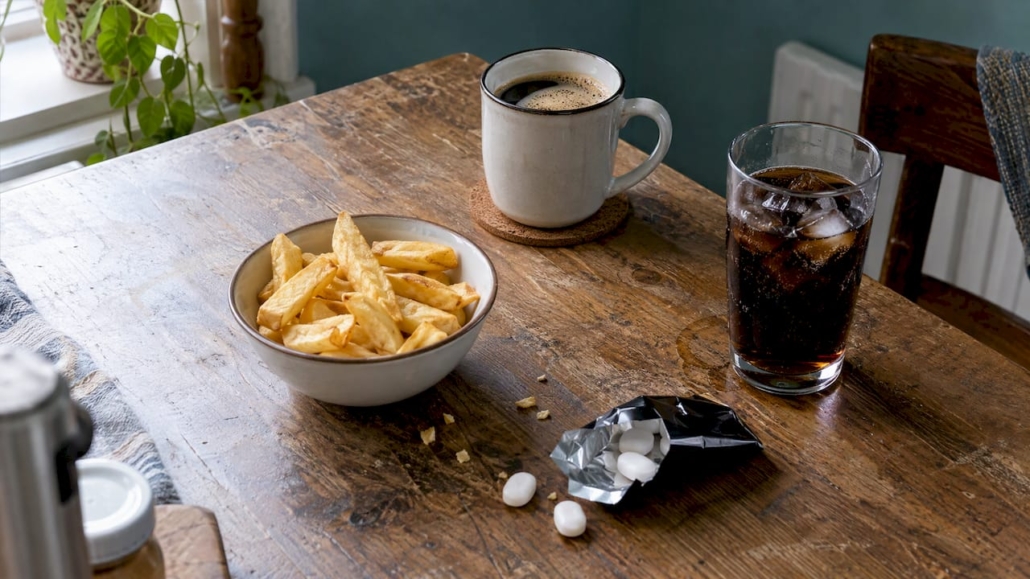
There is no single list of IBS flare foods that fits everyone. UK guidance points to a handful of common culprits: fatty, spicy and processed foods, high-fibre foods, gas-producing vegetables and pulses, caffeine, fizzy drinks, alcohol and sugar-free sweeteners. Beyond that, triggers are personal. The reliable way to find yours is to track what you eat, adjust one thing at a time, and get dietitian support if you plan to cut out whole groups of foods.
Below, we cover the usual suspects, what is often easier on the gut, how to work out your own pattern, and how an elimination diet fits in.
TL;DR
- Common flare foods in UK guidance: fatty, spicy and processed foods, high-fibre foods, beans and pulses, some vegetables, caffeine, fizzy drinks, alcohol and sorbitol-type sweeteners.
- How you eat matters too: regular meals, smaller portions, no skipping meals and no rushing.
- Triggers differ from person to person, so a food and symptom diary is the best first step.
- A low-FODMAP style elimination diet is usually short-term and followed by reintroduction, ideally with a dietitian.
- See your GP before making big changes, and always for new or worrying symptoms.
Table of Contents
- The foods most often linked to IBS flares
- A quick reference: common triggers and what to try
- What tends to be easier during a flare
- How to find your own triggers
- Elimination diets and the low-FODMAP approach
- Our perspective
- Ready to get a clearer starting point?
- FAQ
- Sources
The foods most often linked to IBS flares
IBS affects each person differently, so think of this as a shortlist of things worth watching, not a ban list. The advice below comes from UK health bodies.
Fatty, spicy and processed foods
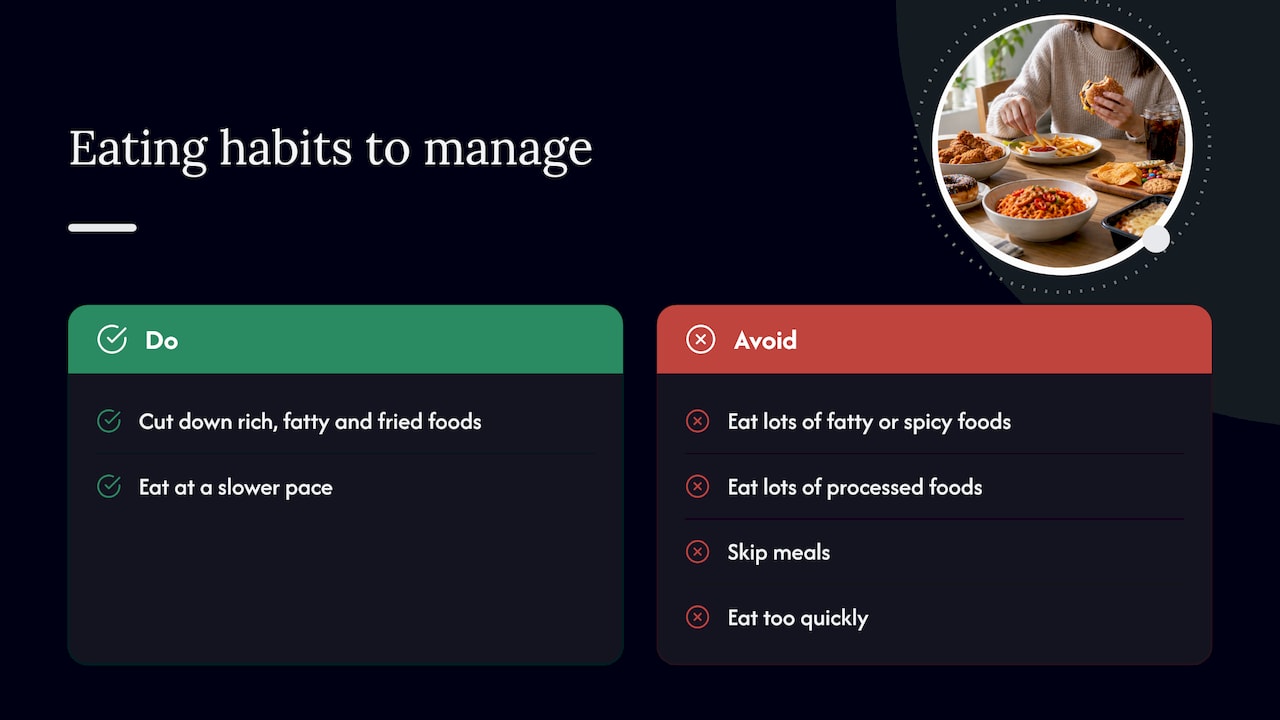
The NHS advises against eating lots of fatty, spicy or processed foods, and against skipping meals or eating too quickly. The British Dietetic Association (BDA) adds that cutting down rich, fatty and fried foods can help. That includes chips, fast food, ready meals, some snack foods and fatty meats.
High-fibre foods and resistant starch
Fibre is usually seen as a good thing, but in IBS it can backfire. NICE advises people to limit high-fibre foods and to reduce resistant starch, which is often found in processed or re-cooked foods. For people with diarrhoea, NICE also advises avoiding sorbitol.
Gas-producing foods
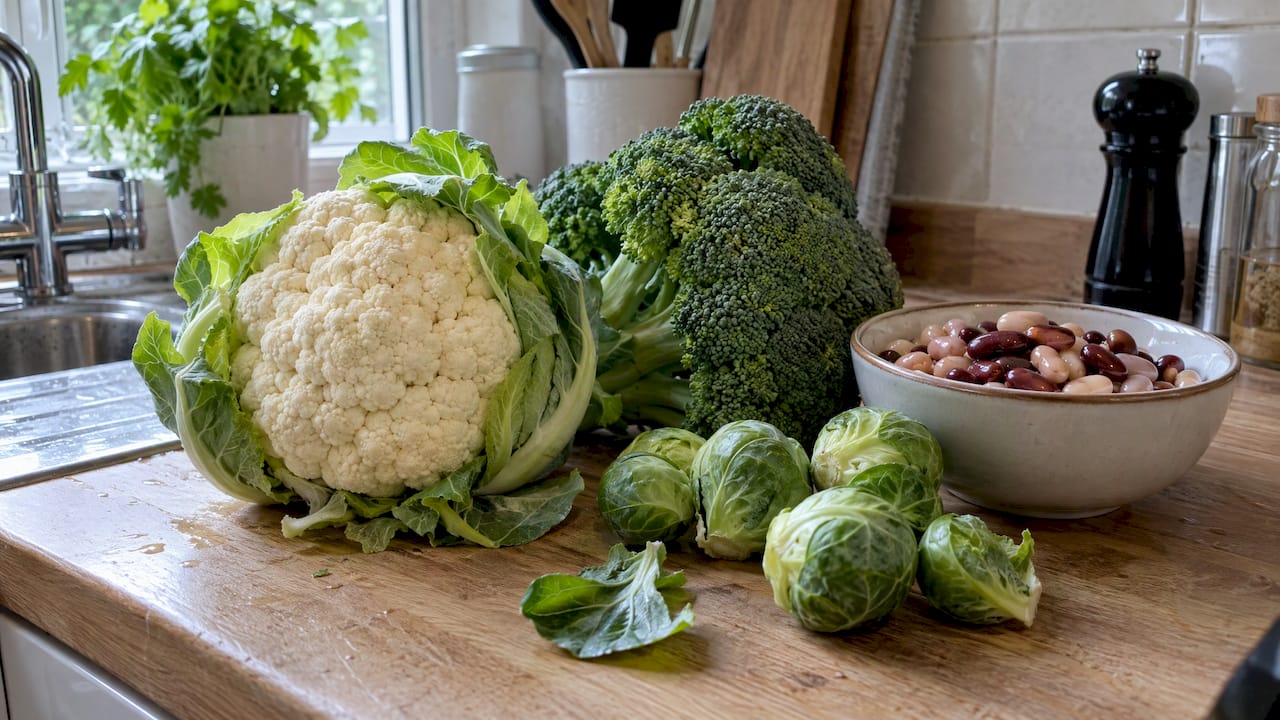
If bloating and wind are your main problem, the BDA suggests limiting beans and pulses and certain vegetables such as Brussels sprouts and cauliflower. The NHS also lists cabbage, broccoli, onions and beans among foods that are hard to digest.
Caffeine, fizzy drinks and alcohol
NICE suggests limiting tea and coffee to three cups a day and reducing alcohol and fizzy drinks. The BDA gives similar advice for diarrhoea-type IBS, with caffeine kept to three drinks a day.
Sugar-free sweets, gum and mints
Sorbitol, mannitol and xylitol are common in sugar-free sweets, mints, gum and some drinks. The BDA advises avoiding them if you have diarrhoea, and also suggests dropping sugar-free mints and gum if bloating is the issue. Check labels, as they turn up in unexpected places.
Dairy and wheat
These are two of the most talked-about triggers, and both can be a factor for some people. Whether they affect you is something to find out through tracking and careful reintroduction rather than assume. If you suspect dairy, our guide on lactose and dairy intolerance explains the difference.
A quick reference: common triggers and what to try
| Symptom pattern | Foods often worth limiting | Gentler habits to try |
|---|---|---|
| Bloating and wind | Beans, pulses, Brussels sprouts, cauliflower, sugar-free gum and mints | Oats and linseeds, smaller meals |
| Diarrhoea | High-fibre foods, caffeine beyond 3 drinks, sorbitol, mannitol, xylitol, fatty and spicy foods | Replace lost fluids, regular meals |
| All types | Fried food, ready meals, fizzy drinks, alcohol | Eat slowly, avoid long gaps between meals |
The oats and linseed suggestion for wind and bloating comes from NICE.
What tends to be easier during a flare
When symptoms are active, the aim is to give your gut a calmer routine rather than to follow a perfect diet.
- Eat regularly. NICE recommends regular meals. A UK NHS hospital leaflet suggests three regular meals a day, or smaller, more frequent ones if you tolerate them better, with no long gaps.
- Go smaller. The BDA notes that smaller meal sizes may ease symptoms.
- Drink enough. NICE suggests at least eight cups of fluid a day. The hospital leaflet aims for around two litres.
- Keep it simple. A hospital low-FODMAP example menu includes porridge for breakfast, and a plain protein such as fish, poultry or tofu with rice for dinner, so familiar, plainly cooked meals are a sensible starting point.
- Cook vegetables. Plain cooked vegetables are usually gentler than large raw portions if raw ones upset you.
If you have diarrhoea, the BDA stresses replacing lost fluids. Seek medical advice promptly if you notice blood in your stool, unexplained weight loss or symptoms that wake you at night, as these are not typical of IBS and need a GP.
How to find your own triggers
Because triggers are individual, the NHS recommends keeping a diary of what you eat and any symptoms. Timing matters: a Leicestershire NHS hospital page says trigger foods can cause symptoms straight away or within 48 hours, so record both the meal and when symptoms started.
A simple routine:
- Write down everything you eat and drink, including snacks and sweeteners.
- Note symptoms, their severity and the time they began.
- Add other factors, such as stress, sleep and how fast you ate.
- After two weeks, look for patterns across food groups, not only single foods.
- Change one thing at a time, so you know what made the difference.
Our step-by-step guide to tracking food symptom triggers has a printable-style layout, and our piece on identifying common food triggers shows worked examples. If you want to read more about the condition itself, see our IBS symptoms page.
Elimination diets and the low-FODMAP approach
If a diary points to several suspects, an elimination diet is the next step. FODMAPs are carbohydrates that are not fully digested or absorbed, so they reach the large bowel, where gut bacteria ferment them. A Gloucestershire Hospitals diet sheet explains this and says the low-FODMAP diet is usually followed for 4 to 8 weeks to see whether symptoms respond. After that, the avoided foods are reintroduced to see which ones cause problems, since tolerance differs between people.
The key points:
- It is temporary. The goal is not to stay restricted, but to learn what you can eat comfortably.
- It is not a ban on food groups. The same sheet says the diet does not exclude whole food groups and can be balanced if you eat as many allowed foods as possible.
- Support helps. A hospital leaflet says low-FODMAP and other dietary changes should only be done with the advice of a dietitian, so that the diet stays appropriate and adequate. The Leicestershire page also advises against cutting out any food group without speaking to a health professional.
- Children need extra care. If you are thinking of changing a child’s diet, speak to your GP or a dietitian first.
If several foods seem to cause trouble, Nutritionist Resource suggests asking your GP to refer you to a registered dietitian. Our elimination diet checklist walks you through the stages, and our explainer on FODMAP sensitivity covers symptoms and management.
A sample day during the exclusion phase
The Gloucestershire sheet gives an example day. Use it as inspiration, then adapt it with a dietitian:
- Breakfast: porridge or wheat-free cereal with a suitable milk.
- Lunch: a wheat- and rye-free sandwich or wrap, or sushi.
- Dinner: steak, fish, poultry, tofu or Quorn with suitable vegetables and rice or gluten-free pasta.
- Snacks: suitable fruit, low-fat yoghurt, or vegetable sticks with dip.
- Drinks: water, perhaps with lemon, plus tea or coffee within sensible limits.
For more variety, these balanced bowl ideas show how to combine a protein, a base and vegetables into satisfying lunches and dinners during the exclusion phase.
Simple swaps and shopping list basics
The same hospital sheet suggests easy substitutions that keep meals tasty:
- Green spring onion tops or chives instead of onion.
- Garlic-infused oil instead of garlic.
- Gluten-free bread or pasta in place of wheat versions.
- Lactose-free milk or yoghurt.
- Wheat-free flour or cornflour for cooking.
A starter shopping list built from these swaps: oats, rice, gluten-free bread and pasta, lactose-free dairy, eggs, plain fish and poultry, tofu, suitable fruit and vegetables, chives, and garlic-infused oil. Always check labels for added sweeteners and hidden onion or garlic.
What about a rotation diet?
A rotation diet spreads foods across several days so you do not eat the same item daily. It is sometimes used after elimination to keep variety while you watch for reactions. Nothing in the UK guidance above covers it for IBS, so treat it as something to discuss with a dietitian, especially if your diet is already limited.
Our perspective
We hear from many people who have been guessing at their IBS triggers for months, even years. They feel tired of trial and error and a little anxious about every meal.
We believe clarity helps. A food diary gives you the pattern, and for many people an at-home intolerance screen gives a useful starting list to bring into that process. Our tests use bioresonance technology and a simple hair sample, with no needles and no clinic visit. The sample goes to a UK-based laboratory and your digital report arrives within 48 to 72 hours.
Our reports are designed to support an elimination diet by pointing you towards the foods and environmental items most worth looking at first, instead of cutting out dozens of foods at once. That keeps your diet broader and your plan more manageable. We are open that our tests are best suited to intolerance screening, so we always encourage you to see your GP about persistent or worrying symptoms.
Rob
Ready to get a clearer starting point?
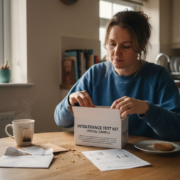
If you are tired of guessing, our at-home screen can give you a focused list of foods to work with while you keep your diary. The Ultimate Plus Intolerance Test is £140.99 one-off per person. You collect a hair sample at home, send it to our UK laboratory and receive your digital report in 48 to 72 hours, with guidance for using it in an elimination diet.
See the Ultimate Plus Intolerance Test, or compare all our tests to find the right fit. Not sure which panel suits you? Our Core vs Ultimate comparison can help.
FAQ
What food calms an IBS flare-up?
There is no single calming food, but plain, regular, smaller meals usually sit best. NICE suggests oats and linseeds for wind and bloating, while the BDA suggests smaller meals and cutting back on rich, fatty and fried foods. Keep drinking fluids through the day.
How long do IBS flare-ups usually last?
This varies a lot between people, and the sources we used give no standard length. A diary helps you see how long yours last and what came before them. If a flare is unusually long, severe or different from your normal pattern, see your GP.
Should I cut out lots of foods at once?
It is better not to. UK hospital guidance says not to remove food groups without speaking to a GP or dietitian, and that dietary changes such as low FODMAP should be dietitian-supported. Change one thing at a time and reintroduce foods afterwards.
Can a food diary really help?
Yes. The NHS recommends one because triggers are individual. Record what you eat and your symptoms for at least a couple of weeks, remembering that reactions can appear straight away or up to 48 hours later.
Sources
- NHS: Diet, lifestyle and medicines for IBS
- NICE: Irritable bowel syndrome in adults, recommendations
- BDA: Irritable bowel syndrome (IBS) and diet
- West Suffolk NHS: Dietary advice for patients with IBS
- Leicestershire hospitals: Keeping a food diary with IBS symptoms
- Gloucestershire Hospitals: Low FODMAP diet sheet
- Nutritionist Resource: Health conditions and the gut









Leave a Reply
Want to join the discussion?Feel free to contribute!