

TL;DR:
- Food intolerance involves a non-immune adverse reaction to certain foods that the body struggles to digest. It often causes delayed symptoms like bloating and fatigue, with common triggers including dairy, wheat, and high-FODMAP foods in the UK. The safest diagnosis method is a supervised elimination and reintroduction diet, which helps identify specific triggers while avoiding nutritional deficiencies.
Food intolerance is defined as a non-immune mediated adverse reaction to specific foods or food components that the body struggles to digest or process properly. Unlike a food allergy, it does not trigger an immune response. NHS clinical guidance identifies lactose, gluten, and fermentable carbohydrates known as FODMAPs as the most common triggers in the UK. Symptoms such as bloating, abdominal pain, and fatigue are typical, but they often appear hours after eating, making the connection to food easy to miss. Understanding what foods commonly cause intolerances is the first step toward feeling better.
What foods commonly cause intolerances?
The foods most frequently linked to intolerances fall into a handful of clear categories. Dairy, wheat-based products, and high-FODMAP foods account for the majority of cases seen in UK clinical practice. Food intolerances differ from allergies because they involve digestive mechanisms rather than the immune system, and symptoms typically appear hours rather than minutes after eating.

Lactose is the sugar found in cow’s milk, yoghurt, soft cheese, and cream. The body needs an enzyme called lactase to break it down. When lactase levels are low, undigested lactose ferments in the gut, causing gas, bloating, and diarrhoea. Secondary lactose intolerance can develop at any age, often following illness or gut inflammation.
Gluten is a protein found in wheat, barley, and rye. Non-coeliac gluten sensitivity produces symptoms similar to coeliac disease but without the intestinal damage. Bread, pasta, pastries, and many processed foods contain gluten, making it one of the harder intolerances to manage without clear guidance.
FODMAPs are a group of fermentable carbohydrates found in onions, garlic, apples, legumes, and wheat. They draw water into the gut and ferment rapidly, producing gas and discomfort in people with a sensitive digestive system. A low-FODMAP diet, developed by Monash University researchers, is now widely used in the UK to manage irritable bowel syndrome.
Food additives such as sulphites, preservatives, and histamine are less well-known triggers but affect a significant number of people. Sulphites appear in wine, dried fruit, and processed meats. Histamine builds up in aged cheeses, fermented foods, and smoked fish. Salicylates, found naturally in many fruits and vegetables, can also provoke reactions in sensitive individuals.
Pro Tip: If you react to wine, dried apricots, or cured meats but not fresh equivalents, sulphite sensitivity is worth investigating before assuming a broader food group intolerance.
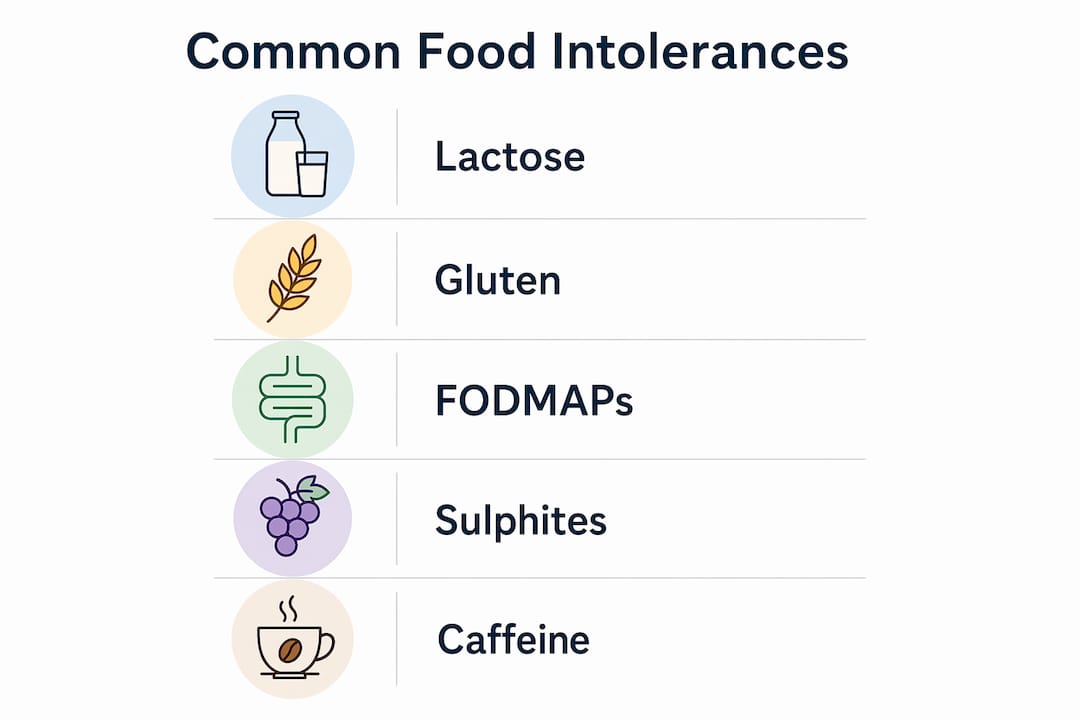
| Intolerance | Cause | Common food sources | Typical symptoms |
|---|---|---|---|
| Lactose | Low lactase enzyme | Milk, yoghurt, soft cheese, cream | Bloating, diarrhoea, gas |
| Gluten sensitivity | Reaction to gluten protein | Bread, pasta, barley, rye | Bloating, fatigue, abdominal pain |
| FODMAPs | Fermentable carbohydrates | Onions, garlic, apples, legumes | Gas, cramping, loose stools |
| Sulphites | Food additive sensitivity | Wine, dried fruit, processed meats | Headaches, digestive discomfort |
| Histamine | Excess histamine in food | Aged cheese, fermented foods, smoked fish | Flushing, headaches, gut symptoms |
| Caffeine | Stimulant sensitivity | Coffee, tea, energy drinks, cola | Digestive discomfort, nervousness |
Caffeine sensitivity is frequently overlooked as a food intolerance trigger. Coffee, tea, and some fizzy drinks can cause digestive discomfort and nervousness in sensitive individuals. Many people attribute these symptoms to stress rather than their morning cup.
How do you know if a food is causing your symptoms?
Food intolerance symptoms typically include bloating, flatulence, abdominal pain, fatigue, and brain fog. These differ from allergic reactions, which are immediate and can be life-threatening. The delayed nature of intolerance symptoms, sometimes appearing 2–72 hours after eating, makes self-diagnosis genuinely difficult.
Symptoms can mimic serious conditions such as coeliac disease, inflammatory bowel disease, or gut infections. This is why a GP review is the right first step, not a self-managed elimination diet. Ruling out serious pathology protects you from missing a diagnosis that requires medical treatment.
Food intolerances can also develop at any age, often triggered by illness, prolonged stress, or medication use such as antibiotics. This explains why you might tolerate a food for decades and then suddenly react to it. The gut microbiome and digestive enzyme levels both change over time.
Before changing your diet, consider discussing the following with your GP:
- How long have symptoms been present, and are they getting worse?
- Do symptoms follow meals consistently, or do they appear randomly?
- Have you noticed any blood in stools, unexplained weight loss, or fever?
- Is there a family history of coeliac disease or inflammatory bowel disease?
- Have you recently taken antibiotics or experienced a gut infection?
These questions help your GP prioritise the right investigations and refer you to a gastroenterologist or dietitian if needed.
What is the gold standard for diagnosing food intolerances?
The elimination and reintroduction diet is the gold standard for diagnosing food intolerances safely. The process takes 2–6 weeks and works by removing suspected trigger foods, then reintroducing them one at a time to confirm which cause symptoms. Supervision by an HCPC-registered dietitian is strongly recommended to maintain nutritional balance throughout.
A word of caution on IgG testing. NHS, NICE, and BSACI advise against IgG food intolerance tests because IgG antibodies indicate normal immune exposure to a food, not intolerance. Acting on IgG results can lead to unnecessarily restrictive diets without any symptom improvement. Experts warn these tests carry real risk of harm through nutritional deficiency and disordered eating patterns.
The elimination and reintroduction process follows a clear structure:
- Consult your GP first. Confirm there is no underlying medical condition requiring treatment before changing your diet.
- Identify suspected triggers. Work with a dietitian to list the foods most likely causing your symptoms based on your history.
- Remove all suspected foods for 2–4 weeks. Stick to a simple, whole-food diet during this phase and avoid hidden sources in processed foods.
- Monitor symptoms daily. Keep a written log noting what you ate, portion sizes, and any symptoms with timing.
- Reintroduce one food at a time. Introduce each food over 3 days, eating a normal portion and waiting for a reaction before moving to the next.
- Record and review findings. Share your log with your dietitian to confirm triggers and plan a long-term diet that avoids only what is necessary.
Pro Tip: Download a symptom-tracking app or use a simple notebook. Consistent daily logging during the elimination phase produces far more reliable results than memory alone.
For a structured approach to this process, the step-by-step intolerance testing guide from Ukfoodintolerance provides clear guidance tailored to UK readers.
How do you manage your diet after identifying intolerances?
Identifying your triggers is only the beginning. The goal is to eat as broadly as possible while avoiding only the foods that genuinely cause you symptoms. Dietitians recommend reintroducing as many foods as tolerated long-term because overly restrictive elimination diets carry real risks of nutritional deficiency and disordered eating.
Practical dietary adjustments after diagnosis include:
- Lactose intolerance: Switch to lactose-free milk, oat milk, or soda milk. Hard cheeses such as cheddar and parmesan are naturally low in lactose and are often tolerated well.
- Gluten sensitivity: Choose certified gluten-free bread, pasta, and oats. Rice, quinoa, buckwheat, and potatoes are naturally gluten-free staples.
- High-FODMAP foods: Follow a structured low-FODMAP protocol with a dietitian. Many high-FODMAP foods can be reintroduced in smaller portions once the gut has settled.
- Sulphite sensitivity: Read labels carefully. Fresh, unprocessed foods are naturally sulphite-free. Opt for fresh fruit over dried, and check wine labels for sulphite declarations.
- Histamine intolerance: Prioritise fresh over fermented or aged foods. Freeze leftovers promptly, as histamine levels rise in food left at room temperature.
| Food group | Common substitute | Notes |
|---|---|---|
| Cow’s milk | Oat milk, lactose-free milk | Check for added sugars in plant milks |
| Wheat bread | Gluten-free bread, sourdough rye (if tolerated) | Sourdough fermentation reduces some gluten content |
| Onion and garlic | Garlic-infused oil, spring onion greens | The FODMAP is water-soluble, not oil-soluble |
| Aged cheese | Fresh mozzarella, ricotta, cottage cheese | Lower histamine than hard or blue cheeses |
| Wine with sulphites | Organic wine, spirits without mixers | Sulphite-free labelling is not always reliable |
Private dietitian consultations in the UK cost around £60–£120 per session and provide personalised elimination and reintroduction support. For those managing lactose intolerance specifically, understanding lactose in your diet can help you make better food choices day to day. Seek professional dietary advice if you are managing multiple intolerances simultaneously, as the risk of nutritional gaps increases significantly.
Symptoms of lactose intolerance often improve within 48 hours of removing lactose from the diet. That rapid improvement is encouraging, but it does not mean you need to avoid lactose permanently. Many people with lactose intolerance tolerate small amounts, particularly in hard cheeses or yoghurt, without symptoms.
Key takeaways
The most reliable way to identify food intolerances is through a supervised elimination and reintroduction diet, guided by an HCPC-registered dietitian, after ruling out serious conditions with your GP.
| Point | Details |
|---|---|
| Most common triggers | Lactose, gluten, FODMAPs, sulphites, histamine, and caffeine cause the majority of food intolerance symptoms in the UK. |
| Symptoms are delayed | Food intolerance symptoms appear hours after eating, making self-diagnosis without a food diary unreliable. |
| See your GP first | Symptoms can mimic coeliac disease and IBD, so medical assessment must come before any dietary change. |
| Avoid IgG tests | NHS, NICE, and BSACI advise against IgG testing as it measures immune exposure, not intolerance. |
| Eat as broadly as possible | Long-term restrictive diets cause nutritional deficiencies; reintroduce tolerated foods as soon as symptoms allow. |
Rob’s honest view on food intolerances
The most common mistake I see is people self-diagnosing based on a single bad meal and then cutting out entire food groups for months. That approach creates new problems. Nutritional gaps, anxiety around eating, and a social life that shrinks around food restrictions are all real consequences of over-restriction.
The second mistake is spending money on IgG tests marketed as definitive answers. IgG antibodies show that your immune system has encountered a food, not that the food is harming you. Acting on those results without clinical oversight can lead you further from the truth, not closer to it.
What actually works is patience and structure. A proper food diary kept for two to four weeks, combined with a GP visit and a referral to a registered dietitian, gives you real data. The elimination and reintroduction process is slow, but it is the only method with genuine clinical backing.
Realistic expectations matter too. Many people find that their intolerance is dose-dependent. A small amount of lactose in a sauce causes no symptoms, while a glass of milk does. That nuance is worth knowing, because it means your diet does not have to be as restrictive as you fear. Work with a professional, keep your diet as broad as possible, and give the process the time it needs.
— Rob
Testing your intolerances with Ukfoodintolerance
If you are experiencing unexplained digestive symptoms and want a clearer starting point, Ukfoodintolerance offers a range of at-home testing options designed to help you identify potential triggers quickly and without invasive procedures.

The Ultimate Single Intolerance Test screens over 1,100 food and environmental items using bio-resonance technology. You collect a small hair sample at home, post it to the UK-based laboratory, and receive a detailed digital report within 48–72 hours. The Core Single Intolerance Test covers 500 items at a more accessible price point. Both reports are designed to support an elimination diet by giving you a clear list of potential sensitivities to investigate further with your GP or dietitian. Ukfoodintolerance makes the first step straightforward, clear, and fast.
FAQ
What foods most commonly cause intolerances in the UK?
Lactose in dairy, gluten in wheat and rye, and high-FODMAP foods such as onions and garlic are the most common triggers, as identified by NHS clinical guidance. Food additives including sulphites and histamine also cause intolerance reactions in a significant number of people.
How is a food intolerance different from a food allergy?
A food intolerance does not involve the immune system and produces delayed symptoms such as bloating and fatigue, typically appearing hours after eating. A food allergy triggers an immediate immune response and can cause anaphylaxis, which is a medical emergency.
Can food intolerances develop later in life?
Food intolerances can develop at any age, often following illness, stress, or antibiotic use that alters gut bacteria or enzyme levels. Secondary lactose intolerance, for example, commonly develops after a gut infection even in adults who previously tolerated dairy.
Are home IgG food intolerance tests reliable?
IgG tests are not recommended by NHS, NICE, or BSACI because IgG antibodies indicate normal immune exposure to a food rather than intolerance. Acting on these results risks unnecessary dietary restriction without genuine symptom improvement.
What is the safest way to identify my food triggers?
The elimination and reintroduction diet, supervised by an HCPC-registered dietitian, is the gold standard method. It takes 2–6 weeks and systematically confirms which foods cause symptoms while protecting your nutritional intake throughout the process.










Leave a Reply
Want to join the discussion?Feel free to contribute!