

TL;DR:
- Biological and physiological markers signal how your body responds to specific foods, aiding in food intolerance identification. IgG and IgG4 antibodies reflect immune exposure but are not validated for diagnosing intolerance, while enzyme deficiency tests like hydrogen breath tests offer reliable evidence of specific food-related issues. Symptom tracking and elimination diets remain the most effective methods for confirming food intolerances and managing symptoms.
Key markers in intolerance tests are measurable biological and physiological indicators that signal how your body responds to specific foods. The term “intolerance marker” is the informal label; clinicians refer to these as immunological biomarkers or physiological indicators depending on the mechanism involved. Understanding which markers matter, and what they actually measure, is the first step towards making sense of symptoms of food intolerance such as bloating, fatigue, and persistent headaches. This guide explains each major category of marker, what the evidence says about its reliability, and how you can use that knowledge practically.
What are the main immunological markers used in intolerance tests?
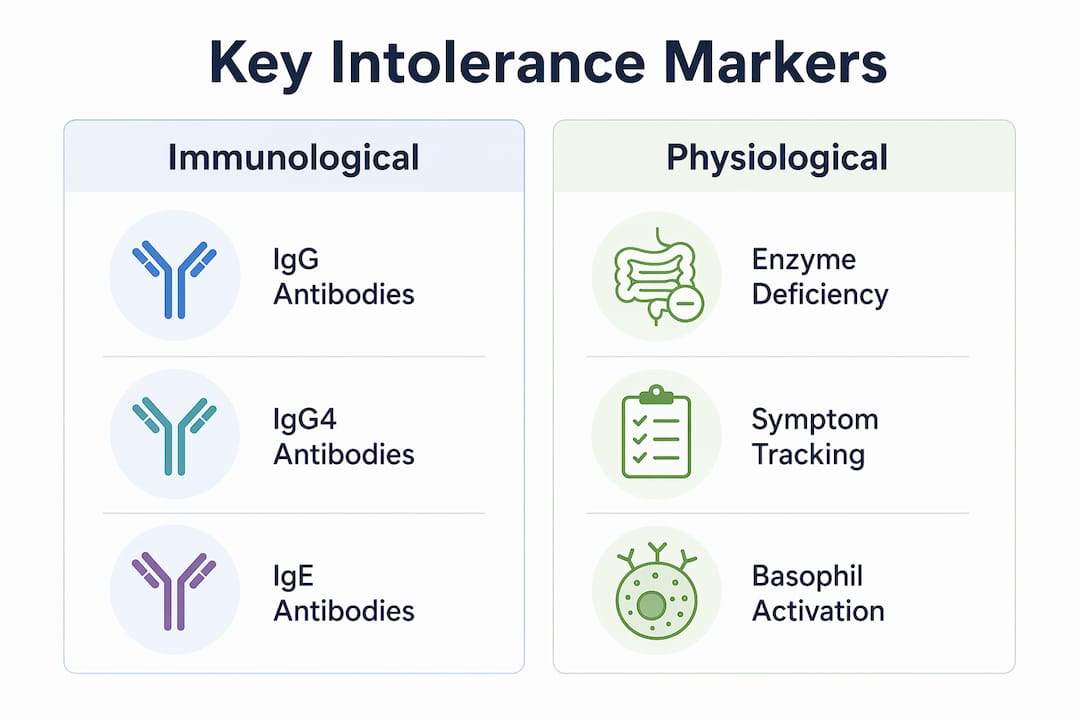
Immunological markers are proteins produced by your immune system in response to food. The most discussed are IgG, IgG4, and IgE antibodies, and each tells a different story.
IgG and IgG4 antibodies are the markers most commonly measured in commercial food intolerance panels. IgG antibodies are produced whenever your immune system encounters a foreign substance, including food proteins you eat regularly. IgG tests lack validated evidence linking elevated levels to clinical intolerance. That means a high IgG reading for wheat may simply reflect the fact that you eat a lot of bread, not that wheat is harming you.

IgE antibodies serve a different purpose entirely. They drive immediate allergic reactions, including anaphylaxis. IgE testing is the standard clinical tool for diagnosing true food allergies, not intolerances. IgE tests and skin prick tests show high sensitivity but can produce false positives, which is why clinicians always interpret results alongside a full symptom history and, where needed, an oral food challenge.
The IgG4/IgE ratio is a more nuanced marker gaining attention in specialist settings. Higher IgG4/IgE ratios correlate with reduced immune cell activation and clinical tolerance, particularly in complex cases such as peanut allergy. This ratio is a promising adjunct in ambiguous allergy cases, not a standalone intolerance test.
The Basophil Activation Test (BAT) measures whether immune cells called basophils activate when exposed to a food allergen. BAT shows up to 97% sensitivity and 92% specificity for identifying true allergic reactions. That accuracy is impressive, but BAT requires a specialist laboratory and is not designed for broad intolerance screening.
| Marker | What it measures | Clinical role | Limitation |
|---|---|---|---|
| IgG antibodies | Immune exposure to food proteins | Used in commercial intolerance panels | Not validated for intolerance diagnosis |
| IgG4 antibodies | Blocking antibody response | Adjunct in allergy tolerance research | Reflects exposure, not necessarily symptoms |
| IgE antibodies | Immediate allergic response | Standard allergy diagnosis | False positives; needs clinical context |
| IgG4/IgE ratio | Balance between tolerance and allergy | Emerging tool in complex allergy cases | Not a standalone intolerance marker |
| Basophil Activation Test | Immune cell activation by allergen | High accuracy for allergy confirmation | Specialist labs only; not for general screening |
Pro Tip: If a test result shows elevated IgG for a food, do not remove that food without speaking to a clinician first. Elevated IgG often reflects normal dietary exposure, not intolerance.
Which physiological and symptom markers help identify food intolerance?
Beyond antibodies, the most clinically useful indicators in food intolerance are physiological and symptom-based. These markers reflect what your body actually does after eating a problem food.
Food intolerance symptoms are dose-dependent and delayed, typically appearing two or more hours after eating. This delay is what makes intolerance so difficult to pin down without structured tracking. Common symptoms include abdominal pain, bloating, gas, diarrhoea, nausea, headaches, and fatigue. The dose-dependent nature means a small amount of the trigger food may cause no reaction, while a larger portion triggers clear symptoms.
Enzyme deficiency markers are among the most reliably diagnosed physiological indicators. Food intolerance is primarily caused by enzyme deficiencies or chemical sensitivities rather than immune hypersensitivity. Lactose intolerance is the clearest example. When the body does not produce enough lactase, undigested lactose ferments in the gut, producing hydrogen gas. A hydrogen breath test measures this gas directly, making it one of the few objective, validated tests for a specific intolerance.
Symptom diaries and elimination diets function as practical diagnostic markers. Recording what you eat, when symptoms appear, and how severe they are creates a pattern that a clinician can interpret. Elimination diets and breath tests are the practical tools most widely used in clinical practice. No single blood or skin test currently exists that diagnoses food intolerance across the board.
Common physiological and symptom markers assessed in intolerance diagnostics include:
- Symptom onset timing: delayed reactions (2+ hours) suggest intolerance rather than allergy
- Dose response: symptoms that worsen with larger portions point to a physiological threshold
- Hydrogen breath test results: elevated hydrogen indicates lactase deficiency or fructose malabsorption
- Symptom diary patterns: recurring symptoms linked to specific foods across multiple exposures
- Gut microbiota profiles: an emerging research area; microbiome composition may influence intolerance thresholds, though clinical application is still developing
- Elimination and reintroduction responses: symptom relief during elimination and return on reintroduction is the most direct confirmation available
How reliable are key markers in current intolerance testing methods?
Reliability varies significantly depending on which marker and which testing method you are looking at. Understanding this distinction protects you from spending money on tests that cannot deliver what they promise.
IgG antibody testing is not validated as a reliable diagnostic tool for food intolerance. Major clinical bodies, including the NHS, advise against using IgG panels as the basis for dietary exclusions. The reason is straightforward: elevated IgG simply reflects immune exposure, not clinical harm.
Validated methods for identifying food intolerance are more limited but more meaningful:
- Hydrogen breath test: validated for lactose intolerance and fructose malabsorption; objective and reproducible
- Elimination and reintroduction diet: the clinical gold standard for identifying food intolerances; requires careful supervision
- Oral food challenge (OFC): the gold standard for allergy confirmation; resource-intensive and carries a reaction risk, so it is conducted in clinical settings only
- Skin prick tests and specific IgE blood tests: validated for allergy, not intolerance; useful for ruling out an allergic component
- BAT: high accuracy for allergy confirmation in specialist settings; not appropriate for routine intolerance screening
Food sensitivities develop gradually and require ongoing symptom tracking and clinical guidance. Sudden or severe symptoms always need urgent medical evaluation. This distinction matters because a gradual onset of bloating after dairy is very different from a rapid reaction requiring emergency care.
At-home screening tests, including bio-resonance based options, serve a different purpose. They are screening tools that can highlight potential sensitivities worth investigating further, not clinical diagnoses. Used alongside symptom tracking and professional advice, they give you a starting point for a structured elimination approach.
Pro Tip: Keep a detailed symptom journal for at least two weeks before starting any elimination diet. Record meal times, portion sizes, symptoms, and their timing. This data is far more useful to a clinician than a commercial antibody panel alone.
What practical steps can you take using intolerance markers and test results?
Knowing what the markers mean is only useful if you act on that knowledge sensibly. A structured approach gives you the clearest picture.
- Start with a symptom diary. Record every meal, snack, and drink alongside any symptoms and their timing. Two weeks of consistent data reveals patterns that a single test cannot.
- Use screening tests as a starting point. At-home tests, such as those offered by Ukfoodintolerance, can screen a wide range of potential triggers and give you a shortlist to investigate. Treat results as a guide, not a verdict.
- Follow an elimination diet under guidance. Remove the suspected food for 2–4 weeks, then reintroduce it systematically. This step-by-step approach to managing sensitivities is the most reliable way to confirm whether a food is genuinely causing your symptoms.
- Consult a healthcare professional. A GP or registered dietitian can order validated tests such as a hydrogen breath test, interpret your symptom diary, and rule out conditions like coeliac disease or inflammatory bowel disease that can mimic intolerance.
- Adjust your diet gradually. Removing multiple foods at once makes it impossible to identify the true trigger. Reintroduce one food at a time and monitor your response over several days.
- Seek prompt evaluation for severe symptoms. Sudden severe symptoms require urgent medical evaluation. Rapid onset reactions, difficulty breathing, or swelling are allergy signs, not intolerance, and need immediate attention.
Key takeaways
The most reliable approach to identifying food intolerance combines validated physiological tests, structured symptom tracking, and professional clinical guidance rather than relying on any single immunological marker.
| Point | Details |
|---|---|
| IgG tests are not diagnostic | Elevated IgG reflects food exposure, not confirmed intolerance; do not exclude foods based on IgG alone. |
| Enzyme deficiency tests are validated | Hydrogen breath tests reliably confirm lactose intolerance and fructose malabsorption. |
| Symptom diaries are essential | Two weeks of detailed food and symptom records give clinicians the clearest diagnostic picture. |
| At-home tests are screening tools | Use them to narrow down suspects, then confirm findings through elimination and professional review. |
| Allergy and intolerance markers differ | IgE and BAT identify allergic reactions; physiological markers and elimination diets identify intolerances. |
Why I think most people misread their intolerance test results
After years of following the clinical literature on food sensitivity testing, one pattern stands out clearly. People receive a commercial IgG panel, see a long list of elevated readings, and immediately cut out a dozen foods. That response is understandable. It is also, in most cases, the wrong one.
The science is unambiguous on this point. IgG elevation tells you what you eat regularly, not what is harming you. I have seen people unnecessarily restrict nutritious foods like eggs, nuts, and wholegrains based on IgG results, only to find their symptoms unchanged. The real culprit was often something not on the panel at all.
What I find genuinely useful is the combination of a broad screening test and a disciplined symptom diary. The screening gives you a hypothesis. The diary and elimination process test it. Neither works well without the other. If you are learning how intolerance tests work, understanding this distinction will save you time, money, and unnecessary dietary restriction.
The other thing worth saying plainly: distinguishing intolerance from allergy is not a minor detail. An allergy can be life-threatening. An intolerance is uncomfortable but not dangerous in the same way. If you have any doubt about which category your symptoms fall into, that question belongs with a clinician, not a commercial test result.
— Rob
How Ukfoodintolerance can help you identify your triggers
If you are ready to move beyond guesswork and start narrowing down your dietary triggers, Ukfoodintolerance offers a clear, accessible way to begin. The service uses bio-resonance technology to screen hair samples against a wide range of potential food and environmental sensitivities, with results delivered digitally within 48–72 hours.
The Ultimate Single Intolerance Test screens over 1,100 items, while the Core Single Intolerance Test covers 500 items at a lower price point. Both provide a detailed digital report you can use as the basis for a structured elimination diet. You can also browse the full range of available intolerance tests to find the option that fits your needs. The process is non-invasive, conducted entirely at home, and designed to give you a clear starting point for understanding your body’s responses.
FAQ
What are the key markers measured in food intolerance tests?
The main markers include IgG and IgG4 antibodies, enzyme deficiency indicators such as hydrogen breath test results, and symptom-based patterns identified through elimination diets. No single blood marker is currently validated as a standalone diagnostic for food intolerance.
Is IgG testing reliable for diagnosing food intolerance?
IgG antibody tests are not validated for diagnosing food intolerance. Elevated IgG levels reflect normal immune exposure to foods you eat regularly rather than confirming that a food is causing your symptoms.
What is the difference between an intolerance marker and an allergy marker?
Allergy markers, primarily IgE antibodies measured via blood tests or skin prick tests, indicate an immediate immune response. Intolerance markers, such as hydrogen breath test results or symptom diary patterns, reflect physiological reactions like enzyme deficiency rather than immune hypersensitivity.
How does the hydrogen breath test work as an intolerance marker?
The hydrogen breath test measures hydrogen gas produced when undigested sugars, such as lactose or fructose, ferment in the gut. Elevated hydrogen levels confirm that the body is not absorbing the sugar properly, indicating a specific enzyme deficiency.
Can at-home intolerance tests replace a clinical diagnosis?
At-home tests are screening tools, not clinical diagnoses. They identify potential triggers worth investigating further through elimination diets and professional review, but they do not replace validated clinical testing or medical consultation.










Leave a Reply
Want to join the discussion?Feel free to contribute!