

TL;DR:
- Keeping a detailed food and symptom diary over 7 to 14 days helps identify potential triggers by tracking ingredients, timing, and non-food factors. Consistent logging of precise meal times, ingredients, symptom severity, and contextual notes enables accurate pattern recognition for clinicians. Proper elimination and reintroduction, alongside professional guidance, confirm specific food intolerances and improve health management outcomes.
If you have been dealing with unexplained bloating, fatigue, headaches, or digestive discomfort, your diet may be playing a bigger role than you realise. Learning how to track food symptom triggers, known clinically as keeping a food and symptom diary, gives you something more valuable than guesswork. It gives you data. The right data, collected in the right way, can transform a confusing pattern of symptoms into clear evidence you can discuss with a doctor or dietitian. This guide walks you through exactly how to do that, from your very first log entry to interpreting results with confidence.
Table of Contents
- Key takeaways
- How to track food symptom triggers: getting started
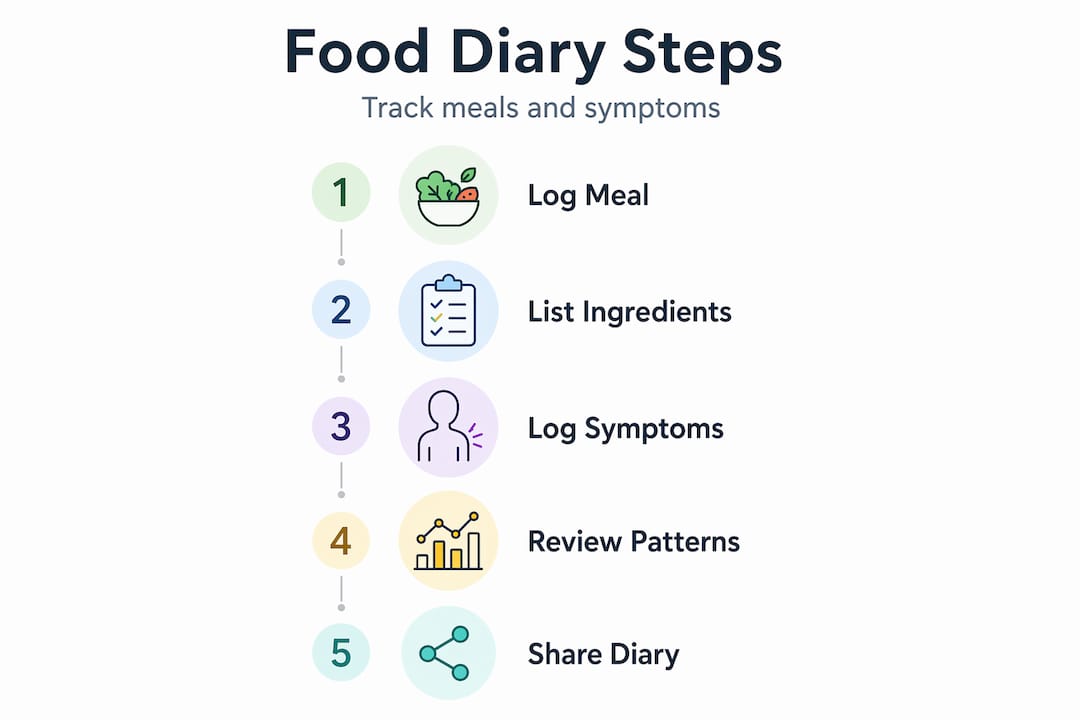
- Step-by-step: logging meals and symptoms accurately
- Recognising patterns in your diary
- Elimination and reintroduction: confirming your triggers
- Avoiding common mistakes in your diary
- My honest take on tracking symptoms
- How Ukfoodintolerance can support your tracking journey
- Common questions
Key takeaways
| Point | Details |
|---|---|
| Log ingredients, not just meals | Recording individual ingredients and spices gives clinicians the detail needed to spot true triggers. |
| Track for 7 to 14 days | A consistent diary over this window provides the diagnostic baseline clinicians look for before elimination. |
| Note symptom timing | Recording when symptoms start and stop after eating is critical for distinguishing intolerances from other causes. |
| Include non-food factors | Stress, sleep, and activity levels can influence symptoms and must be logged alongside food. |
| Elimination confirms triggers | Symptoms improving on elimination and returning on reintroduction is the strongest confirmation of a food trigger. |
How to track food symptom triggers: getting started
Before you write down your first meal, it helps to understand what you are actually trying to build. A food trigger diary, or food and symptom diary, is a structured record that links what you eat to how you feel afterwards. The clinical term used by dietitians and GPs is a “food and symptom diary,” and this is worth knowing because it signals to any healthcare professional exactly what kind of document you are presenting them with.
Here is what you need to get started:
- A logging method. Paper notebooks work fine, but apps like mySymptoms, Cara Care, or a simple notes app on your phone make it easier to log consistently and search for patterns later. Choose whatever you will actually use every day.
- Ingredient-level detail. Naming meals alone hides the ingredients most likely to be causing a reaction. Write down each component, including oils, sauces, spices, and garnishes.
- Timestamps for everything. Log the time you ate and the time any symptom appeared or resolved. This timing evidence is what separates a useful diary from a vague list.
- A minimum tracking window of 7 to 14 days. The NHS and British Dietetic Association recommend this window to generate a reliable diagnostic baseline before you consider any dietary changes.
- Non-food context notes. The American Heart Association advises noting mood and activities during or around meals because stress and physical activity can produce symptoms that mimic food reactions entirely.
Pro Tip: Pick one logging method on day one and stick with it for the full tracking period. Changing formats halfway through makes it much harder to spot patterns across your entries.
A simple starting template might include: date, meal time, every ingredient consumed, any drinks or supplements, symptom description, symptom start time, and symptom end time. That structure will serve you well throughout the process.
Step-by-step: logging meals and symptoms accurately
Once you have your tools ready, consistency is everything. Here is how to log each meal and symptom correctly for maximum clarity.
-
Record the exact time of eating. Not “lunchtime.” Write 12:45. This precision matters because many food intolerances produce symptoms anywhere from 30 minutes to several hours after a meal, and the gap between eating and symptoms is a key diagnostic clue.
-
List every ingredient individually. If you had pasta with tomato sauce, do not write “pasta dish.” Write: pasta (wheat), canned tomatoes, garlic, olive oil, dried basil, Parmesan cheese. This level of detail is what makes your diary clinically useful rather than just a rough record.
-
Note portion size where possible. Some reactions are dose-dependent. A small amount of lactose might be tolerated, while a large portion triggers symptoms. Rough portion estimates like “small bowl” or “two tablespoons” are enough.
-
Log drinks and supplements too. Caffeine, alcohol, fruit juices, and even some vitamin supplements can provoke symptoms that look like food intolerance reactions. Many people miss these entirely.
-
Describe symptoms with specificity and severity. Avoid writing “felt unwell.” Instead write: “bloating, moderate, started 1 hour after eating, resolved after 3 hours.” Rate severity on a simple 1 to 5 scale to help spot whether reactions are worsening or improving over time.
-
Record symptom resolution time. The Cleveland Clinic notes that symptom onset and relief timing are vital for interpretation because no definitive clinical test exists for many intolerances. Your timing data fills that gap.
-
Add contextual notes. Were you eating quickly under stress? Did you exercise shortly before the meal? Did you sleep poorly the night before? These factors can produce or amplify symptoms independently of food, and noting activities and mood keeps your data honest.
Pro Tip: If you use a smartphone app with barcode scanning, you can log packaged foods instantly and capture full ingredient lists without manually typing everything. This removes one of the biggest barriers to consistent logging.
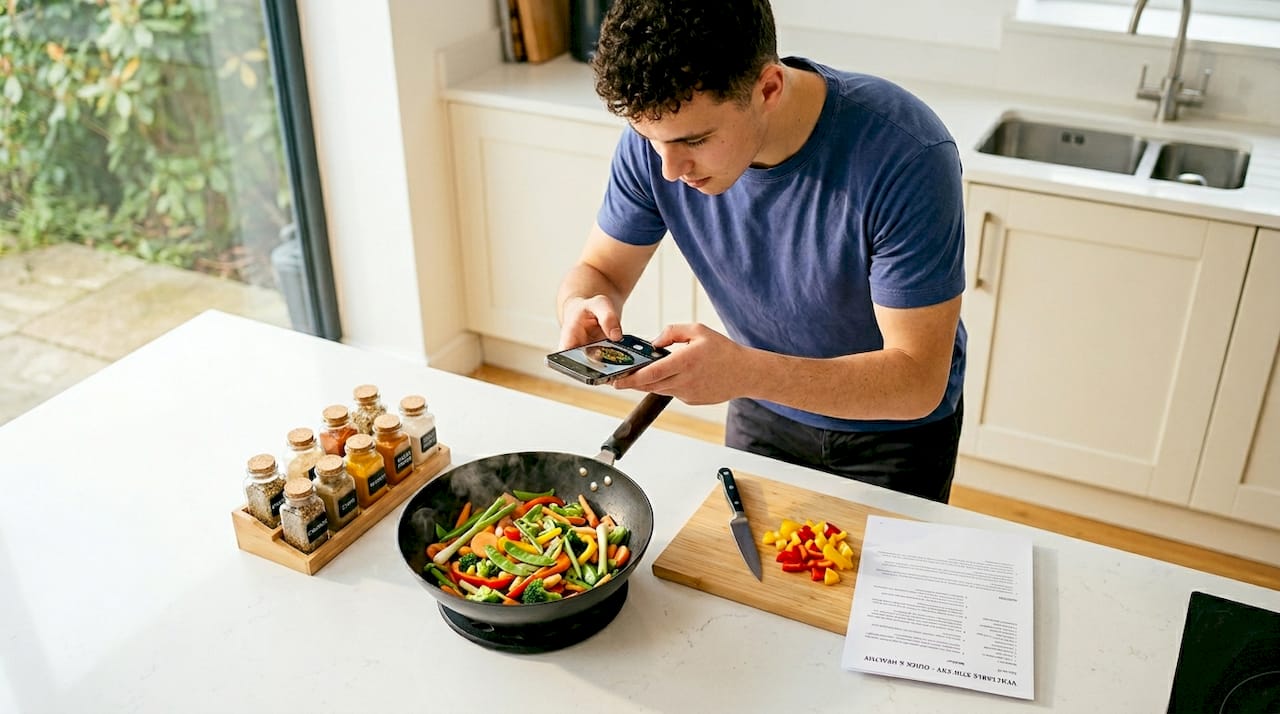
For complex meals with many ingredients, photograph the dish immediately after preparation. You can fill in the ingredient details later, but you will not forget what was in it.
Recognising patterns in your diary
After 7 to 14 days of consistent logging, you move from data collection into analysis. This is where a food trigger diary starts paying off.
Here is what to look for:
- Repeated symptom clusters after specific foods. If you notice bloating appearing within two hours of meals containing dairy on four separate days, that is a pattern worth flagging. One incident is coincidence; three or four is a signal.
- Symptom timing differences. Food allergies typically cause rapid reactions within minutes. Intolerance reactions usually take longer, sometimes hours. Understanding this distinction helps you identify food allergy symptoms versus intolerance signs in your own logs.
- Days without symptoms. These are just as informative as symptomatic days. What was different about those meals? Which ingredients were absent?
- Confounding factors. If a symptom appears after a meal but you also logged high stress and poor sleep that day, the food connection is less certain. You need multiple clean data points to draw a reliable conclusion.
- Severity trends. Symptoms that reliably worsen with larger portions of a suspected food, and improve when you eat less of it, are a meaningful pattern that clinicians will take seriously.
A food and symptom diary does not diagnose food intolerance on its own. It provides the structured evidence a clinician needs to assess your case properly. Think of it as your contribution to a clinical conversation, not a verdict.
Avoid jumping to conclusions after just two or three days. The confirmatory pattern clinicians look for requires consistent data across multiple meals and days. Patience here genuinely pays off.
Elimination and reintroduction: confirming your triggers
Once you have a shortlist of suspected foods from your diary, the next step is structured elimination, followed by careful reintroduction. This two-phase process is the closest thing available to a clinical confirmation for most food intolerances.
-
Remove all suspected foods for 4 to 8 weeks. StatPearls describes this elimination phase as a standard clinical approach, giving your system enough time to clear any residual reactions and establish a symptom-free baseline.
-
Continue logging throughout. Do not stop your diary during elimination. You need to confirm that symptoms genuinely improve without the suspected foods present.
-
Reintroduce one food at a time. The Monash FODMAP protocol recommends a 3-day challenge per food group, logging symptoms carefully each day before moving on to the next. This structure produces interpretable results rather than a confusing mix of reactions.
-
Grade your response during reintroduction. Use a consistent severity scale and compare against your elimination baseline.
| Response during reintroduction | What it suggests |
|---|---|
| No symptoms on all 3 days | Food is likely well tolerated at this portion size |
| Mild symptoms on day 2 or 3 only | Possible dose sensitivity; test smaller amounts |
| Moderate to severe symptoms on any day | Strong indicator of intolerance; remove from diet |
-
Do not restrict long-term without confirmation. Unnecessary dietary restriction carries its own nutritional risks. The structured reintroduction process exists specifically to personalise your diet and preserve as much variety as possible.
-
Work with a dietitian. Unsupervised restrictive diets, especially those eliminating multiple food groups, risk nutritional deficiencies. A registered dietitian can guide you through the process safely and help you interpret ambiguous results.
Pro Tip: Keep your food diary active during every reintroduction challenge. Logging symptoms across all 3 days of each challenge gives you the clearest picture of your tolerance and avoids second-guessing your results later.
Avoiding common mistakes in your diary
Even well-intentioned logging can go wrong in ways that undermine the whole process. These are the most common pitfalls and how to avoid them.
- Vague meal descriptions. Writing “had a sandwich” tells you almost nothing when you are reviewing your logs two weeks later. Always name every ingredient.
- Missing symptom times. A dated diary with precise meal and symptom times is what makes your data clinically useful. A rough description without timestamps is much harder for a clinician to interpret.
- Stopping tracking too early. Seven days is a minimum, not a target. If your symptoms are irregular or cyclical, you may need longer to capture a reliable pattern.
- Failing to note stress, illness, or medication changes. All three can produce or mask symptoms. If you are unwell, taking antibiotics, or going through a stressful period, note it. These entries contextualise your data rather than contaminating it.
- Self-diagnosing before the full process is complete. Jumping to conclusions early leads people to cut out foods unnecessarily, which then skews the elimination and reintroduction phases.
If you experience severe symptoms such as throat tightening, significant swelling, difficulty breathing, or widespread hives after eating, stop the tracking process and seek emergency medical attention immediately. These signs may indicate a serious allergic reaction, not intolerance.
Sharing your completed diary with your GP or dietitian before making major dietary changes is strongly advised. A well-kept diary improves clinical consultations considerably and helps practitioners guide you more quickly to an answer.
My honest take on tracking symptoms
I have seen a lot of people come to food tracking after years of unexplained symptoms and countless inconclusive GP appointments. What strikes me every time is how transformative it is when they shift from “I think wheat might be the problem” to “here are 12 logged entries where bloating appeared within 90 minutes of eating wheat, and 8 days without symptoms when I avoided it.”
That shift from suspicion to evidence changes everything. Clinicians respond differently. Conversations become more productive. You stop feeling like you are being dismissed and start feeling like an active participant in your own health management.
What I have found is that the biggest obstacle is not motivation. It is the first three days. Once logging becomes a habit, most people stick with it. The insight you gain from monitoring food symptoms over even a single week often surprises people, because the patterns were always there. They just needed to be written down.
My honest advice: do not try to be perfect. Miss a meal description? Write what you can remember. Had an unusual day? Note it and move on. An imperfect diary kept consistently beats a perfect system abandoned after four days. Trust the process, share your results with a professional, and give yourself the time the process genuinely requires.
— Rob
How Ukfoodintolerance can support your tracking journey
Your food and symptom diary is a powerful starting point. But if patterns remain unclear after weeks of careful logging, a structured intolerance test can add an important layer of objective data to your investigation.
Ukfoodintolerance offers non-invasive, at-home testing using bio-resonance technology, analysing hair samples against over 1,100 food and environmental items. Results are delivered digitally within 48 to 72 hours, giving you a clear, detailed report you can use alongside your diary when speaking with a healthcare professional. If you are ready to move beyond guesswork, explore the full range of intolerance testing options available, or take a closer look at what each test covers to find the right fit for your needs. Testing and tracking together give you the most complete picture of what your body is responding to.
Common questions
How long should I keep a food symptom diary?
The NHS and British Dietetic Association recommend a minimum of 7 to 14 days to generate a reliable diagnostic baseline before considering dietary changes.
What is the difference between a food allergy and a food intolerance in my diary?
Allergic reactions typically appear within minutes and can be severe, while intolerance symptoms usually take longer to appear and are digestive in nature. Understanding the difference between the two helps you log and interpret your symptoms more accurately.
Can a food and symptom diary diagnose food intolerance on its own?
No. A symptom diary provides valuable evidence to support clinical assessment, but diagnosis requires confirmation that symptoms improve on elimination and return on reintroduction, ideally overseen by a clinician or dietitian.
Which apps are most useful for monitoring food symptoms?
Apps such as mySymptoms and Cara Care are commonly recommended for symptom tracking for food because they allow ingredient-level logging, symptom severity ratings, and pattern analysis in one place.
When should I stop tracking and seek medical help urgently?
Seek emergency help immediately if you experience throat swelling, difficulty breathing, or widespread hives after eating. These may indicate a serious allergic reaction and require prompt medical attention rather than further diary logging.










Leave a Reply
Want to join the discussion?Feel free to contribute!