

TL;DR:
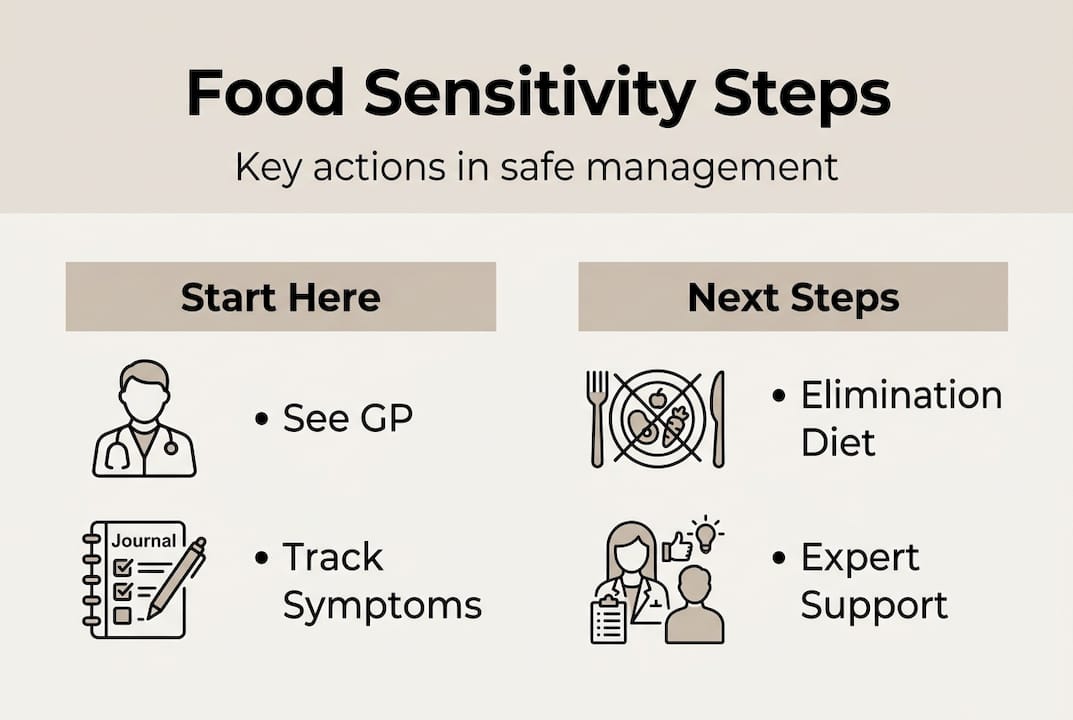
- Proper diagnosis and GP consultation are essential before making dietary changes.
- Keeping a detailed food and symptom diary helps identify potential trigger foods.
- Supervised elimination and reintroduction are the most reliable methods for confirming food sensitivities.
Unexplained bloating, persistent fatigue, skin flare-ups after meals — these symptoms affect thousands of people across the UK, yet many never find a clear answer. Managing food sensitivities can feel overwhelming, especially when you are not sure whether you are dealing with an allergy, an intolerance, or something else entirely. The good news is that a clear, evidence-backed workflow exists. Follow it step by step, and you can move from confusion to clarity, making real, lasting improvements to your wellbeing without putting your health at risk.
Table of Contents
- Understanding food sensitivities versus allergies
- Step 1: See a GP and rule out serious conditions
- Step 2: Keep a detailed food and symptom diary
- Step 3: Elimination diet and reintroduction under supervision
- Appropriate use of at-home tests: what works and what doesn’t
- Hard truths and expert insights: what most guides miss
- Safe, accessible support for your next steps
- Frequently asked questions
Key Takeaways
| Point | Details |
|---|---|
| Consult your GP first | Always rule out serious conditions and allergies with your doctor before beginning any self-management. |
| Track your symptoms | A detailed two-week food and symptom diary is fundamental for finding patterns and triggers. |
| Supervised elimination is safest | Never remove major food groups without professional guidance to avoid nutritional harm. |
| Most at-home tests lack evidence | IgG, hair, and bioresonance tests are not clinically validated and may be misleading. |
| Lactose intolerance requires specific tests | Hydrogen breath tests are the reliable method for diagnosing lactose intolerance in the UK. |
Understanding food sensitivities versus allergies
Before you make any changes to your diet, it is vital to understand what type of reaction your body is having. The terms allergy, intolerance, and sensitivity are often used interchangeably, but they are meaningfully different, and that difference shapes everything that follows.
A food allergy is an immune system response. Your body mistakenly identifies a food protein as a threat and triggers an IgE antibody reaction. This can cause symptoms within minutes, ranging from hives and swelling to, in severe cases, anaphylaxis. This is a medical emergency. If you have ever experienced throat tightening, difficulty breathing, or sudden dizziness after eating, seek urgent medical help immediately.
A food intolerance works differently. It does not involve the immune system in the same way. Instead, it typically causes delayed, non-life-threatening symptoms such as bloating, stomach cramps, diarrhoea, or headaches, sometimes appearing hours or even a day after eating the trigger food. The NHS distinguishes IgE allergy from non-IgE intolerance clearly, noting that the mechanisms and management differ significantly.
A food sensitivity is a broader, less clinically defined term. It often refers to reactions that do not fit neatly into either category above, including responses to food chemicals like histamine or salicylates.
Understanding food sensitivities explained in detail helps you approach testing and elimination more effectively. Here is a quick comparison:
| Feature | Food allergy | Food intolerance | Food sensitivity |
|---|---|---|---|
| Immune involvement | IgE-mediated | Non-IgE or none | Variable |
| Reaction speed | Immediate (minutes) | Delayed (hours/days) | Variable |
| Severity | Can be life-threatening | Rarely dangerous | Mild to moderate |
| Diagnosis method | Skin prick/blood test | Elimination/breath test | Diary and exclusion |
Typical common intolerance symptoms include bloating, loose stools, skin rashes, brain fog, and fatigue. Recognising which category your symptoms fall into is the essential first step.
Important: Never attempt to self-diagnose a food allergy. If you suspect one, consult your GP or an allergy specialist before making any dietary changes.
Step 1: See a GP and rule out serious conditions
Once you understand the difference between these conditions, safety must come first. The recommended starting point, supported by NHS, Which?, and BSACI guidelines, is a consultation with your GP.
Your doctor will take a detailed history of your symptoms, their timing, and any patterns you have noticed. They may arrange:
- Skin prick or blood tests to check for IgE-mediated allergies
- A coeliac disease screen (a blood test checking for specific antibodies)
- Investigations to rule out inflammatory bowel disease (IBD) or irritable bowel syndrome (IBS)
- A review of any medications that could be causing symptoms
This step is not optional. The UK medical workflow recommended by clinicians always begins here because several serious conditions mimic intolerance symptoms. Coeliac disease, for example, requires strict lifelong gluten avoidance and can cause significant long-term harm if undiagnosed.
Certain symptoms should prompt urgent attention rather than a routine appointment:
- Unintentional weight loss
- Blood in your stools
- Persistent vomiting
- Difficulty swallowing
- Symptoms that wake you from sleep
The NHS food allergy information pages outline when to seek emergency care. Skipping this step and jumping straight to elimination diets or test kits risks missing a serious underlying condition. It also means any dietary changes you make may be based on incomplete or inaccurate information.
Remember: A GP consultation is not a barrier to progress. It is the foundation that makes every subsequent step safer and more effective.
Once your doctor has ruled out serious conditions, you are ready to begin the practical detective work.
Step 2: Keep a detailed food and symptom diary
With major conditions excluded, the next phase is evidence-gathering. A detailed food and symptom diary is one of the most powerful tools available to you, and it costs nothing.
A detailed food diary for two weeks is the standard recommendation from NHS and BSACI guidelines. Two weeks gives enough data to spot patterns that a single day or a vague recollection simply cannot reveal.
Here is how to set up your diary effectively:
- Choose your format. A notebook, spreadsheet, or a dedicated app all work. Consistency matters more than the tool.
- Record every meal and snack. Include ingredients, portion sizes, and preparation methods.
- Note the time of eating. This helps link delayed reactions to specific meals.
- Log symptoms immediately. Do not rely on memory at the end of the day.
- Rate symptom severity. Use a simple 1 to 5 scale so you can track changes over time.
- Include lifestyle factors. Stress, sleep quality, and exercise can all influence gut symptoms.
Your diary columns should include at minimum:
| Column | What to record |
|---|---|
| Date and time | When you ate |
| Food and drink | Everything consumed |
| Symptoms | Type, severity, timing |
| Other factors | Stress, sleep, activity |
Useful symptom tracking tips can help you build a more accurate picture, and understanding the benefits of tracking makes it easier to stay consistent. The BSACI guide also recommends sharing your diary with a dietitian or GP before moving to elimination.
Pro Tip: Apps like MySymptoms or Cara Care are designed specifically for gut symptom tracking. They can generate visual reports that make it far easier for your GP or dietitian to spot patterns quickly.
Step 3: Elimination diet and reintroduction under supervision
Your diary gives you a working hypothesis. Now comes the main practical phase: removing suspected trigger foods and reintroducing them methodically to confirm which ones are genuinely causing problems.
The elimination and reintroduction protocol is considered the gold standard for identifying food intolerances by BSACI, Which?, and the British Dietetic Association. It works because it removes the guesswork and replaces it with direct, observable evidence.
Caution: Do not cut out entire food groups without expert guidance. This is especially important for children, pregnant women, and anyone with a chronic health condition.
Here is the standard process:
- Identify suspects. Based on your diary, list the foods most frequently associated with symptoms.
- Remove them for two to four weeks. Eliminate all suspected triggers simultaneously. Read labels carefully, as many trigger ingredients appear in unexpected products.
- Monitor your symptoms. Keep your diary going throughout. Note any improvements.
- Reintroduce one food at a time. Introduce a single food every three to four days. Eat a normal portion and observe your response.
- Record reactions carefully. If symptoms return, that food is likely a trigger. If nothing happens, it is probably safe.
- Repeat until all suspects are tested. This builds a clear, personalised picture of your tolerances.
| Approach | Supervised elimination | Unsupervised at-home testing |
|---|---|---|
| Evidence quality | High | Variable |
| Safety | Monitored | Risk of nutritional gaps |
| Accuracy | High when done correctly | Prone to false positives |
| Suitable for children | Yes, with specialist | Not recommended |
For families, understanding elimination for children is especially important. The expert consensus is clear: structured, supervised elimination beats shortcuts every time.

Pro Tip: Work with a registered dietitian during elimination. They ensure your diet remains nutritionally balanced while you identify your triggers, reducing the risk of deficiencies.
Appropriate use of at-home tests: what works and what doesn’t
After taking these practical steps, many people consider at-home test kits. It is worth being clear about what the evidence actually supports.
The testing options overview shows a wide range of products on the market, but not all are equal. Some tests have genuine clinical value. Others do not.
Tests with valid clinical uses:
- Hydrogen breath test: the NHS-recommended method for diagnosing lactose intolerance and small intestinal bacterial overgrowth (SIBO)
- Clinical history combined with oral food challenges for pollen-food syndrome
- GP-ordered blood tests for coeliac antibodies and IgE allergy panels
Tests without reliable evidence:
- IgG antibody tests: IgG tests are not endorsed by the NHS, BSACI, or Which? for diagnosing intolerance. Elevated IgG simply indicates prior exposure to a food, not a harmful reaction.
- Hair analysis and bioresonance tests: ASA regulator warnings flag these as lacking scientific backing for allergy or intolerance diagnosis.
- Kinesiology and Vega testing: no clinical evidence supports their use.
The risk with unreliable tests is real. False positives can lead you to unnecessarily restrict healthy foods, creating nutritional gaps and making your diet harder to sustain. Understanding the role of at-home tests within a broader, evidence-informed approach helps you use them wisely.
Pro Tip: If you use any at-home test, always share the results with your GP or dietitian before making dietary changes. Results should inform a conversation, not replace professional guidance.
Hard truths and expert insights: what most guides miss
Most articles give you the steps. Fewer tell you why people still struggle even when they follow them.
The emotional toll of managing food sensitivities is real. When you have spent months feeling unwell without answers, the appeal of a quick, simple test is understandable. We see this regularly. People want certainty, and they want it fast. But the reality is that identifying genuine intolerances takes time, patience, and a willingness to sit with uncertainty for a while.
The slow, methodical approach, diary first, GP second, supervised elimination third, works precisely because it is thorough. Shortcuts tend to produce unreliable results, which leads to more restriction, more frustration, and sometimes worse symptoms.
What most guides also miss is the nutritional dimension. Cutting foods out without replacing their nutrients creates new problems. Calcium from dairy, fibre from wheat, and B vitamins from grains all need substitutes. This is especially true for children’s needs, where growth and development are at stake.
Patience is not passive. It is the most active, productive thing you can do for your long-term health.
Safe, accessible support for your next steps
You now have a clear, evidence-informed framework for managing food sensitivities safely. The next question is: where do you go from here?

At UK Food Intolerance, we offer accessible, non-invasive at-home testing that fits naturally into this process. Our tests use bioresonance technology to screen over 1,100 items from a simple hair sample, with detailed digital results delivered within 48 to 72 hours. They are designed to complement your GP consultation and diary work, giving you additional information to discuss with your healthcare team. Explore our comprehensive tests or order a home test kit today and take the next step with confidence.
Frequently asked questions
What is the safest way to identify my food sensitivities at home?
The safest process is to consult your GP first, then build a detailed symptom diary and only attempt elimination diets with professional guidance. Skipping these steps risks missing serious underlying conditions.
Are at-home IgG food intolerance tests reliable?
No. IgG tests carry false positive risks and are not endorsed by the NHS or BSACI, meaning they can lead to unnecessary and potentially harmful food restrictions.
How long should an elimination diet last?
Never exceed four weeks of unsupervised elimination, as prolonged restriction without expert oversight can cause nutritional deficiencies.
What validated test exists for lactose intolerance?
The hydrogen breath test is the NHS-recommended clinical method for diagnosing lactose intolerance accurately and reliably.
Is it safe to use elimination diets on children?
Children need specialist oversight for elimination diets to protect healthy growth and ensure nutritional needs are fully met throughout the process.
Recommended
- Step-by-step guide to identifying food sensitivities in the UK
- Effective Method for Managing Food Sensitivities Naturally
- Parental Guide to Food Sensitivity: Easy Steps for Families
- 7-Step Checklist for Food Sensitivity Testing at Home
- Finding the Best Laundry Detergent for Allergies in 2026 | Laundry Tips










Leave a Reply
Want to join the discussion?Feel free to contribute!