

If you’ve ever felt bloated, gassy, or uncomfortable after a glass of milk or a bowl of cereal, you’re not alone. Many UK adults dismiss these symptoms as normal digestion or blame stress, yet lactose intolerance affects up to 75% of non-white adults in the UK and around 5% of white adults. Despite its prevalence, confusion and myths persist. This guide cuts through the noise with evidence-backed clarity on what lactose intolerance is, who it affects, how to spot it, and how to manage it without unnecessary restriction or anxiety.
Table of Contents
- What is lactose intolerance?
- Common symptoms: recognising the signs
- Who is affected? Prevalence and risk factors in the UK
- Causes and types of lactose intolerance
- Diagnosis: how is lactose intolerance confirmed?
- Dietary management: living well with lactose intolerance
- Myths, misconceptions, and practical tips
- Consider food intolerance testing and professional support
- Frequently asked questions
Key Takeaways
| Point | Details |
|---|---|
| Lactose intolerance basics | It is common worldwide but less so in UK whites and is caused by a lack of lactase enzyme. |
| Symptoms and diagnosis | Digestive symptoms often occur after dairy, but self-diagnosis is unreliable—proper testing is best. |
| Dietary management | Most can enjoy some dairy or lactose-free products without major restriction. |
| Misconceptions | Not every digestive problem is lactose intolerance, and avoiding all dairy may cause nutritional issues. |
What is lactose intolerance?
Lactose intolerance happens when your small intestine doesn’t produce enough lactase, the enzyme needed to break down lactose, the sugar in milk and dairy. Without lactase, lactose ferments in the colon, producing gas, fluid, bloating, diarrhoea, abdominal pain, and nausea. It’s a digestive issue, not an immune reaction.
This is different from a milk allergy, which triggers an immune response and can be life-threatening. It’s also distinct from general food sensitivities, which may involve different mechanisms. Lactose intolerance varies widely in severity. Some people tolerate small amounts of dairy without issue, while others react to even trace quantities.
Key distinctions:
- Lactose intolerance: Digestive issue caused by lactase deficiency
- Milk allergy: Immune system reaction to milk proteins
- Food sensitivity: Broader term for various non-allergic reactions
“Not all intolerance is the same. Your tolerance depends on how much lactase you produce and how much lactose you consume.”
Common symptoms: recognising the signs
Symptoms typically appear 30 minutes to two hours after consuming lactose. Timing matters. If discomfort strikes hours later or the next day, another cause may be responsible.
The most common symptoms include bloating, diarrhoea, gas, abdominal pain, and nausea. Some people also report fatigue or general malaise, though these are less frequent. Severity varies. You might feel mildly uncomfortable after a latte but fine after a small piece of cheese.
Watch for these signs:
- Bloating or a swollen feeling in your abdomen
- Loose stools or diarrhoea
- Excessive gas or flatulence
- Cramping or abdominal pain
- Nausea or an unsettled stomach
Pro Tip: Keep a food diary for two weeks, noting what you eat and when symptoms appear. Patterns often emerge that help pinpoint triggers before formal testing.
If you recognise these food intolerance symptoms, the next step is understanding whether you’re likely affected and why.
Who is affected? Prevalence and risk factors in the UK
Lactose intolerance is far more common globally than many realise. Around 65 to 70% of the world’s population has some degree of lactase deficiency. In the UK, prevalence varies sharply by ethnicity. Only about 5% of white UK adults are affected, but up to 75% of non-white adults experience lactose intolerance. Self-reported food intolerances sit at roughly 24% among UK adults, though not all are lactose-related.
Age also plays a role. Lactase production naturally declines after weaning in many populations. Certain health conditions, like coeliac disease or IBS, increase your risk of secondary lactose intolerance, though they don’t directly cause it.
| Group | Prevalence |
|---|---|
| White UK adults | ~5% |
| Non-white UK adults | ~75% |
| Global population | 65-70% |
| Self-reported food intolerance (UK) | ~24% |
These numbers show lactose intolerance is neither rare nor universal. Your ethnicity, age, and health history all influence your likelihood. Understanding your risk helps you make informed choices about food intolerance and diet.
Causes and types of lactose intolerance
Lactose intolerance develops for different reasons, and understanding the type you have explains why symptoms vary.
Primary lactose intolerance is the most common form. Lactase production naturally decreases after childhood in many populations. This is genetic and usually permanent.

Secondary lactose intolerance occurs after illness or injury to the small intestine. Conditions like coeliac disease, Crohn’s disease, or gastroenteritis can temporarily reduce lactase production. Secondary intolerance is common in UK adults with coeliac or IBS, though there’s only about an 8% overlap and no direct causal link. The good news? Secondary intolerance often improves once the underlying condition is treated.
Congenital lactose intolerance is extremely rare. Babies are born with little or no lactase enzyme. This requires immediate medical attention and lifelong dietary management.
Key points:
- Primary intolerance is genetic and lifelong
- Secondary intolerance can improve with treatment
- Family history increases your risk
- Older adults may have higher malabsorption but fewer symptoms
“Not all forms are permanent. Recovery after illness is possible, especially with secondary intolerance.”
Understanding your type helps set realistic expectations for management and recovery.
Diagnosis: how is lactose intolerance confirmed?
Self-diagnosis is tempting but unreliable. Around 39% of people self-diagnose food intolerances, yet clinical tests often reveal different triggers or no intolerance at all. Misdiagnosis can lead to unnecessary dietary restrictions, nutritional deficiencies, and ongoing symptoms.
Three main clinical tests confirm lactose intolerance in the UK:
- Hydrogen breath test: You drink a lactose solution, then breathe into a device at intervals. High hydrogen levels indicate undigested lactose fermenting in your colon. This is the gold standard.
- Lactose tolerance blood test: Blood sugar is measured after consuming lactose. Little or no rise suggests lactose isn’t being digested and absorbed.
- Elimination diet: You remove lactose from your diet for two to four weeks, then reintroduce it while monitoring symptoms. This is less precise but useful when other tests aren’t available.
Typical diagnosis journey:
- Visit your GP with a symptom diary
- Discuss your medical history and family background
- Receive a referral for testing or try an elimination diet
- Review results with your GP or dietitian
- Develop a personalised management plan
Pro Tip: Don’t cut out dairy before testing. Removing lactose can skew results and delay accurate diagnosis.
If you’re considering lactose intolerance clinical testing or exploring food intolerance testing options, professional guidance ensures you get reliable answers. You can also explore core intolerance test options or broad intolerance test panels to identify multiple triggers at once.
Dietary management: living well with lactose intolerance
A lactose intolerance diagnosis doesn’t mean giving up all dairy. Most people can tolerate up to 12 to 15 grams of lactose daily without symptoms. That’s roughly one glass of milk. Hard cheeses, yoghurt, and lactose-free products often fit comfortably into your diet.
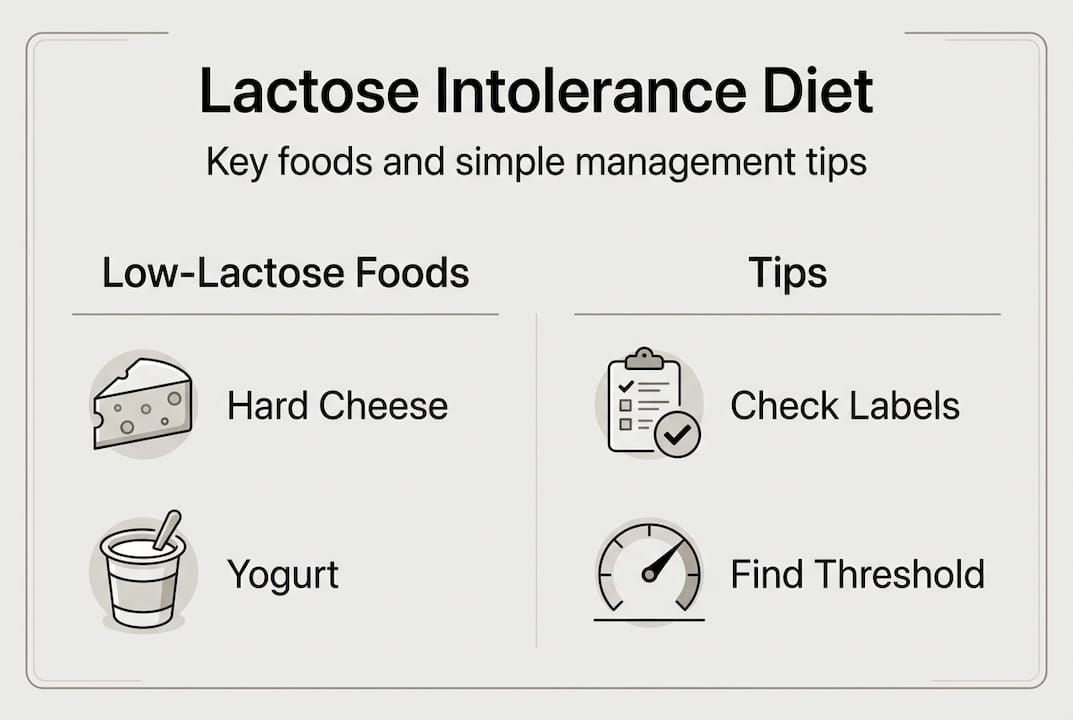
The key is finding your personal threshold. Start by removing high-lactose foods, then gradually reintroduce small amounts to see what you tolerate. Spreading lactose intake throughout the day, rather than consuming it all at once, can also reduce symptoms.
| Food | Lactose content (per serving) |
|---|---|
| Whole milk (250ml) | 12g |
| Cheddar cheese (30g) | 0.1g |
| Greek yoghurt (150g) | 4g |
| Ice cream (100g) | 6g |
| Butter (10g) | 0.1g |
| Cream (30ml) | 1g |
Practical swaps:
- Choose lactose-free milk, widely available in UK supermarkets
- Opt for hard cheeses like cheddar, parmesan, or Swiss
- Try plant-based alternatives fortified with calcium and vitamin D
- Use lactase enzyme tablets before eating dairy
Over-restriction is a common pitfall. Cutting out all dairy without guidance can lead to calcium and vitamin D deficiencies, increasing your risk of osteoporosis. If you’re unsure, consult a registered dietitian who can tailor a plan to your needs.
Always check food labels. Lactose hides in processed foods, medications, and baked goods. Ingredients like whey, curds, milk solids, and cream indicate lactose content.
Myths, misconceptions, and practical tips
Misconceptions about lactose intolerance create unnecessary anxiety and confusion. Let’s clear up the most common myths.
Myth 1: Lactose intolerance means you can’t eat any dairy.
False. Many people tolerate small amounts or specific products like hard cheese and yoghurt. Tolerance varies widely, and blanket avoidance isn’t always needed.
Myth 2: Lactose intolerance and milk allergy are the same.
No. Lactose intolerance is a digestive issue. Milk allergy is an immune reaction that can be life-threatening. The two require completely different management.
Myth 3: Everyone with lactose malabsorption has symptoms.
Not true. Some people absorb lactose poorly but experience no discomfort. Symptoms depend on individual sensitivity and gut bacteria.
Practical tips for daily life:
- Eat dairy with meals to slow digestion and reduce symptoms
- Start with small portions and gradually increase to find your limit
- Carry lactase enzyme tablets when eating out
- Communicate your needs clearly at restaurants without over-explaining
- Don’t panic over accidental exposure; symptoms are temporary and not dangerous
Pro Tip: Yoghurt with live cultures often causes fewer symptoms because the bacteria help digest lactose. Look for labels mentioning live or active cultures.
“Not all with malabsorption are symptomatic. Your tolerance is unique, and finding it takes patience and experimentation.”
If you’re still uncertain about your triggers, choosing food intolerance tests or identifying intolerances at home can provide clarity and confidence.
Consider food intolerance testing and professional support
If you’re experiencing ongoing digestive discomfort and suspect lactose intolerance, professional testing can provide the clarity you need. Accurate identification of your triggers helps you avoid unnecessary dietary restrictions and ensures you’re addressing the right issue.

Intolerance tests can pinpoint specific sensitivities, allowing you to tailor your diet with confidence. Whether you’re dealing with lactose or other potential triggers, targeted testing saves time, reduces guesswork, and supports your long-term wellbeing. Professional support from a registered dietitian ensures you maintain balanced nutrition while managing symptoms effectively.
Explore food intolerance test options to find the right fit for your needs. Broad testing panels can identify multiple sensitivities at once, helping you understand how matching your diet to your needs improves your quality of life.
Frequently asked questions
Can lactose intolerance go away or improve with age?
Symptoms may lessen if caused by illness, but primary lactose intolerance usually persists, although some people can tolerate small amounts over time.
Is lactose intolerance more common in certain ethnic groups in the UK?
Yes. Non-white UK adults are much more likely to have lactose intolerance, up to 75%, while only about 5% of white UK adults are affected.
What foods can people with lactose intolerance usually eat?
Many can eat hard cheeses, lactose-free milk, and small amounts of yoghurt without symptoms. Individual tolerance varies, but up to 12 to 15 grams of lactose daily is often manageable.
What is the difference between lactose intolerance and a milk allergy?
Lactose intolerance affects digestion due to lactase deficiency, while milk allergy is an immune reaction and can be life-threatening.










Leave a Reply
Want to join the discussion?Feel free to contribute!