

Struggling with unpredictable bloating or stomach discomfort can leave British adults searching for answers beyond everyday dietary tweaks. Understanding the difference between a food allergy and intolerance is key, as comprehensive intolerance tests promise to pinpoint hidden triggers without the need for clinical visits. While these tests are convenient, scientific research highlights limitations in their accuracy, so taking a careful approach guided by expert advice can help you discover practical solutions for your digestive wellbeing.
Table of Contents
- What Is A Comprehensive Intolerance Test?
- Key Differences: Food Versus Environmental Testing
- How Bio-Resonance Intolerance Testing Works
- Interpreting Results And Practical Applications
- Risks, Reliability, And Alternatives In The UK
Key Takeaways
| Point | Details |
|---|---|
| Comprehensive Intolerance Tests Provide Insights | These tests identify non-immune mediated food and environmental sensitivities, helping individuals understand their health disruptions. |
| Diagnosis Requires Professional Guidance | Despite their insights, comprehensive intolerance tests are not definitive, and supervised elimination diets are preferred for accurate diagnosis. |
| Understand the Differentiation Between Food and Environmental Testing | Food tests focus on dietary triggers, while environmental tests examine reactions to external agents; both require specific methodologies. |
| Risks of Unverified Testing Methods | Many popular intolerance tests lack scientific validation, potentially leading to nutritional deficiencies and unnecessary dietary restrictions. |
What Is a Comprehensive Intolerance Test?
A comprehensive intolerance test is an advanced diagnostic approach designed to identify specific food and environmental sensitivities that might be impacting an individual’s overall health and wellbeing. Unlike traditional allergy tests that focus on immediate immune responses, these tests explore non-immune mediated food reactions which can cause subtle but significant health disruptions.
Typically, comprehensive intolerance tests examine an extensive range of potential trigger items using specialised screening techniques. These might include hair sample analysis, blood tests, or bio-resonance technology to detect subtle physiological responses to different substances. The goal is to create a personalised profile of an individual’s potential sensitivities across multiple categories including food groups, environmental allergens, and other potential inflammatory triggers.
However, it’s crucial to understand that while these tests offer valuable insights, they are not definitive diagnostic tools. Scientific research highlights limitations in comprehensive intolerance testing methods. The gold standard for identifying true food intolerances remains the traditional elimination and reintroduction diet, preferably conducted under professional medical supervision.
Here is a summary of common intolerance test methods and what each can reveal:
| Test Method | Main Focus | Invasiveness | Typical Insights |
|---|---|---|---|
| Hair Sample Analysis | Food/environmental triggers | Non-invasive | Broad sensitivity clues |
| Blood (IgG) Testing | Food sensitivity markers | Minimally invasive | Specific food categories |
| Bio-resonance Technology | Energetic/physiological responses | Non-invasive | Unique energetic patterns |
| Elimination Diet | Confirming trigger foods | Requires supervision | Direct symptom tracking |
Pro tip: Before undertaking any comprehensive intolerance test, consult with a healthcare professional to ensure the most appropriate and personalised approach to understanding your potential sensitivities.
Key Differences: Food Versus Environmental Testing
Food testing and environmental testing represent two distinct but interconnected approaches in understanding bodily sensitivities. While both aim to identify potential triggers affecting individual health, they differ significantly in their methodology, focus, and diagnostic techniques. Food allergy testing involves immune-mediated diagnostic methods that are more scientifically validated compared to environmental sensitivity screenings.
Food intolerance tests primarily concentrate on identifying specific dietary triggers that might cause digestive discomfort, inflammation, or subtle systemic reactions. These tests typically analyse potential sensitivities to food groups like dairy, gluten, specific proteins, or complex carbohydrates. In contrast, environmental testing explores reactions to external substances such as pollen, dust mites, chemical compounds, synthetic materials, and airborne particulates that could trigger physiological responses.
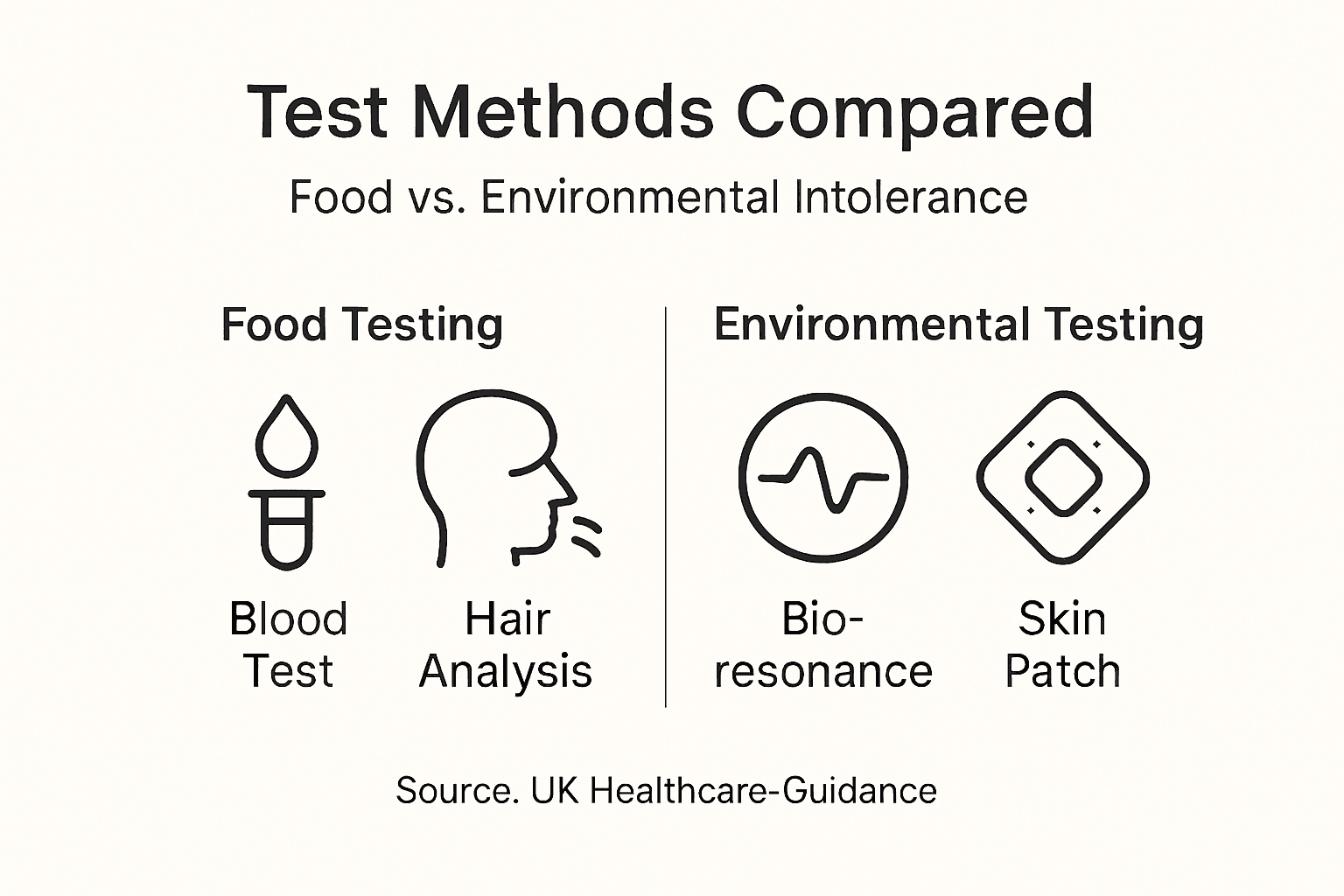
The diagnostic approaches for these two testing categories also diverge considerably. Food intolerance assessments often utilise techniques like hair sample analysis, blood screenings, or bio-resonance technology to detect subtle inflammatory markers. Environmental sensitivity tests might involve skin patch tests, blood panels measuring inflammatory markers, or specialised respiratory function assessments to understand an individual’s reactivity to specific environmental substances.
Pro tip: Consider consulting a healthcare professional who can provide personalised guidance on interpreting test results and developing a comprehensive management strategy for your specific sensitivities.
This table contrasts food and environmental intolerance testing at a glance:
| Aspect | Food Testing | Environmental Testing |
|---|---|---|
| Trigger Focus | Dietary components | Pollen, dust, chemicals |
| Common Symptoms | Digestive discomfort | Respiratory/skin reactions |
| Main Assessment Tools | Blood, hair, bio-resonance | Skin patch, breath, blood tests |
| Result Application | Diet modification | Environment/lifestyle changes |
How Bio-Resonance Intolerance Testing Works
Bio-resonance testing represents an innovative approach to identifying potential sensitivities within the human body, utilising advanced technological principles to detect subtle energetic imbalances. Bioresonance research techniques explore how different substances interact with an individual’s unique electromagnetic frequencies, providing insights into potential intolerance triggers that might not be immediately apparent through traditional diagnostic methods.

The fundamental mechanism of bio-resonance testing involves capturing and analysing the electromagnetic waves emitted by hair samples or biological materials. Each substance, whether a food group, environmental allergen, or chemical compound, generates a specific electromagnetic signature. By comparing these signatures against a comprehensive database of known reactive substances, the testing process can identify potential sensitivities that might be causing underlying health disruptions.
Unlike conventional testing methods that rely solely on blood markers or invasive procedures, bio-resonance testing offers a non-invasive approach to understanding bodily responses. The technology essentially acts as a sophisticated screening tool, mapping out potential inflammatory triggers by examining the body’s energetic communication patterns. This method allows individuals to gain insights into their unique physiological responses without undergoing extensive medical procedures or experiencing significant discomfort.
Pro tip: Consider maintaining a detailed health journal alongside your bio-resonance test results to track how identified sensitivities correlate with your day-to-day physical and emotional wellbeing.
Interpreting Results and Practical Applications
Interpreting intolerance test results requires a nuanced and comprehensive approach that goes beyond simply identifying reactive substances. Practical health management strategies involve understanding the severity, frequency, and potential systemic impact of identified sensitivities. The results typically categorise reactions into different levels of intensity, ranging from mild to severe, which helps individuals prioritise their dietary and lifestyle modifications.
Practical application of test results involves developing a structured elimination and reintroduction strategy. This means systematically removing identified trigger substances from one’s diet and lifestyle, while carefully monitoring physiological responses. The process is not about complete elimination but creating a personalised management plan that allows individuals to understand their body’s unique reactions and develop sustainable long-term health strategies.
Translating test results into actionable health insights requires collaboration with healthcare professionals who can provide contextual interpretation. The data serves as a valuable starting point for deeper investigation, potentially uncovering underlying inflammation patterns, digestive challenges, or systemic sensitivities that might have been previously undetected. This approach transforms raw test data into a comprehensive wellness roadmap, empowering individuals to make informed decisions about their dietary choices and overall health management.
Pro tip: Work with a nutritional therapist or healthcare professional to develop a personalised strategy that integrates your intolerance test results into a holistic wellness plan.
Risks, Reliability, and Alternatives in the UK
Intolerance testing involves inherent complexities that require careful consideration of potential risks and limitations. Common testing methods often lack scientific validation and can potentially mislead individuals about their true dietary sensitivities. Many commercially available tests, including IgG antibody screenings and hair analyses, have been criticised by medical professionals for producing unreliable results that might prompt unnecessary dietary restrictions.
The primary risks associated with unverified intolerance testing include potential nutritional deficiencies and psychological distress. Individuals might unnecessarily eliminate entire food groups based on inconclusive test results, which could compromise their overall nutritional intake. Moreover, the psychological impact of receiving potentially inaccurate sensitivity information can lead to anxiety, unnecessary dietary restrictions, and a distorted relationship with food.
In the United Kingdom, healthcare professionals recommend more rigorous alternatives to commercial intolerance tests. These include medically supervised elimination diets, carefully monitored food challenges, and targeted diagnostic procedures such as hydrogen breath tests for specific conditions like lactose intolerance. Professional guidance ensures that any dietary modifications are scientifically sound, nutritionally balanced, and tailored to an individual’s specific health requirements.
Pro tip: Always consult a registered dietitian or healthcare professional before making significant dietary changes based on intolerance test results, to ensure your nutritional needs are comprehensively addressed.
Unlock Your Body’s Hidden Sensitivities for Better Wellbeing
If you are struggling with unexplained digestive discomfort or suspect food and environmental triggers are affecting your health, understanding your unique sensitivities is vital. This article has shown how comprehensive intolerance tests, especially those using bio-resonance technology, can reveal subtle inflammatory triggers that traditional tests might miss. Many people feel frustrated by persistent symptoms but find relief only after pinpointing the right causes. Our specialised tests offer a non-invasive way to explore over 1,100 potential triggers, giving you clear insights into your personalised intolerance profile.

Take control of your health today with UK Food Intolerance’s proven at-home testing services. Start by exploring our Digestive Health Archives – UK Food Intolerance to understand more about how intolerances impact your wellbeing. Then choose from the Ultimate Single Intolerance Test or the Core Single Intolerance Test at https://ukfoodintolerance.co.uk. Receive fast, reliable results within 48-72 hours and clear guidance on interpreting your report for effective elimination diets. Your journey to improved health and lasting comfort begins here.
Frequently Asked Questions
What is a comprehensive intolerance test?
A comprehensive intolerance test is an advanced diagnostic tool designed to identify specific food and environmental sensitivities that may affect an individual’s health, focusing on non-immune mediated reactions.
How do comprehensive intolerance tests differ from allergy tests?
Comprehensive intolerance tests differ from allergy tests in that they assess subtle non-immune mediated reactions rather than immediate immune responses, providing insights into a broader range of sensitivities.
What are the common methods used for intolerance testing?
Common methods for intolerance testing include hair sample analysis, blood testing (IgG), bio-resonance technology, and elimination diets, each providing different insights into potential sensitivities.
How should I interpret the results of an intolerance test?
Interpreting intolerance test results involves understanding the severity and impact of identified sensitivities, often requiring collaboration with healthcare professionals to develop a structured elimination and reintroduction strategy.
Recommended
- Role of Intolerance Testing in UK Healthcare
- Comprehensive Intolerance Testing: Impact on Wellbeing
- Comprehensive Intolerance Testing: Impact on Wellbeing
- Industry Standards in UK Intolerance Testing: What Matters
- Why Sustainable Supplementation Matters for UK Athletes – Interval
- Hair Analysis Test 2025: Discover Your Health Insights | MyHair









Leave a Reply
Want to join the discussion?Feel free to contribute!