
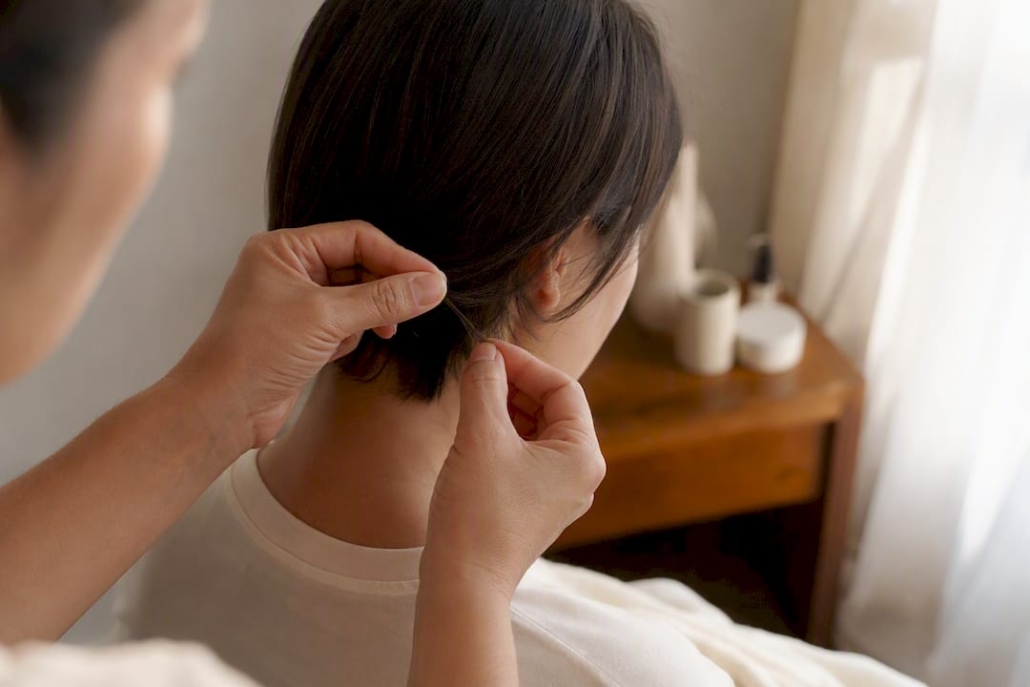
Yes, at-home bioresonance hair-sample tests can help people with unexplained eczema spot dietary patterns worth investigating, but they are a starting point, not a diagnosis. The Monash Lens review flags several non-standard testing methods as scientifically unproven, so results work best when treated as leads rather than facts.
- Verdict: useful as a screening tool to narrow down suspects, not a medical answer.
- Next action: order a test, then use the report to run a careful, time-limited elimination diet. If symptoms are severe, see a clinician first.
Table of Contents
- What is eczema and food sensitivity testing at home?
- How do you interpret a positive or negative result?
- What are the limits of at-home sensitivity testing?
- How do you run a safe elimination diet after testing?
- When should you see a clinician instead of self-testing?
- What can you expect from Ukfoodintolerance’s Core and Ultimate tests?
- Order a hair-sample test that fits your situation
- Frequently asked questions
- Sources
What is eczema and food sensitivity testing at home?
An at-home bioresonance hair-sample test works in three simple steps: you order a kit, send a small hair sample to a laboratory, and receive a digital report. Ukfoodintolerance processes samples through UK laboratory partners and delivers a report designed to flag items worth investigating for skin flare-ups, digestive symptoms, or general fatigue.
The process is non-invasive. There’s no blood draw, no needles, and no clinic visit.
- Order your kit online and choose Core or Ultimate depending on how broad you want the panel.
- Snip a small hair sample at home, following the included instructions.
- Post it to the lab using the pre-paid return method.
- Receive your digital report by email within the stated turnaround window.
Turnaround is typically a few days once the sample reaches the UK-based laboratory. Your report lists every item tested, a sensitivity indicator for each, and plain-language guidance on what to do next. It won’t diagnose eczema, but it gives you a structured list to test against your own body’s response.
How do you interpret a positive or negative result?
A flagged item on your report is a signal, not a diagnosis. It means the item is worth testing behaviourally, through removal and reintroduction, rather than something to cut out permanently on the strength of the report alone. A clear result reduces the likelihood that item is a driver of your symptoms, but it doesn’t rule out every possible trigger, especially where environmental factors or stress are also at play.
Here’s how to turn a report into something useful:
- Rank your flagged items by sensitivity score, and start with the two or three highest.
- Keep a symptom diary alongside the elimination process, noting skin condition, itch severity, and digestive symptoms daily.
- Remove one item, or a small related group, for two to four weeks before judging any change.
- Reintroduce slowly and watch for a reaction within 24 to 72 hours, since eczema flares can be delayed rather than immediate.
Pro Tip: Photograph affected skin at the same time each day under similar lighting. Written notes are useful, but a photo timeline makes subtle improvement far easier to spot than memory alone.
If several items show borderline scores, don’t eliminate them all at once. Test the strongest signal first. Removing five foods simultaneously makes it almost impossible to know which one, if any, was responsible for a change.
What are the limits of at-home sensitivity testing?
Bioresonance testing sits in a category of methods that lacks strong peer-reviewed validation. The Monash Lens analysis names several non-standard approaches as scientifically unfounded, warning that unreliable results can mislead people into thinking a genuine trigger is safe, or into avoiding foods unnecessarily.
Methods worth treating with particular caution include:
- Electrodermal or Vega testing
- Certain hair analysis variants making unverified claims
- Cytotoxicity testing
- Voice analysis
- Kinesiology-based “muscle testing”
Tests without peer-reviewed backing can produce false positives and false negatives alike, and the real risk isn’t just an inaccurate result. It’s the knock-on effect: needless food restriction, missed nutrients, and a false sense of security that delays proper medical care.
The practical risks are worth naming plainly: cutting too many foods can lead to nutritional gaps, particularly in children; a false negative can leave someone chasing the wrong lead for months; and cost adds up quickly if repeated testing replaces a clear plan.
When choosing a provider, watch for red flags. A provider that won’t say where samples are processed, offers no elimination guidance, or promises to “cure” eczema outright is one to avoid. Legitimate services state their laboratory processing location, explain their methodology in plain terms, and are honest about what a report can and cannot tell you.
How do you run a safe elimination diet after testing?
Before removing anything, do a few basic checks. Note your current symptoms, take baseline photos of affected skin, and start a symptom diary a few days before you begin. If you’re on medication or have other health conditions, a quick chat with your GP first is sensible.
- Choose your target items from the test report, starting with the highest-scoring two or three.
- Remove them systematically, ideally one item or one small related group at a time, for two to six weeks depending on how quickly your skin typically responds.
- Track daily, using the same symptom diary and photo routine throughout.
- Pause and reassess if symptoms worsen sharply, rather than pushing through.
- Reintroduce one item at a time, waiting 48 to 72 hours between each to watch for a reaction before adding the next.
- Confirm a genuine trigger by removing and reintroducing it a second time. A repeatable pattern is far more convincing than a one-off flare.
Pro Tip: Don’t eliminate more than three or four items at once. Broad restriction feels proactive, but it makes cause and effect almost impossible to untangle and raises the risk of missing key nutrients.
Variety matters throughout. Swap out a flagged food for a genuine equivalent rather than simply eating less overall, and if you’re removing entire food groups, such as dairy, ask a dietitian whether supplementation makes sense. Ukfoodintolerance’s elimination diet checklist sets out this sequencing in more detail, including how to log reactions consistently.

When should you see a clinician instead of self-testing?
Self-directed testing has its place, but certain signs mean it’s time to bring in professional support rather than continuing alone.
- Rash that’s spreading rapidly, weeping, or showing signs of infection
- Any breathing difficulty, swelling of the face or throat, or other systemic symptoms
- Unexplained weight loss or signs of nutritional deficiency
- Eczema that keeps worsening despite consistent diet changes
Bring your digital report, your symptom diary, dated photos, a list of current medications, and a summary of what you’ve already eliminated. A GP can rule out other causes; a dermatologist can assess the skin directly; a registered dietitian can check your diet remains nutritionally complete during elimination.
What can you expect from Ukfoodintolerance’s Core and Ultimate tests?
Ukfoodintolerance offers two main panels, and the right choice depends on how broad a picture you want.
- Core Single Intolerance Test: covers 500 items, a solid starting point if budget matters and you want a focused first pass.
- Ultimate Single Intolerance Test: covers over 1,100 items for a wider sweep, useful if the Core panel leaves too many unanswered questions.
- Both use the same non-invasive hair sample collected at home and processed through UK laboratory partners, with reports typically delivered in 48 to 72 hours.
After you order, the process runs in a predictable sequence:
- Your kit arrives with clear collection instructions.
- You post the hair sample back using the provided method.
- The UK laboratory processes the sample and compiles your report.
- You receive a digital report with sensitivity indicators plus interpretation guidance and an elimination checklist.
Be realistic about total cost. The test itself is one expense, but a dietitian consultation, supplements during restriction, or a repeat test months later can all add up. Factor those in before you commit to a long elimination plan.
A candid note on what testing can and cannot do
I’d try an at-home hair-sample test if my eczema had no obvious cause. It’s a low-effort way to generate a shortlist worth investigating properly, and that shortlist alone can save months of guesswork. What it shouldn’t replace is a clinical assessment for anyone with severe, spreading, or infected skin.
The most useful home tests act as a shortlist generator, and eczema improves fastest when that shortlist is checked with a disciplined elimination diet, not blind trust in a single report.
| Point | Details |
|---|---|
| Treat results as leads | A flagged item means “test it behaviourally,” not “this is confirmed.” |
| Avoid mass elimination | Remove no more than three or four items at once to keep cause and effect clear. |
| Track symptoms daily | Use a diary and dated photos to catch delayed eczema flares after reintroduction. |
| Know your red flags | Spreading rash, breathing issues, or worsening symptoms mean it’s time for a GP. |
| Ukfoodintolerance fits early-stage screening | Core (500 items) or Ultimate (1,100+ items) hair-sample tests with UK lab processing and a 48 to 72 hour turnaround. |
Order a hair-sample test that fits your situation
If you’ve been guessing at eczema triggers with no clear pattern, ordering a structured test beats waiting for another flare-up to strike. Ukfoodintolerance’s Core and Ultimate panels give you a specific list of items to work through, backed by UK laboratory processing and a report that arrives within 48 to 72 hours, rather than weeks of trial and error with no shortlist at all.

Choosing between them comes down to budget and how thorough you want the first pass to be. The Core Single Intolerance Test covers 500 items and suits a first attempt at narrowing things down; the Ultimate Single Intolerance Test covers over 1,100 items and works well if you’ve already ruled out the obvious suspects. Both come with an elimination-diet checklist and interpretation support, so you’re not left staring at a spreadsheet of scores with no idea what to do next.
Browse the full range of test kits and pick the panel that matches how detailed a picture you need. Order today, and your report, plus a clear plan for what comes after it, could be in your inbox within days.
Frequently asked questions
Can food sensitivity really cause eczema flare-ups?
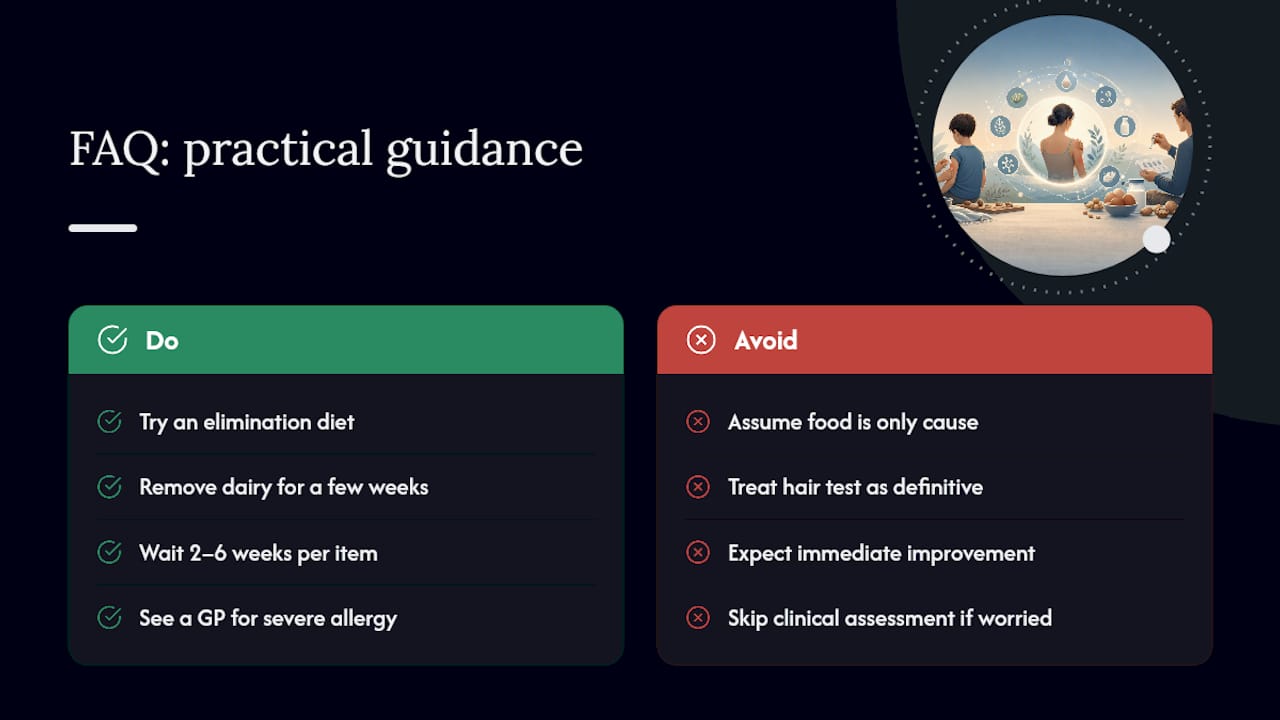
Food isn’t the only driver of eczema, but many people notice a link between certain foods and worsening skin. An elimination diet, guided by a hair-sample report, is a practical way to check whether specific foods are contributing to your flares.
Is dairy a common eczema trigger?
Dairy is one of the more frequently flagged items on intolerance reports and a common target during elimination diets, though it affects people differently. Removing it for a few weeks while tracking symptoms is the only reliable way to know if it matters for you.
How long before I see results from an elimination diet?
Most people allow two to six weeks per eliminated item before judging any change, since skin can take time to settle and flare again on reintroduction.
Do I need a blood test as well as a hair-sample test?
If your eczema is severe or you suspect a true allergy rather than a sensitivity, a GP or allergy specialist can arrange further clinical assessment. A hair-sample test is a starting point for narrowing down everyday dietary suspects, not a replacement for that care.
This article is general information, not a substitute for advice from a qualified doctor. Consult a qualified healthcare professional about your own circumstances before acting on anything here.
Sources
- The science and pseudoscience of food allergy and intolerance testing – Monash Lens










Leave a Reply
Want to join the discussion?Feel free to contribute!