

Ongoing digestive problems can make everyday life feel uncertain and uncomfortable. Many adults in the United Kingdom search for clear answers, yet the right solution often seems out of reach. Modern food intolerance testing offers affordable, non-invasive ways to explore the hidden triggers behind digestive discomfort, with professional methods now focusing on scientifically validated protocols to improve individual wellbeing.
Table of Contents
- Defining Food Intolerance Testing Today
- Key Testing Types And Emerging Technologies
- How Bio-Resonance And At-Home Methods Work
- Legal Status, Accuracy, And Regulations In The Uk
- Comparing Traditional And Modern Approaches
- Practical Implications And Next Steps For Consumers
Key Takeaways
| Point | Details |
|---|---|
| Importance of Professional Testing | Professional food intolerance testing is crucial for accurate diagnosis and personalised recommendations, compared to at-home methods which lack scientific validation. |
| Evolving Methodologies | Modern testing techniques are advancing, incorporating genetic, biochemical, and immunological analyses for more precise insights into food sensitivities. |
| Regulatory Framework | Food intolerance testing in the UK is governed by stringent regulations to ensure consumer safety and the accuracy of testing methodologies. |
| Holistic Health Management | A comprehensive approach that combines various diagnostic methods and professional guidance is essential for effective food intolerance management. |
Defining Food Intolerance Testing Today
Food intolerance testing represents a critical health intervention for individuals experiencing unexplained digestive discomfort and systemic inflammatory responses. Unlike traditional allergy testing, these assessments focus on identifying specific food sensitivities that may not trigger immediate immune responses but can cause chronic health complications.
Modern food intolerance testing encompasses several sophisticated methodological approaches, which the Food Standards Agency research highlights as increasingly important for protecting consumer health. These methodologies include:
- Blood serum analysis for inflammatory markers
- Hair sample bioresonance testing
- Comprehensive elimination and reintroduction dietary protocols
- Advanced immunological screening techniques
The British Dietetic Association provides crucial context by distinguishing between immune-mediated allergic reactions and non-immune food intolerances. These distinctions are vital for developing accurate testing protocols that can reliably identify potential dietary triggers affecting an individual’s wellbeing.
Professional testing approaches differ significantly from home-based or unverified methods. Medical professionals recommend structured testing that involves:
- Comprehensive patient medical history review
- Systematic symptom tracking
- Controlled dietary elimination experiments
- Professional diagnostic interpretation
While food intolerance testing continues evolving, the core objective remains consistent: empowering individuals to understand their unique physiological responses to specific dietary substances.
To better understand the landscape of food intolerance testing, here’s a comparison of professional medical methods versus popular at-home and unverified approaches:
| Aspect | Professional Testing | At-Home/Unverified Methods |
|---|---|---|
| Oversight | Conducted by clinicians | Self-administered or remote |
| Reliability | Scientifically validated | Often unproven or limited |
| Interpretation | Expert analysis required | Usually automated or generic |
| Personalisation | Tailored recommendations | One-size-fits-all results |
| Medical Follow-up | Direct healthcare support | Rarely offers follow-up |
Pro tip: Always consult a registered dietitian or healthcare professional to interpret your food intolerance test results and develop a personalised dietary management strategy.
Key Testing Types and Emerging Technologies
Food intolerance testing has evolved dramatically, with multiple diagnostic approaches emerging to provide precise insights into individual dietary sensitivities. Analytical testing methodologies have advanced significantly, offering increasingly sophisticated techniques for identifying potential food-related inflammatory responses.
The primary testing methodologies currently employed in the United Kingdom include:
- Blood Serum Analysis: Measuring immunoglobulin responses to specific food proteins
- Hair Follicle Testing: Utilising bioresonance technology to detect subtle energetic imbalances
- Elimination Diet Protocols: Systematic food removal and reintroduction to identify trigger substances
- Comprehensive Immunological Screening: Advanced techniques mapping complex immune system reactions
Emerging technologies are revolutionising food intolerance diagnostics through innovative approaches such as:
- Multiplex assay development
- Point-of-use rapid testing techniques
- Genetic predisposition screening
- Microbiome interaction analysis
Bioresonance technologies represent a particularly exciting frontier, offering non-invasive testing methods that can detect subtle energetic disruptions associated with specific food sensitivities. These approaches provide individuals with personalised insights into their unique physiological responses.
Advanced diagnostic techniques are transforming our understanding of food intolerances, moving beyond traditional testing paradigms to offer more comprehensive and nuanced health assessments.
As research continues, the future of food intolerance testing will likely incorporate increasingly sophisticated genetic and molecular profiling techniques, enabling more precise and personalised dietary recommendations.

Pro tip: Consider maintaining a detailed food and symptom diary alongside professional testing to provide comprehensive context for your healthcare provider.
How Bio-Resonance and At-Home Methods Work
Bio-resonance testing represents an innovative approach to identifying potential food intolerances, offering individuals a non-invasive method to explore their unique physiological responses. At-home food intolerance tests have gained popularity, though medical professionals caution about their scientific validity and potential limitations.
The primary mechanisms of bio-resonance testing involve several key techniques:
- Energetic Frequency Analysis: Measuring subtle electromagnetic oscillations associated with specific food substances
- Hair Follicle Sampling: Collecting genetic and energetic information through microscopic hair samples
- Electromagnetic Response Mapping: Detecting potential inflammatory triggers through subtle energy field interactions
- Vibrational Frequency Comparison: Assessing individual resonance patterns against known food-related energy signatures
At-home testing methods typically involve straightforward collection processes:
- Collecting biological samples (hair or blood)
- Sending samples to specialised laboratory facilities
- Undergoing comprehensive bio-energetic analysis
- Receiving personalised diagnostic reports
Bioresonance technologies offer a fascinating glimpse into how electromagnetic interactions might provide insights into individual physiological responses. These approaches suggest that every substance emits a unique energetic frequency that can be measured and interpreted.
Emerging research indicates that while bio-resonance testing shows promise, it should not replace comprehensive medical evaluation or professional dietary guidance.
The scientific community continues to debate the precise mechanisms and reliability of bio-resonance techniques, emphasising the importance of complementing these approaches with traditional diagnostic methods and professional medical advice.
Pro tip: Always discuss your at-home test results with a registered healthcare professional to ensure comprehensive and accurate interpretation of your findings.
Legal Status, Accuracy, and Regulations in the UK
Food intolerance testing in the United Kingdom operates within a complex regulatory landscape designed to protect consumer health and ensure scientific integrity. Food allergen regulations mandate rigorous standards for testing methodologies, emphasising consumer protection and accurate diagnostic approaches.
The key legal and regulatory frameworks governing food intolerance testing include:
- European Food Safety Regulations: Establishing baseline testing standards
- UK Food Information Regulations: Requiring transparent allergen labelling
- Medical Devices Regulations: Controlling diagnostic testing equipment
- Consumer Protection Guidelines: Ensuring accurate marketing claims
Specific regulatory considerations for food intolerance testing involve:
- Mandatory scientific validation of testing techniques
- Strict requirements for clinical accuracy
- Comprehensive documentation of testing methodologies
- Regular compliance audits by regulatory bodies
Diagnostic accuracy remains a critical concern for policymakers and healthcare professionals. Current regulations emphasise the importance of evidence-based testing approaches that provide reliable, reproducible results.
Regulatory bodies continuously evaluate emerging testing technologies to ensure consumer safety and scientific validity.
The legal landscape surrounding food intolerance testing is dynamic, with ongoing discussions about standardising methodologies and protecting consumers from potentially misleading diagnostic claims.
Pro tip: Always verify the scientific credentials and regulatory compliance of any food intolerance testing service before proceeding with diagnostic procedures.
Comparing Traditional and Modern Approaches
Food intolerance diagnostics have undergone significant transformation, with contemporary testing methodologies challenging traditional assessment techniques. The evolution from purely subjective symptom tracking to data-driven diagnostic approaches represents a fundamental shift in understanding individual dietary sensitivities.
Traditional diagnostic approaches typically involved:
- Elimination Diets: Systematic food removal and symptom monitoring
- Symptom Journals: Manual tracking of dietary responses
- Clinical Observation: Physician-led assessment of potential intolerances
- Anecdotal Evidence: Patient-reported experiences
Modern diagnostic techniques now incorporate more sophisticated methodologies:
- Molecular immunological screening
- Advanced genetic profiling
- Comprehensive biochemical analysis
- Artificial intelligence-assisted interpretation
Technological innovation has dramatically expanded our understanding of food interactions with individual physiological systems. Emerging research suggests that precision diagnostics can provide more nuanced insights than traditional observational methods.
Contemporary food sensitivity testing represents a paradigm shift from generalist approaches to personalised, data-driven health management.
The integration of cutting-edge technologies promises more accurate, reliable diagnostics that move beyond simplistic binary classifications of food reactions.
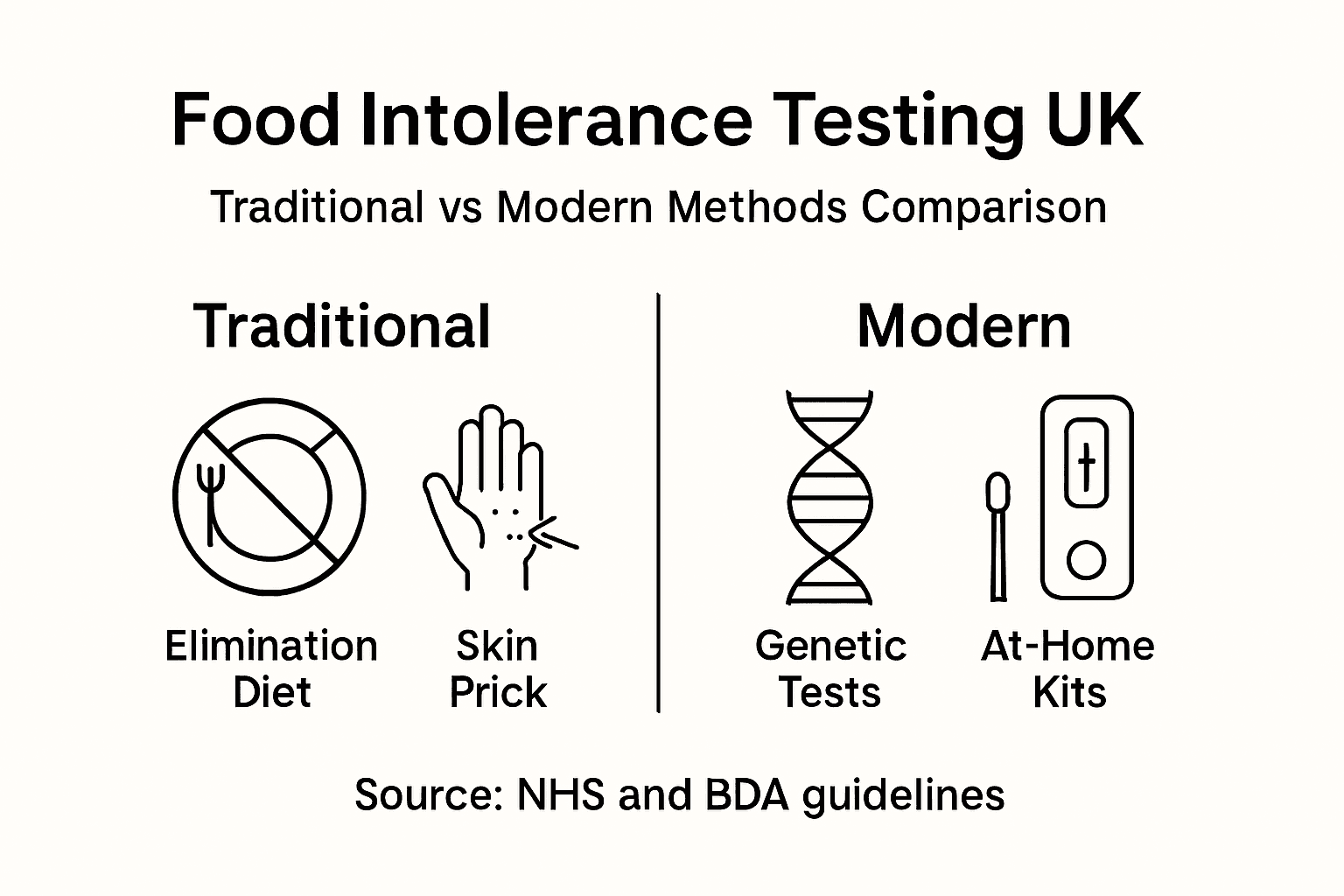
The following table summarises traditional versus modern food intolerance diagnostic approaches, highlighting how new technologies have shifted personal dietary assessment:
| Approach Type | Key Features | Typical Outcomes |
|---|---|---|
| Traditional | Journals, elimination diets | Broad detection, subjective |
| Modern | Genetic and biochemical tests | Pinpoint triggers, detailed |
| Integrated | Combines old and new methods | Comprehensive insights |
Pro tip: Combine modern diagnostic insights with professional medical guidance to develop a comprehensive understanding of your unique dietary needs.
Practical Implications and Next Steps for Consumers
Navigating the complex landscape of food intolerance testing requires strategic decision-making and a proactive approach to personal health management. Consumers must approach diagnostic processes with informed caution, understanding both the potential benefits and limitations of available testing methodologies.
Key considerations for individuals exploring food intolerance testing include:
- Medical Consultation: Prioritise professional healthcare guidance
- Test Verification: Research scientific credibility of testing methods
- Comprehensive Approach: Combine multiple diagnostic techniques
- Personalised Interpretation: Understand individual test results contextually
Practical steps for consumers interested in food intolerance investigation involve:
- Schedule consultation with registered dietitian
- Document comprehensive medical and dietary history
- Select scientifically validated testing approach
- Develop personalised dietary management strategy
- Monitor and track physiological responses
Financial and Health Planning becomes crucial when considering food intolerance diagnostics. Individuals should budget for potential additional testing, potential dietary modifications, and potential nutritional supplementation.
Effective food intolerance management requires a holistic, patient-centred approach that balances scientific insights with individual physiological responses.
Successful navigation of food intolerance testing demands patience, critical thinking, and a commitment to understanding one’s unique bodily responses. The journey is not about finding a single definitive answer, but developing a nuanced understanding of personal health.
Pro tip: Maintain a detailed food and symptom diary before and after testing to provide your healthcare provider with comprehensive, contextual information about your dietary experiences.
Discover Your Unique Food Sensitivities with Advanced At-Home Testing
The future of food intolerance testing in the United Kingdom is moving towards personalised and non-invasive solutions that empower you to take control of your digestive health. If you have experienced unexplained symptoms or inflammation, navigating complex testing options can feel overwhelming. The article highlights challenges such as distinguishing immune-mediated allergies from intolerances and the importance of reliable, scientifically validated testing methods like bio-resonance technology.
At UK Food Intolerance we provide comprehensive yet affordable at-home testing solutions that address these concerns. Our Ultimate Single Intolerance Test screens over 1,100 food and environmental items, while the Core Single Intolerance Test offers an insightful analysis of 500 common triggers. Both tests use simple hair sample collection with fast turnaround and expert guidance. To deepen your understanding, explore our Food Sensitivities Archives – UK Food Intolerance and Digestive Health Archives – UK Food Intolerance for expert advice and personalised support.

Take the next step to uncover hidden intolerances affecting your wellbeing and start your journey towards better health today at UK Food Intolerance. Don’t wait for symptoms to worsen—act now for clarity and confidence in your dietary choices.
Frequently Asked Questions
What are the main types of food intolerance testing available today?
Modern food intolerance testing includes blood serum analysis, hair follicle testing, elimination diet protocols, and comprehensive immunological screening techniques. Each method offers unique insights into individual dietary sensitivities.
How does bio-resonance testing for food intolerances work?
Bio-resonance testing uses energetic frequency analysis and electromagnetic response mapping to detect potential food intolerances. It measures subtle energy interactions associated with specific food substances through various techniques like hair follicle sampling.
Why is professional supervision important when testing for food intolerances?
Professional supervision ensures accurate interpretation of test results and provides tailored recommendations for dietary management. It also emphasizes the importance of structured testing over at-home or unverified methods.
What considerations should I take into account before undergoing food intolerance testing?
Before testing, consult with a registered dietitian, research the scientific validity of the testing methods, maintain a comprehensive medical history, and consider combining multiple diagnostic techniques for a more thorough understanding.










Leave a Reply
Want to join the discussion?Feel free to contribute!