

TL;DR:
- Undiagnosed sensitivity affects a significant portion of the population, causing delayed and non-immune reactions to foods and environments. Recognizing these sensitivities requires systematic symptom tracking and professional evaluation, as symptoms are often mild but persistent. Management involves supervised elimination diets, professional guidance, and environmental adjustments to reduce triggers.
Undiagnosed sensitivity is defined as a pattern of adverse reactions to foods, environmental stimuli, or sensory inputs that occurs without a formal medical diagnosis or the immediate, obvious symptoms typical of a classic allergy. It sits in a grey zone between allergy and intolerance, and it affects more people than most realise. Research shows that about 30% of the population carry a genetically heritable sensitive phenotype, meaning deeper information processing and heightened reactions to subtle stimuli. That figure alone explains why so many people feel unwell without ever receiving a clear answer from their GP. Understanding what causes sensitivity is the first step toward doing something practical about it.
What is undiagnosed sensitivity and what drives it biologically?
Sensitivity reactions fall into two broad biological categories: immune-mediated and non-immune-mediated. A classic food allergy is immune-mediated. The immune system identifies a protein as a threat and triggers an immediate, sometimes severe response. Undiagnosed sensitivities, by contrast, typically bypass the immune system entirely.
The most studied non-immune mechanism is enzyme deficiency. Lactose intolerance is the clearest example. The body lacks sufficient lactase to break down lactose, and digestive symptoms follow. Similar enzyme-related mechanisms exist for fructose, histamine, and certain food additives.
The second major mechanism is Sensory Processing Sensitivity (SPS), a recognised neurological phenotype. People with SPS process sensory and emotional information more deeply than average. This is not a disorder. It is a trait, and SPS is often misinterpreted as anxiety or depression, particularly when the person’s environment is unsupportive.
A third factor is delayed symptom onset. Unlike an allergy, which triggers a reaction within minutes, sensitivity reactions can appear hours or even days after exposure. This delay makes identifying the trigger genuinely difficult without systematic tracking.
- Immune-mediated: Allergies involving IgE antibodies, with rapid onset
- Enzyme deficiency: Inability to process specific compounds such as lactose or fructose
- Neurological processing: SPS phenotype causing heightened responses to sensory input
- Delayed reactions: Symptoms appearing 24–72 hours after exposure, complicating identification
Pro Tip: Keep a simple daily log of what you eat, your environment, and how you feel. Even two weeks of consistent notes can reveal patterns that months of guesswork cannot.
How can you recognise undiagnosed sensitivity symptoms?
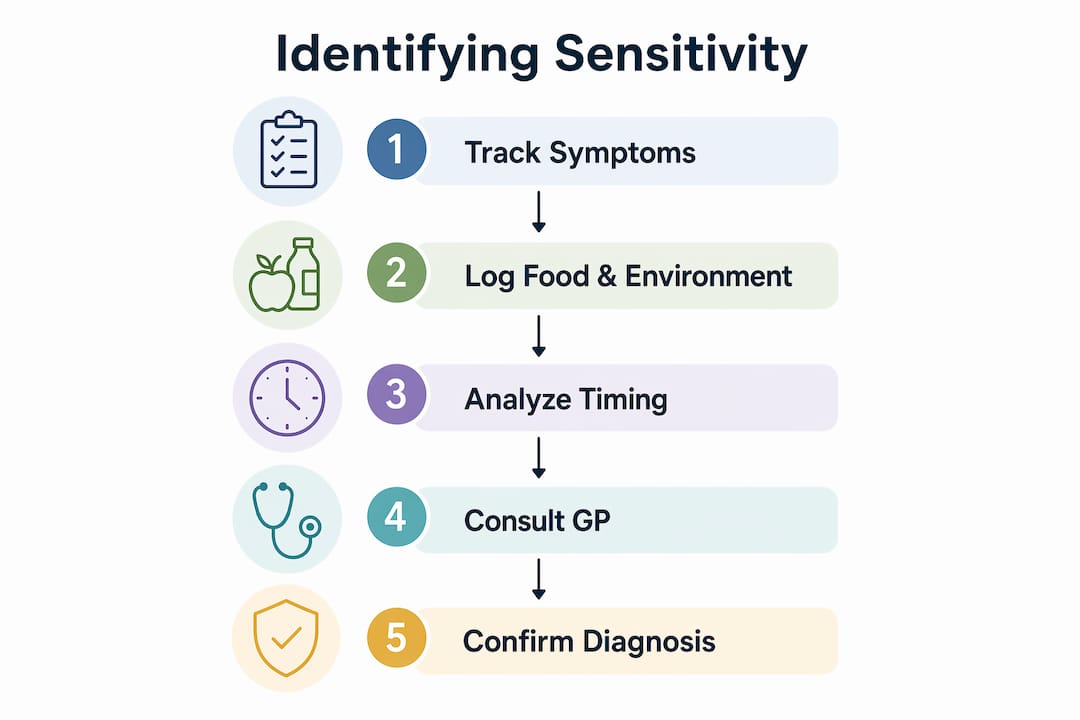
Recognising undiagnosed sensitivity symptoms is difficult because they overlap with dozens of other conditions. The most common symptoms include bloating, abdominal pain, loose stools, fatigue, brain fog, headaches, skin rashes, and nasal congestion. None of these are specific to sensitivity alone.

The key distinguishing feature is timing. Sensitivity symptoms are often delayed by days, which means you may not connect Tuesday’s pasta with Thursday’s headache. This delay is what separates sensitivity from allergy in practical terms.
Ruling out serious conditions is not optional. Clinical guidance published in early 2026 mandates that conditions such as inflammatory bowel disease, coeliac disease, and food allergies must be excluded before a sensitivity diagnosis is considered. A GP referral for blood tests and, where appropriate, an endoscopy is the correct first step.
The table below clarifies the key differences between allergy, intolerance, and sensitivity:
| Feature | Food allergy | Food intolerance | Food sensitivity |
|---|---|---|---|
| Immune system involved | Yes (IgE-mediated) | No | Rarely |
| Onset of symptoms | Minutes | Hours | Hours to days |
| Severity | Can be life-threatening | Uncomfortable | Mild to moderate |
| Diagnosis method | Skin prick or blood test | Breath test or exclusion | Symptom tracking, exclusion |
| Example | Peanut allergy | Lactose intolerance | Gluten sensitivity (non-coeliac) |
Common symptoms of undiagnosed sensitivity to watch for include:
- Persistent bloating or cramping with no clear cause
- Fatigue that does not improve with rest
- Recurring headaches or migraines
- Skin reactions such as eczema flares or hives
- Brain fog or difficulty concentrating
- Mood changes, including irritability or low mood
What practical methods help identify sensitivities safely?
The most reliable method for identifying undiagnosed sensitivities is a structured elimination diet combined with a detailed symptom diary. This approach removes suspected trigger foods for a set period, typically two to six weeks, then reintroduces them one at a time while monitoring symptoms carefully.
- Start a food and symptom diary. Record everything you eat, your environment, stress levels, and symptoms daily. Use a simple notebook or an app. Consistency matters more than detail.
- Identify patterns over two to four weeks. Look for correlations between specific foods or environments and symptom flares. Tracking hidden food triggers is far easier with a written record.
- Remove suspected triggers one at a time. Eliminating everything simultaneously makes it impossible to identify which food is responsible. Remove one category, wait two weeks, and assess.
- Reintroduce foods systematically. Reintroduce each food in a controlled way, eating a normal portion and observing for 48–72 hours before moving to the next item.
- Seek professional guidance before restricting your diet significantly. Registered Dietitian Erica Golden warns that elimination diets risk triggering disordered eating unless medical screening for eating disorders is conducted beforehand.
Restrictive diets also carry a specific risk of orthorexia and avoidant/restrictive food intake disorder. These are real clinical concerns, not edge cases. A registered dietitian can supervise the process and protect against nutritional deficiency.
Pro Tip: Ask your GP for a coeliac blood test before starting any gluten elimination. Removing gluten before testing makes the results unreliable and could delay a genuine diagnosis.
Home testing kits can offer a useful starting point, but they are not diagnostic tools. Use them to generate hypotheses, not conclusions, and always follow up with a healthcare professional.
How do environmental and sensory sensitivities connect to this?
Environmental and sensory sensitivities are a distinct but closely related category. Dr George Sachs, a clinical psychologist, confirms that sensory issues in adults represent neurological differences rather than personality quirks. They affect how the brain processes sound, light, texture, and smell.
People with Sensory Processing Sensitivity can appear highly functional or significantly distressed depending entirely on their environment. A quiet, low-stimulation workspace may allow someone to perform at their best. An open-plan office with fluorescent lighting and background noise may leave the same person exhausted and overwhelmed by midday.
Common environmental triggers include:
- Loud or persistent background noise
- Bright or flickering artificial lighting
- Strong smells from cleaning products, perfumes, or food
- Rough or synthetic fabric textures
- Crowded or unpredictable social environments
- Temperature extremes or sudden changes
The overlap between SPS and anxiety or mood disorders creates a diagnostic challenge. Many sensitive people receive a mental health diagnosis when the underlying issue is neurological processing. Reframing sensory hypersensitivity as a neurological trait rather than a character flaw significantly improves mental health outcomes.
Practical adaptations include using noise-cancelling headphones, adjusting lighting at home and work, choosing natural fabrics, and building regular periods of low-stimulation recovery into your day.
What are the biggest myths about undiagnosed sensitivities?
The most damaging myth is that sensitivity symptoms are imaginary or psychosomatic. They are not. The neurological and biochemical mechanisms behind sensitivities are well documented. Dismissing symptoms as “all in your head” delays proper management and causes real harm.
A second common myth is that commercial at-home sensitivity tests provide definitive answers. Clinical experts at Nationwide Children’s Hospital caution that commercial sensitivity testing often exaggerates symptom lists to increase sales. A positive result on a broad panel test does not confirm a clinical sensitivity. It identifies a signal worth investigating further.
“Patients should prioritise medical evaluation to exclude serious conditions before acting on commercial test results.” — Nationwide Children’s Hospital clinical guidance
A third myth is that sensitivity is a lifestyle choice or a trend. Research confirms it is a fixed neurological and physiological trait. Sensitivity is a fixed neurotype affecting roughly 30% of people. It does not disappear with willpower or a positive attitude.
The balanced, evidence-based approach combines self-monitoring, professional medical evaluation, and realistic expectations. No single test or diet will resolve every symptom overnight. Progress is gradual and requires patience.
Key takeaways
Undiagnosed sensitivity is a real, biologically grounded condition affecting roughly 30% of people, and identifying it requires systematic symptom tracking, professional medical evaluation, and a clear understanding of how it differs from allergy and intolerance.
| Point | Details |
|---|---|
| Sensitivity is not allergy | Sensitivities are non-immune reactions with delayed onset, unlike immediate allergic responses. |
| 30% prevalence | Roughly 30% of people carry a sensitive phenotype, making this far more common than most realise. |
| Delayed symptoms complicate diagnosis | Reactions can appear 24–72 hours after exposure, requiring systematic tracking to identify triggers. |
| Elimination diets need supervision | Unsupervised restrictive diets carry real risks of disordered eating and nutritional deficiency. |
| Commercial tests are not diagnostic | At-home sensitivity tests generate leads, not diagnoses. Always follow up with a healthcare professional. |
Sensitivity is not a weakness: my honest view
I have spoken with many people who spent years feeling dismissed by healthcare professionals and embarrassed by their own reactions to food, noise, or light. The pattern is consistent. They minimise their symptoms, push through, and eventually burn out. Masking sensitivity leads to burnout by mid-adulthood. That is not a metaphor. It is a documented clinical outcome.
The most useful shift I have seen is when people stop trying to “toughen up” and start treating sensitivity as a fixed trait that requires management, not elimination. You cannot train yourself out of a neurological phenotype. You can, however, build a life that works with it.
Self-advocacy matters here. Bring a symptom diary to your GP appointment. Ask specifically for coeliac and IBD screening before accepting a vague “sensitivity” label. Push for a dietitian referral if dietary changes are recommended. The NHS pathway exists. You just need to know to ask for it.
The science is catching up with lived experience. Research published in december 2025 confirms that SPS is a distinct neurological trait, not a subcategory of anxiety. That recognition matters. It changes how clinicians approach treatment and how sensitive people understand themselves.
— Rob
How Ukfoodintolerance can support your next step
If you have been experiencing unexplained symptoms and want a clearer picture of potential food and environmental triggers, Ukfoodintolerance offers non-invasive at-home testing using bio-resonance technology. The process is straightforward. You collect a small hair sample at home, post it to a UK-based laboratory, and receive a detailed digital report within 48–72 hours.

The intolerance tests from Ukfoodintolerance cover over 1,100 food and non-food items, giving you a broad picture of potential sensitivities to work through with your GP or dietitian. Testing does not replace medical evaluation. It gives you specific, structured information to bring to that conversation. Explore the full range of at-home test options and find the level of detail that suits your needs.
FAQ
What is undiagnosed sensitivity in simple terms?
Undiagnosed sensitivity is when your body reacts adversely to foods, environmental factors, or sensory inputs without a formal medical diagnosis or the immediate symptoms of a classic allergy. Reactions are often delayed and mild to moderate in severity.
How do sensitivity symptoms differ from allergy symptoms?
Allergy symptoms appear within minutes and can be life-threatening. Sensitivity symptoms typically appear hours to days after exposure and are uncomfortable rather than dangerous, making them harder to trace back to a specific trigger.
Can a home testing kit diagnose a food sensitivity?
No. Home testing kits can identify signals worth investigating, but clinical experts confirm they are not diagnostic tools. Always follow up any positive result with a GP or registered dietitian to rule out serious conditions such as coeliac disease.
Is Sensory Processing Sensitivity the same as being overly emotional?
No. Sensory Processing Sensitivity is a neurological trait affecting how the brain processes sensory information. Dr George Sachs confirms it represents a neurological difference, not a personality flaw or emotional weakness.
When should I see a GP about possible sensitivity symptoms?
See a GP if symptoms are persistent, significantly affecting your quality of life, or include unexplained weight loss, blood in stools, or severe fatigue. A GP can rule out inflammatory bowel disease, coeliac disease, and food allergies before any sensitivity management begins.










Leave a Reply
Want to join the discussion?Feel free to contribute!