

Persistent bloating, discomfort or unpredictable stomach pain after meals can leave anyone feeling frustrated and confused. For many health-conscious adults across the United Kingdom, unexplained digestive issues may stem from food intolerance, a condition where specific food groups create ongoing symptoms without involving the immune system. This guide will clarify the distinction between allergies and intolerances, highlighting common trigger foods and offering practical steps for identifying and managing these sensitivities.
Table of Contents
- Food Groups And Intolerance Explained
- Types Of Food Intolerance In The UK
- How Food Groups Trigger Symptoms
- Identifying Intolerances With Testing
- Safe Alternatives And Dietary Adjustments
Key Takeaways
| Point | Details |
|---|---|
| Understanding Food Intolerance | Food intolerance involves digestive responses to certain foods without immune involvement, leading to symptoms like bloating and discomfort. |
| Common Trigger Foods | Key food groups that often trigger intolerances include dairy, gluten, fructose, and specific additives in processed foods. |
| Elimination Strategies | Individuals should employ systematic elimination diets and keep detailed food diaries to identify specific intolerances effectively. |
| Alternative Dietary Options | Safe alternatives exist for common intolerances, such as lactose-free dairy products and gluten-free grains, ensuring nutritional adequacy. |
Food Groups And Intolerance Explained
Food intolerance represents a complex digestive response where certain food groups trigger uncomfortable symptoms without involving the immune system. Food hypersensitivity research highlights the nuanced differences between food allergies and intolerances, revealing how specific dietary components can cause significant physiological reactions.
Different food groups present unique challenges for individuals experiencing digestive sensitivities. The primary categories that commonly trigger intolerances include:
- Dairy products (containing lactose)
- Gluten-containing grains
- Fructose and certain sugars
- Specific proteins in legumes and nuts
- Additives and preservatives in processed foods
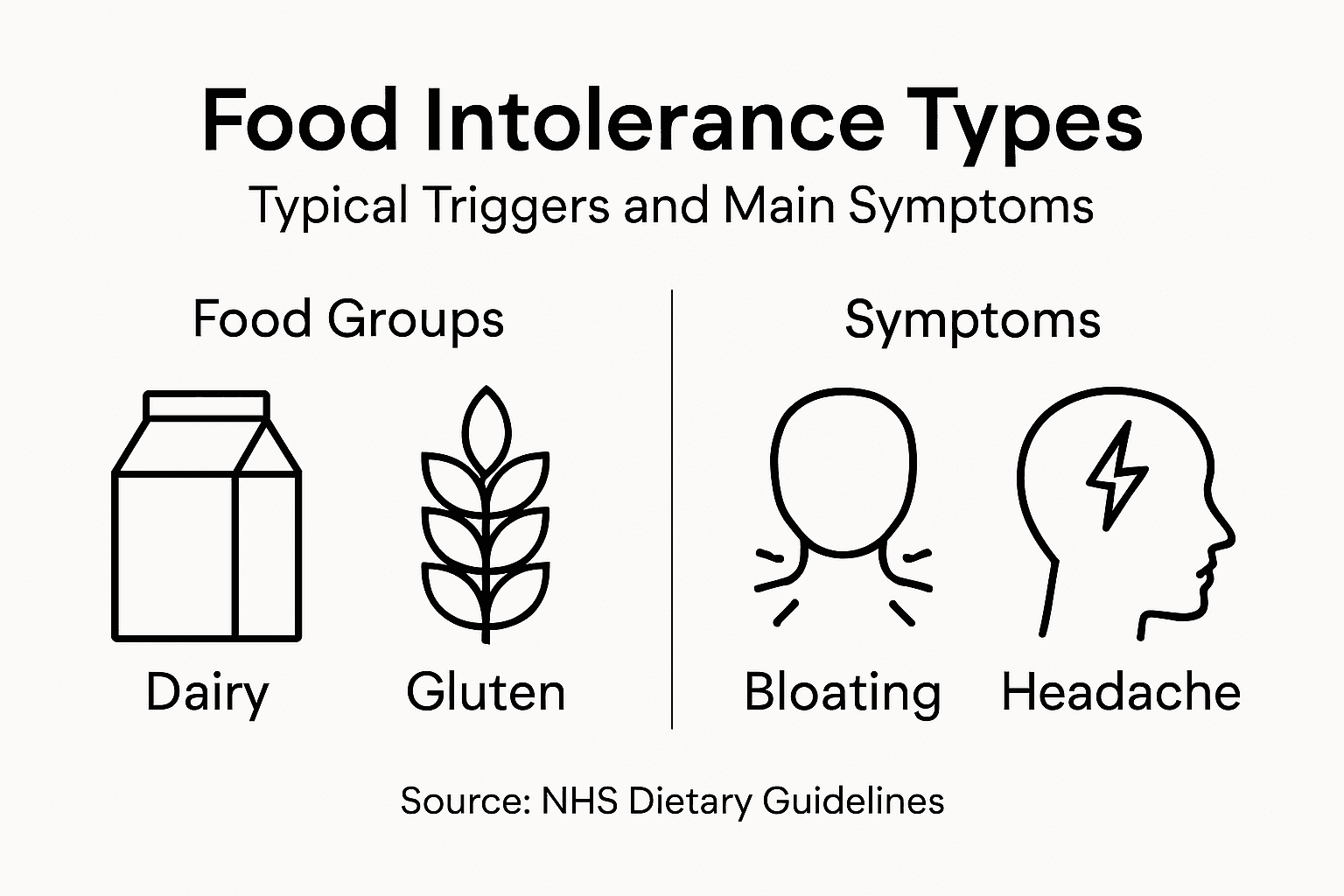
Understanding these food groups requires recognising how individual metabolic processes interact with specific nutritional components. NHS guidance on food intolerances emphasises that symptoms like bloating, stomach pain, and digestive discomfort can emerge hours after consuming problematic foods.
People experiencing repeated digestive issues should consider systematic elimination strategies to identify specific trigger foods. Keeping a detailed food diary, tracking symptoms, and potentially consulting nutritional experts can provide critical insights into personal dietary sensitivities.
Pro tip: Start by systematically removing one suspected food group at a time and monitor your body’s response over two to three weeks for accurate intolerance identification.
Types Of Food Intolerance In The UK
Food hypersensitivity research in the UK reveals that approximately a quarter of the population experiences complex digestive reactions to certain food groups. These reactions manifest as various types of food intolerances, which differ fundamentally from food allergies by not involving the immune system’s direct response.
The primary types of food intolerances prevalent in the United Kingdom include:
- Lactose Intolerance: Difficulty digesting milk sugars
- Gluten Sensitivity: Reactions to wheat, barley, and rye proteins
- Fructose Malabsorption: Challenges processing fruit sugars
- Histamine Intolerance: Reactions to naturally occurring food chemicals
- Non-Coeliac Gluten Sensitivity: Digestive issues without diagnosed coeliac disease
NHS dietary guidelines highlight that metabolic and pharmacological reactions can trigger diverse symptoms, ranging from mild digestive discomfort to more complex physiological responses. These intolerances typically emerge through specific metabolic processes that prevent efficient nutrient breakdown.
Here’s a summary of common food intolerance types and their typical digestive symptoms:
| Intolerance Type | Typical Foods Involved | Common Symptoms |
|---|---|---|
| Lactose Intolerance | Milk, soft cheese, yoghurt | Bloating, diarrhoea, cramps |
| Gluten Sensitivity | Wheat bread, pasta, barley | Abdominal pain, fatigue, loose stools |
| Fructose Malabsorption | Apples, honey, fruit juice | Gas, cramps, diarrhoea |
| Histamine Intolerance | Aged cheese, wine, cured meats | Headaches, flushing, nausea |
| Non-Coeliac Gluten Sensitivity | Rye, processed cereals, beer | Bloating, discomfort, brain fog |
Understanding individual sensitivities requires comprehensive tracking and potential professional consultation. Precise identification involves systematic elimination diets, detailed symptom journals, and potentially specialised diagnostic approaches to pinpoint exact trigger foods.
Pro tip: Maintain a comprehensive food and symptom diary, documenting everything consumed and any subsequent physical reactions to help identify potential intolerance patterns.
How Food Groups Trigger Symptoms
FODMAP dietary research reveals complex interactions between specific food groups and digestive system responses. Certain carbohydrates and proteins can provoke significant physiological reactions in sensitive individuals, creating a cascade of uncomfortable symptoms that extend beyond simple dietary discomfort.
The primary food groups known to trigger intolerance symptoms include:
- Dairy Products: Lactose and milk proteins
- Wheat-Based Foods: Gluten and related proteins
- Legumes: Complex carbohydrates difficult to digest
- Certain Fruits: High fructose content
- Processed Foods: Artificial additives and preservatives
NHS dietary guidelines demonstrate that fermentable carbohydrates can produce significant digestive disturbances. These food components create gas, cause bloating, and disrupt normal gut microbiome functioning, leading to complex symptomatic responses that vary between individuals.

Understanding individual trigger mechanisms requires careful observation and systematic dietary investigation. Tracking precise reactions, documenting symptom patterns, and potentially consulting nutritional specialists can provide deeper insights into personal digestive sensitivities.
Pro tip: Consider maintaining a detailed food and symptom journal, recording not just what you eat but also specific physiological responses to identify your unique dietary triggers.
Identifying Intolerances With Testing
Food intolerance diagnostic methods reveal that identifying digestive sensitivities requires a comprehensive and systematic approach. Unlike straightforward medical tests, food intolerance detection demands careful observation, documentation, and professional guidance to understand individual physiological responses.
Effective testing strategies typically involve multiple approaches:
- Food Diary Tracking: Documenting meals and subsequent symptoms
- Elimination Diet Protocols: Systematically removing suspected trigger foods
- Symptom Correlation Analysis: Identifying patterns between consumption and physiological reactions
- Professional Dietary Consultation: Expert assessment of nutritional impacts
- Non-Invasive Testing Options: Bioresonance and hair sample analysis
NHS diagnostic guidelines emphasise that no single definitive test exists for food intolerances. The diagnostic journey involves a personalised approach combining clinical history, dietary modifications, and careful symptom monitoring to understand individual sensitivities.
Successful identification requires patience, meticulous record-keeping, and a holistic understanding of how different food groups interact with individual metabolic processes. Consulting nutritional specialists can provide tailored insights and support throughout this investigative process.
Pro tip: Create a detailed symptom journal with precise meal descriptions, timing of consumption, and subsequent physiological responses to establish clear correlations between diet and digestive reactions.
Safe Alternatives And Dietary Adjustments
Low FODMAP dietary strategies offer comprehensive guidance for individuals managing food intolerances. Navigating dietary restrictions requires a nuanced approach that balances symptom management with nutritional adequacy, ensuring individuals can maintain a healthy and varied diet despite digestive sensitivities.
Key dietary alternatives and adjustment strategies include:
- Dairy Alternatives: Plant-based milks, lactose-free products
- Gluten-Free Grains: Quinoa, rice, buckwheat
- Protein Substitutions: Lean meats, fish, legume alternatives
- Low FODMAP Vegetables: Spinach, carrots, cucumber
- Natural Sweetener Options: Stevia, maple syrup
Nutritional management guidelines emphasise the importance of personalized dietary approaches. Successful adaptation involves gradual food reintroduction, careful symptom tracking, and working closely with nutritional professionals to develop a tailored eating plan.
Effective dietary adjustments require patience, systematic experimentation, and a willingness to modify nutritional intake based on individual physiological responses. Regular consultation with dietary specialists can provide critical insights and support throughout this nutritional journey.
Here are alternative dietary options for commonly problematic foods:
| Difficult Food Group | Safer Substitute | Nutritional Advantage |
|---|---|---|
| Dairy products | Oat milk, soya yoghurt | Source of calcium, low lactose |
| Wheat-based foods | Brown rice, quinoa | Gluten-free, fibre-rich |
| Legumes | Tofu, fish protein | Easier to digest protein |
| High-fructose fruits | Strawberries, kiwi | Lower sugar load |
| Processed foods | Fresh vegetables, nuts | Minimal additives, healthy fats |
Pro tip: Introduce alternative foods gradually and maintain a detailed food diary to track your body’s specific responses and identify the most suitable nutritional replacements.
Discover How Identifying Food Triggers Can Transform Your Digestive Health
If you find yourself struggling with unexplained digestive symptoms or suspect that certain food groups are causing discomfort it is vital to take control and gain clarity. This article highlights common challenges like lactose intolerance, gluten sensitivity and fructose malabsorption that often disrupt wellbeing and daily life. Understanding your unique dietary triggers through careful monitoring is key but knowing where to start can feel overwhelming

Take the next confident step by exploring how non-invasive at-home testing can help reveal your specific intolerances. Our tailored services at UK Food Intolerance offer fast and reliable analysis using bio-resonance technology to test over 500 or even 1100+ items from the comfort of your home. Unlock detailed insights that support effective elimination diets and symptom relief. Learn more about symptoms and triggers related to IBS & Gut Health – Symptoms, Triggers and Food Intolerance Links and review personalised guidance in our Digestive Health Archives – UK Food Intolerance. Understanding your body’s reactions is the first step towards lasting comfort and vitality. Visit UK Food Intolerance today and begin your journey to digestive wellness.
Frequently Asked Questions
What are the common food groups that cause intolerances?
Common food groups that often trigger intolerances include dairy products, gluten-containing grains, certain sugars like fructose, specific proteins found in legumes and nuts, and additives in processed foods.
How can I identify my food intolerances?
Identifying food intolerances typically involves keeping a detailed food diary to track meals and symptoms, following an elimination diet to systematically remove suspected trigger foods, and consulting with nutritional experts for detailed assessments.
What are the typical symptoms of food intolerance?
Typical symptoms of food intolerance include bloating, abdominal pain, diarrhoea, gas, headache, and in some cases, nausea. These symptoms can arise several hours after consuming the problematic food.
Are there safe alternatives for people with food intolerances?
Yes, safe alternatives include plant-based milks for those with lactose intolerance, gluten-free grains like quinoa for those with gluten sensitivity, and natural sweeteners like stevia instead of high-fructose options. Consulting with dietary professionals can help tailor alternatives to specific needs.










Leave a Reply
Want to join the discussion?Feel free to contribute!