

TL;DR:
- Food intolerance causes non-immune, dose-dependent symptoms that are often delayed and non-specific.
- Commercial tests like IgG blood testing are not scientifically endorsed; supervised elimination diets are preferred.
- Managing food intolerances involves accurate tracking, gradual reintroduction, and working with healthcare professionals to ensure balanced nutrition.
Months of fatigue, recurring bloating, persistent headaches, and skin flare-ups that no lifestyle change seems to fix. Sound familiar? Millions of people across the UK live with unexplained symptoms, cycling through GP appointments and dietary adjustments without ever finding a clear answer. What often goes unexamined is the role food intolerance may be playing. This guide explains exactly what food intolerance is, how it connects to chronic symptoms, what the science says about testing, and what practical steps you can take to start feeling better.
Table of Contents
- Understanding food intolerance and chronic symptoms
- Evidence and controversies: UK expert views on intolerance testing
- How to identify food intolerance safely and effectively
- Living well: managing chronic symptoms after identifying intolerances
- A practical reality: what most guides miss about food intolerance and chronic symptoms
- Take the next step: support and solutions for lasting relief
- Frequently asked questions
Key Takeaways
| Point | Details |
|---|---|
| Intolerance vs allergy | Food intolerance causes chronic symptoms without immune reactions, unlike allergies. |
| Evidence limitations | Most commercial food intolerance tests lack strong scientific backing in the UK. |
| Safe diagnosis | Dietitian-guided elimination and reintroduction is the safest identification method. |
| Lifestyle balance | Effective management relies on balanced nutrition and ongoing symptom monitoring. |
Understanding food intolerance and chronic symptoms
Food intolerance and food allergy are frequently confused, but they are fundamentally different. A food allergy triggers an immune response. Even a tiny amount of the offending food can cause a rapid and sometimes life-threatening reaction. Food intolerance, by contrast, does not involve the immune system in the same way. It is typically a non-immune reaction, often caused by the body’s inability to properly digest certain substances.
One of the most well-known examples is lactose intolerance, where the body lacks sufficient lactase enzyme to break down lactose, the sugar found in dairy. Other intolerances involve histamine, fructose, or food additives. Because these reactions are not immune-driven, they tend to be dose-dependent. A small amount of the trigger food might cause no symptoms, while a larger portion creates noticeable discomfort.
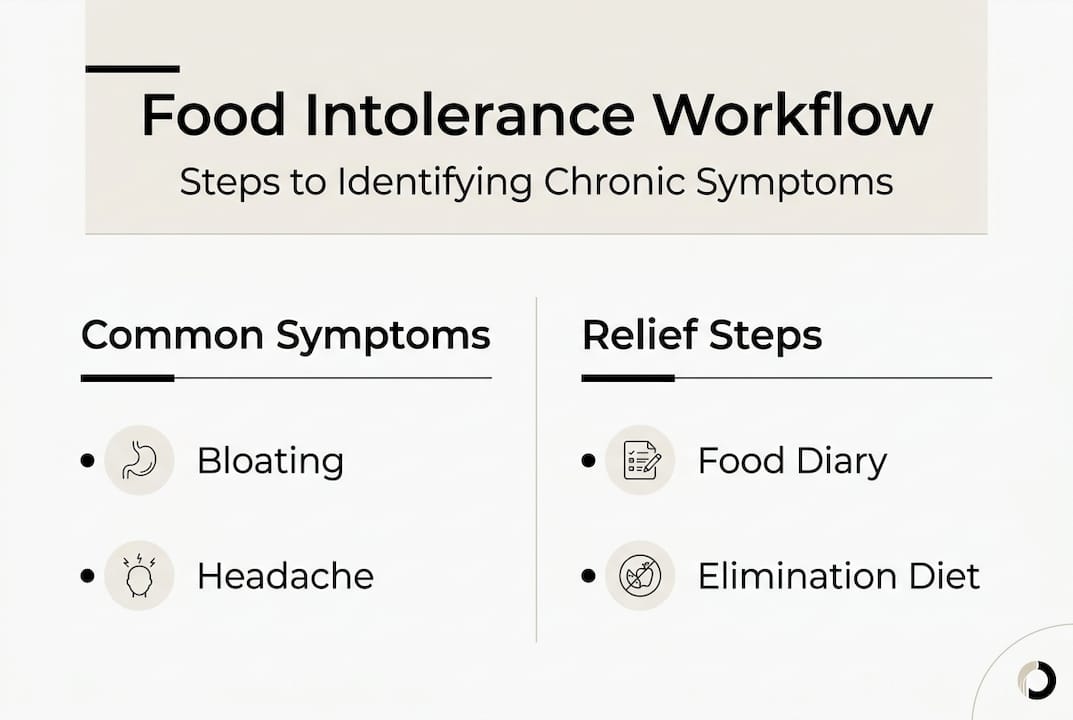
This is where things get complicated. The symptoms of food intolerance are non-specific and often delayed, sometimes appearing hours or even days after eating. This delay makes it genuinely difficult to connect symptoms to a particular food without careful investigation.
Common symptoms linked to food intolerance include:
- Bloating and abdominal discomfort
- Diarrhoea or constipation
- Fatigue and low energy
- Headaches or migraines
- Skin problems including eczema and rashes
- Brain fog and difficulty concentrating
- Nausea
These symptoms overlap with many other conditions, from irritable bowel syndrome (IBS) to anxiety. This overlap creates diagnostic confusion. You can learn more about how to recognise intolerance symptoms in your daily life, and explore advice on dealing with symptoms if you are already experiencing them.
According to Allergy UK, diagnosis of food intolerance is typically exclusion-based, with placebo and nocebo effects being significant factors, and no single non-invasive test considered reliably diagnostic. Supervised reintroduction of foods remains essential to confirm findings.
This reality means that ruling out other medical causes with your GP is always the right first step. Only once other conditions are excluded should food intolerance be seriously investigated.
Evidence and controversies: UK expert views on intolerance testing
With the basics in mind, we turn to the science and controversy surrounding how food intolerance is actually identified, especially with the rise of home testing.
Commercial food intolerance tests have grown rapidly in popularity across the UK. Many measure IgG antibodies in blood, while others use bioresonance technology (a method that analyses energy frequencies from hair or skin samples). The appeal is obvious: a simple, non-invasive test that gives you a list of foods to avoid sounds ideal.
But the expert consensus is more cautious. The NHS, Allergy UK, and the British Dietetic Association (BDA) do not endorse most commercial food intolerance tests. Their position is that the evidence for IgG testing and non-invasive approaches does not meet the standard required for clinical recommendation.
That said, the picture is not entirely black and white. Some research has shown benefits in specific contexts. For example, patch-testing improved IBS symptoms in 83% of participants at one month and 80% at 7.6 months, though sample sizes were limited and methodology varied.
Here is a comparison of the main approaches currently available:
| Method | Availability | Expert endorsement | Cost estimate |
|---|---|---|---|
| Supervised elimination diet | GP or dietitian referral | Recommended | Low to moderate |
| IgG blood testing | Private clinics and online | Not recommended | £100 to £400 |
| Bioresonance hair testing | Online providers | Not recommended | £30 to £150 |
| Self-reported symptom diary | Self-managed | Supported | Free |
Key insight: No single commercial test has been proven superior to a carefully supervised elimination diet. The evidence on intolerance test risks is worth understanding before you invest in any testing approach. You can also explore current testing trends in the UK to see how the landscape is shifting.
For now, the most balanced view is this: commercial tests can provide a useful starting point for exploration, but their results should be interpreted carefully and never used as a standalone diagnosis.
How to identify food intolerance safely and effectively
Given the limits of current tests, readers need a safe and effective approach to pinpointing problem foods.
The safest and most evidence-supported approach follows a clear sequence. Skipping steps can lead to unnecessary food restriction, nutritional deficiencies, or missed diagnoses of more serious conditions.
- Keep a detailed symptom diary. Record everything you eat and drink alongside any symptoms, their severity, and timing. Even two weeks of consistent logging can reveal patterns that would otherwise be invisible.
- Rule out other causes with your GP. Conditions like coeliac disease, inflammatory bowel disease, and thyroid disorders share symptoms with food intolerance. Blood tests and clinical assessment can exclude these first.
- Work with a registered dietitian. A dietitian can guide you through a structured elimination diet, removing suspected trigger foods for a set period and monitoring your response. This is the most reliable method currently available.
- Reintroduce foods one at a time. Supervised reintroduction, where one food is added back every few days while symptoms are monitored, is critical for confirming which foods are genuinely problematic.
- Interpret commercial test results with care. If you use a non-invasive home test as a starting point, treat the results as one piece of information among many. Do not eliminate entire food groups based solely on a test report.
As Which? reports, structured dietary management is safer and more effective than commercial testing alone, and personalised planning with a dietitian produces the best outcomes.
Pro Tip: A food and symptom diary does not need to be complicated. A simple notes app on your phone, updated immediately after meals, is often more accurate than a detailed written journal filled in at the end of the day.
You can find a clear food sensitivity workflow to guide you step by step, as well as a practical food intolerance checklist to help you stay organised throughout the process.
Living well: managing chronic symptoms after identifying intolerances
Knowing what to avoid is just the start. Sustained wellbeing depends on how you live with these changes each day.

Once you have identified your trigger foods, the temptation is to cut them out permanently and completely. This feels logical, but it often creates new problems. Overly restrictive diets can lead to nutritional gaps, reduced social enjoyment of food, and unnecessary anxiety around eating.
Here are the key strategies for managing life with food intolerances:
- Reintroduce foods periodically. Intolerances can shift over time. A food that caused symptoms last year may be better tolerated after a period of avoidance and gut recovery.
- Prioritise nutritional balance. If you remove dairy, ensure you are getting calcium from other sources. If wheat is a trigger, focus on naturally gluten-free wholegrains. Work with your dietitian to avoid deficiencies.
- Plan ahead when eating out. Most restaurants now provide allergen information. Do not be afraid to ask staff about ingredients. Simple preparation prevents most problems.
- Acknowledge the emotional side. Food is deeply social and cultural. Feeling restricted at dinner parties or worrying about every meal is genuinely stressful. Seeking support from a counsellor or support group can make a real difference.
| Common pitfall | Why it happens | What to do instead |
|---|---|---|
| Over-restriction | Fear of triggering symptoms | Work with a dietitian to test tolerance levels |
| Missing key nutrients | Cutting out whole food groups | Find nutritional alternatives with professional support |
| Social isolation | Anxiety about eating with others | Plan ahead and communicate dietary needs |
| Ignoring symptom changes | Assuming intolerances are permanent | Review and reassess every six to twelve months |
Pro Tip: Set a calendar reminder every six months to review your intolerances with a dietitian. What your body could not tolerate a year ago may be manageable now, and staying unnecessarily restricted only limits your quality of life.
As structured dietary management evidence shows, improving wellbeing requires avoiding unsupported restrictive diets and keeping dietary variety at the centre of your approach. Explore how wellbeing through testing can support a better daily life, and read more about the benefits of intolerance testing as part of a broader wellness strategy.
A practical reality: what most guides miss about food intolerance and chronic symptoms
Most articles on food intolerance present the process as straightforward. Test, identify, avoid, feel better. In reality, it is rarely that tidy.
The emotional weight of unexplained chronic symptoms is heavy. You have likely spent months, possibly years, feeling dismissed or confused. When a test result finally points to something concrete, the relief can lead to over-reliance on that result. We see this often: people cutting out twenty foods based on a single report, then feeling worse because their diet lacks variety and nutrients.
The truth is that test results, whether from a home kit or a clinic, are a starting point for conversation, not a final verdict. Your symptoms, your diary, your lived experience, these matter more than any single report. Food intolerance management is iterative. It requires patience, observation, and a willingness to adjust.
The goal is not rigid avoidance of everything flagged on a list. The goal is informed self-care, guided by evidence and shaped by how you actually feel. Find practical intolerance advice that reflects this more honest, realistic approach.
Take the next step: support and solutions for lasting relief
If you are ready to move from insight to action, we are here to help you take that next practical step.

At UK Food Intolerance, we offer non-invasive at-home testing for UK residents, using hair sample analysis to screen across hundreds of potential triggers. Our intolerance test options include the Core Single Intolerance Test covering 500 items and the Ultimate Single Intolerance Test covering over 1,100 items. Results are delivered digitally within 48 to 72 hours. You also get access to resources that help you interpret your report and design a plan that works for your lifestyle. Browse our home test kits and learn how personalised diet matching can help you make lasting changes with confidence.
Frequently asked questions
Can food intolerance really cause long-term symptoms?
Yes. Food intolerance can trigger non-specific, persistent symptoms including digestive issues, fatigue, and headaches that continue for months if the trigger food remains part of your diet.
Are at-home food intolerance tests reliable?
UK experts including the NHS, Allergy UK, and BDA do not endorse IgG or non-invasive commercial tests as diagnostic tools, with supervised elimination diets considered the gold standard.
What is the safest way to identify a food intolerance?
Begin with a symptom diary and visit your GP to rule out other causes, then consider an elimination diet under a dietitian’s guidance for the most accurate and safe identification process.
Can food intolerance symptoms change over time?
Yes. Intolerance symptoms can evolve as your body, lifestyle, and gut health change, which is why ongoing monitoring and periodic reassessment are important parts of long-term management.










Leave a Reply
Want to join the discussion?Feel free to contribute!