

Digestive discomfort is a persistent issue for nearly one in five British adults, often leaving many searching for answers beyond standard medical checks. Unexplained symptoms can disrupt routines and health goals, making it vital to pinpoint hidden dietary triggers. Modern intolerance testing now offers British individuals a non-invasive way to uncover specific sensitivities, helping them make informed food choices for lasting relief and improved wellbeing.
Table of Contents
- Defining Comprehensive Intolerance Testing In The UK
- Types Of Intolerance Testing And Key Distinctions
- How Bio-Resonance Hair Sample Testing Works
- Interpreting Results And Practical Applications
- Risks, Limitations, And Comparing Alternatives
Key Takeaways
| Point | Details |
|---|---|
| Comprehensive Intolerance Testing | This testing identifies food and environmental sensitivities, revealing potential dietary triggers linked to chronic health issues. |
| Variety of Testing Methods | Options range from IgG blood tests to alternative methods like hair analysis, with varying degrees of scientific credibility. |
| Importance of Professional Guidance | Interpreting test results should involve qualified healthcare professionals to ensure accurate dietary recommendations. |
| Risks of Unverified Tests | Many commercial tests may lack scientific support, leading to false positives and unnecessary dietary restrictions. |
Defining comprehensive intolerance testing in the UK
Comprehensive intolerance testing represents a sophisticated diagnostic approach designed to identify specific food and environmental sensitivities affecting an individual’s health. In the United Kingdom, these advanced testing methodologies go beyond traditional allergy assessments, offering detailed insights into potential dietary triggers that might contribute to chronic health challenges.
At its core, comprehensive intolerance testing involves systematic evaluation of an individual’s biological responses to numerous substances, often utilising innovative techniques such as bioresonance technology. Advanced healthcare professionals are increasingly recognising these methods as valuable tools for understanding complex health interactions. The process typically involves analysing biological samples like hair or blood to detect subtle immune reactions and inflammatory responses that standard medical screenings might overlook.
The key components of comprehensive intolerance testing in the UK generally include multi-item screening across several critical categories: food ingredients, environmental allergens, chemical compounds, and potential sensitivities. This approach enables individuals to gain a nuanced understanding of their body’s unique reactions, potentially revealing underlying causes of persistent symptoms such as digestive discomfort, skin conditions, fatigue, and unexplained inflammatory responses.
Summary of common reasons people seek intolerance testing:
| Symptom | Possible Related Causes | Testing Benefit |
|---|---|---|
| Digestive discomfort | Food intolerance, gut imbalance | Identifies trigger foods |
| Skin conditions | Chemical sensitivity, allergies | Highlights external triggers |
| Fatigue | Hidden dietary reactions | Reveals overlooked sensitivities |
| Inflammation | Chronic immune response | Pinpoints inflammatory triggers |
Pro tip: Consider maintaining a detailed food and symptom diary alongside your intolerance test results to track potential correlations and patterns in your body’s responses.
Types of intolerance testing and key distinctions
Intolerance testing encompasses a range of diagnostic methodologies designed to identify potential dietary and environmental sensitivities. In the United Kingdom, these approaches vary significantly in their scientific validity, methodology, and diagnostic precision, presenting individuals with multiple options for understanding their body’s unique responses.
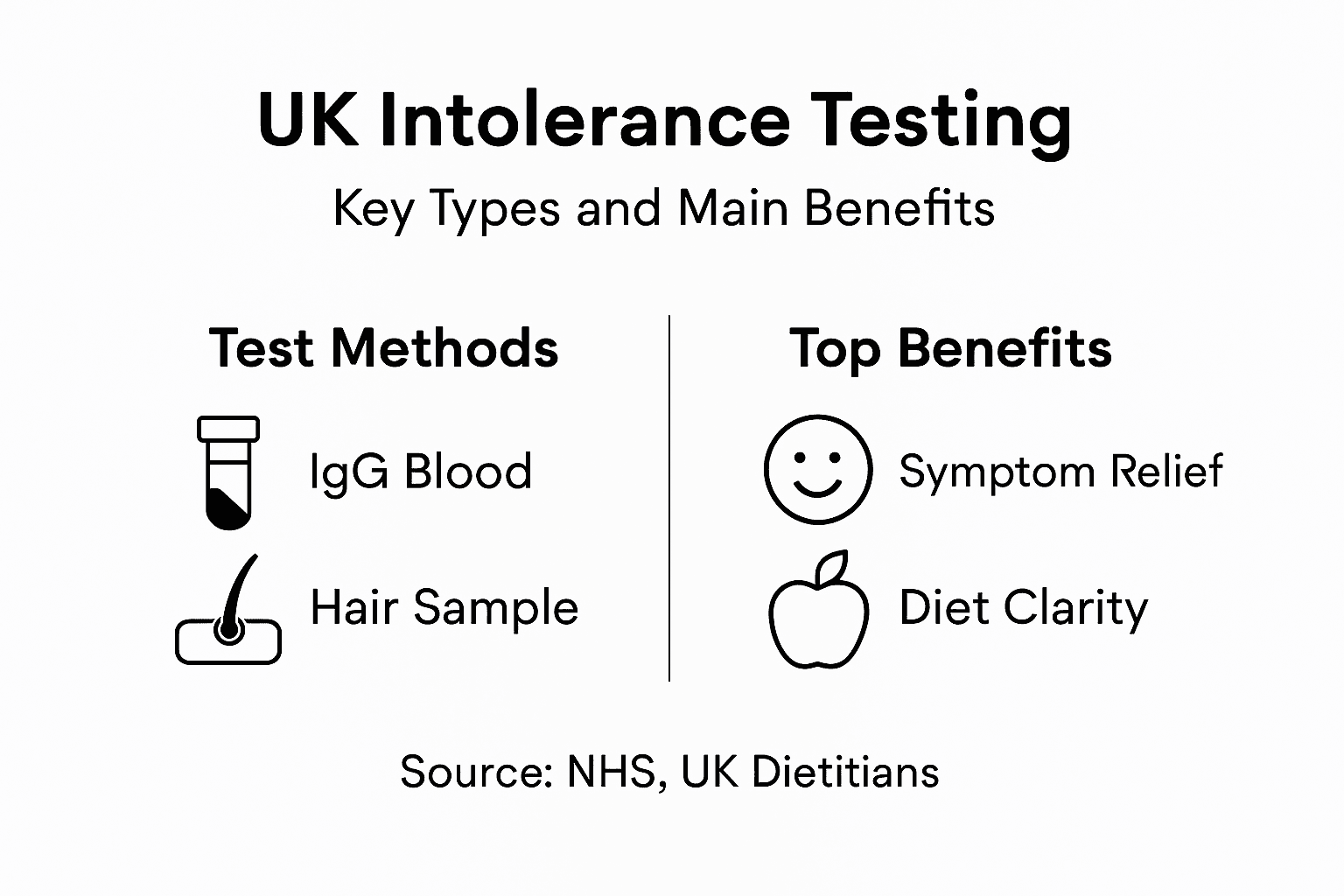
The landscape of intolerance testing methods includes several key approaches. These range from IgG blood tests and hair analysis to more specialised techniques like applied kinesiology, leukocytoxic testing, and Vega electrodermal testing. While each method offers distinct advantages, healthcare professionals emphasise that not all approaches carry equal scientific credibility. Blood-based IgG tests, for instance, provide more quantifiable data compared to hair analysis, though their diagnostic reliability can still vary.
Crucial distinctions emerge when comparing these testing methodologies. Traditional medical approaches prioritise empirical evidence and reproducibility, whereas alternative testing methods might rely on less established diagnostic principles. The gold standard remains a professionally supervised food exclusion and reintroduction protocol, which allows for direct observation of an individual’s physiological responses to specific dietary triggers. This method provides the most comprehensive and personalised insights into potential food intolerances.
Here is a comparison of key intolerance testing methods available in the UK:
| Method | Technique Used | Scientific Support | Typical Insights Provided |
|---|---|---|---|
| IgG Blood Test | Blood sample analysis | Moderate clinical backing | Quantifiable immune response |
| Hair Analysis | Hair strand examination | Limited validation | Potential reactive patterns |
| Applied Kinesiology | Muscle response testing | Lacks robust evidence | Subjective sensitivity clues |
| Vega Electrodermal | Skin conductance measured | Low scientific acceptance | Possible energetic imbalances |
| Elimination Diet | Controlled food removal | High clinical support | Direct observable symptoms |
Pro tip: Consult with a registered nutritionist or healthcare professional to interpret your intolerance test results and develop a personalised dietary management strategy.
How bio-resonance hair sample testing works
Bio-resonance hair sample testing represents an innovative diagnostic approach that harnesses the unique electromagnetic frequencies contained within individual hair follicles. By analysing these microscopic biological samples, practitioners can potentially uncover insights about an individual’s physiological responses and potential sensitivities without invasive medical procedures.

The testing process begins with collecting a small hair sample, typically requiring approximately 5-10 strands with the root intact. Bioresonance research methodologies suggest that hair contains comprehensive information about an individual’s biochemical and energetic profile. Sophisticated scanning technologies then analyse the hair’s inherent vibrational frequencies, comparing them against a comprehensive database of known substances to identify potential reactive patterns.
At its core, bio-resonance testing operates on the principle that every substance emits a unique electromagnetic frequency, and biological systems respond differently to these frequencies. The hair sample serves as a non-invasive biological blueprint, allowing practitioners to detect subtle energetic imbalances that might indicate potential food intolerances, environmental sensitivities, or underlying metabolic stressors. While the technique remains controversial within traditional medical circles, many individuals find value in understanding these intricate biological interactions.
Pro tip: Ensure your hair sample is clean, free from chemical treatments, and collected from a consistent area of the scalp to maximise testing accuracy.
Interpreting results and practical applications
Interpreting intolerance test results requires a nuanced and professional approach that goes beyond simple binary categorisations. Each individual’s physiological response represents a complex interplay of biochemical factors, necessitating a comprehensive and personalised understanding of the findings.
Nutrition experts recommend careful result interpretation by qualified healthcare professionals who can translate technical data into actionable dietary strategies. The test results serve as a valuable diagnostic tool, providing insights into potential food sensitivities that might be triggering inflammatory responses, digestive discomfort, or unexplained systemic reactions. Critically, these findings should not be viewed in isolation but as part of a holistic health assessment.
Practical application of intolerance test results typically involves developing a targeted elimination diet strategy. This approach allows individuals to systematically remove identified trigger foods while maintaining nutritional balance. Tracking symptomatic changes, monitoring overall wellbeing, and working closely with nutritional professionals ensures a structured and scientifically grounded approach to dietary management. While test results offer valuable guidance, they represent one piece of a larger health puzzle that requires professional interpretation and personalised nutritional planning.
Pro tip: Maintain a detailed food and symptom diary alongside your test results to help healthcare professionals create a more precise dietary management plan.
Risks, limitations, and comparing alternatives
Intolerance testing presents a complex landscape of diagnostic approaches, each carrying unique potential benefits and inherent limitations. Understanding these nuanced considerations is crucial for individuals seeking accurate insights into their physiological responses and potential dietary triggers.
Medical professionals caution that many commercial intolerance tests lack robust scientific validation. Hair analysis and applied kinesiology techniques are particularly scrutinised within the medical community, with significant concerns about their diagnostic reliability. The primary risks include potential false positives, which might lead individuals to unnecessarily restrict their diets, potentially compromising nutritional intake and creating unwarranted dietary anxiety.
Comparing alternative diagnostic approaches reveals the gold standard remains a professionally supervised elimination diet. This method involves carefully removing suspected trigger foods under expert guidance and systematically reintroducing them to accurately identify genuine intolerances. Unlike commercial testing methods, this approach provides direct, observable evidence of physiological responses. Alternative strategies such as detailed food and symptom tracking, blood tests measuring specific inflammatory markers, and comprehensive nutritional consultations offer more scientifically grounded pathways to understanding individual dietary sensitivities.
Pro tip: Consult a registered dietitian before making significant dietary changes based on testing results to ensure balanced nutrition and accurate interpretation.
Unlock Your Wellbeing with Comprehensive Intolerance Testing
Are you struggling with unexplained digestive discomfort, persistent fatigue, or skin irritations that do not resolve? These symptoms might be linked to hidden food or environmental sensitivities identified in “Comprehensive Intolerance Testing: Impact on UK Wellbeing.” By understanding your body’s unique reactions through bio-resonance hair sample testing, you gain valuable insights that empower you to take control of your health. Discover how eliminating your personal triggers can lead to improved wellbeing and reduced inflammation by exploring the trusted resources in our Digestive Health Archives – UK Food Intolerance.

Take the first step towards clarity with UK Food Intolerance’s easy and affordable at-home testing services. Choose between the Ultimate Single Intolerance Test, examining over 1,100 items, or the Core Single Intolerance Test, covering 500 key substances. Collect your hair sample in the comfort of your home, send it to our UK-based laboratory, and receive detailed results within 48 to 72 hours. Start your personalised elimination diet journey today with professional support and guidance available on UK Food Intolerance. For more specific concerns, you can also explore dedicated insights on Egg Intolerance – Symptoms, Allergy Difference & How to Test. Do not wait to improve your health; accurate intolerance testing is your gateway to lasting wellbeing.
Frequently Asked Questions
What is comprehensive intolerance testing?
Comprehensive intolerance testing is a sophisticated diagnostic approach designed to identify specific food and environmental sensitivities that may affect an individual’s health, using methods such as bioresonance technology and biological sample analysis.
How does bio-resonance hair sample testing work?
Bio-resonance hair sample testing involves collecting hair samples and analysing the unique electromagnetic frequencies of hair follicles, comparing them against a database to identify potential sensitivities and dietary triggers.
What are the different types of intolerance testing methods available?
Different types of intolerance testing methods include IgG blood tests, hair analysis, applied kinesiology, Vega electrodermal testing, and elimination diets. Each has varying levels of scientific credibility and diagnostic precision.
How should I interpret my intolerance test results?
Interpreting intolerance test results requires a professional approach. It’s recommended to work with qualified healthcare professionals who can help translate the findings into actionable dietary strategies, considering the results as part of a holistic health assessment.










Leave a Reply
Want to join the discussion?Feel free to contribute!