

TL;DR:
- Food intolerance involves delayed digestive symptoms caused by enzyme deficiencies or chemical sensitivities. Proper identification requires supervised elimination and reintroduction diets, not unreliable IgG tests. Managing intolerance depends on understanding personal thresholds, maintaining gut health, and working with a dietitian.
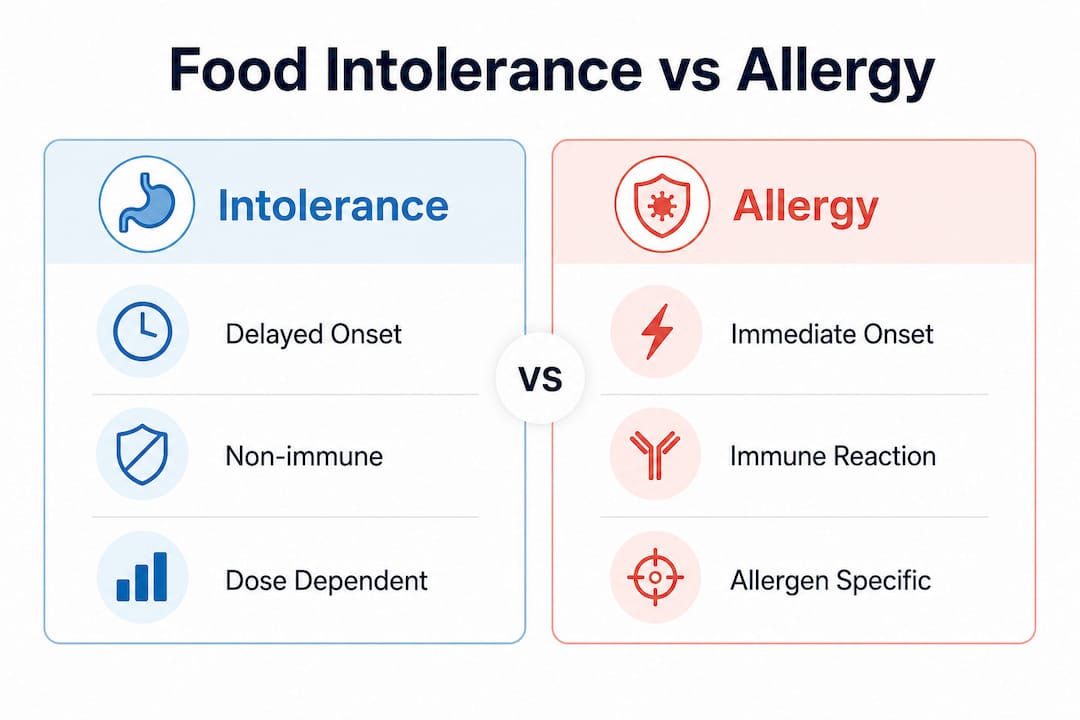
Food intolerance is a non-immune digestive condition where the body struggles to break down certain foods, producing uncomfortable digestive symptoms such as bloating, cramps, and diarrhoea. Unlike a food allergy, which triggers an immediate immune response, food intolerance is driven by enzyme deficiencies or sensitivity to food chemicals. Symptoms are dose-dependent and typically appear between 30 minutes and 48 hours after eating, making the connection to a specific food genuinely difficult to spot. Understanding how intolerance impacts digestion is the first step toward identifying your triggers and feeling better. The NHS and the British Dietetic Association (BDA) both recognise food intolerance as a distinct clinical condition requiring careful, supervised management.
What are the common digestive symptoms of food intolerance?
Food intolerance produces a recognisable cluster of gut symptoms, though the timing makes them easy to confuse with other conditions. Symptoms typically appear between 30 minutes and 48 hours after consuming a trigger food. That delay is what separates intolerance from allergy, and it is why so many people spend months not knowing what is causing their discomfort.
The most common digestive symptoms include:
- Bloating — a feeling of fullness or swelling in the abdomen, often worse after meals
- Abdominal pain and cramps — ranging from mild discomfort to sharp, persistent pain
- Diarrhoea — loose or frequent stools, often occurring within hours of eating
- Constipation — less common, but present in some intolerances, particularly to certain food additives
- Excess gas — produced when undigested food ferments in the large bowel
- Nausea — a general feeling of sickness, sometimes without vomiting
These symptoms differ from allergic reactions in a clinically important way. Allergies produce immediate, immune-mediated responses such as hives, swelling, or anaphylaxis. Intolerance reactions are slower, milder in isolation, and directly tied to the amount consumed.
| Feature | Food intolerance | Food allergy |
|---|---|---|
| Onset | 30 minutes to 48 hours | Usually within minutes |
| Immune involvement | None | IgE-mediated immune response |
| Dose dependency | Yes, worse with larger portions | No, even trace amounts trigger reaction |
| Symptoms | Digestive: bloating, cramps, gas | Systemic: hives, swelling, anaphylaxis |
| Life-threatening risk | Rare | Potentially yes |
For a fuller comparison of these two conditions, the Ukfoodintolerance guide on intolerance versus allergy is worth reading before you draw any conclusions about your own symptoms.
Pro Tip: Keep a written record of every symptom alongside what you ate and when. Even a rough diary over two weeks can reveal patterns that are invisible in the moment.
How does intolerance disrupt the digestive system?
The effects of food intolerance on the gut are rooted in specific physiological failures. The most well-understood mechanism is enzyme deficiency. When the body does not produce enough of a particular enzyme, food passes through the digestive tract only partially broken down.
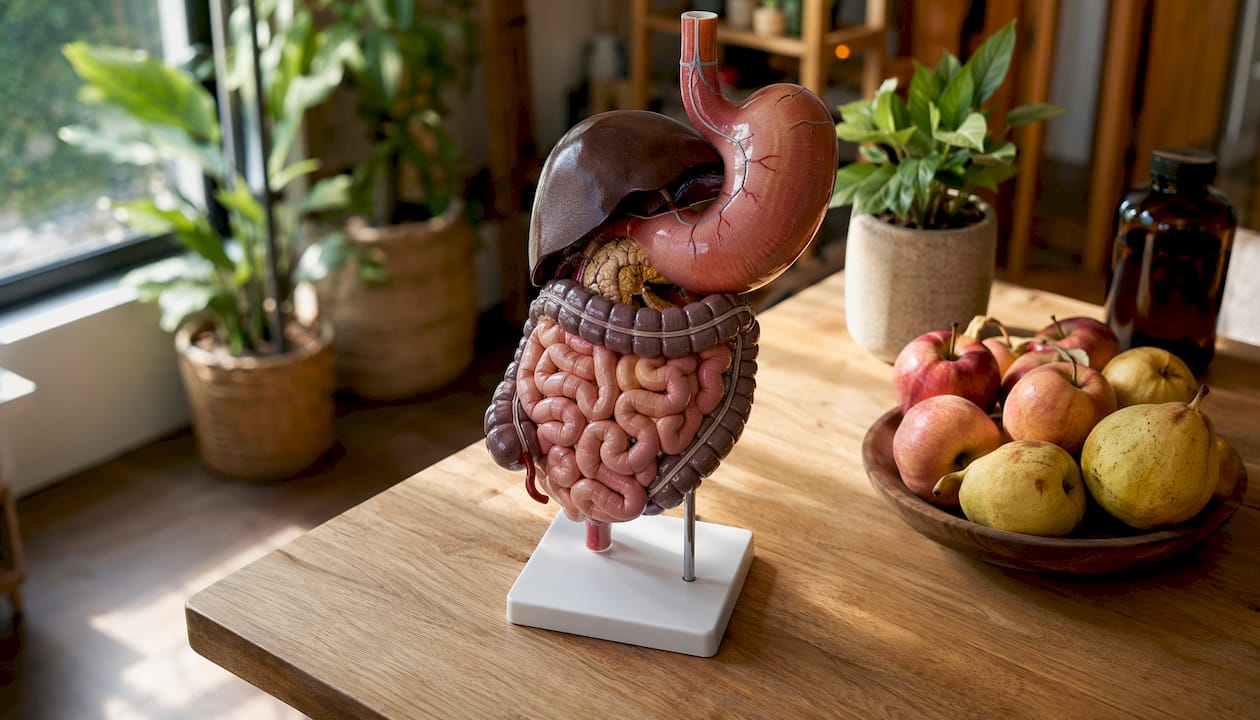
Lactose intolerance is the clearest example. Lactase, the enzyme that breaks down lactose (the sugar in dairy), is absent or insufficient in affected individuals. Undigested lactose ferments in the large bowel, producing hydrogen gas and triggering bloating, cramps, and diarrhoea. The impact of dairy intolerance on digestion is well documented and measurable: a hydrogen breath test can detect an increase of 20 ppm hydrogen above baseline, confirming lactose malabsorption.
Beyond enzyme deficiency, food chemical sensitivity plays a separate role. Compounds such as histamine, salicylates, and food additives like sulphites can irritate the gut lining directly, without any enzyme involvement. These reactions are harder to identify because the offending chemicals appear across many unrelated foods.
Gut microbiota also shape how intolerance symptoms develop. Chronic digestive symptoms may reflect underlying gut dysfunction, such as dysbiosis (an imbalance of gut bacteria) or impaired intestinal permeability, which can mimic or worsen intolerance symptoms. This matters because improving gut health sometimes allows people to reintroduce foods they previously could not tolerate.
The dose-dependent nature of intolerance is also worth understanding clearly. Small amounts of a trigger food may cause no symptoms at all. Larger portions push past an individual threshold and produce a reaction. This is why symptoms feel inconsistent and why identifying a trigger without structured tracking is so difficult.
Pro Tip: If you suspect a food chemical sensitivity rather than an enzyme issue, consider working with a dietitian who specialises in the low-FODMAP or low-histamine approach. These are structured, evidence-based frameworks, not generic exclusion diets.
How are food intolerances diagnosed in the UK?
UK clinical standards are clear on this point: the supervised elimination and reintroduction diet is the gold standard for diagnosis. The NHS and BDA both recommend this approach, conducted under the supervision of an HCPC-registered dietitian.
The standard diagnostic pathway follows these steps:
- Food and symptom diary — record everything you eat and every symptom over a 2–4 week period. The NHS and BDA recommend a 7–14 day diary within this window to detect meaningful patterns before any food is removed.
- Elimination phase — remove the suspected trigger food or food group entirely for 2–6 weeks, long enough for symptoms to resolve if the food is genuinely responsible.
- Reintroduction phase — reintroduce foods one at a time, every 3–4 days, to assess whether symptoms return and at what dose. This phase produces the most diagnostic clarity.
- Hydrogen breath test — used specifically for suspected lactose or fructose malabsorption, measuring gas produced by fermentation in the gut.
- Dietitian review — a registered dietitian interprets the results and guides nutritional adjustments to prevent deficiencies.
A word on IgG tests is necessary here. These are widely marketed as food intolerance tests, but they are not endorsed by the NHS, NICE, the British Society for Allergy and Clinical Immunology (BSACI), or the European Academy of Allergy and Clinical Immunology (EAACI).
IgG antibodies indicate immune tolerance, not pathology. A positive IgG result often simply reflects the foods you eat regularly. Acting on these results can lead to unnecessary dietary restrictions and nutritional harm, without resolving the underlying problem.
Prolonged unsupervised elimination risks deficiencies in calcium, iron, fibre, and B vitamins. The BDA is explicit: elimination diets must be supervised to protect nutritional adequacy. For a balanced view of at-home testing options and their limitations, the Ukfoodintolerance article on at-home test risks sets out the evidence clearly.
What practical steps help manage digestion issues from intolerance?
Managing the effects of food intolerance on digestion does not mean eliminating foods permanently. The goal is identifying your personal threshold and building a diet around it.
- Identify your dose threshold. Most people with lactose intolerance, for example, can tolerate small amounts of dairy without symptoms. Structured reintroduction every 3–4 days is where this threshold becomes clear.
- Follow a structured reintroduction protocol. Reintroduce one food at a time and wait long enough to observe any delayed reaction before testing the next food. Rushing this phase produces unreliable results.
- Protect your nutritional intake. Removing dairy, gluten, or other food groups without replacing key nutrients creates new health problems. A dietitian can recommend appropriate substitutes and, where needed, supplementation.
- Track symptoms consistently. A detailed food diary over 2–4 weeks creates the data patterns that make professional interpretation possible. Vague recollections are not enough.
- Address lifestyle factors. Stress, poor sleep, and low physical activity all affect gut motility and microbiota balance. These factors can amplify intolerance symptoms even when diet is well managed. Research into nutrition and mental health highlights how closely gut function and psychological wellbeing are linked.
- Know when to seek medical advice. Unexplained weight loss, blood in stools, or symptoms that do not improve after a supervised elimination diet require a GP referral to rule out conditions such as coeliac disease or inflammatory bowel disease.
Pro Tip: Use the Ukfoodintolerance elimination diet checklist to structure your reintroduction phase. Having a clear protocol reduces the risk of missing a trigger or cutting out foods unnecessarily.
Key takeaways
Food intolerance disrupts digestion through enzyme deficiencies and food chemical sensitivities, producing delayed, dose-dependent symptoms that require structured, supervised identification to resolve.
| Point | Details |
|---|---|
| Delayed symptom onset | Symptoms appear 30 minutes to 48 hours after eating, making triggers hard to identify without tracking. |
| Enzyme deficiency is the core mechanism | Undigested food ferments in the gut, producing gas, bloating, and cramps. |
| IgG tests lack clinical validity | NHS, NICE, and BSACI do not endorse IgG tests; use supervised elimination diets instead. |
| Dose management beats total avoidance | Most people have a personal threshold; structured reintroduction identifies it without unnecessary restriction. |
| Nutritional safety requires supervision | Unsupervised elimination risks deficiencies in calcium, iron, fibre, and B vitamins. |
Why I think most people manage their intolerance the hard way
Most people I speak with have spent years cutting out foods based on guesswork, online quizzes, or an IgG test result that a GP later dismissed. They end up on a very restricted diet, still experiencing symptoms, and genuinely confused about what went wrong.
The uncomfortable truth is that intolerance management is not about finding the “bad” food and removing it forever. It is about understanding your threshold. Someone with lactose intolerance may tolerate a splash of milk in tea but react badly to a bowl of cereal with full-fat milk. That nuance gets lost when people treat intolerance as a binary on-or-off condition.
The other thing I have observed consistently is that gut health matters as much as diet. People who address stress, sleep, and gut microbiota alongside their dietary changes tend to see better results than those who focus on food alone. Intolerance symptoms are real and specific, but the gut is not a simple machine. It responds to everything you do, not just what you eat.
My advice is straightforward: get a proper diary going, work with a registered dietitian, and resist the temptation to cut everything out at once. Patience and structure produce far better outcomes than panic elimination.
— Rob
How Ukfoodintolerance supports your next steps
If you are experiencing persistent digestion issues and want a clearer picture of what might be driving them, Ukfoodintolerance offers at-home testing services designed to give you a useful starting point.

Ukfoodintolerance uses bio-resonance technology to analyse hair samples against over 1,100 food and environmental items, with results delivered digitally within 48–72 hours. The process is non-invasive, straightforward, and designed to complement, not replace, professional dietary guidance. You can browse the full range of intolerance testing options to find the panel that fits your needs and budget. Whether you are at the start of your investigation or looking to refine an existing elimination plan, having clear data makes every conversation with a dietitian more productive.
FAQ
What is the difference between food intolerance and food allergy?
Food intolerance is a non-immune digestive reaction caused by enzyme deficiency or food chemical sensitivity, with symptoms appearing up to 48 hours after eating. Food allergy is an immediate, IgE-mediated immune response that can be life-threatening even in small amounts.
How long does it take for food intolerance symptoms to appear?
Symptoms typically appear between 30 minutes and 48 hours after consuming a trigger food, depending on the individual and the amount eaten.
Are IgG food intolerance tests reliable?
IgG tests are not recommended by the NHS, NICE, or BSACI. A positive result reflects regular food consumption, not intolerance, and acting on it can cause unnecessary dietary restriction.
What is the best way to diagnose a food intolerance in the UK?
The gold standard is a supervised elimination and reintroduction diet, conducted with an HCPC-registered dietitian. A food and symptom diary kept for 2–4 weeks before elimination provides the data needed to guide the process.
Can food intolerance symptoms improve over time?
Yes. Many people find that addressing gut health, identifying their dose threshold through structured reintroduction, and supporting nutritional adequacy allows them to reintroduce foods they previously could not tolerate without symptoms returning.










Leave a Reply
Want to join the discussion?Feel free to contribute!